A small butterfly is the tattoo people point at when they say they want something that means a lot and shows a little. It reads clearly at thumbnail size, it fits the body’s small flat spots, and it can sit in a place only you and a few other people ever see. This list keeps a strict rule about size. Every design below is palm-size or smaller on the body: wrists, ankles, feet, ribs, the nape, behind the ear, the collarbone and small shoulder pieces. The big back and chest butterflies live in our main
butterfly tattoo ideas collection. This page is for the little ones.
Every photo here is a real tattoo on real skin, counted one by one, and each design gets its own picture. Where a piece was photographed fresh, with the skin still pink around it, the note under the photo says so. Where an older tattoo has softened, that is in the note too, because a small butterfly lives or dies on how its lines hold up.
What a Small Butterfly Tattoo Means
The meaning most people attach to a butterfly is change. That one is not studio folklore: the caterpillar, chrysalis and butterfly stages are a real life cycle, and the design gets picked again and again after a move, a recovery, a divorce, a new job or the end of a hard stretch of years. The full story, including the Greek word psyche, which meant both soul and butterfly, sits in our
butterfly tattoo meaning guide. This page keeps the meaning notes short and spends its room on the designs.
Size changes the audience, not the meaning. A small butterfly is usually a private marker rather than a public statement: a reminder the wearer reads all day and most people never notice. One honest note: the semicolon butterfly, where one wing is drawn as a semicolon, comes up in searches for this topic a lot. We could not find a single properly licensed photo of one for this list, the same gap the main collection ran into, so it is covered here in words only.
20 Small Butterfly Tattoo Ideas
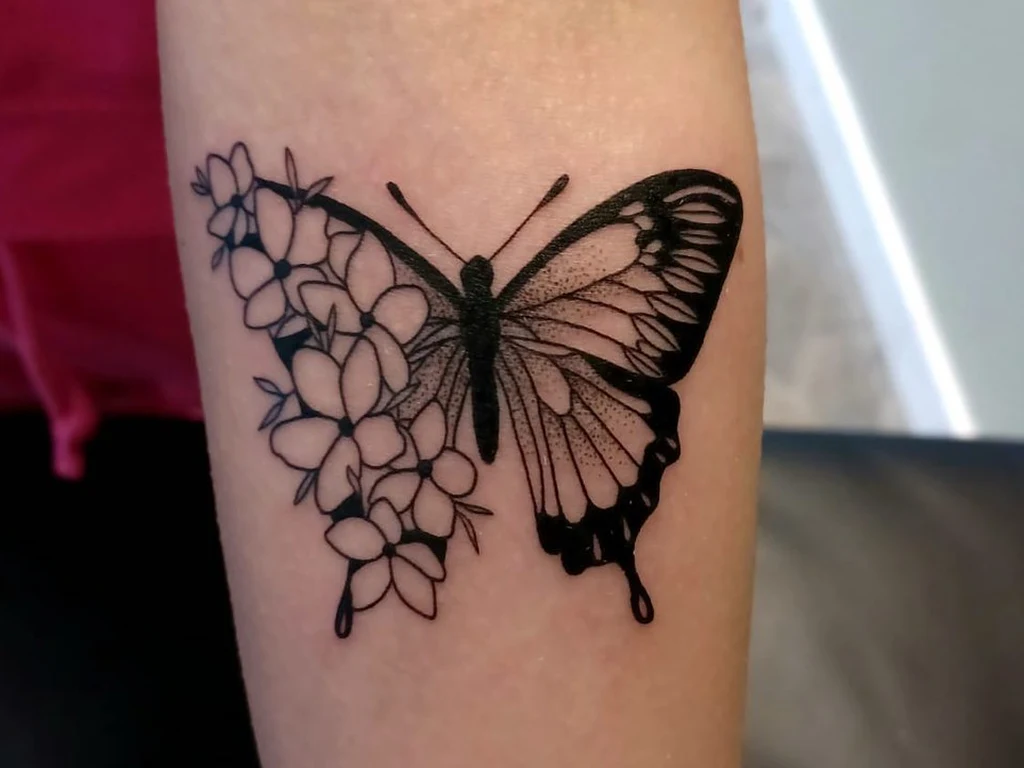
1. Half Butterfly, Half Flowers
The split build is the hardest-working idea in small butterfly design. One half is a butterfly wing, drawn with its cells and spots; the other half is a bunch of flowers in the same black linework. Your eye finishes the insect on its own, so the tattoo reads as a butterfly from across a room and as two designs standing close up.
It works on a forearm because the split runs along the arm’s length and the two halves stay the same size. Keep them equal. If the flower side grows bigger than the wing side, the butterfly disappears and the piece becomes a floral tattoo with a wing in it.
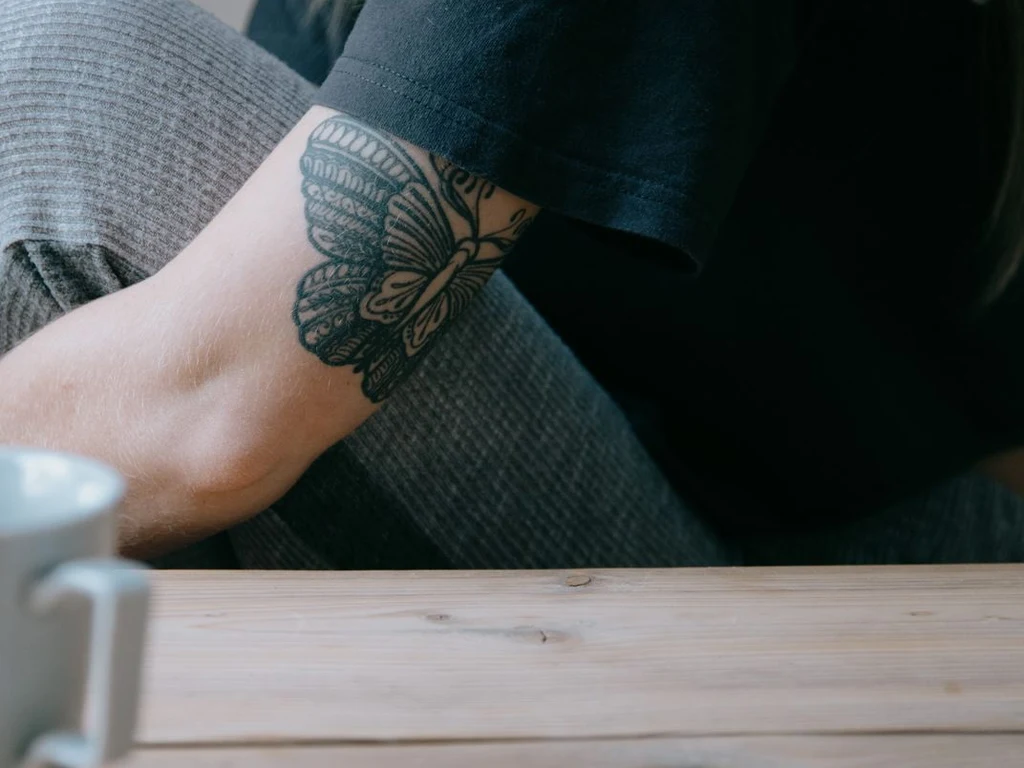
2. A Butterfly Beside a Coffee Cup
This forearm butterfly gets photographed the way it actually lives: on an arm resting on a table, next to a cup. The cup is a gift for scale, because plenty of tattoo photos give you no idea how big a piece is. This one takes up about as much room as the side of a coffee mug.
Colour this size needs a sound black outline underneath it. The wings carry soft colour, and the black edges are what will still be defining the shape in fifteen years, long after the palest colour has lightened.
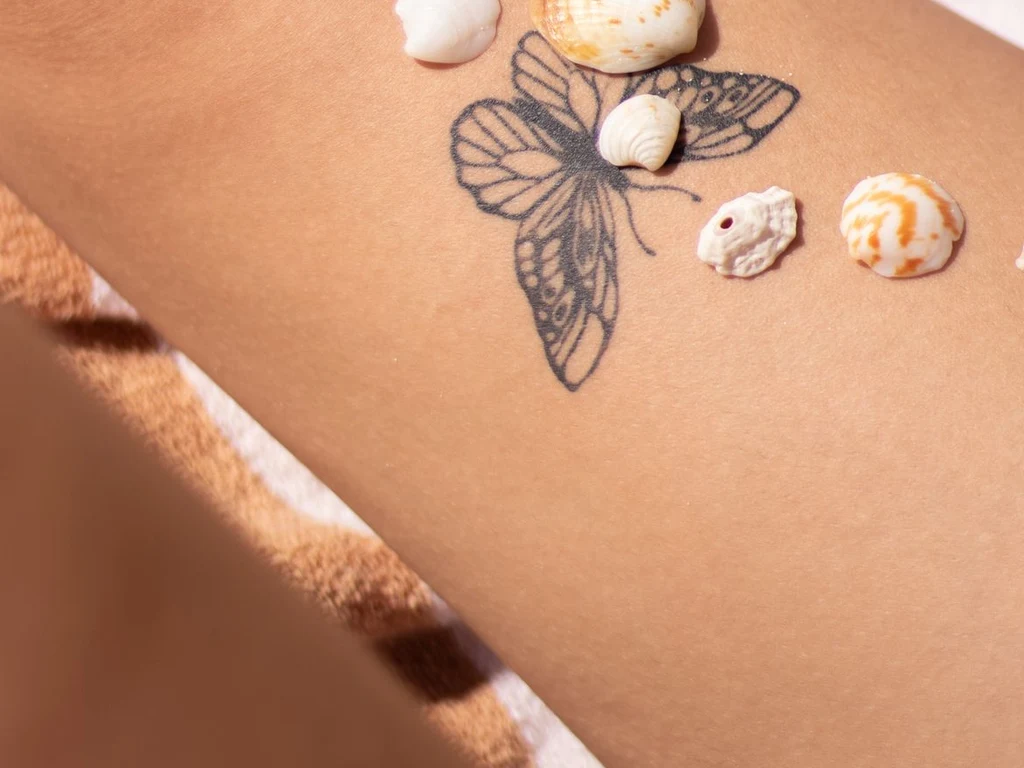
3. Fine Line Butterfly on the Lower Leg
A delicate outline butterfly on the lower leg, photographed on a beach towel next to small seashells. Fine line is the style most people ask for first and the style that asks the most of the artist: every wobble shows, and there is no shading to hide behind.
The lower leg is a kind place to put it. The skin is fairly stable, sun exposure is easy to control with trousers, and a small piece here can sit above the ankle where it reads like jewellery when the leg is bare.
4. Small Butterfly on Top of the Foot
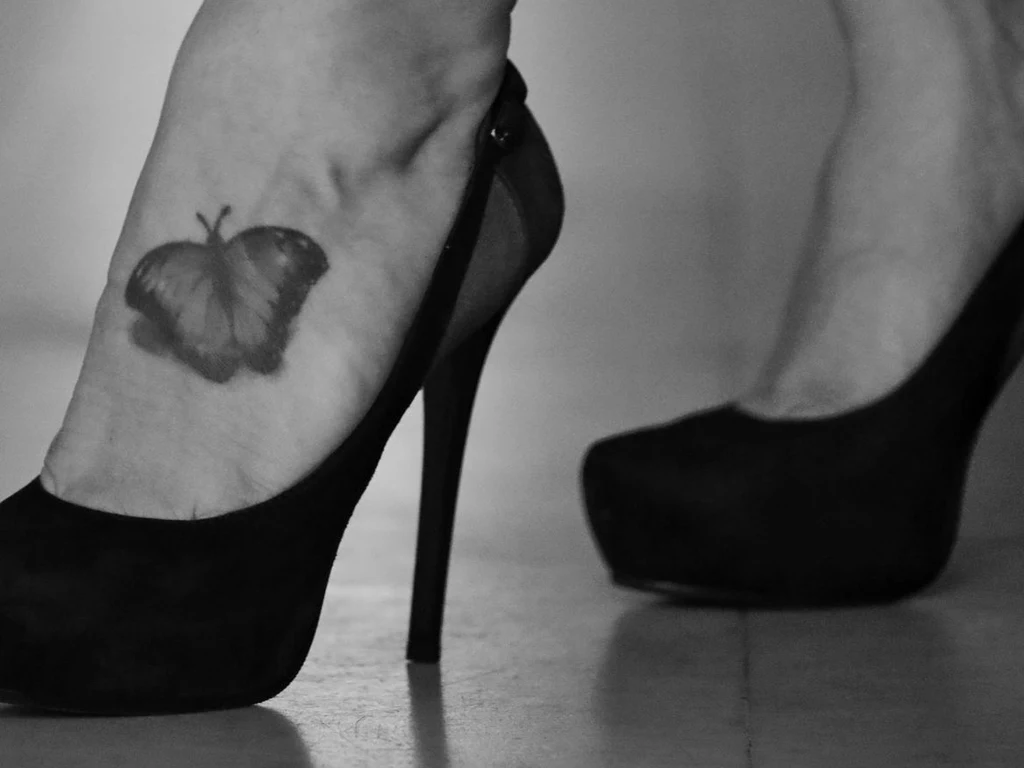
Shot in black and white, this little butterfly sits on top of the foot above a high heel. The top of the foot is one of the few placements where a small tattoo is on show exactly when the wearer chooses: heels and sandals display it, shoes and boots hide it completely.
Foot skin sheds faster than most, so small foot pieces are the ones most likely to need a touch-up in the first year or two. Book this design bold enough to survive that, and plan the session for a week when you can stay out of tight shoes.
5. Green Butterfly at the Nape
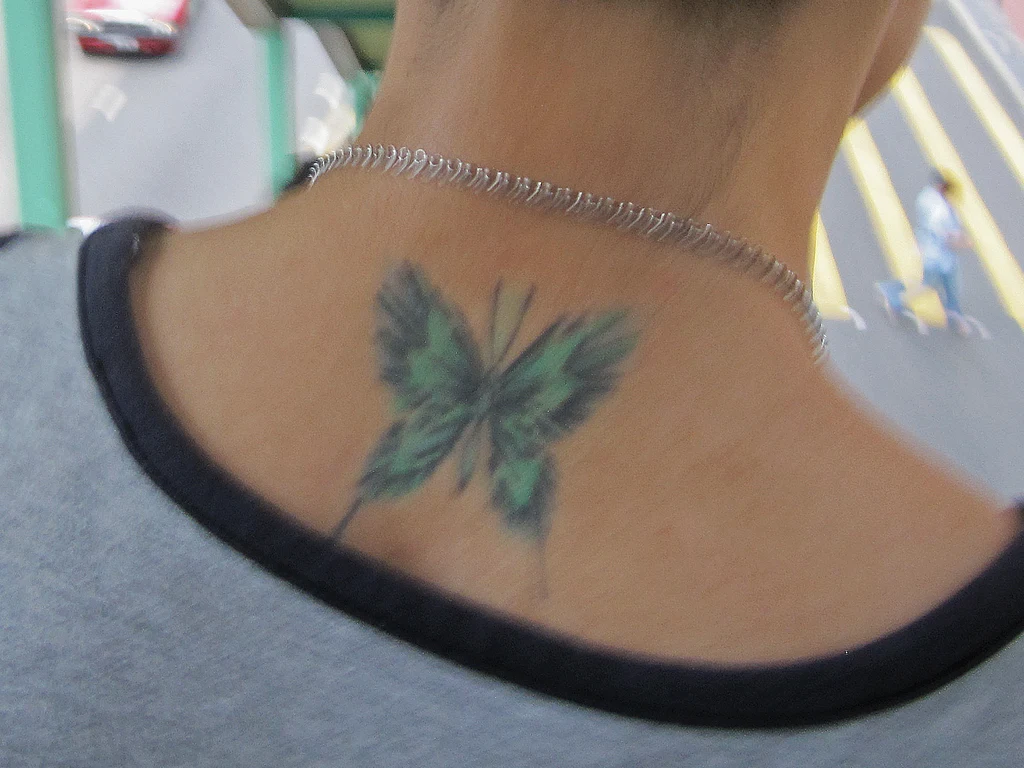
A green butterfly at the nape of a man’s neck, settled and healed, with the wings kept simple: two-tone green, black edges, no fussy pattern inside the wings. At this size that restraint is the whole trick. The wing cells are big enough to stay separate as the ink ages.
The nape hides under hair and collars and shows when hair goes up. It is also a spot the wearer cannot watch while it heals, so mirror checks replace the usual glance-down routine.
6. Dark Butterfly at the Centre of the Chest
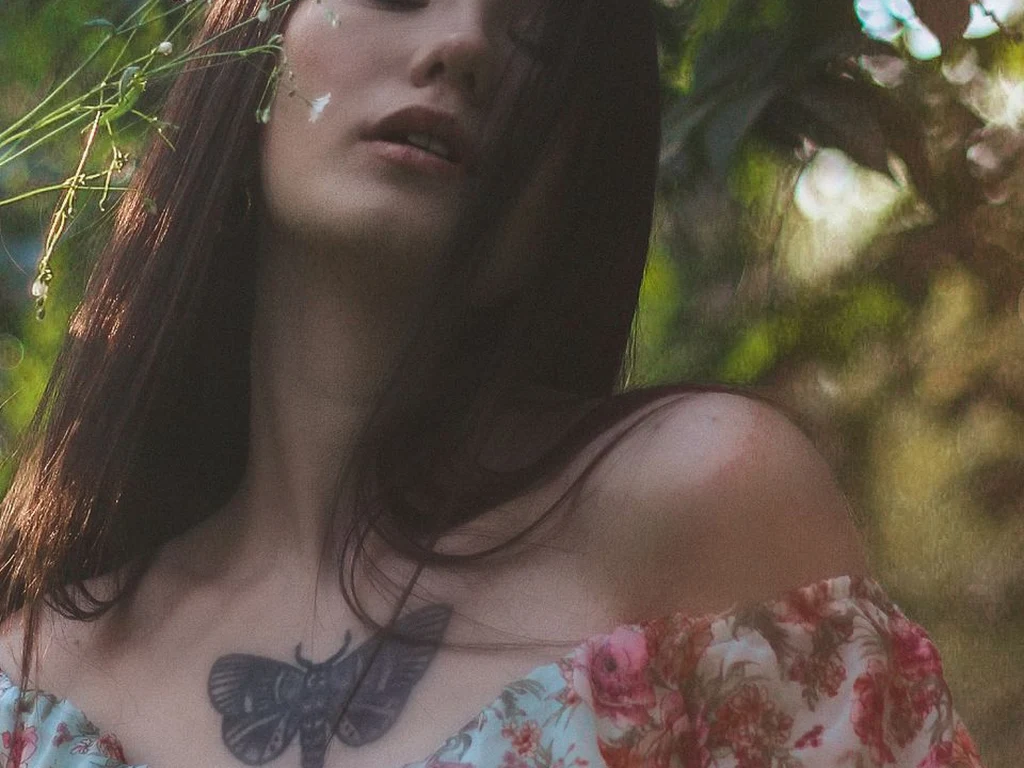
A dark butterfly placed dead centre on the chest, small against the whole sternum. Centre placements borrow the body’s symmetry, so a symmetrical insect looks deliberate and balanced even at a few centimetres wide.
Dark wings are a practical choice here. Chest skin sees a lot of sun in summer necklines, and deep tones hold their contrast far longer than pastel colour in the same spot. Sunscreen is still part of the deal.
7. Small Butterfly on the Ribs
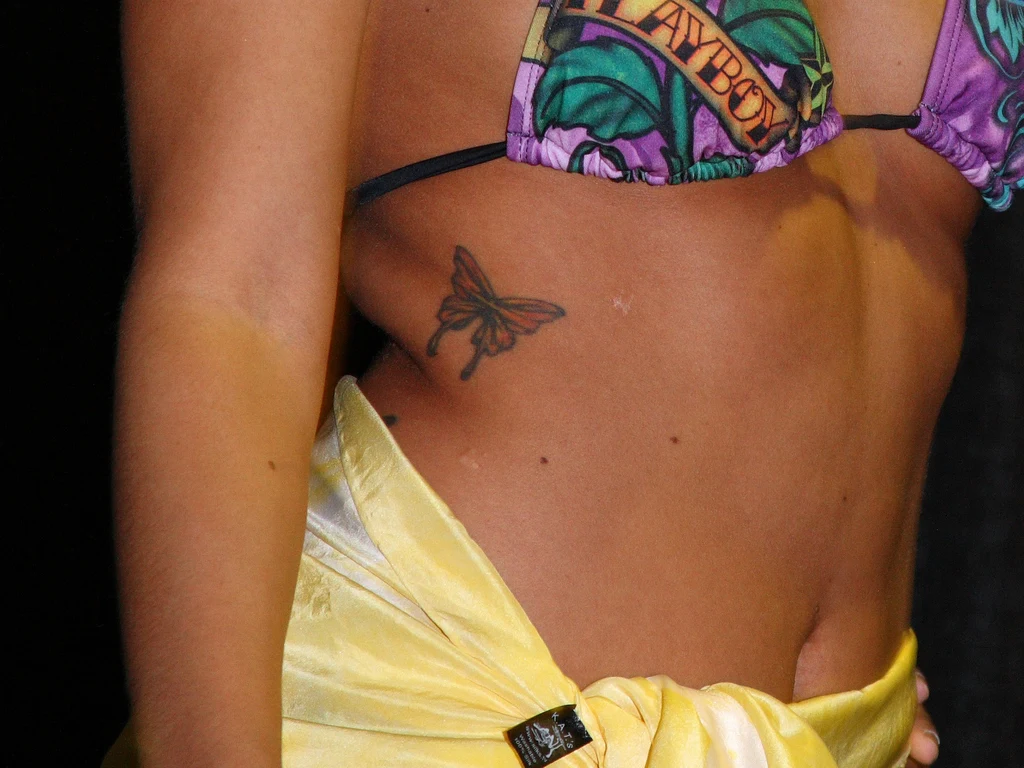
A small butterfly tucked on the ribs under a bikini line. The ribs are the classic hidden placement: covered by almost every top a person owns, shown at the beach and on holiday, and easy to forget about the rest of the year.
Rib skin moves with every breath, so the artist works in short passes and the session can feel longer than the tattoo looks. Small and simple is the right ask here; this one keeps to a single butterfly with clean edges.
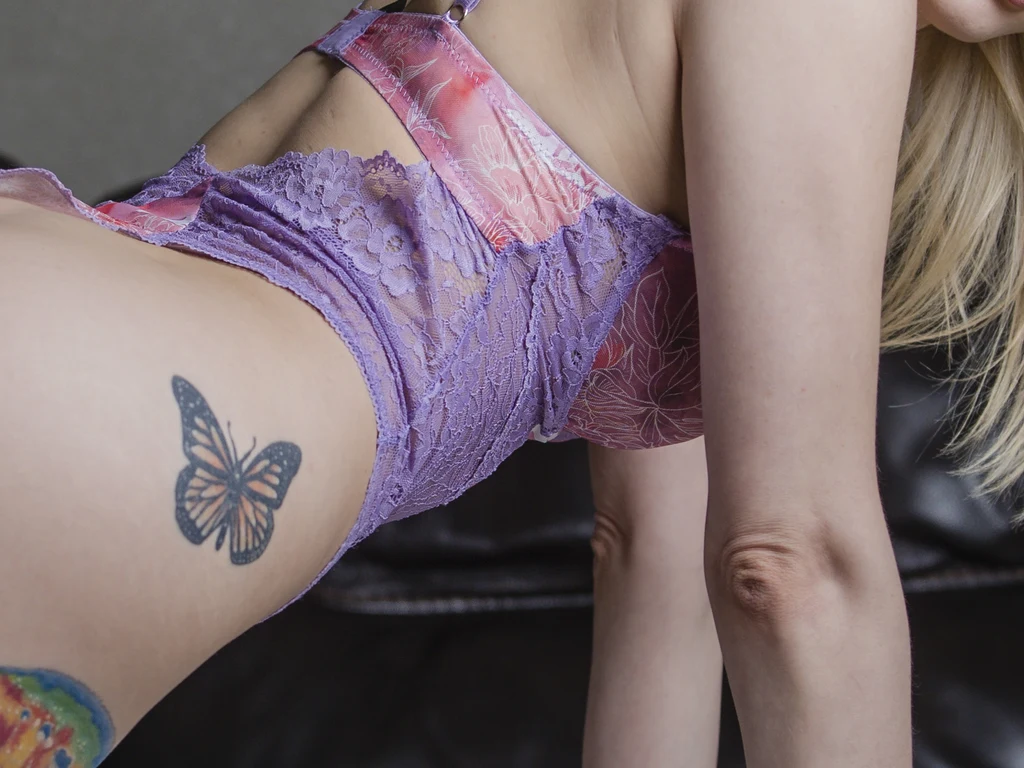
8. Small Butterfly on the Hip
This hip butterfly sits above a much larger thigh piece, and the size gap is the lesson. A small tattoo does not need the body to itself. Placed at the hip, it works as an accent that leads the eye down to the bigger work below.
Hip placements move with waistbands, so healing week is not the week for tight jeans. Loose waistbands for a few days, and a piece this size settles fast.
9. Butterfly at the Hip Bone
Photographed at the beach, this small butterfly sits right at the hip bone. It is an older, settled piece rather than a fresh studio shot, and it is still reading clearly, which is the best evidence a small design can offer.
The hip bone is close to the surface, so expect a sharper session than the size suggests. In exchange you get a flat little canvas that swimsuit lines frame neatly.
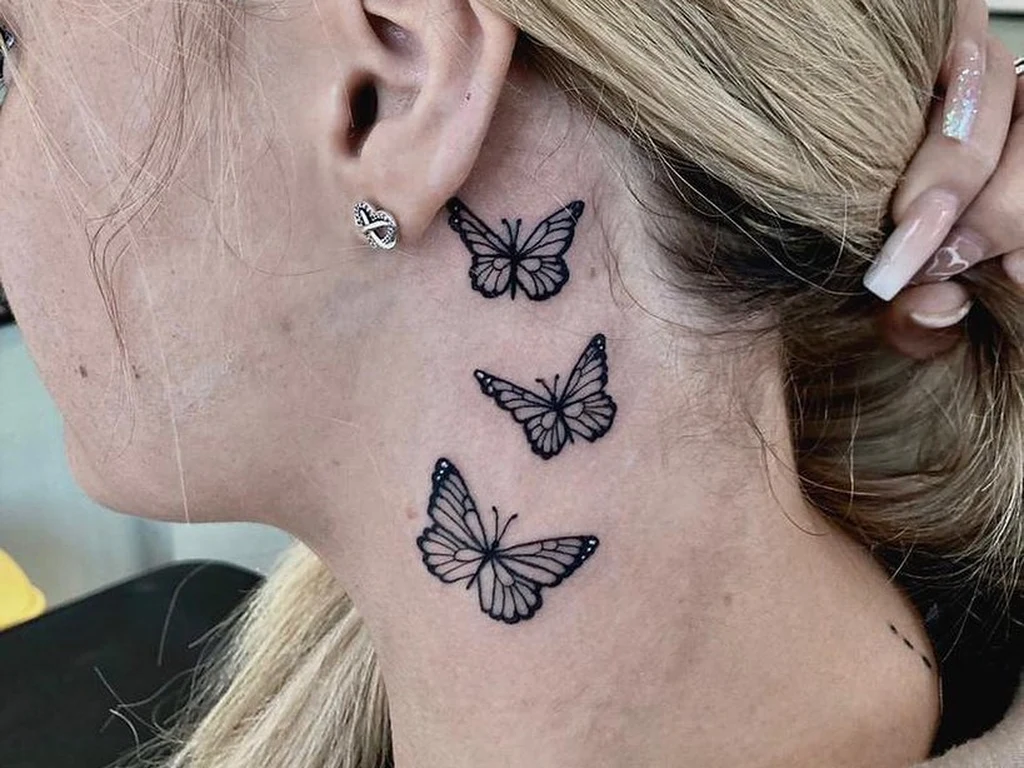
10. Three Butterflies Behind the Ear
Three black outline butterflies step down the side of the neck from behind the ear, each one a plain open-wing outline with the wing cells kept wide. Behind the ear is the most hideable spot on this whole list: hair down and the tattoos vanish, hair up and all three show at once.
The canvas here is tiny, which is why the drawing stays this simple. A silhouette or a clean outline is all the space allows, and this set proves that is enough. Crowd the wings with pattern at this size and the cells merge within a few years.
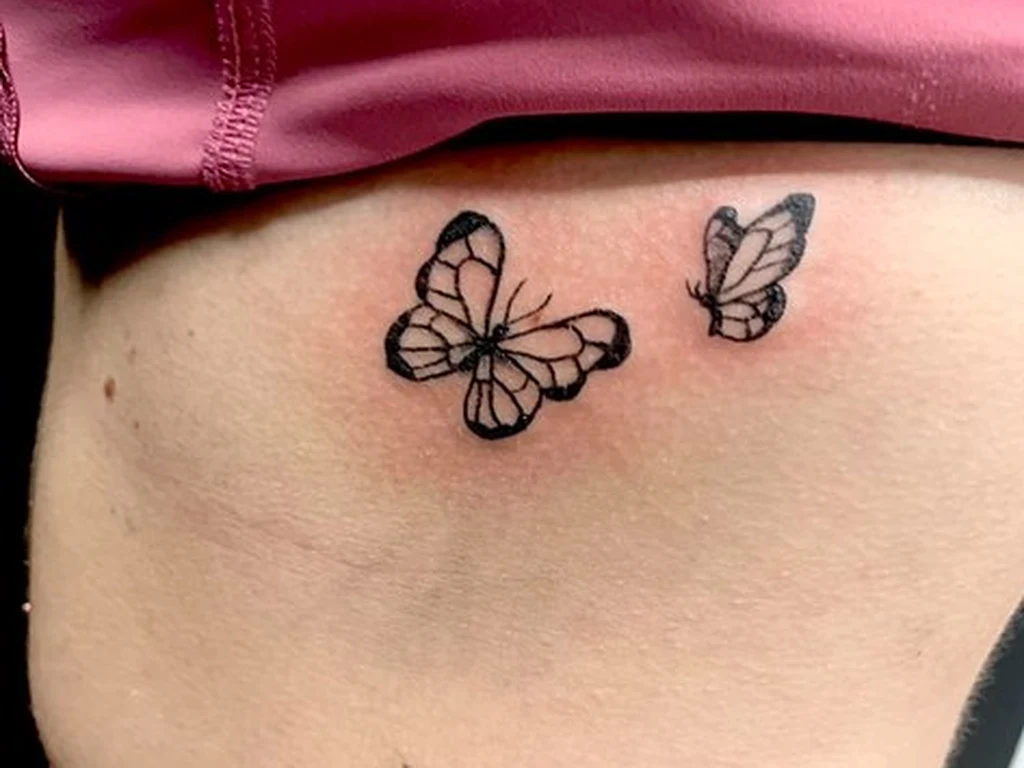
11. Two Outline Butterflies on the Ribs
A pair of outline butterflies on the ribs, one drawn face-on with its wings open and one in profile beside it, like the same insect caught at two moments. The photo was taken while the work was fresh, so the skin around the lines is still pink; the linework itself is clean and unhurried.
Pairs are a gentle way to make a small tattoo feel finished without making it bigger. Matching line weight matters more than matching size: two butterflies drawn by the same hand in the same sitting sit together naturally.
12. Two Monarch Outlines on the Forearm
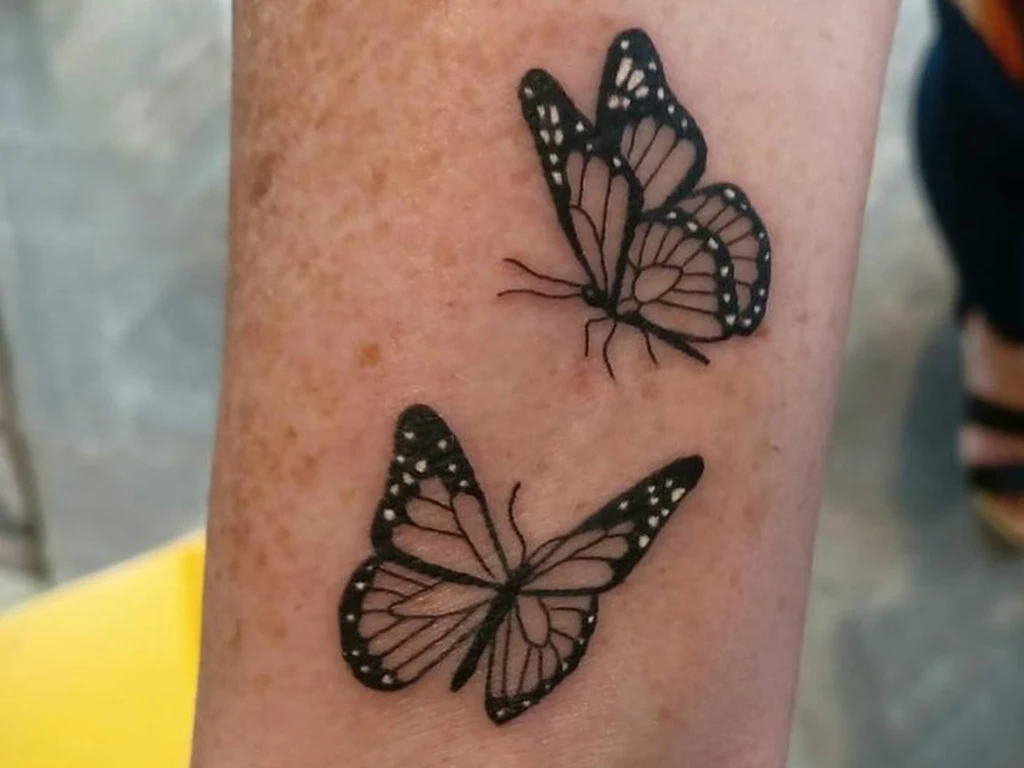
Two monarchs in black outline on the forearm, one angled up the arm and one flying flat, with the white edge-dots of a real monarch wing left as bare skin inside the black border. No colour at all, and the design loses nothing for it.
Black-only butterflies age the slowest of any version on this page. The shape is carried entirely by line and contrast, and those are the last things time takes from a tattoo.
13. Ornamental Outline Butterfly
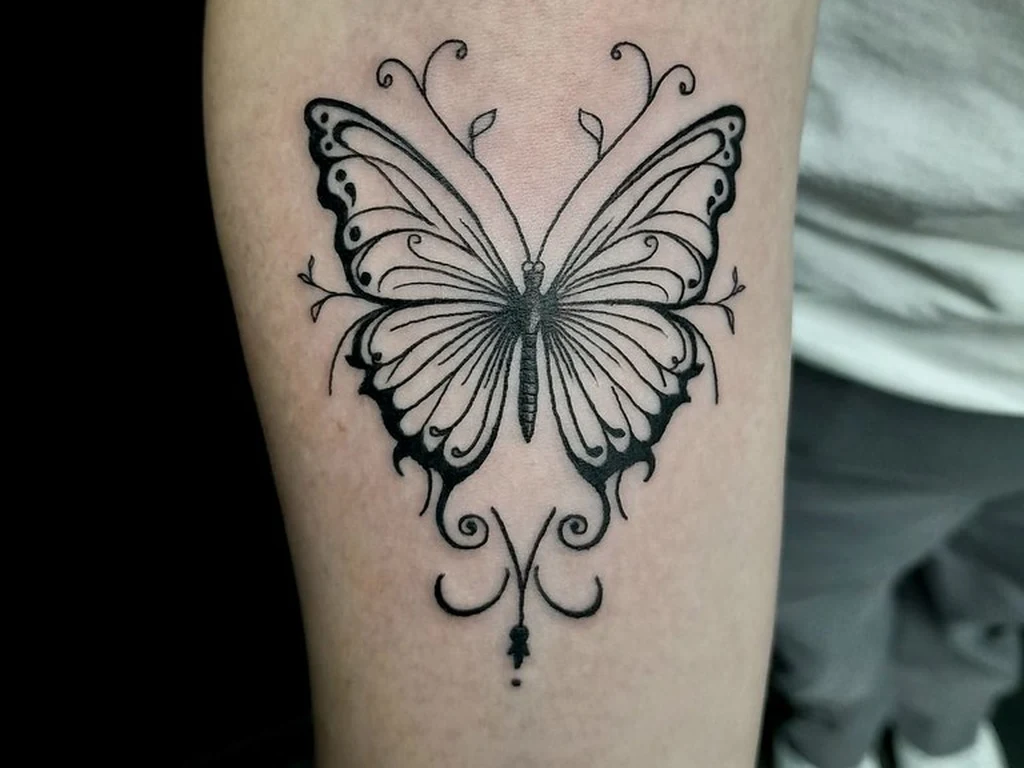
A single ornamental butterfly on the inner forearm: open wings full of fine swirls, curled antennae, and a small drop hanging below the body like a pendant. It is the most decorative design in this list, and it still keeps to one colour and one idea.
Ornamental work lives on spacing. The swirls inside these wings have air between them, which is what keeps the pattern readable as the lines thicken slightly over the years. If you take this style to an artist, ask to see healed ornamental pieces, not just fresh ones.
14. Three Butterflies on a Red Ribbon
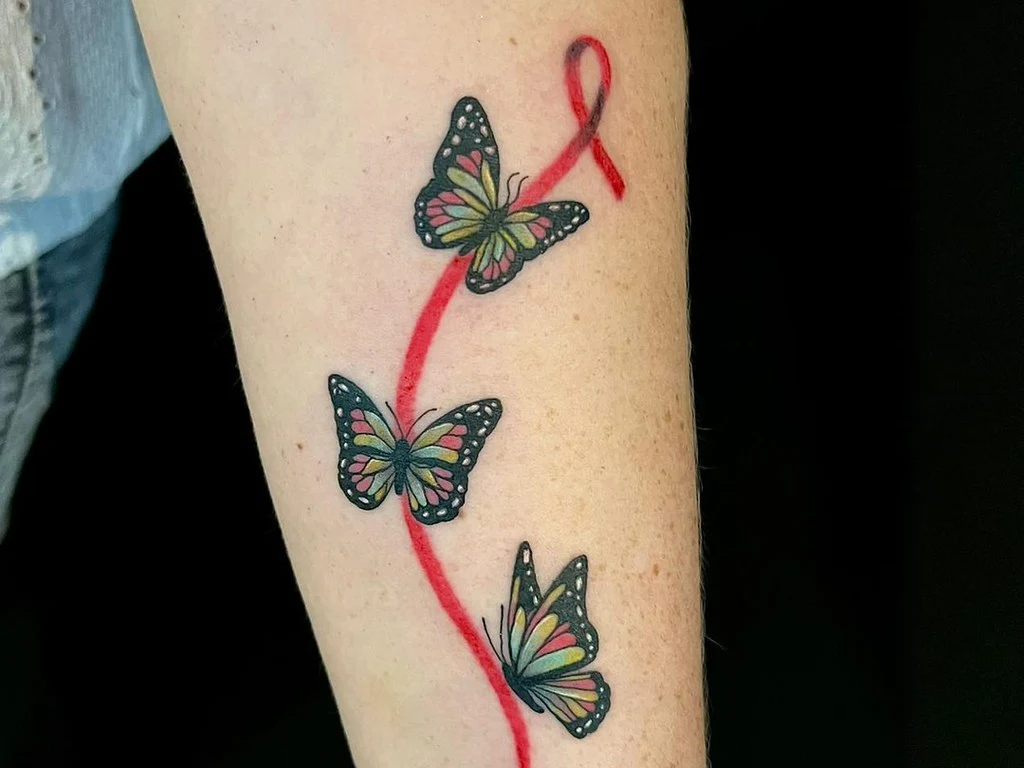
Three small butterflies in pink, yellow and teal ride a single red ribbon down the forearm, and the ribbon loops into an awareness-ribbon shape at the top. It is a support tattoo, the kind done for a cause or for a person, and the butterflies turn a symbol that can look flat into something with movement.
Each butterfly on its own is small; the ribbon does the travelling, and the eye follows it, so the piece feels tall without any single part getting big. Red fades faster than most colours, so this one will want its ribbon refreshed before the butterflies do.
15. A Name Framed by Two Green Butterflies
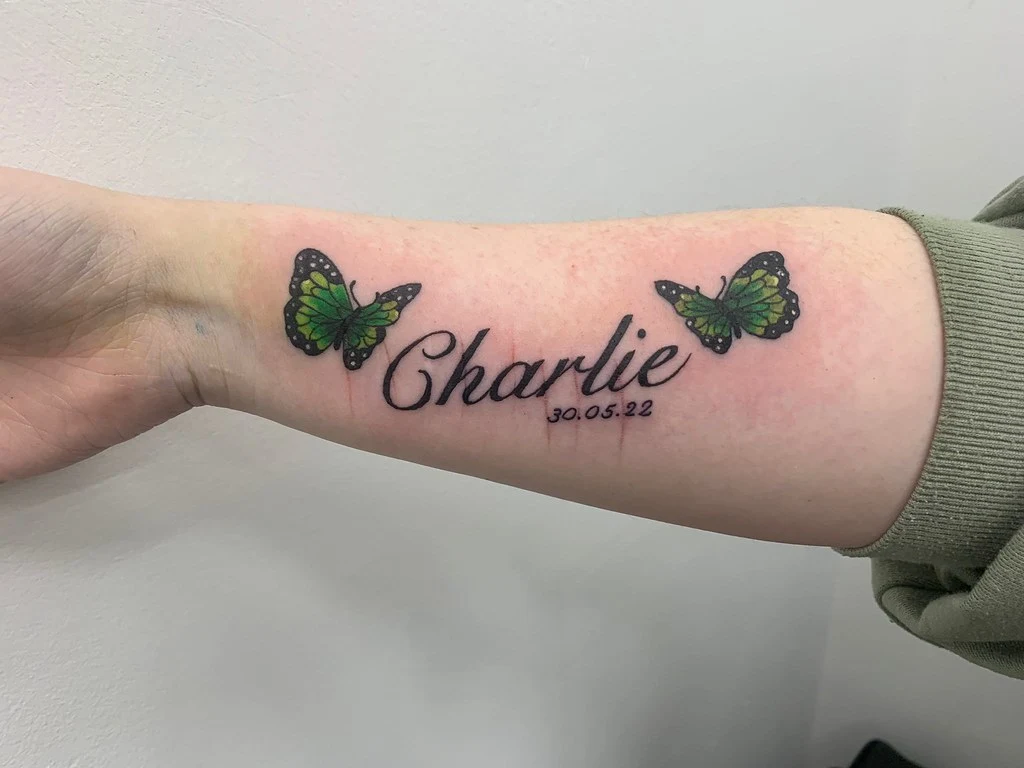
The name Charlie and a date, 30.05.22, in script on the inner forearm, with a small green butterfly at each end of the word. This is the memorial version of the small butterfly: the insects carry the carrying-on meaning, and the name says whose it is. The photo was taken just after the session, so the skin is still red.
Framing a name with two small motifs keeps the lettering as the main event and stops the tattoo spreading. If you copy the layout, keep the butterflies the same size as each other; a lopsided pair pulls the eye off the name.
16. Three Colour Butterflies on the Upper Arm
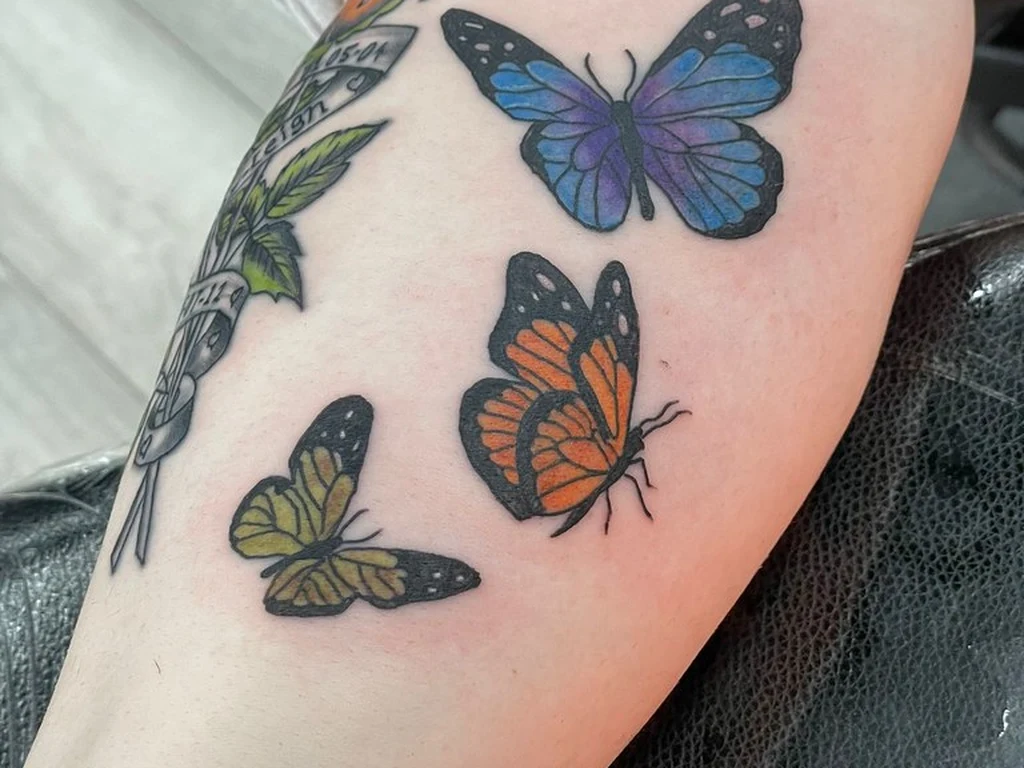
A blue and purple butterfly, a monarch and a yellow-green butterfly, set in a loose triangle on the upper arm beside older tattoo work. Photographed fresh, with the skin still pink. Three different wing patterns at small size is a quiet portfolio test, and each one here keeps its own colours separate and readable.
A cluster like this is also how a small collection starts: one butterfly now, two more later, same scale, and the arm gains a set that looks planned from the beginning.
17. Blue Butterfly on the Calf
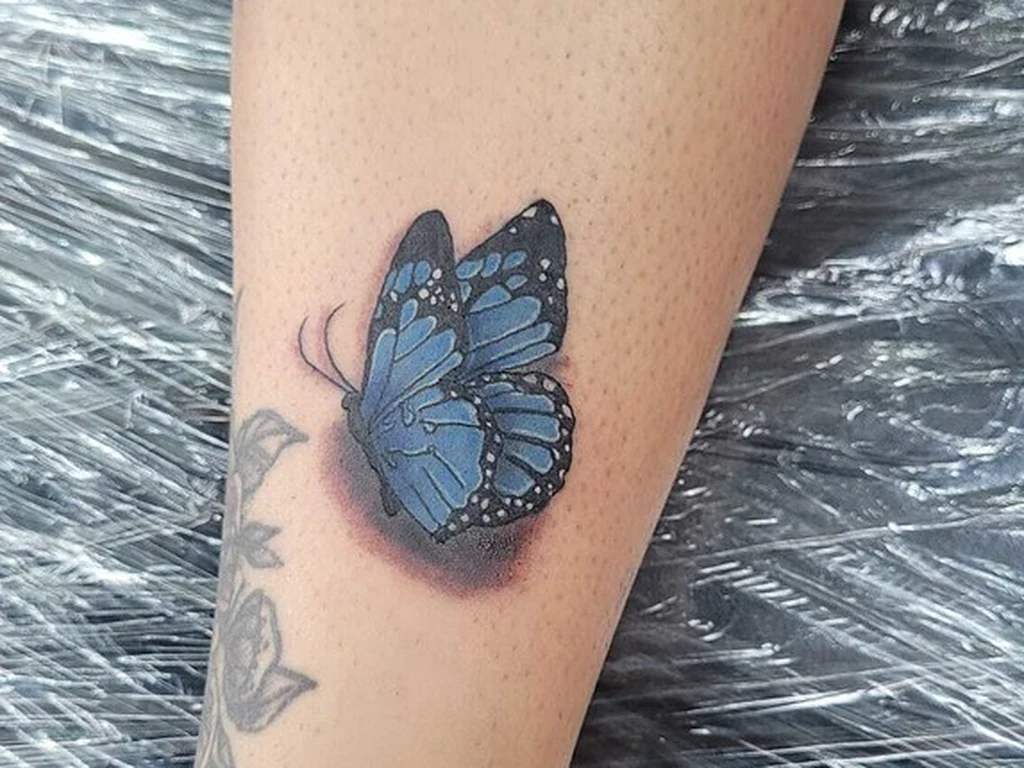
A blue butterfly in profile on the lower leg, wings folded upward, with a soft shaded shadow under it that makes the insect look perched on the skin rather than printed on it. Under it sits an older, faded piece, and the contrast between the two tells you a lot about how much a fresh saturated blue settles over time.
The shadow trick only works at this sort of size. Too small and the shading muddies; here there is room for it to stay soft and still read as a shadow.
18. Monarch on Top of the Foot
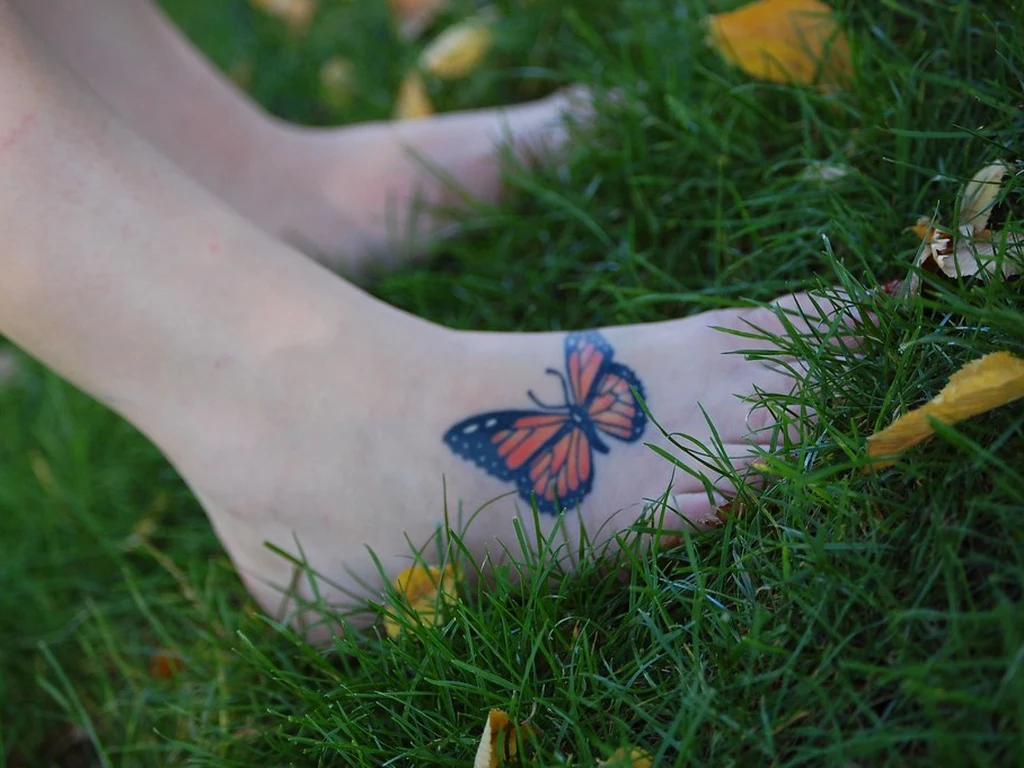
An orange monarch lying across the top of the foot, photographed outside on grass. The wing pattern follows the foot’s shape, with the outer wing reaching toward the toes. Foot tops suit butterflies better than most designs, because the wings can spread along the foot instead of being squeezed into a square.
Everything said about foot tattoos in design 4 applies here too: expect faster fading than an arm piece, keep shoes loose while it heals, and do not judge the colour until the skin has settled, because feet stay swollen a little longer than most spots.
19. Teal Butterfly with a Fading Trail
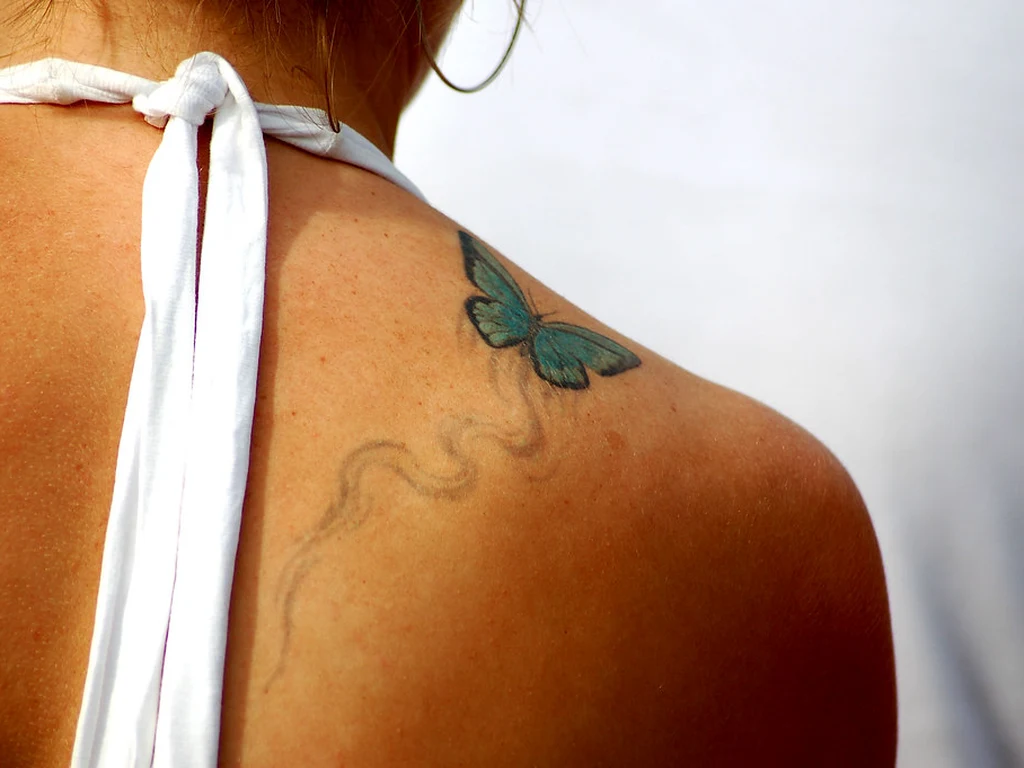
A small teal butterfly on the shoulder blade with a thin swirling trail curling away below it. This one has clearly been on the skin for years: the butterfly still reads well, but the trail, drawn much finer, has faded to a ghost of itself.
Keep it in the list as an honest lesson. In any design that mixes a solid main shape with fine extra lines, the fine lines go first. If a trail matters to you, have it drawn heavier than looks necessary on day one.
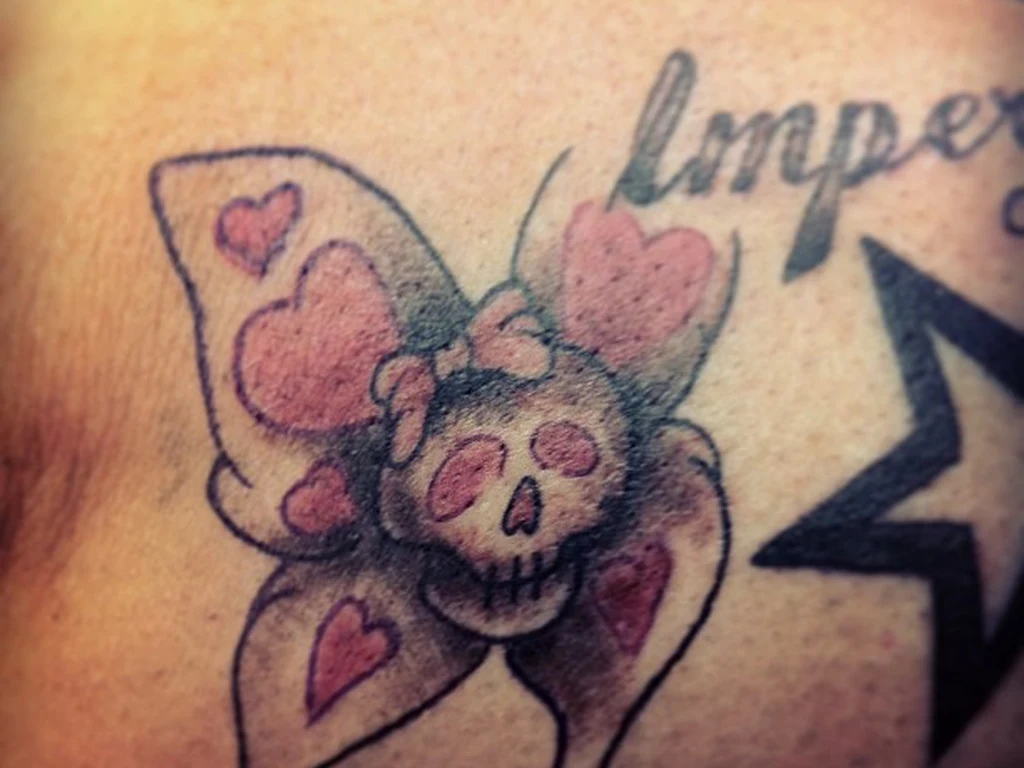
20. Butterfly with a Skull Face
The playful dark one: a butterfly whose body is a small grinning skull, with pink hearts spotted across the wings, sitting on a shoulder among other tattoos. It is old-school in spirit, bold outlines and flat colour, and it has settled into the skin without losing its joke.
A design like this is a good reminder that small does not have to mean sweet. The butterfly shape carries the softness; what you put in the middle of it is up to you.
Best Placements for a Small Butterfly
Wrist. Flat, and the wearer sees it all day, which is why so many first butterflies land here. Inner wrist skin is thin, so lines spread a touch faster than on an arm. Let it heal fully before watch straps and bracelets go back on.
Ankle. The classic small-butterfly spot. The skin sits close to bone, so it can hurt more than the size suggests. Socks and shoe edges rub during healing, and summer sun hits ankles hard, which takes colour out of a small piece early.
Behind the ear. The most hideable placement in this list, as design 10 shows. Hair covers it completely. The canvas is so small that only a silhouette or a clean outline works there.
Collarbone. A single small butterfly sitting at the end of the bone follows its line well. The spot is sun-exposed in most necklines, so sunscreen decides how long the colour stays honest.
Finger. The honest warning spot. Finger skin sheds ink faster than anywhere else on the body, and small finger tattoos need touch-ups as routine maintenance. If you go ahead, keep it to a bold tiny silhouette and skip the wing detail.
Foot, nape, ribs and hip. Feet shed ink almost like fingers, only milder, and they swell after a session, so plan your footwear. The nape hides under hair and collars but needs mirror checks while healing. Ribs and hips take small pieces well as accents; both sit under waistbands and straps, so loose clothing matters for the first two weeks.
How Small Butterfly Tattoos Age
Small work shows ageing first, for a simple reason: there is less ink and less margin. Lines thicken slightly as ink settles and spreads under the skin over the years, and on a palm-size butterfly the wings have nowhere to hide that spread. Detail packed tight inside a small wing merges first. Wing patterns drawn as separate shapes with air between them last; dots and micro-veins are the first things to go soft. Design 19 in this list shows the pattern plainly: the solid butterfly still reads, the fine trail under it has faded away.
The fixes are boring and real. Go one size up from your first instinct. Simplify the wing pattern. Keep the lines a touch bolder than the reference photo you fell for. Colour fades in a rough order, pale pinks and yellows first, then blues and greens soften, while a sound black outline holds the shape the longest, which is why the black-only designs in this list (10, 12 and 13) are the safest long-term bets. Touch-ups are normal maintenance for small pieces. Budget for one when you book.
Making It Yours
Species choice changes the drawing more than colour does. A monarch gives you bold orange cells and a spotted black border. A swallowtail adds tailed hind wings that read well even in plain outline. A blue morpho is a colour decision, not a shape decision. A plain silhouette skips species and ages best of all.
Split designs, like the half-flower build at number 1, are the other strong route. Keep both halves the same size or the split reads as a mistake. Add-ons that stay small: a short word or date under the wing (number 15 shows the name version), tiny flowers at one wingtip, a flight trail of dots. Each addition costs size, so pick one. And bring your artist a photo of the real butterfly species, not only photos of other people’s tattoos. Artists draw better wings from the insect than from a copy of a copy.
FAQs
How small can a butterfly tattoo be before it blurs?
It depends on the drawing, not just the ruler. A plain silhouette or a simple outline can work at around 3 to 4 centimetres. A wing full of cells, dots and veins needs more room, and most artists will steer you toward roughly 5 centimetres or more for a detailed wing. That is shop practice, not a law, and a good artist will scale your chosen design honestly rather than shrink it to order.
What does a small butterfly tattoo mean?
Change and new chapters sit at the centre, drawn from the real caterpillar-to-butterfly life cycle. Older layers include the soul, from the Greek word psyche, and in Japan a pair of butterflies can stand for a couple. The small size itself usually signals the tattoo is a private marker for the wearer. The longer version is in our butterfly tattoo meaning guide, linked near the top of this page.
Where is the least painful place for a small butterfly?
Fleshy, padded spots hurt least: the outer upper arm, the calf and the thigh. Bone-close spots, ribs, ankle, the top of the foot and the hip bone, hurt more than their size suggests. Pain varies a lot from person to person, and small tattoos are short sittings, so even the sharper spots are over quickly.
How much does a small butterfly tattoo cost?
There is no honest single number. Most studios charge a shop minimum that covers setup, sterile kit and the artist’s time, and a tiny tattoo usually lands at that minimum rather than below it. Colour, detail and placement move the price from there. Get a quote from the studio you plan to use, and treat any website that prints one fixed price for every small butterfly as guessing.
Do small butterfly tattoos age badly?
They soften; that is not the same as ageing badly. A small butterfly drawn with a clear outline, spaced wing shapes and a touch more size than the bare minimum can read well for decades, and several settled pieces in this list prove it. The ones that age poorly are the tiny, tightly detailed ones. The ageing section above covers what to ask for instead.
Can a small butterfly cover a scar or another tattoo?
Rarely, and it is the wrong tool for most cover-ups. Covering needs size and density, and a small light butterfly offers neither. Scar tissue also takes ink unevenly. An artist needs to see and feel the area in person before promising anything.
What is the best colour for a small butterfly?
Black, if staying power is the priority: black linework holds a small shape the longest. For colour, saturated tones outlast pastels, and orange monarch colours are a proven middle ground. Pale pink and yellow are the first shades to fade, so use them as accents inside a strong outline rather than as the structure of the wing.
How long does a small butterfly tattoo take to heal?
The surface usually settles in about two weeks: flaking done, skin closed. The deeper settle takes a month or more, and feet can stay tender and swollen past two weeks. Standard aftercare applies: keep it clean, moisturise lightly, no soaking, no sun on fresh ink.
Can I get a small butterfly as my first tattoo?
Yes, and it is one of the most common first tattoos for good reasons: short sitting, easy to place, easy to live with. Choose a spot you can cover for work if that matters in your job, and resist shrinking the design below the size your artist recommends. First-timers shrink tattoos out of nerves and regret the size, not the design.
What should I check in an artist’s portfolio for small fine line work?
Healed photos, first of all. Fresh fine line looks perfect in almost anyone’s portfolio; healed work shows whether the lines stayed separate. Look for pieces the same size as yours, check that wing shapes and lettering are still readable in the healed shots, and be wary of a portfolio that shows no healed work at all.
Final Thoughts
Small is a constraint that improves a butterfly when it is respected. Simple wings, honest size, the right spot: those three choices decide how every design in this list will look in ten years. The pieces that hold up best are not the tiniest ones. They are the ones drawn a touch bolder than they needed to be on day one.