Ask a room of tattoo artists which design they have inked most, and butterflies come up again and again. They suit almost any style, they scale from a thumbnail-sized outline to a full back piece, and the meaning most people attach to them — change, growth, starting over — fits the moments that push someone into a studio.
This page works a little differently from most roundups. Every design below is a real tattoo in a real photograph, counted one by one: 22 in total. No stock illustrations, no repeated photos under different names, no padding. Where a photo shows an older tattoo softened with age, that gets said out loud — useful information if you are planning your own.
Butterflies sit inside a wider insect family on this site. If you like the winged look but want something less expected, our dragonfly tattoo design ideas guide is the natural next read.
How to Choose a Butterfly Tattoo
Three decisions matter more than the exact species you pick. First, size. A butterfly’s wing detail — the veins, the eye spots, the thin antennae — needs room. Below about 5 cm across, most artists will simplify the design whether you ask or not, because fine detail packed too tight blurs as the years pass. Second, style. Bold traditional work and blackwork hold up longest. Fine line looks delicate and modern, and it can age well too, but it asks more of the artist and may need a touch-up sooner. Third, placement. Skin that stretches, rubs on clothing, or sees a lot of sun changes a tattoo faster than skin that stays covered and still.
If you lean floral, browse rose tattoo design ideas before you book — butterflies and roses are combined so often that the flower side is worth seeing alone.
The 22 Designs
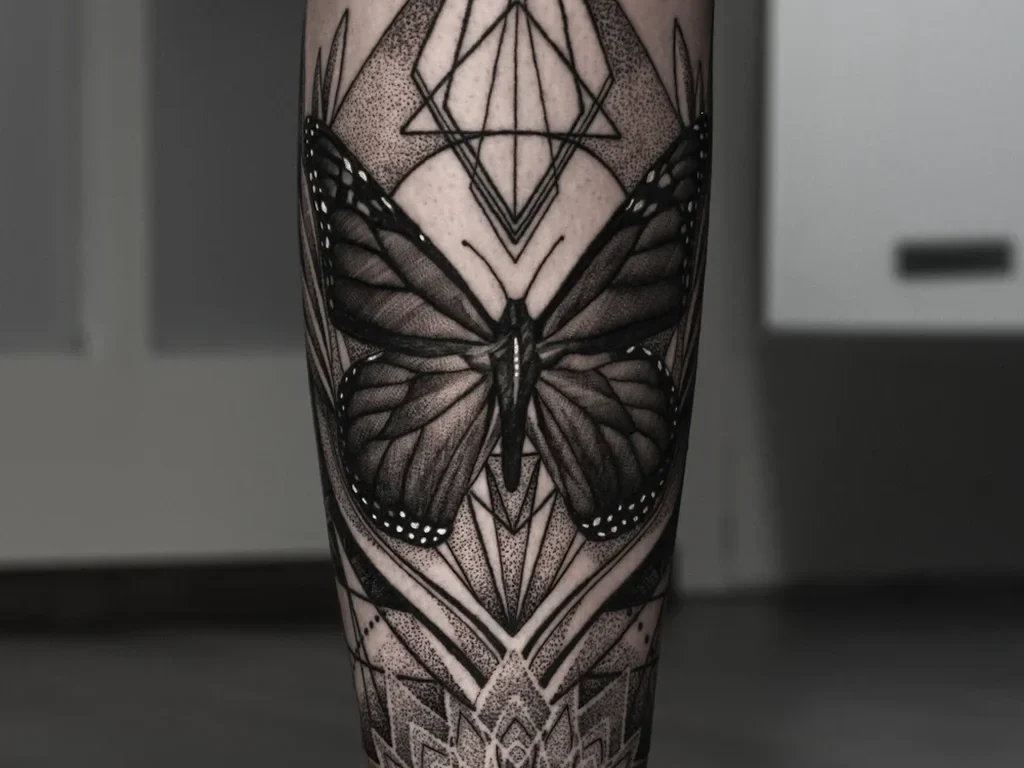
1. Blackwork Butterfly With Mandala Dotwork, Calf
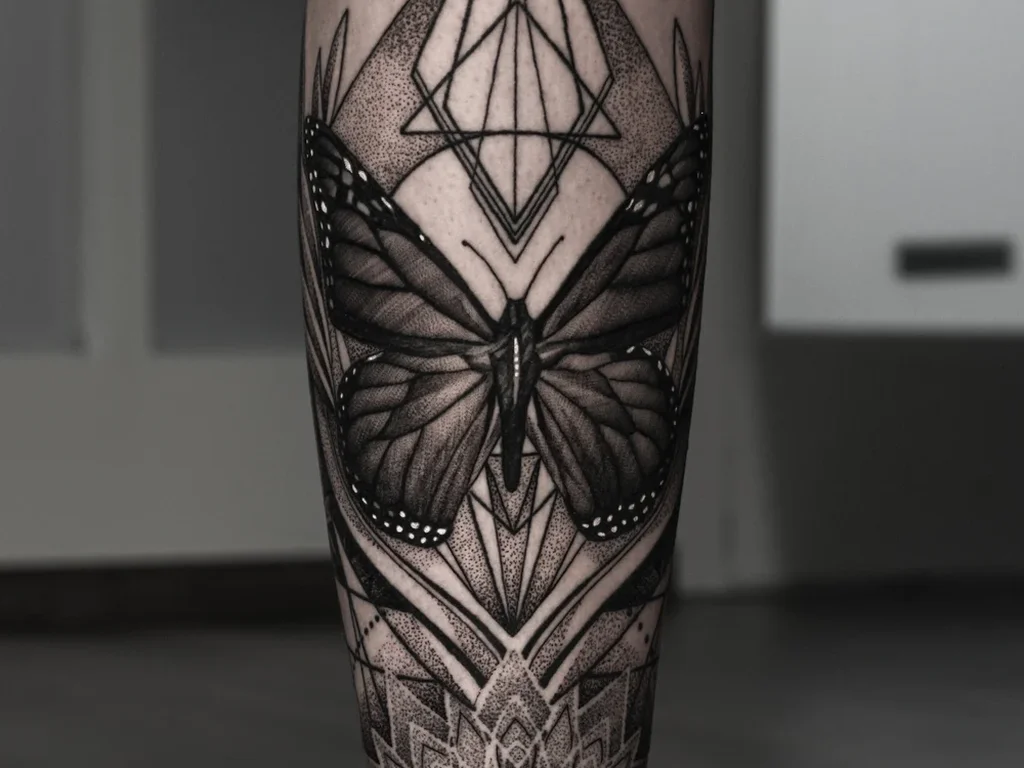
This calf piece treats the butterfly like a piece of jewellery. The wings are built from dense blackwork and fine dot shading, with a geometric diamond above and a mandala-style pattern trailing down toward the ankle. It reads clearly from across the room — exactly what blackwork is for.
The calf gives a long, fairly flat canvas, and a centred symmetrical design uses it well. Dotwork this fine needs a specialist — ask to see healed photos of their dot shading, not just fresh work.
2. Ornamental Fine Line Butterfly, Forearm
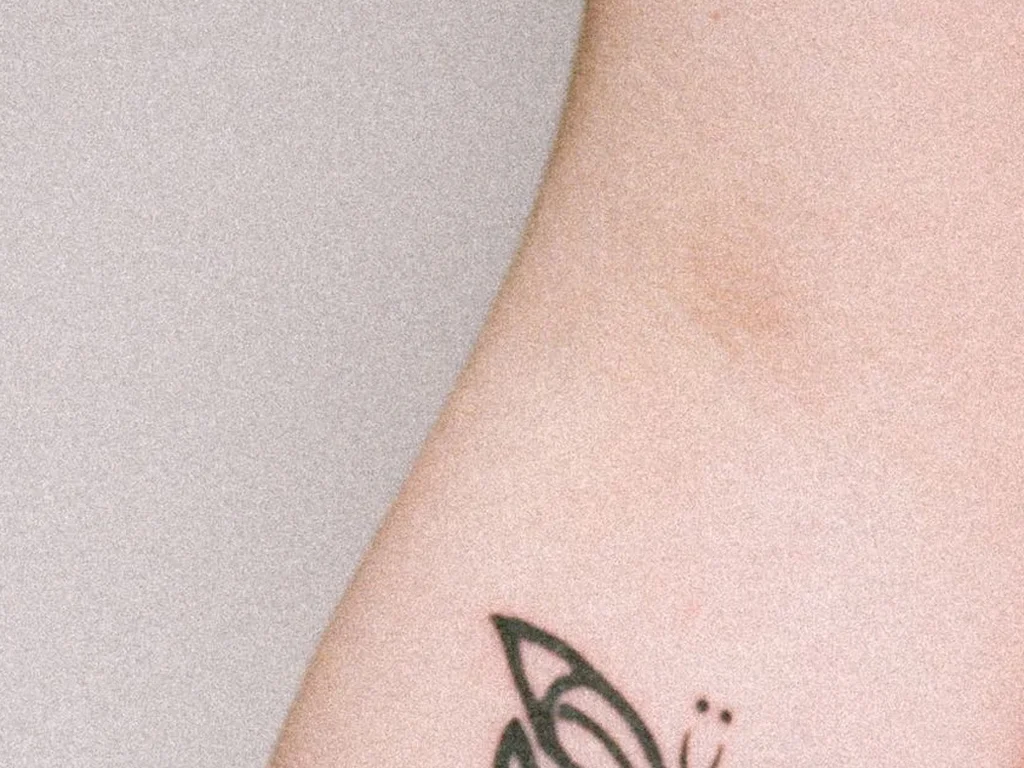
A small butterfly drawn almost like a logo: clean black outline, a few decorative curls, no shading at all. It sits on the inner forearm where the wearer sees it every day, which is the whole point.
Outline-only designs need confident lines — there is nowhere for a shaky hand to hide. Keep it at least 4–5 cm wide so the inner wing shapes stay separate as the ink settles.
3. A Real Species in Full Colour, Upper Arm
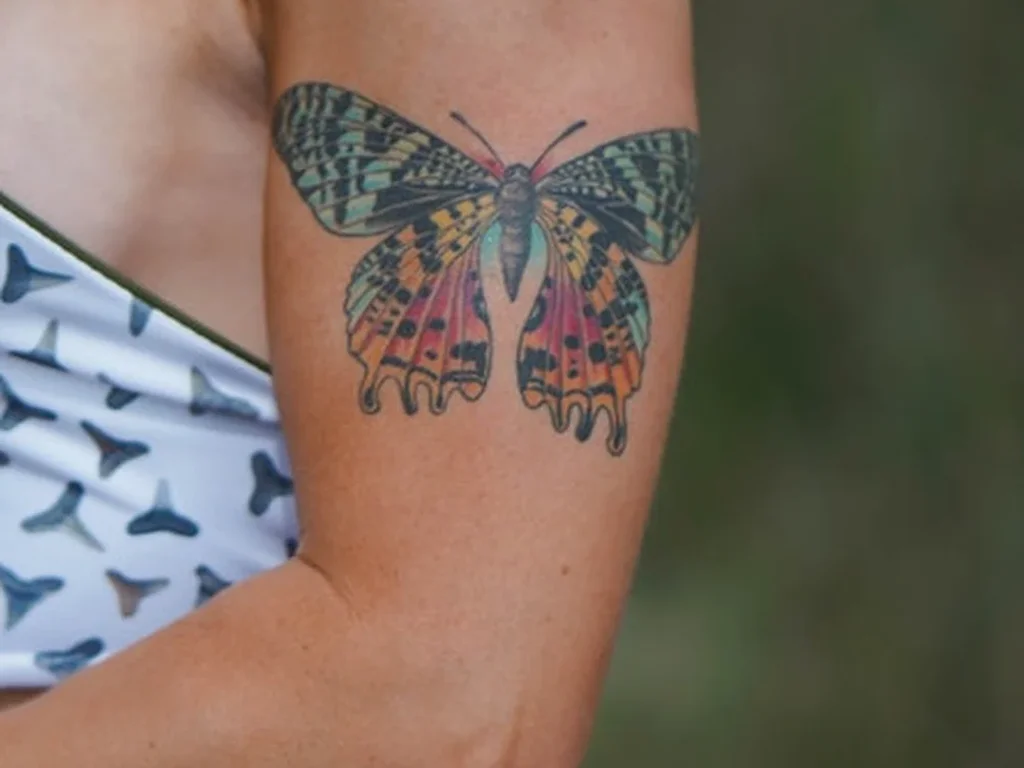
This one copies nature instead of stylising it. The forewings are green and black with a marbled pattern, the lower wings fade through orange and pink, and the whole thing is shaped like a real tropical species — it resembles a Madagascan sunset moth, among the most colourful day-flying moths in the world.
Colour work lives or dies on saturation: greens and oranges hold well; pale pinks soften first. A spot this visible gets sun too, so sunscreen on healed ink is not optional if the wings are to stay this bright.
4. Traditional Butterfly Woman, Upper Arm
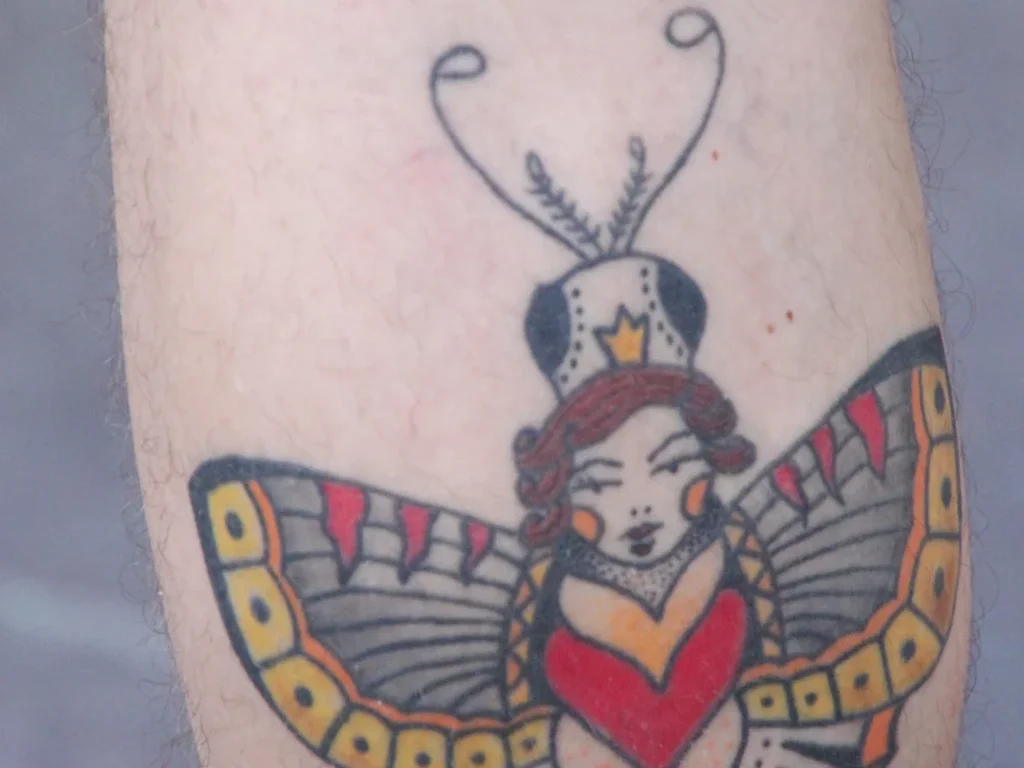
Old-school tattooing had a soft spot for this design: a woman’s face forming the body of a butterfly, wings spread in red, gold and teal, in bold black outlines. It is part pin-up, part insect, and completely unapologetic about it.
Traditional work ages better than almost any other style because its outlines are thick and its colour blocks simple. If you want a butterfly that still looks like itself in twenty years, this family of designs is the safest bet on the page.
5. Black and Grey Butterfly, Upper Arm
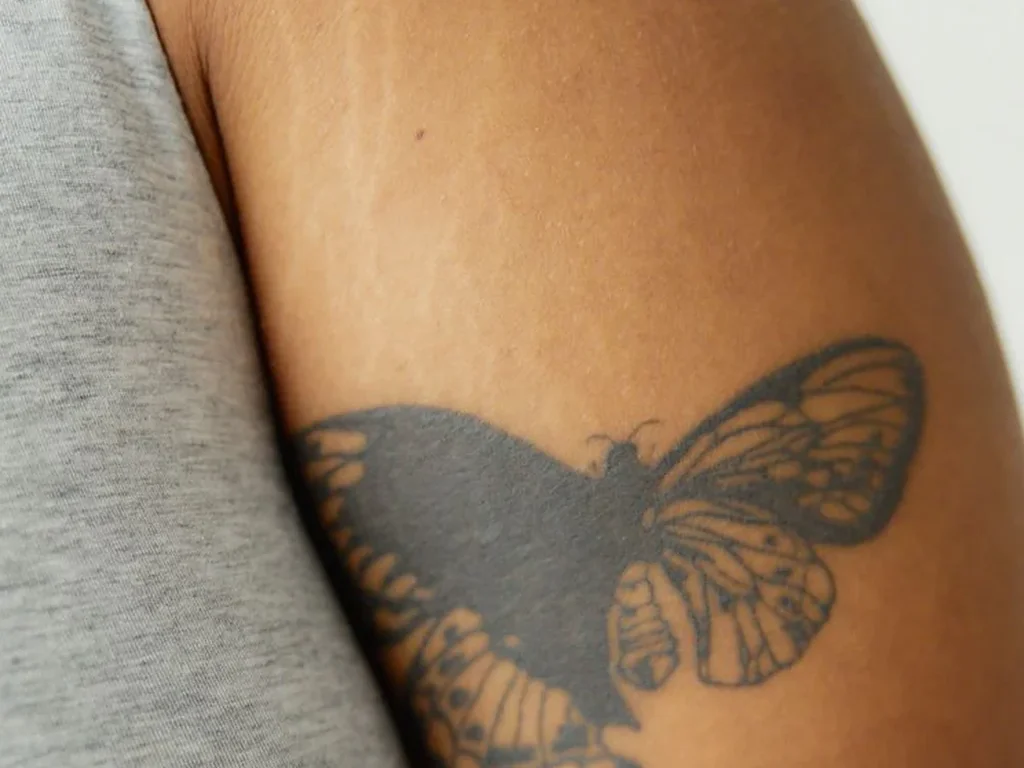
No colour, no gimmick — just soft grey shading doing all the work. The wings are large and rounded, darker at the edges, lighter toward the body, so the tattoo has depth without a drop of coloured ink.
Black and grey suits people who want the butterfly shape without the sweetness colour can bring. It pairs easily with later additions — this wearer has script below it, and the two sit together without fighting.
6. Japanese Butterfly With Cherry Blossoms, Back
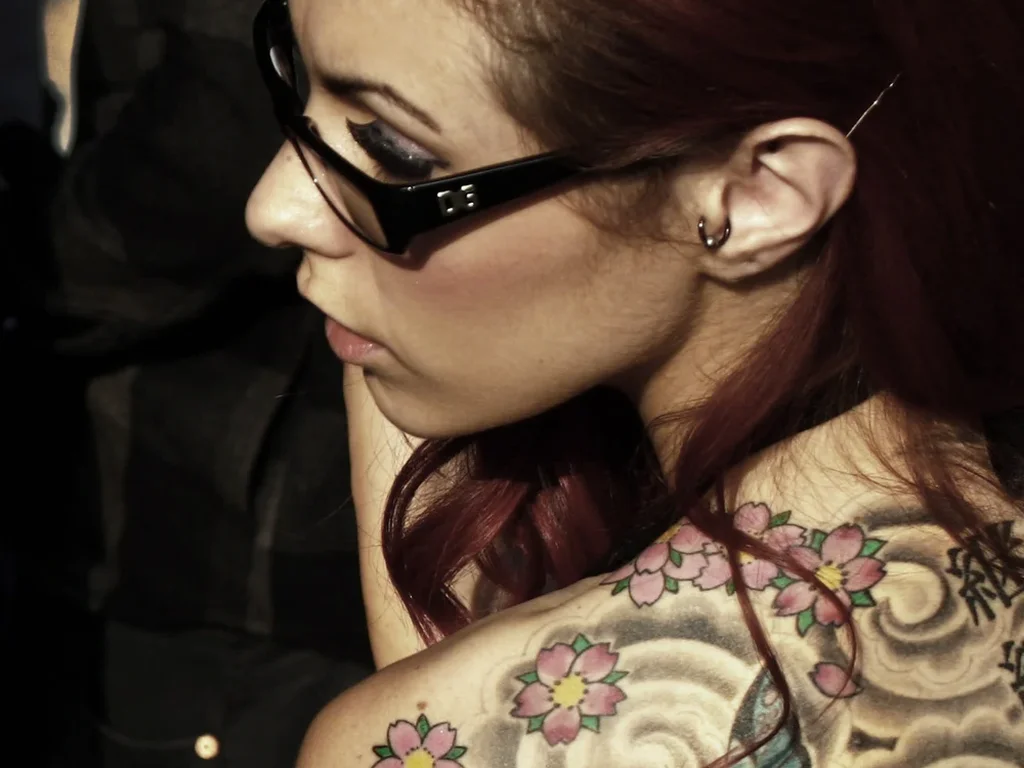
Part of a full back piece in the Japanese tradition: a blue butterfly drifting across waves and cherry blossoms, with kanji in the composition. In Japan the butterfly (cho) is tied to young womanhood and joy, and a pair together is a classic symbol of a happy marriage.
A design at this scale takes many sessions, not one sitting. Notice the butterfly is not the biggest element — in Japanese composition the background waves carry as much weight as the subjects.
7. Half Butterfly, Half Flowers, Forearm
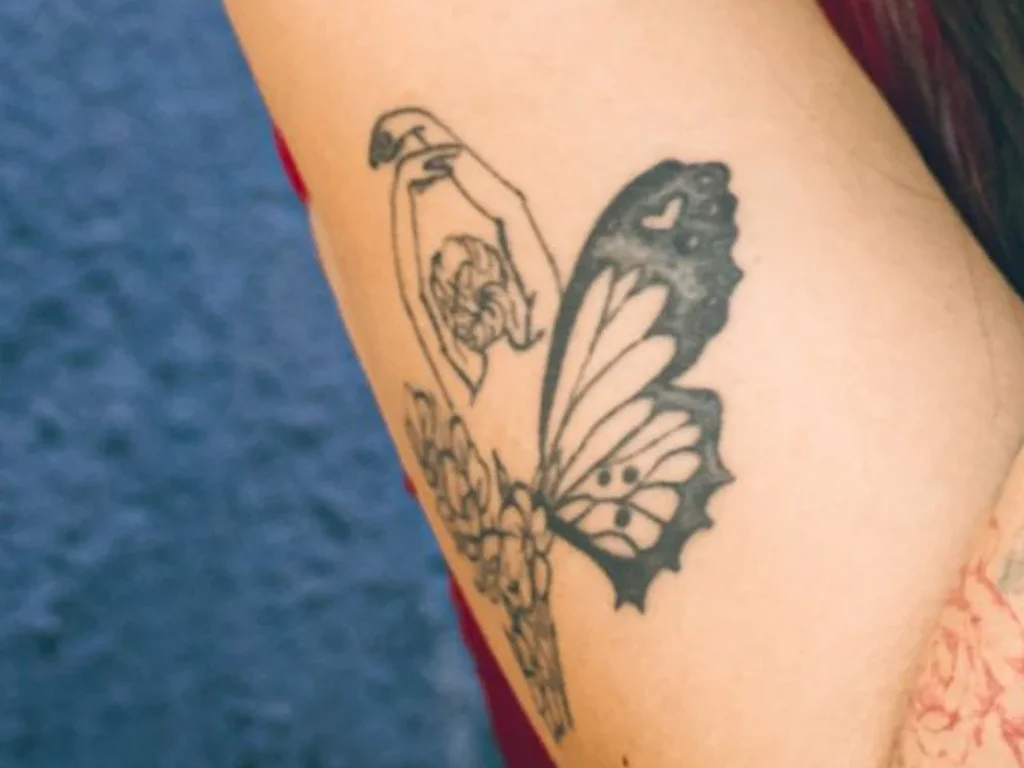
The right wing is a proper butterfly wing, veined and shaded. The left side never becomes a wing at all — it dissolves into roses and leaves instead. It may be the most requested butterfly variation of the last few years: you get two meanings for the price of one.
The trick is the join down the middle: ask your artist to draw the split along the butterfly’s body so it looks grown rather than cut. It pairs well with the blooms in our flower tattoo design ideas collection, if you want to plan the floral half first.
8. Butterfly With a Flower, Foot
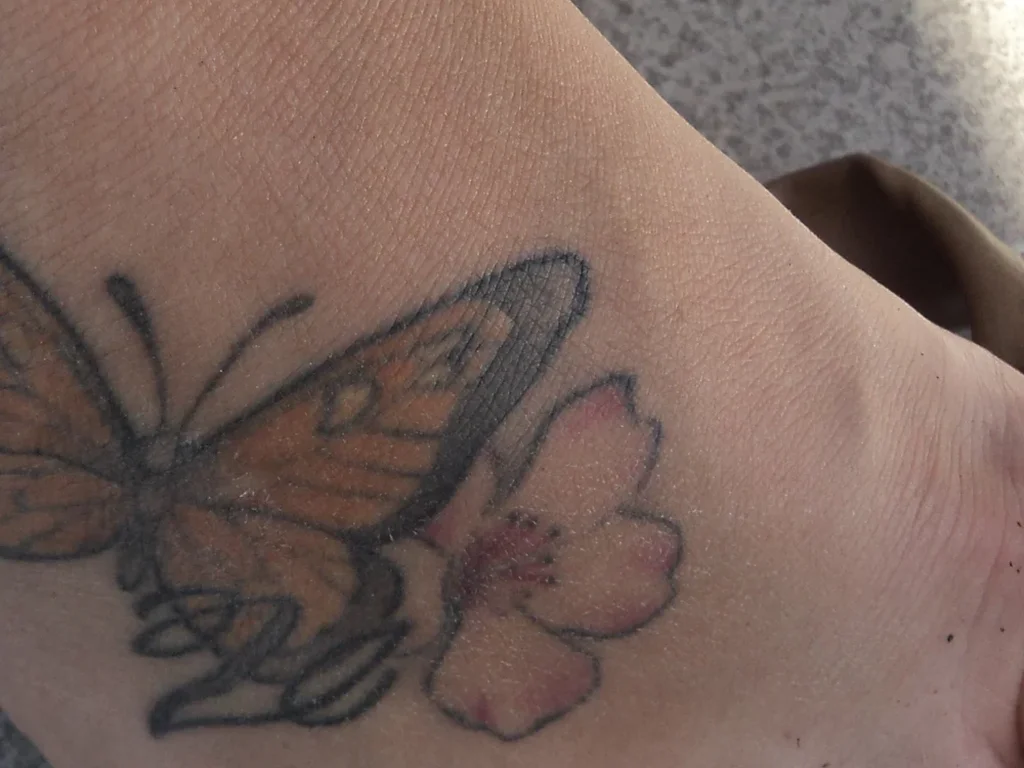
A shaded butterfly rests beside a single flower across the top of the foot. It is a summery, sandal-season tattoo, and the soft grey shading keeps it gentle rather than bold.
Feet are honest work. The skin is thin, shoes rub, and this is one of the faster-fading spots on the body — many studios include one free touch-up for foot tattoos. Book it for a week when you can wear open shoes while it heals.
9. Fine Line Butterfly With Red Swirls, Ribs
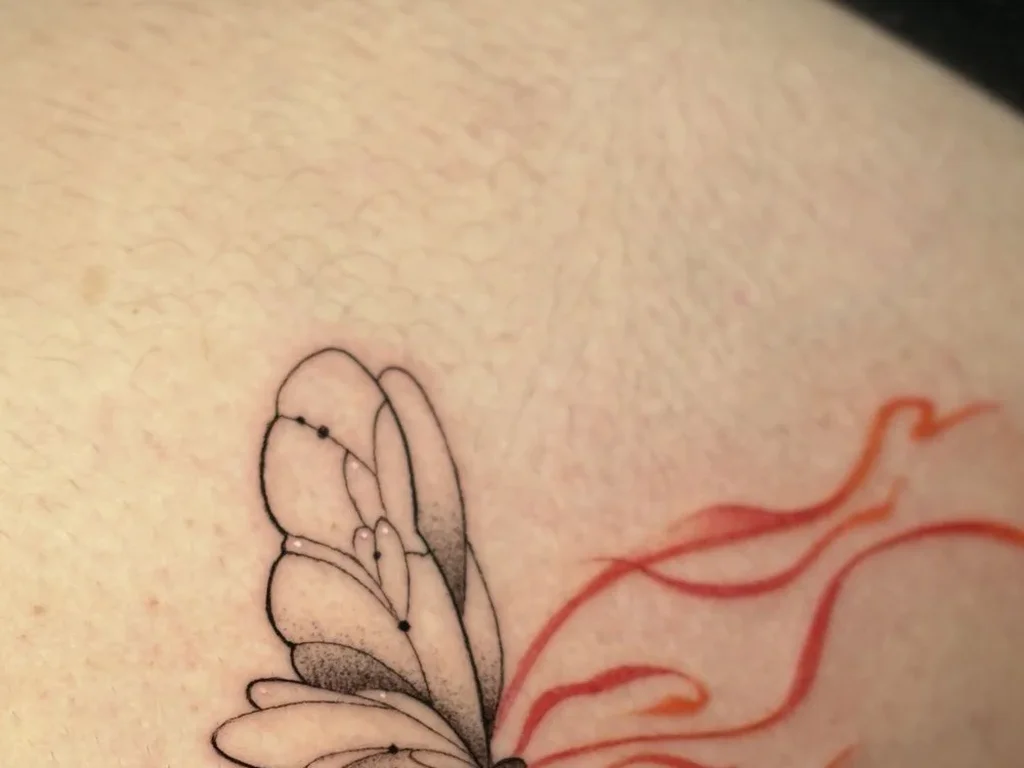
The butterfly is drawn in whisper-thin black line, almost like a pencil sketch. Behind it, two red ribbons trail off across the ribs. The contrast does everything: black for structure, red for movement.
Ribs move every time you breathe, which makes them slower to tattoo and, for most people, sharper than an arm or leg. Eat beforehand, and do not hold your breath — your artist will thank you. Red ink deserves a patch test if your skin has ever reacted to cosmetics.
10. Dotwork Butterfly Under a Crescent Moon, Upper Back
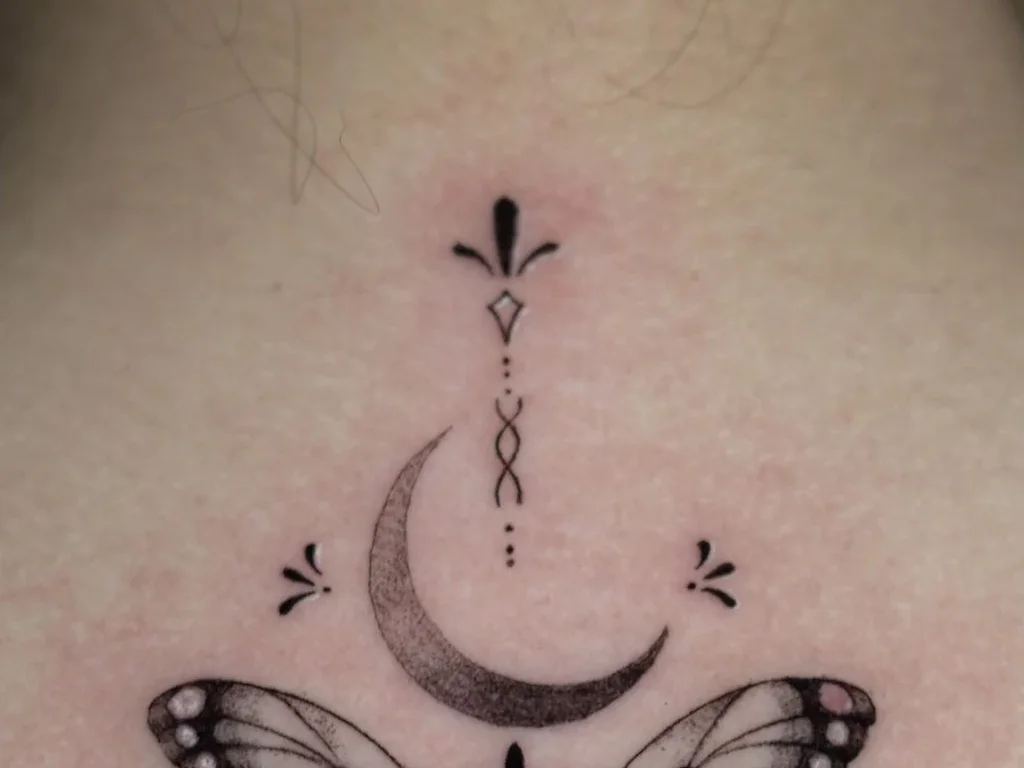
A symmetrical butterfly built from dots and fine lines, hung beneath a crescent moon, with a small ornamental drop running up the spine. The composition is centred on the backbone, so it moves with the body like a pendant on a chain.
Centre-back placements are a kind choice for a first tattoo: low on the pain scale, easy to cover, slow to fade because they see little sun. The fine dotwork will soften gently over the years rather than blob, as long as the dots start properly spaced.
11. Fine Line Butterfly With a Tiny Bee, Thigh
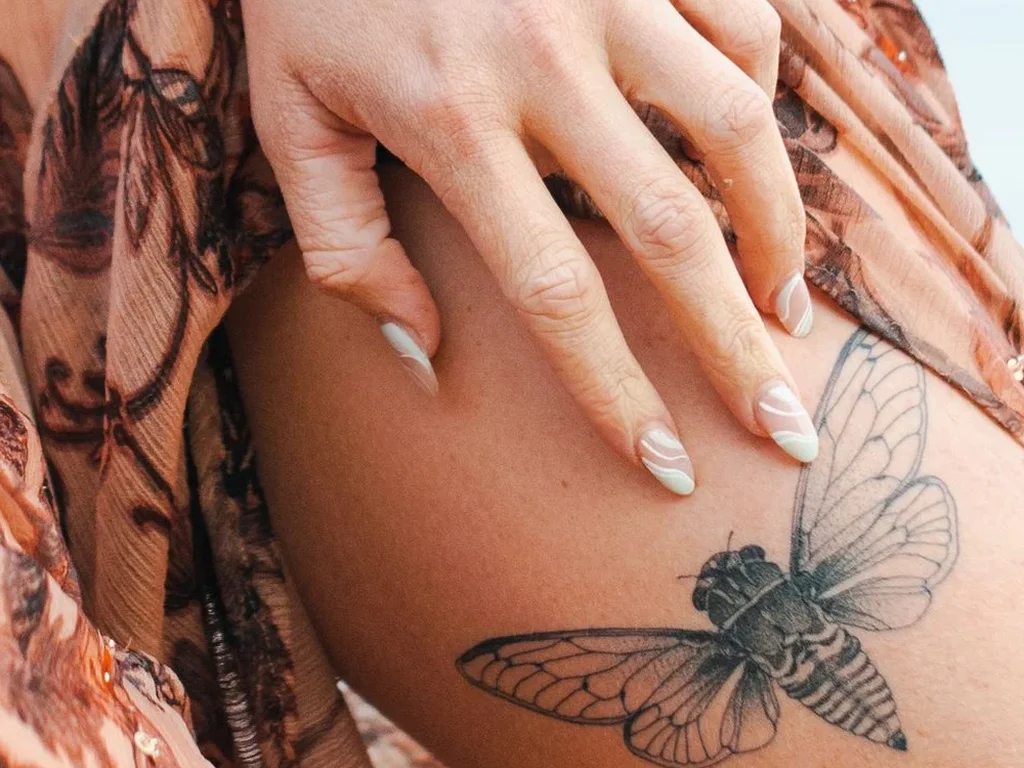
Drawn in the loose, sketchy hand sometimes called ignorant style — visible single lines, long antennae, wings that look inked in one sitting. A tiny bee hovers below it, a second small piece that turns a single tattoo into a little scene.
The thigh is the most forgiving canvas on the leg: plenty of room, modest pain, hidden by most clothing. Sketch-style work like this depends entirely on the artist’s drawing hand, so choose the person, not the flash sheet.
12. Small Butterfly, Centre Chest
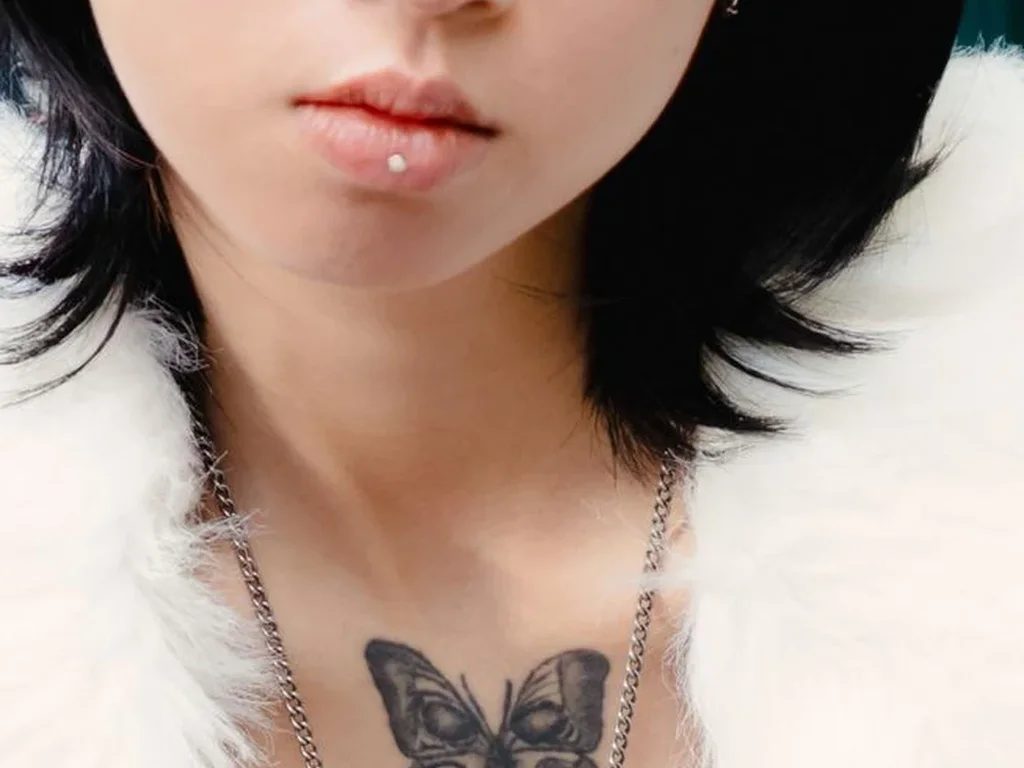
A palm-sized shaded butterfly placed dead centre on the chest, with a line of script running underneath it. Small and balanced — necklaces and open collars frame it; a plain t-shirt hides it completely.
Centre-chest symmetry is unforgiving. A good artist will stencil, check in the mirror with you standing straight, then check again. If the stencil sits even slightly crooked, say so — two minutes of honesty saves decades of annoyance. More small-piece thinking lives in our tattoo ideas for women pillar.
13. Dark Butterfly Below the Collarbone
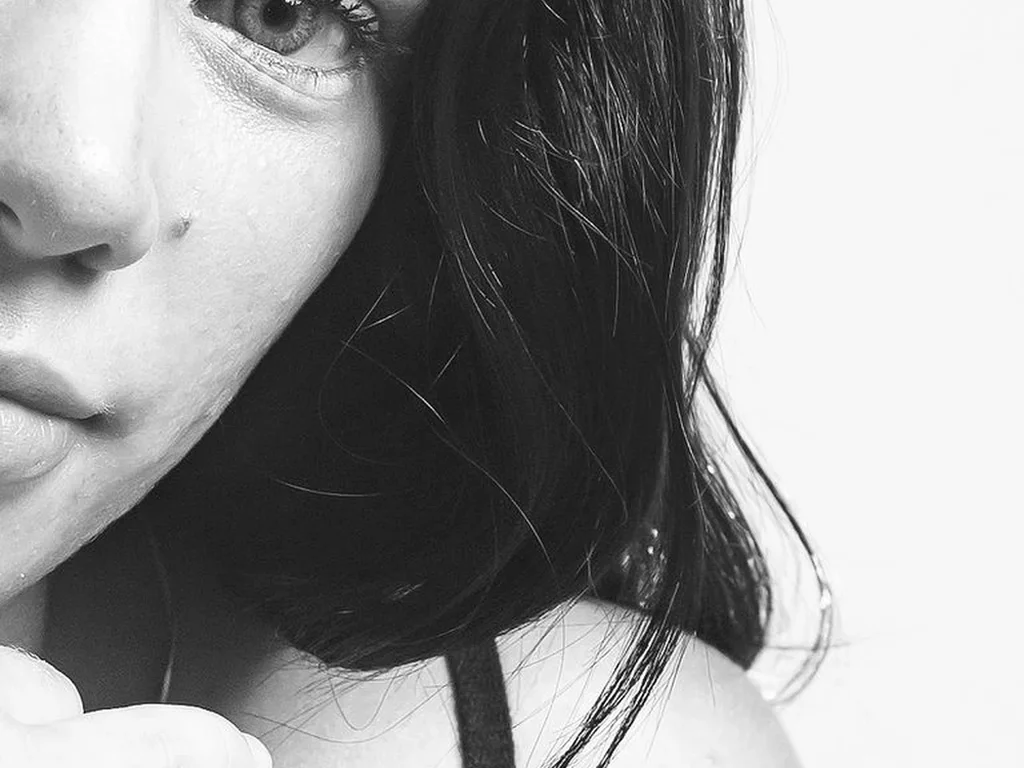
Shown in a black and white photograph: a solid, dark-filled butterfly tucked just under the collarbone. Filled designs like this have a graphic, printed quality — just shape.
Under-collarbone spots sit close to bone, so expect a sharper, buzzier feeling than fleshy areas — though a piece this size is a short session. Solid black fill hides a multitude of sins, a smart style for anyone worried about line spread.
14. Monarch-Style Butterfly in Deep Red, Upper Back
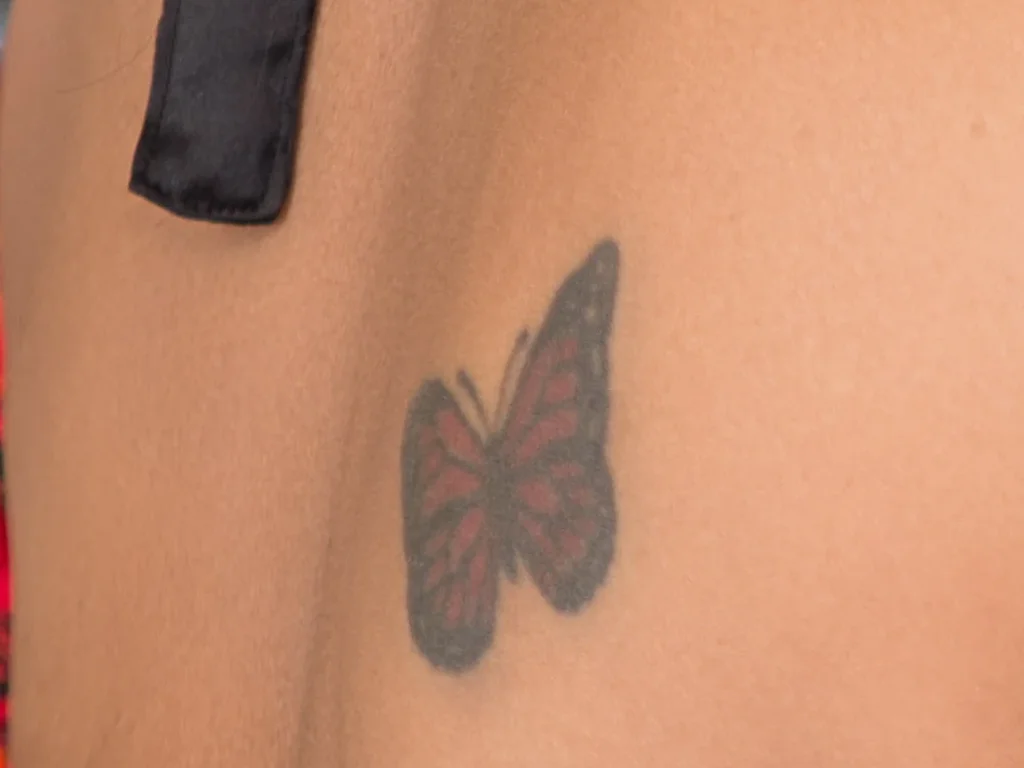
A small butterfly in deep red and black on the upper back, patterned after the monarch — the species famous for migrating thousands of miles. Real monarchs are orange; this one went darker, and looks moodier and less costume-like for it.
People pick the monarch for endurance as much as beauty — the migration story is about long journeys and coming back changed. Upper-back skin holds colour well and hides under most clothing, so it is a kind spot for a first colour piece.
15. Purple Tribal Butterfly, Nape
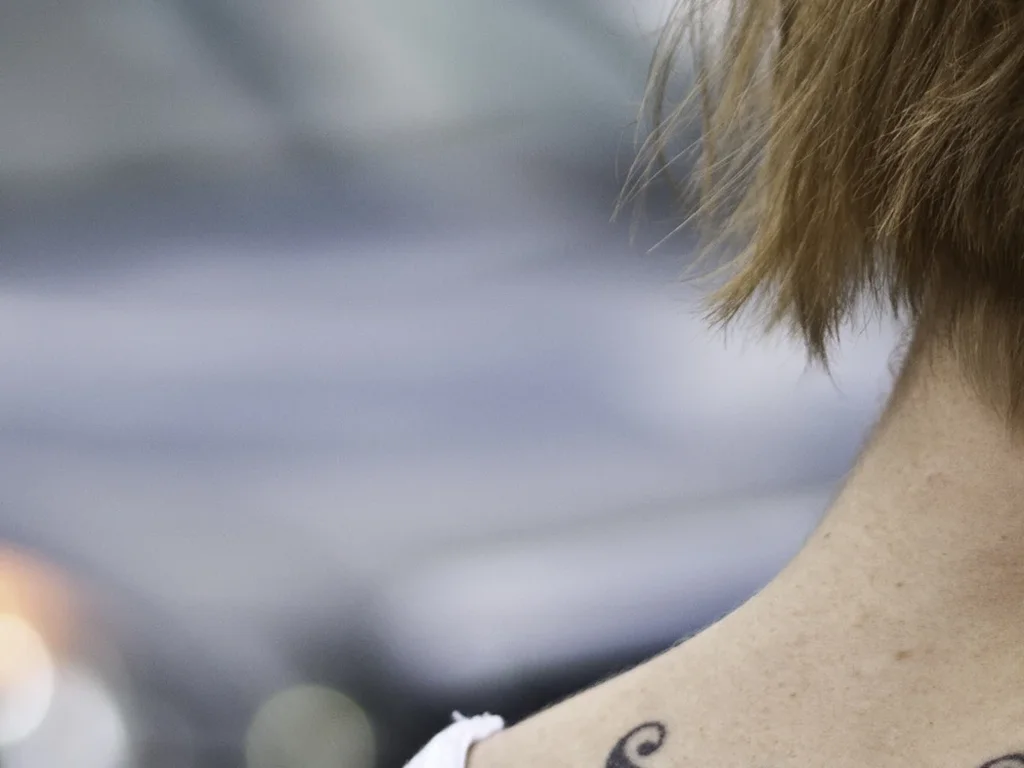
A purple butterfly in the swooping, pointed style of 1990s and 2000s tribal work, sitting right at the nape where hair covers it or reveals it on request. This is the shape a whole generation chose, and it is quietly coming back around.
The nape is a short, sharp session — thin skin over bone — but a design this size is over quickly. Hair length is part of the decision here: the tattoo only shows when the hair is up, and many wearers count that as the appeal.
16. Side-Profile Butterfly, Hip
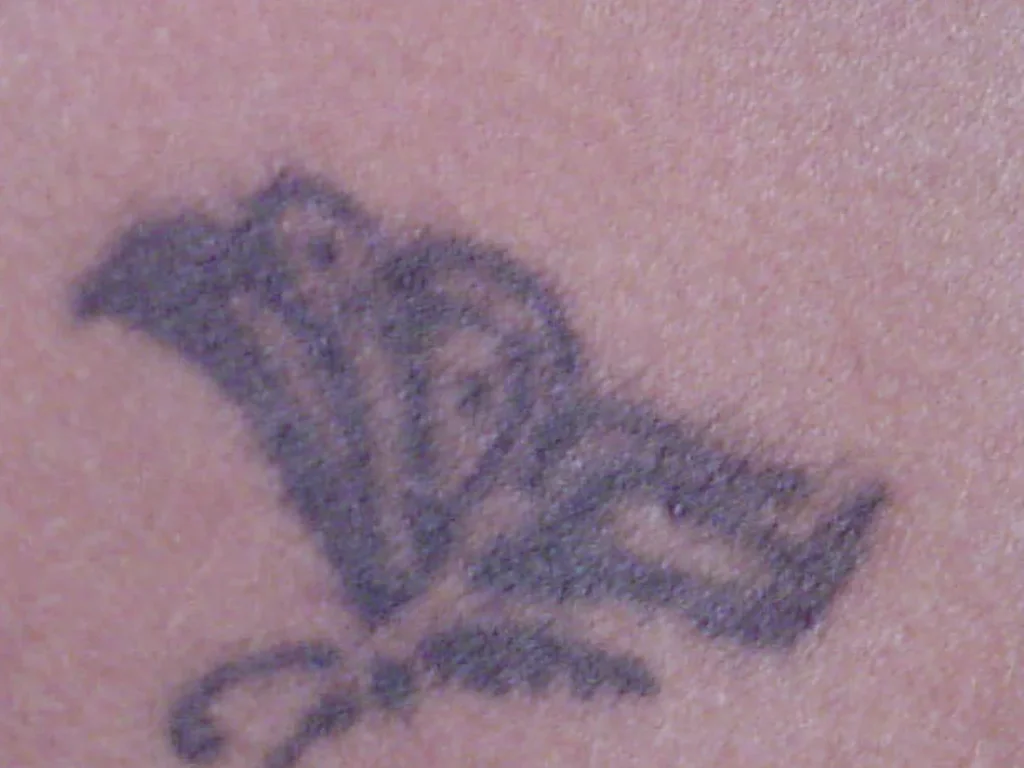
Most butterfly tattoos face you wings-open. This one is drawn side-on, wings swept upward, low on the hip, its lines spread and softened into the skin. Shown exactly as it is: hip butterflies were everywhere in the 2000s, and this is what twenty years does to one.
Hip skin shifts with weight changes more than most, and waistbands rub it daily. If you love this placement, go a touch bolder than feels necessary on day one; future you will be glad of the thicker lines.
17. Pink Ribbon Butterfly, Arm
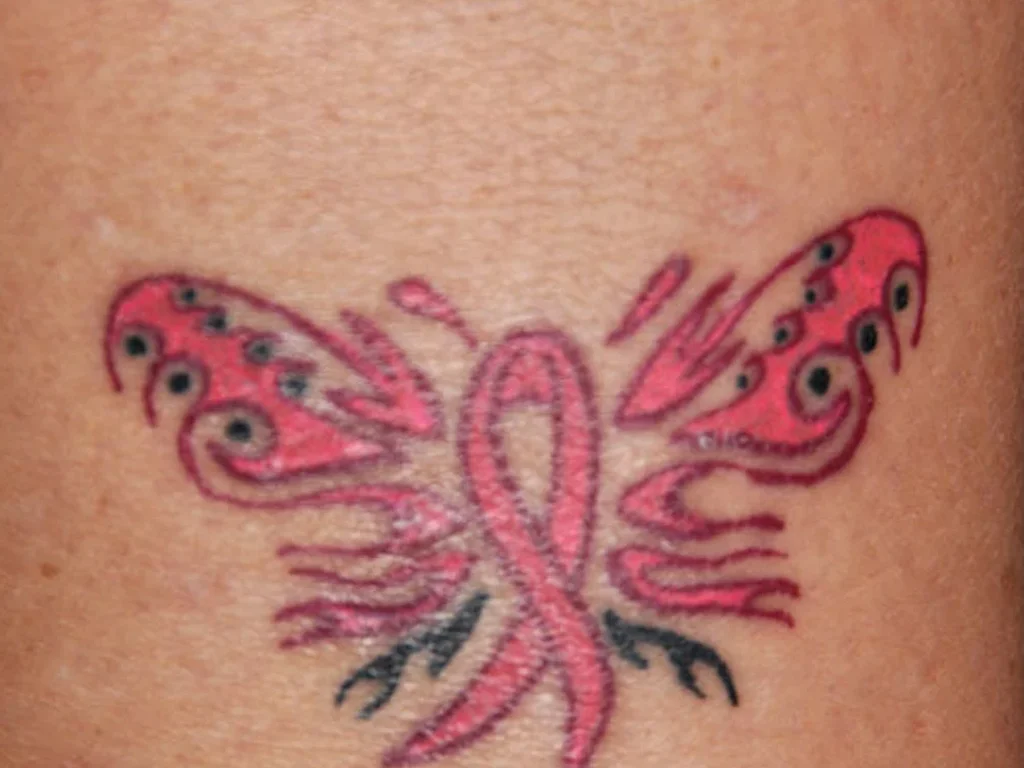
The wings are a butterfly’s; the body is a pink ribbon. This is a breast cancer awareness tattoo, photographed at a US military awareness event — the kind of piece people get for a mother, a sister, a friend, or their own diagnosis.
Pink ink fades faster than black, so expect the wings to need refreshing sooner than a blackwork piece; most wearers call that a fair trade.
18. Purple and Pink Butterfly, Shoulder Blade
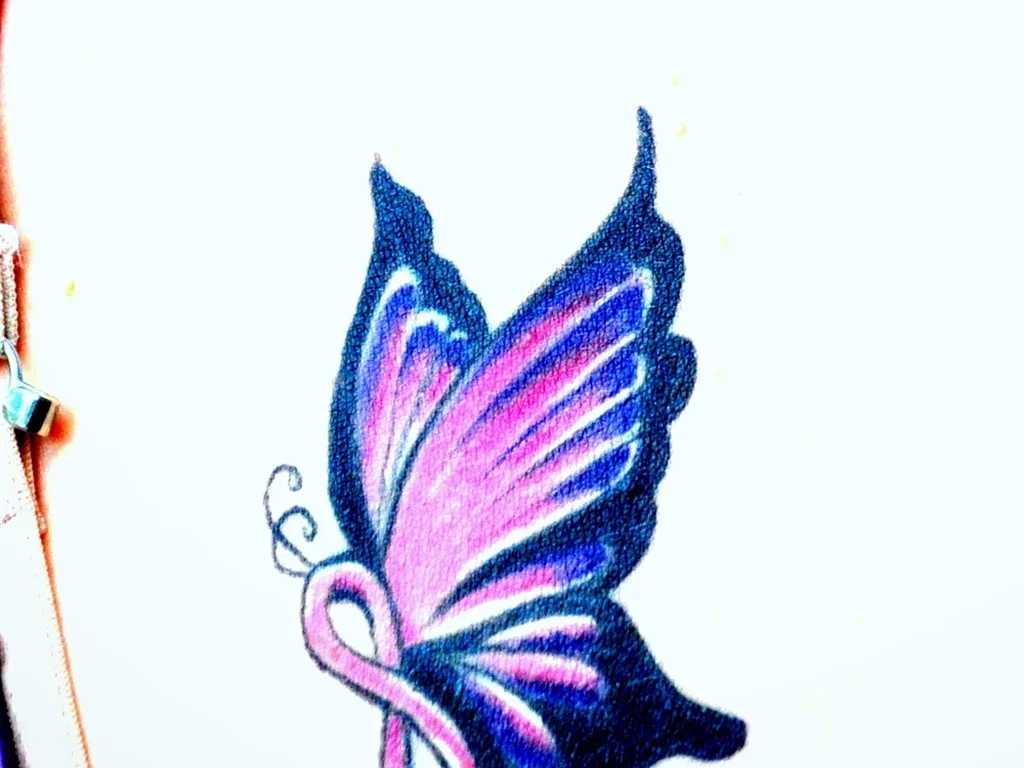
A saturated purple and pink butterfly in profile on the shoulder blade, its body trailing into a ribbon curl. The source photo is heavily colour-edited, so treat the exact shades with a pinch of salt — but the design, bold outline and simple colour blocks, is a sound one.
The shoulder blade is prime butterfly territory: flat, roomy, easy to show in a summer top and easy to cover at work. If you want colour without the ribs’ drama or the foot’s fading, this is the sensible address.
19. Death’s-Head Moth, Chest
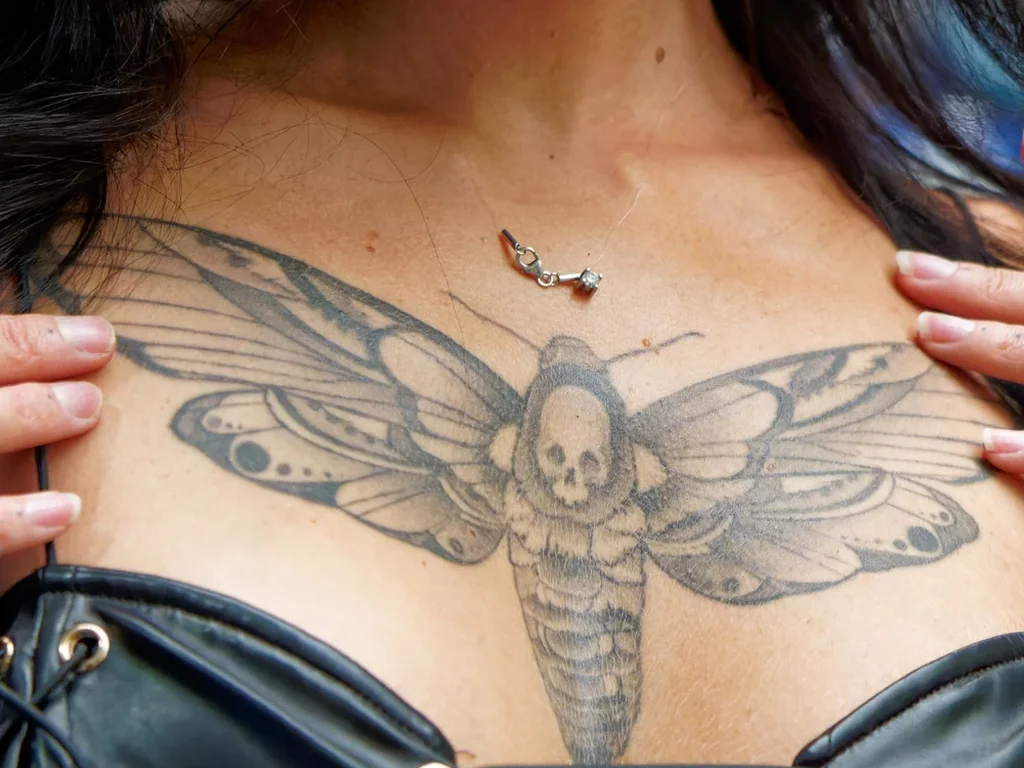
The butterfly’s darker cousin, done at full chest scale. The death’s-head hawkmoth carries a thorax marking that genuinely looks like a small skull, and this tattoo leans into it — soft grey shading, wings spread collarbone to collarbone. The moth became pop-famous through The Silence of the Lambs; long before that it stood for the soul in European folklore.
Chest pieces this size take several sessions, and the centre of the chest is tender going. Moths also dodge the “too pretty” problem some people have with butterflies, while keeping the same transformation story.
20. Grey Moth, Back of the Neck
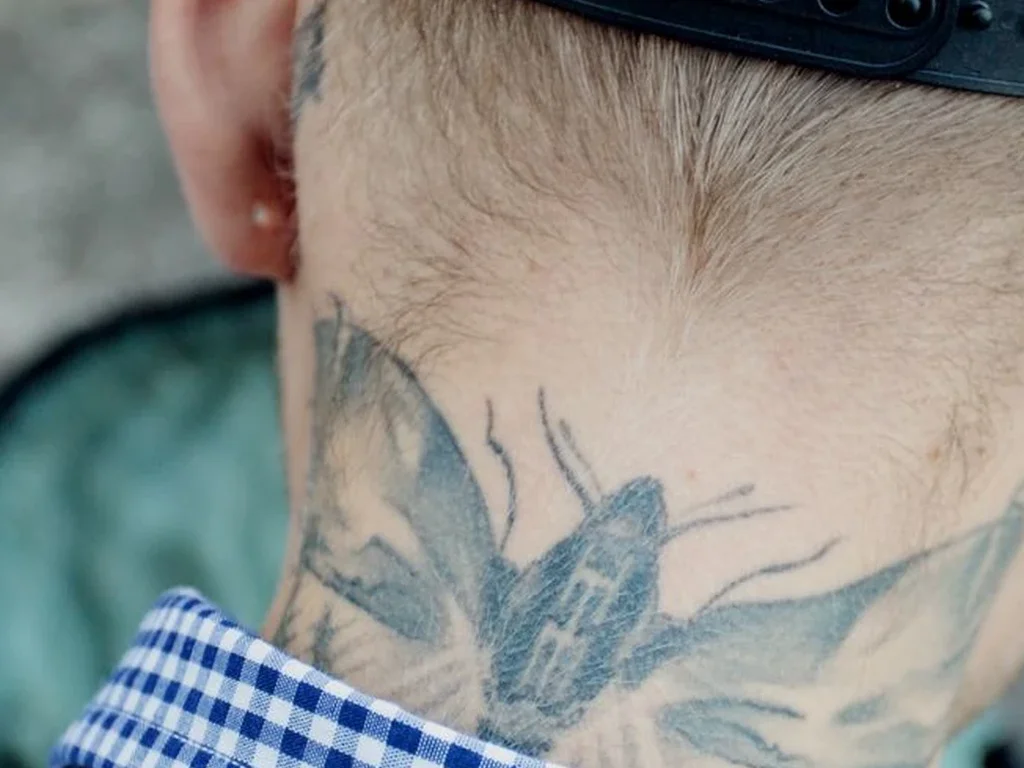
A grey-wash moth spread across the back of the neck, wings following the curve where neck meets skull. It is a bold address — visible above any collar — and the muted palette keeps it wearable rather than shouty.
Neck tattoos sit in the “job-stopper” conversation for a reason: nothing but a high collar or long hair covers this one. A good artist will ask you twice about that. If the answer stays yes, grey wash ages gracefully — there is no colour to lose.
21. Matching Butterflies for Two People
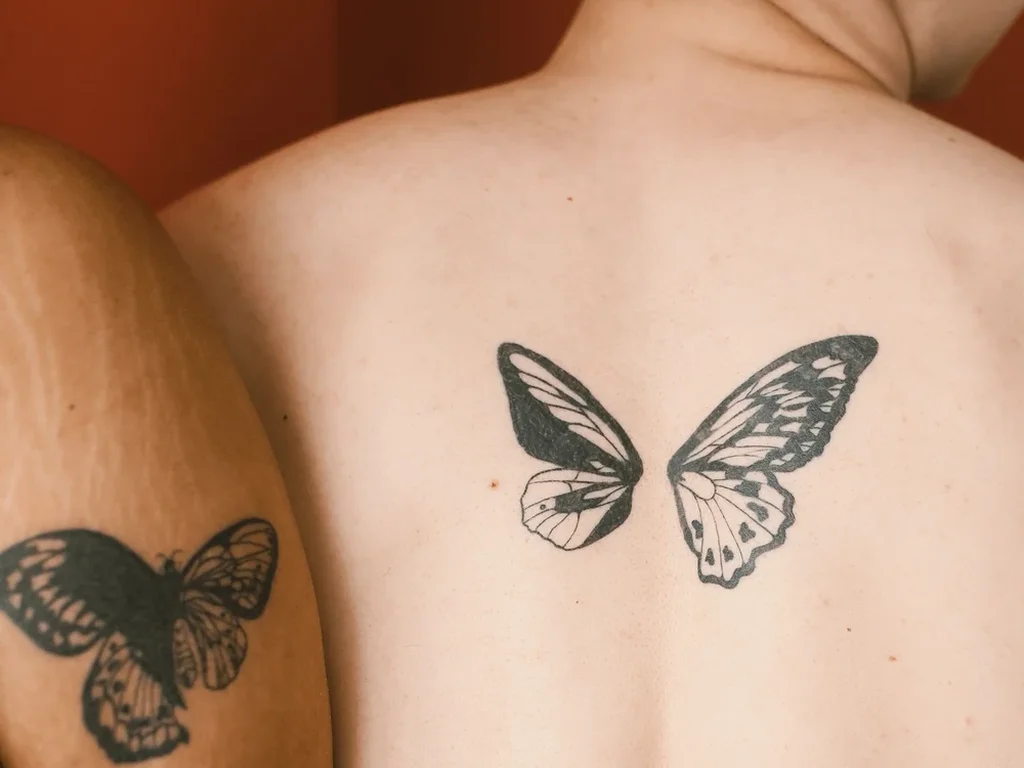
Same butterfly, two bodies: one centred on a back, one on a partner’s upper arm. Matching tattoos do not have to be identical, but this pair chose the identical route — same outline, same shading — and the photograph shows how differently the same design sits on different skin.
If you are planning a matching pair, book the same artist for both pieces, ideally back to back on the same day. Two artists will produce two interpretations no matter how clear the reference is, and “almost matching” is the one outcome nobody wants.
22. The Honest One: A Faded Ankle Butterfly
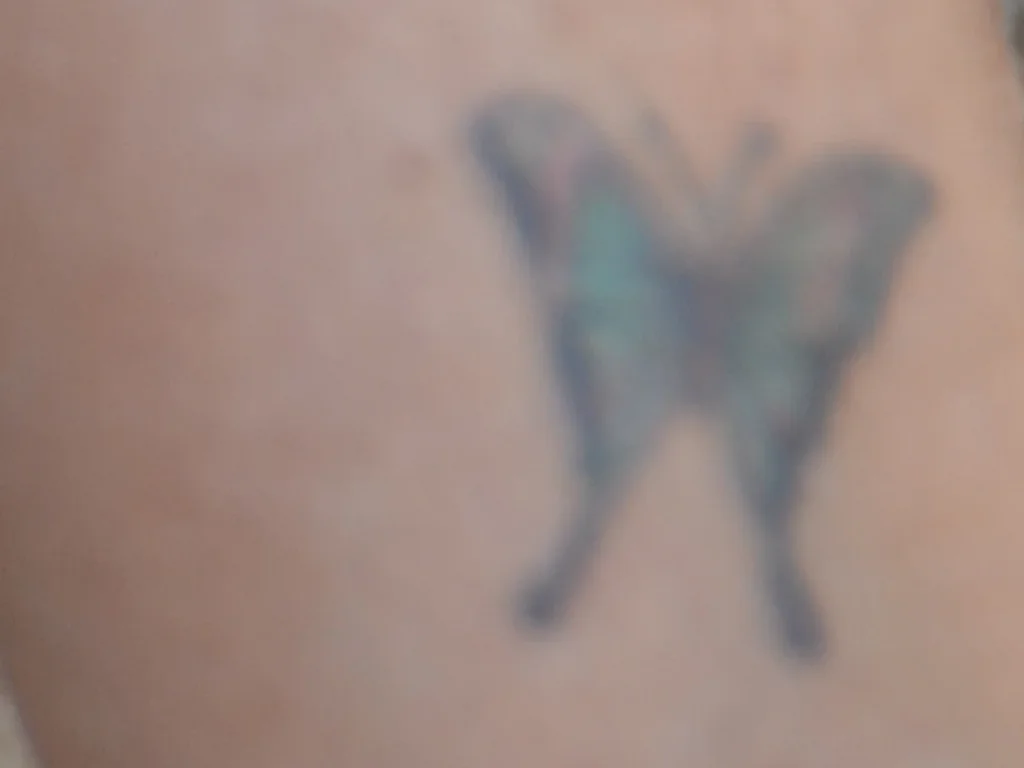
A small butterfly on an ankle, photographed outdoors years after it was done: the colour has washed toward grey-green, the edges have spread, and the detail is mostly gone. The photograph itself is soft, and so is the tattoo — that is the point of showing it.
Nothing went wrong here that time does not do to most small ankle tattoos. Ankles flex constantly, shoes rub, and small colour pieces fade first. Choose this spot with your eyes open: bold outline, minimal detail, and a touch-up budget from the start.
Butterfly Tattoo Placements, Honestly Rated
Forearm. The easiest first home for a butterfly. Low-to-moderate pain, flat skin, and you can watch it being done. Fine line and ornamental work both suit it.
Upper arm and shoulder blade. Roomy, forgiving, slow to fade. The classic choice for colour and traditional pieces, and the easiest large canvas to keep covered at work.
Upper back and spine. Perfect for centred, symmetrical designs like the dotwork piece at number 10. Low pain for most people, apart from right on the spine.
Chest and sternum. Striking and personal, but bony in the middle and tender at scale. Small centre pieces are a short session; full chest work is a project.
Ribs and side. Beautiful drape for trailing designs, and the sharpest sensation on this list for most people.
Foot and ankle. Cute, summery, and the fastest-fading real estate you own. Go bold, keep detail low, expect touch-ups.
Nape and neck. The nape is hideable under hair and a quick session. The sides and back of the neck are a visibility decision first and a tattoo decision second.
Hip and thigh. The thigh is generous and low-pain; the hip is private but sits where waistbands rub and skin shifts. Size up slightly on the hip.
What Butterflies Mean (and What They Don’t)
The oldest layer is Greek. The word psyche meant both “soul” and “butterfly”, and in myth Psyche — whose story is told in full on the World History Encyclopedia — is depicted with butterfly wings after her trials made her immortal. A creature that starts as a caterpillar, seals itself away, and emerges able to fly was always going to stand for the soul and for transformation. That part is documented history, not tattoo-shop invention.
The new-beginnings meaning most wearers cite today grows straight out of that metamorphosis. People choose them after recoveries, divorces, grief, sobriety — any point where the old shape of a life stopped fitting.
One modern variation deserves a straight explanation. The semicolon butterfly belongs to the mental-health awareness movement that grew around Project Semicolon, founded in 2013. The semicolon stands for a sentence the author could have ended but chose to continue; paired with a butterfly, it marks survival and a life still being rewritten. No photograph of one is in this set, so it has no design slot here — if you are planning one, it is usually drawn as a bold, simple mark inside or beneath the wings, and it means more kept simple.
And treat any list assigning every colour a fixed, ancient code with suspicion — colour meanings are personal and modern. Pick colours for your skin and your story.
Frequently Asked Questions
How much does a butterfly tattoo cost?
It depends on size and detail more than subject. A small outline butterfly usually starts at a studio’s minimum charge — commonly $60–$150 in the US — while larger colour or blackwork pieces are priced by the hour or by the piece. Get the quote after a consultation, not from a chart.
Do butterfly tattoos hurt?
No more than any other design the same size in the same place. Placement decides: upper arm, thigh and calf are mild for most people; ribs, sternum, feet and the spine itself are sharper. Thin skin over bone hurts more than the butterfly’s wings do.
How well do butterfly tattoos age?
The bold ones age very well; the wispy ones need help. Thick outlines and simple colour blocks (designs 1, 4 and 17) hold their shape for decades. Fine line wings soften, and tiny internal details can merge, so designs like 2 and 9 may need a touch-up in five to ten years. Design 22 is the honest end of that road. The American Academy of Dermatology’s advice on caring for tattooed skin — moisturise, sunscreen on healed ink — genuinely slows the fade.
What is the smallest a butterfly tattoo can go?
Around 4–5 cm across for anything with wing detail, smaller only if the design becomes a plain silhouette. Below that, veins and eye spots merge into a single dark shape within a few years. If tiny is non-negotiable, choose the silhouette on purpose, like design 22 started out — just with bolder lines.
Is a butterfly a good first tattoo?
Yes — one of the most common first tattoos there is. It scales to your courage: a 5 cm forearm or shoulder-blade piece is a short session in a low-pain spot, and the design can grow into a floral composition later if you catch the bug.
What does a semicolon butterfly tattoo mean?
It is a mental-health awareness symbol. The semicolon comes from Project Semicolon (founded 2013) and stands for continuing a story that could have ended; the butterfly adds transformation and survival. People wear it for their own recovery or in support of someone else’s.
Which colours fade fastest in a butterfly tattoo?
Pale pinks, yellows and soft pastels fade first, followed by light blues and greens. Black, dark blue and deep red last longest. The sunset-moth piece at number 3 will keep its greens and oranges for years; its pinks will need refreshing sooner. Sun exposure speeds all of it up.
Can a butterfly tattoo cover an old tattoo?
Often, yes — wings are one of the better cover-up shapes because they are wide, busy and easy to darken in patches. Blackwork and traditional butterflies (designs 1 and 4) cover best. A cover-up needs to be bigger and darker than what is underneath, so let the artist draw over the old tattoo at a consultation, not around it.
How long does a butterfly tattoo take to get?
A small outline: 20–45 minutes. A palm-sized coloured or shaded piece: one to two hours. The chest moth at number 19 and the Japanese back at number 6 are multi-session work spread over weeks.
Where is the least painful place for a butterfly tattoo?
For most people, the outer thigh, upper arm and calf — the fleshy, well-padded spots in the placement guide above. Pain varies a lot person to person, but if nerves are your main worry, pick one of those three and keep the first piece modest.
Final Thoughts
Butterflies earned their popularity honestly. Few designs flex across this many styles — dotwork mandala to old-school traditional to a moth with a skull — while carrying a meaning most people can state in one sentence. Choose the style for how it ages, the placement for how you live, and the size for the detail you fell in love with. Do that and the butterfly on your skin will still look like the one you meant to get.
Photo credits: Design 1: Wikimedia Commons, “Dom Carter Butterfly Blackwork Tattoo”, CC BY-SA 4.0. Design 4: Wikimedia Commons, “Un genre de papillon”, CC BY 2.0. Design 6: Wikimedia Commons, “Tattooed lady looking at a handbag”, CC BY 2.0. Design 8: Wikimedia Commons, “Tattoos in Italy 0100 02”, CC BY-SA 3.0. Design 14: Wikimedia Commons, “Woman wearing sari (31000048043)”, CC BY 2.0. Design 15: Wikimedia Commons, “Tattoo – 9493444651”, CC BY-SA 2.0. Design 16: Wikimedia Commons, “Abdominal tattoo on a young woman’s belly”, CC BY 2.0. Design 17: DVIDS / US military (Breast Cancer Awareness Month, DVIDS217748), public domain. Design 18: Pixabay, CC0. Design 19: Wikimedia Commons, “International Brussels Tattoo Convention 2023”, CC BY-SA 2.0. Design 22: Wikimedia Commons, “PikiWiki Israel 45964 billi and her tattoos”, CC BY 2.5. Designs 2, 3, 5, 7, 9, 10, 11, 12, 13, 20 and 21: Pexels, Pexels License — photos by Lisa Fotios (2), Tim Savage (3), Darina Belonogova (5), Alex Shimray (9), Da Na (12) and Polina Tankilevitch (21).