Short answer first: a butterfly tattoo meaning usually rests on one picture — the caterpillar that comes out of its cocoon as something else entirely. From that single change people build ideas about transformation, freedom, souls and second chances. Some of those readings are genuinely old. The ancient Greeks used one word, psyche, for both the soul and the butterfly. Some were written by tattoo blogs in the last twenty years. This page keeps the two apart, because both can be good reasons to wear the insect, and they are not the same kind of reason.
The animal earns its symbolism honestly. A caterpillar does not grow wings the way a bird grows feathers. Inside the chrysalis its body breaks down almost completely and rebuilds into a different creature, one that lives in a different element and eats different food. Few animals offer a before-and-after that stark, which is why the butterfly picked up meanings about change almost everywhere it lives. The designs that carry those meanings fill our butterfly tattoo ideas collection; what follows is the story underneath them.
The Core Meanings, One by One
Transformation — the meaning everything else hangs on
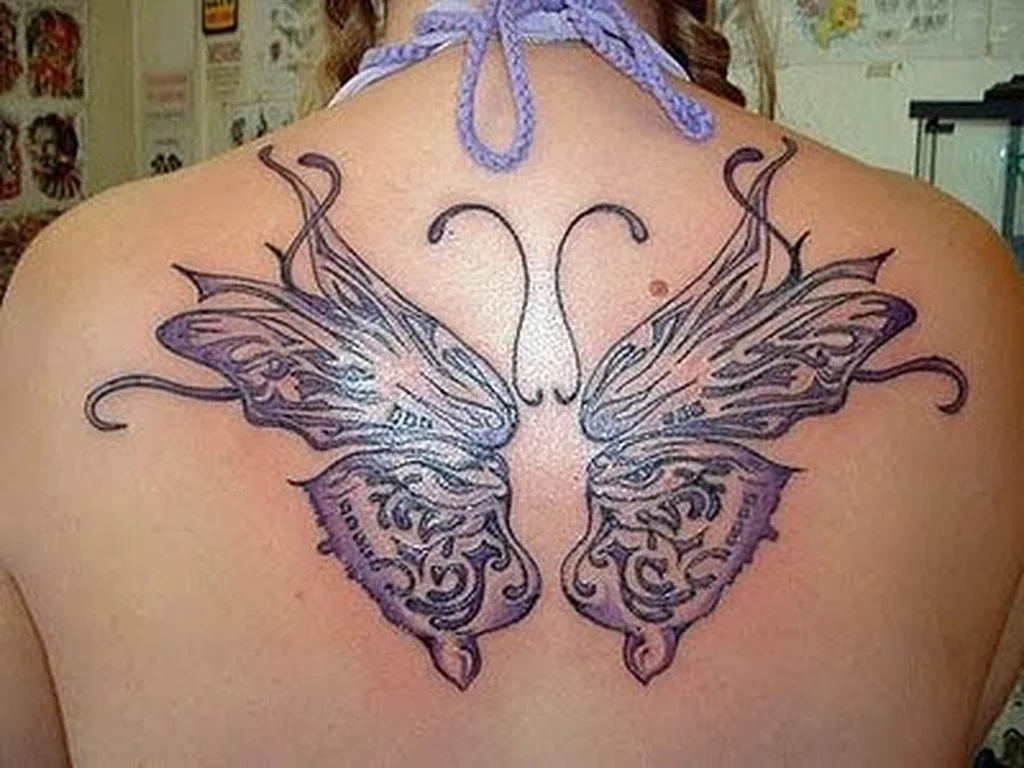
This is the centre of the whole subject, and unusually for tattoo symbolism, it is not a studio invention. Metamorphosis is a fact of the insect’s life, visible to anyone who watches a garden, and people have read their own lives into it for a very long time: the dull, earthbound stage first, then the sealed dark stage, then flight. A butterfly tattoo worn for change is usually marking a specific before and after — recovery, a divorce finalised, a career left behind, weight lost, a self that did not survive the cocoon on purpose. The design does the arguing by itself. Nobody needs the picture explained, which is part of its power: it is the rare tattoo symbol a stranger reads correctly at a glance.
The soul — Greece’s double word
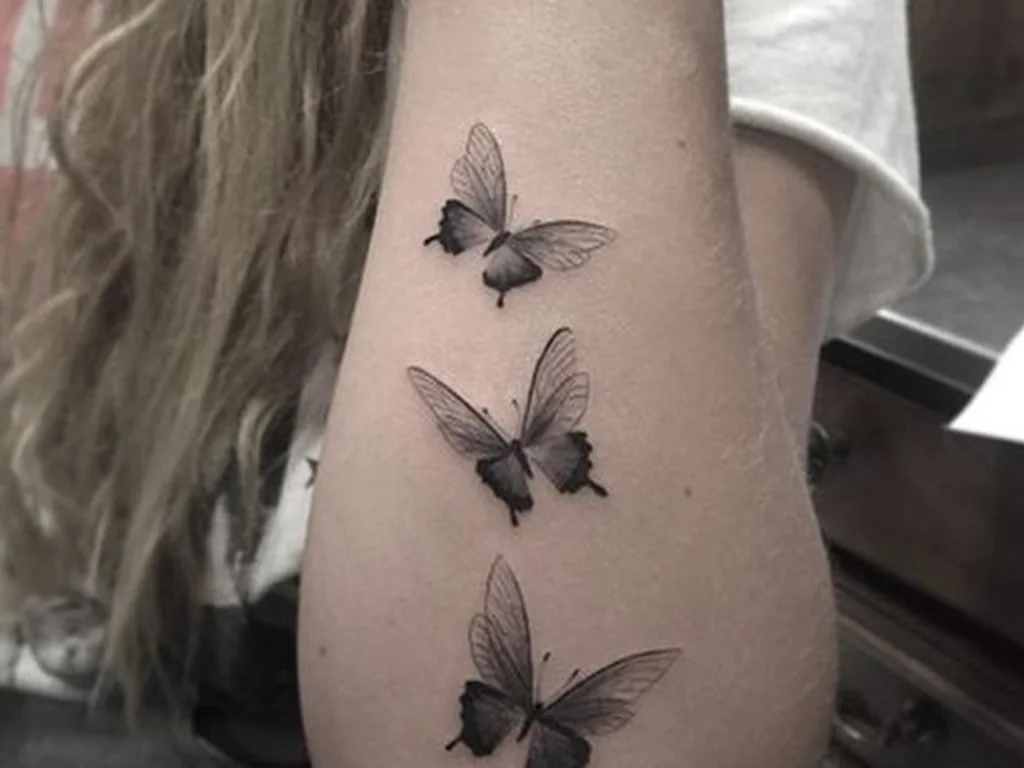
The oldest documented layer is a word. In ancient Greek, psyche means soul, and it also means butterfly. That is not a coincidence of translation. Greeks pictured the soul leaving the body and pictured it with wings, and the winged creature they had was the butterfly. In the myth, Psyche is a mortal girl whose name is the word itself; after trials set by Aphrodite she wins immortality, and Greek and Roman art gives her butterfly wings. So the butterfly as a picture of the soul is not a modern softening of the symbol. It is the oldest version of it we have, older than the change-and-rebirth reading that studios lead with today.
Freedom
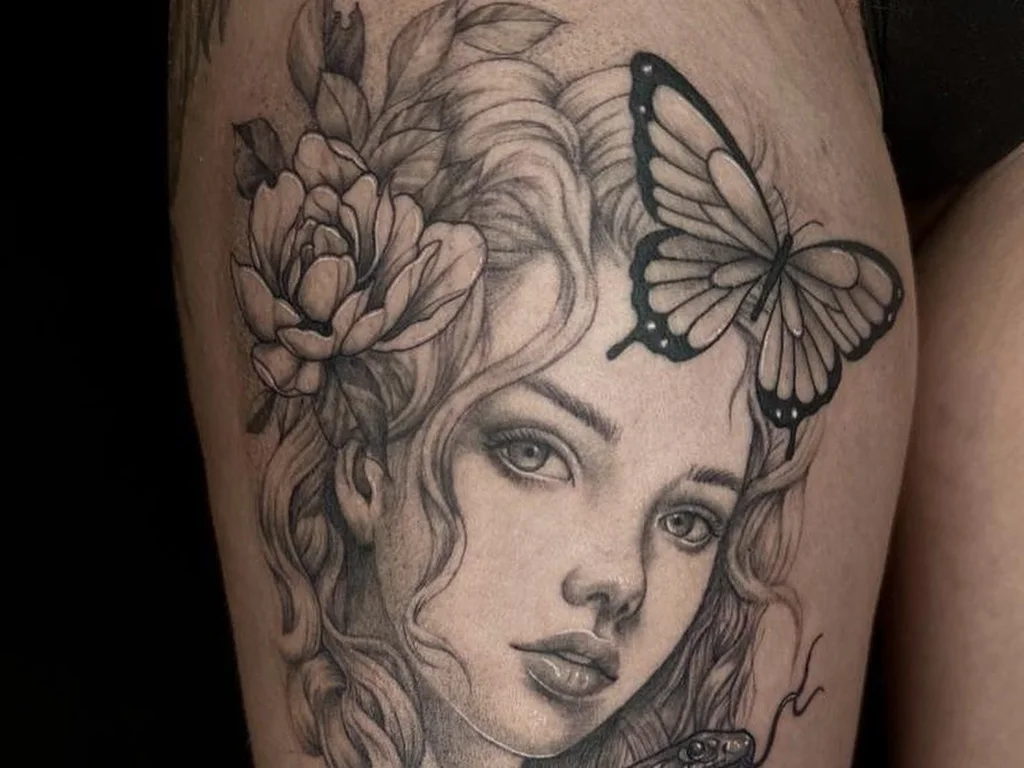
A plainer reading, and a mostly modern one. The butterfly goes where it wants, crosses gardens and borders without asking, and answers to no season but its own. Tattooed for freedom, the design usually marks an exit: out of a household, a town, a job or a version of life that had walls. It overlaps with transformation but is not the same claim. Transformation says I changed. Freedom says I left. The open-winged designs, drawn mid-flight rather than resting, belong to this reading, and so do the small single butterflies placed somewhere they look about to wander off — an ankle, a wrist, the back of a shoulder.
Rebirth and coming back
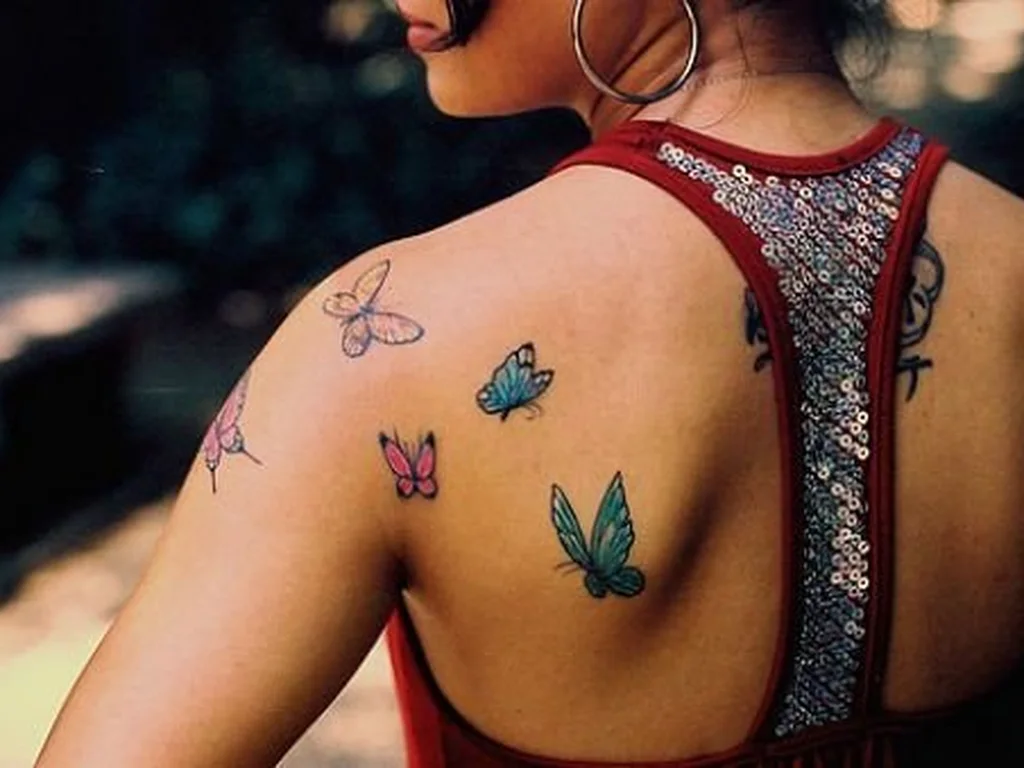
Closely tied to transformation, but with the emphasis moved from changing to returning. The chrysalis looks like a small tomb and sits still like one, which is why Christian art picked the insect up early as a picture of resurrection: caterpillar for earthly life, chrysalis for the grave, butterfly for the life after. That three-stage reading is documented in religious art and writing, not invented by studios. In modern tattooing the same layer does quieter work. Butterflies mark the far side of illness, addiction and grief — not I became someone new, exactly, but I came back from a sealed, dark stretch of my own. It is the comeback reading, and it is one of the most common personal reasons artists hear for this design.
Souls of the dead — the folklore layer
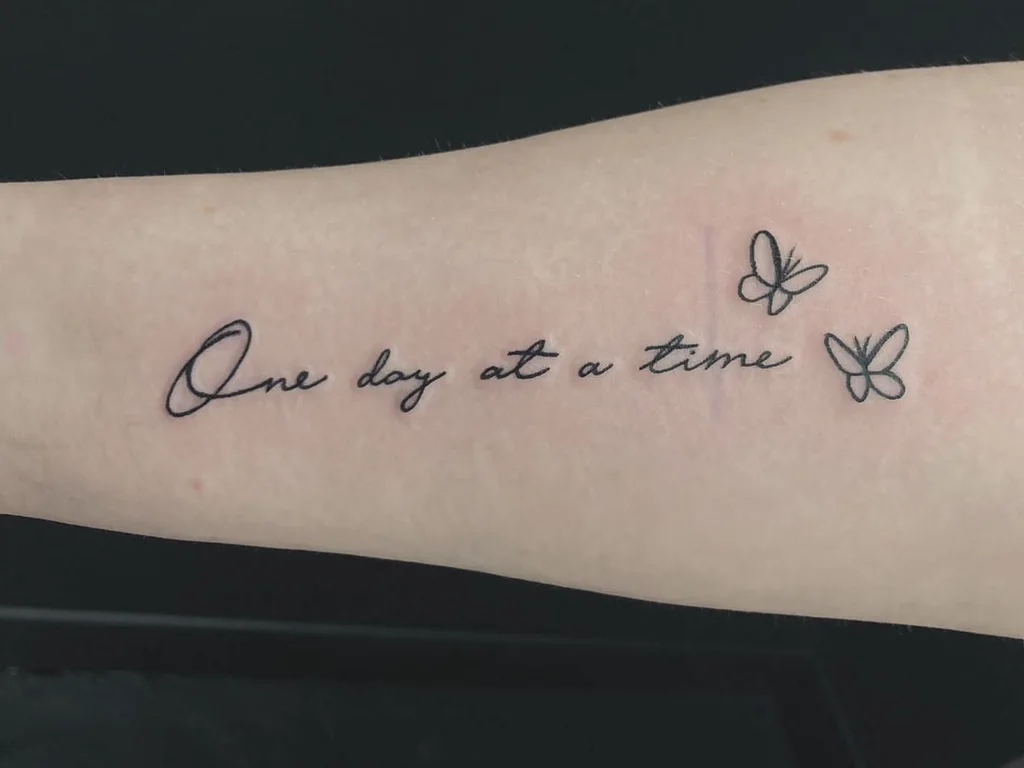
In Japan, butterflies have long been linked to souls. A butterfly entering a room could be treated as a visiting spirit — the soul of a dead loved one, or the soul of a living person wandering while they slept — and in the famous tale of the samurai-era lovers, white butterflies stand for souls that stayed together after death. The link is not only Japanese. Irish folklore treated the white butterfly with care for the same reason: it could be carrying the soul of a dead child, and killing one was said to bring bad luck. Mexican tradition meets the monarchs arriving in autumn as the returning dead, which the history section below covers. A butterfly tattoo worn as a memorial stands on this layer. It is older and more specific than the generic remembrance meaning blogs attach to almost any design.
Beauty and femininity — the modern reading, labelled as such
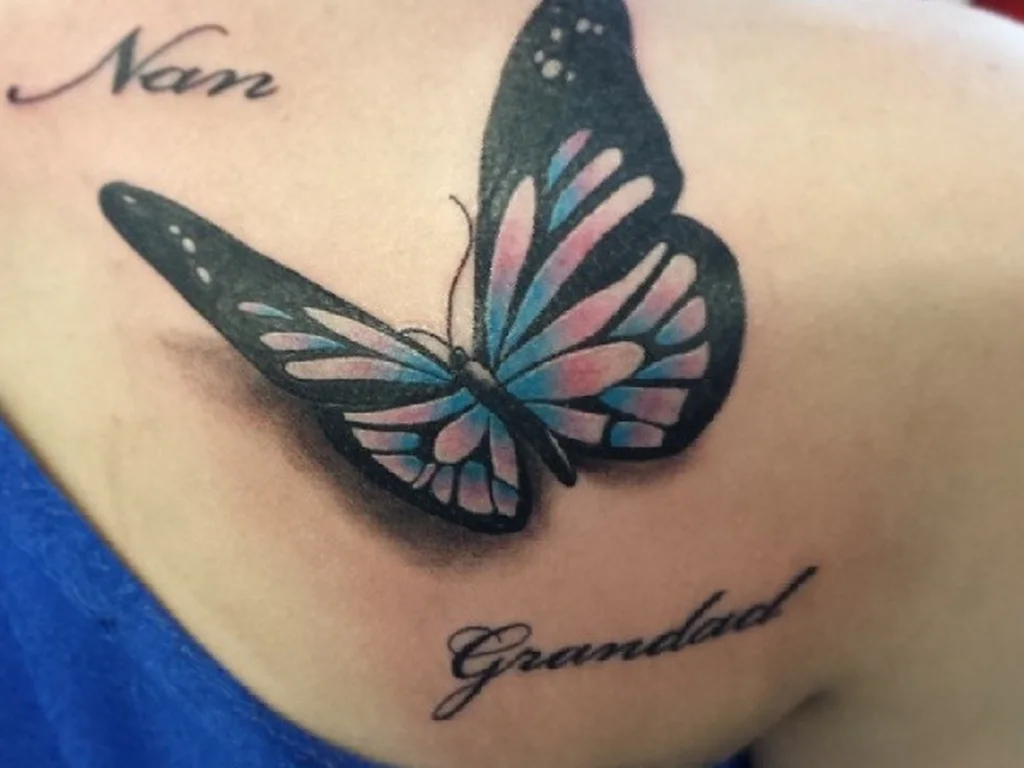
Be honest about this one: the butterfly as a badge of feminine beauty is mostly a modern, commercial reading. It grew with the design’s popularity on women’s skin in the 1990s and 2000s, and it is kept alive by marketing that sells the insect as pretty first and symbolic second. There is nothing wrong with choosing a tattoo because it is beautiful — plenty of people do, and say so. What this page will not do is dress that reading up as ancient tradition. The old layers are change and the soul. Beauty is the new layer, and wearing it knowing that is fine.
History and Culture: Where the Meanings Come From
Greece: Psyche and her wings
The Greek layer deserves its own space because it is the root the soul reading grows from. Psyche’s story, told in full by the Roman writer Apuleius, is a hard-luck romance: a girl so beautiful she angers a goddess, a husband she may not look at, a lamp lit in the dark, tasks that cannot be finished, and at the end a rescue and a wedding among the gods. Art across the Greek and Roman world shows Psyche with butterfly wings, and the butterfly appears on grave goods and carvings as a small sign of the soul that left. When a modern tattoo pairs a butterfly with a face or a figure, it is unknowingly quoting this — the winged girl is two thousand years old.
Japan: chocho, crests and paired butterflies
In Japan the butterfly, chocho, carries grace and the soul, and it also carries marriage. A pair of butterflies dancing together is an old picture of a happy couple, and paired butterflies turn up at weddings and on wedding gifts. The insect was honoured enough to be worked into family crests — the kamon of some samurai families carried a butterfly, which surprises people who expect only fierce emblems from that class. On skin, Japanese work often sets butterflies loose among flowers, peonies especially, where they stand for the season and for beauty that moves. The single butterfly as a woman’s grace is a reading Japan and the modern West arrived at separately, which is worth knowing before anyone calls it a copy of either.
Mexico: the monarchs come home
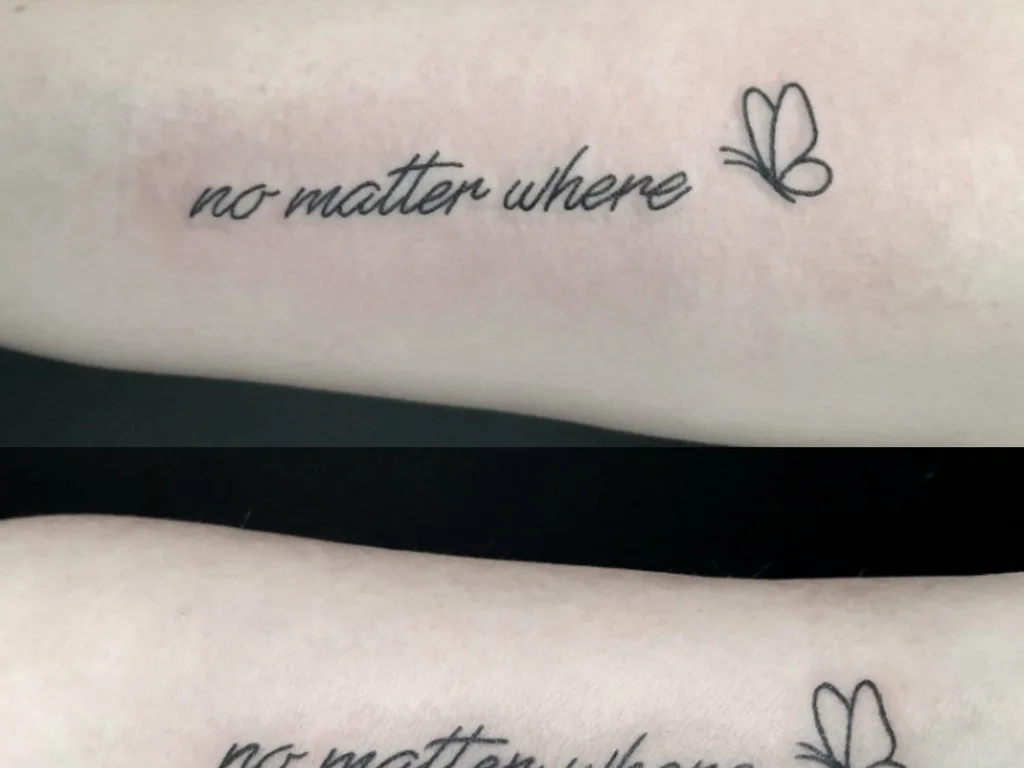
Every autumn, monarch butterflies arrive in the oyamel fir forests of central Mexico after a migration of thousands of kilometres, and they arrive as the Day of the Dead approaches. In the Purépecha and Mazahua communities near the forests, the butterflies have long been received as the returning souls of ancestors, come back for the days when the dead are welcomed home with food, candles and marigolds. Scientists mapped the migration only in the 1970s, but the local reading of it is far older than the science. A monarch tattoo worn by someone with Mexican roots is often this: not generic change, but family, timed to a calendar. It is one of the most specific meanings any butterfly design can carry.
Ireland: mind the white butterfly
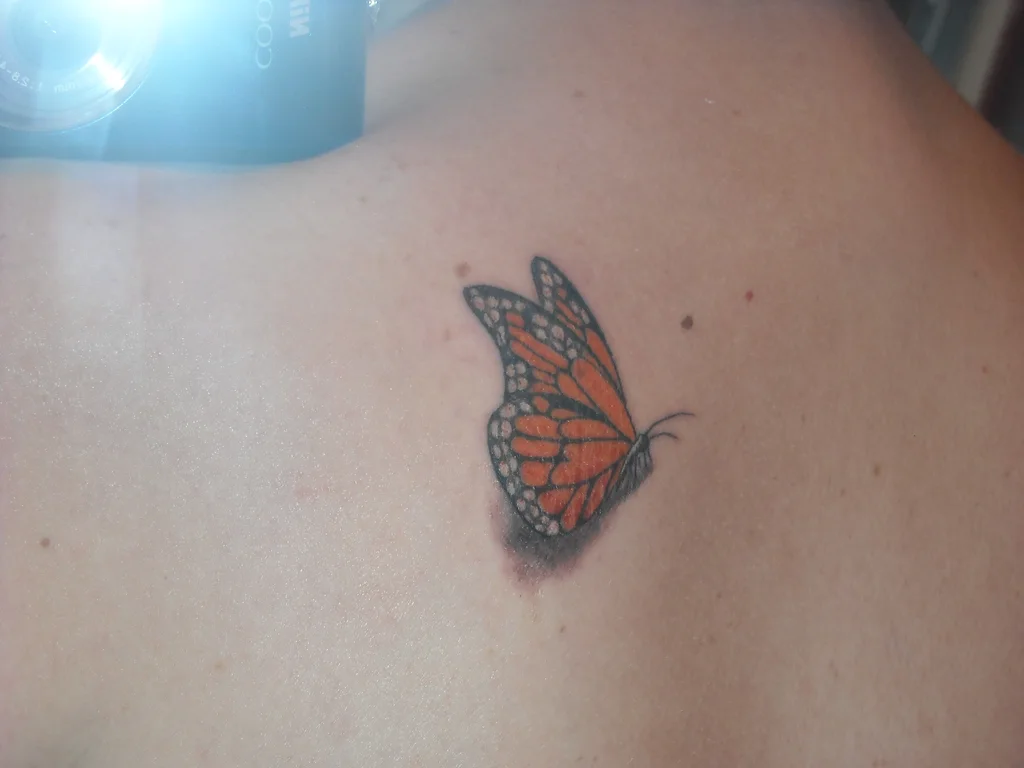
Irish tradition kept the soul reading in a small, sharp rule: do not kill a white butterfly. The white butterfly was thought to carry the soul of a dead child, and harming one invited misfortune; a white butterfly appearing near a death or a grave was read as a sign, not a pest. The belief sits inside a wider Celtic habit of seeing the otherworld as close and easily crossed, with small winged things doing the crossing. It survives today mostly as a thing grandparents say. But it means the soul-butterfly link is not a Greek idea that travelled — it grew in at least three places on its own, which suggests something about the insect makes people think of the dead wherever it flies.
Details That Change the Reading
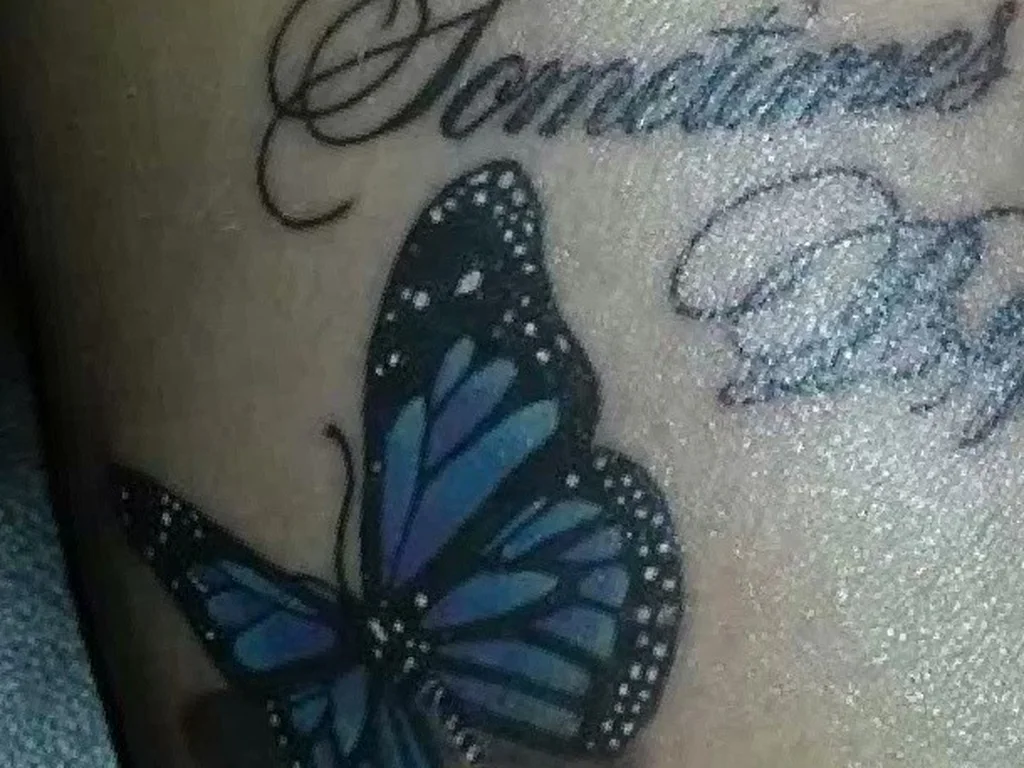
Species: monarch, swallowtail, morpho
Artists who draw real species give the wearer three ready-made dialects. The monarch, orange and black, is the traveller — migration, endurance, and for many wearers the Mexican homecoming above. The swallowtail, with its tailed hindwings, reads as the classic garden butterfly, elegant and local, the one from childhood summers. The blue morpho of Central and South America is the showpiece: huge, iridescent blue, a colour so strong the tattoo often keeps nothing else. In modern studio talk the morpho gets joy and good luck attached to it; that is a young reading, but the colour does the work regardless — a blue butterfly is noticed across a room. Choosing a real species also protects the design. A drawn-from-life butterfly ages into a recognisable insect; a generic one ages into a shape.
Open wings or closed
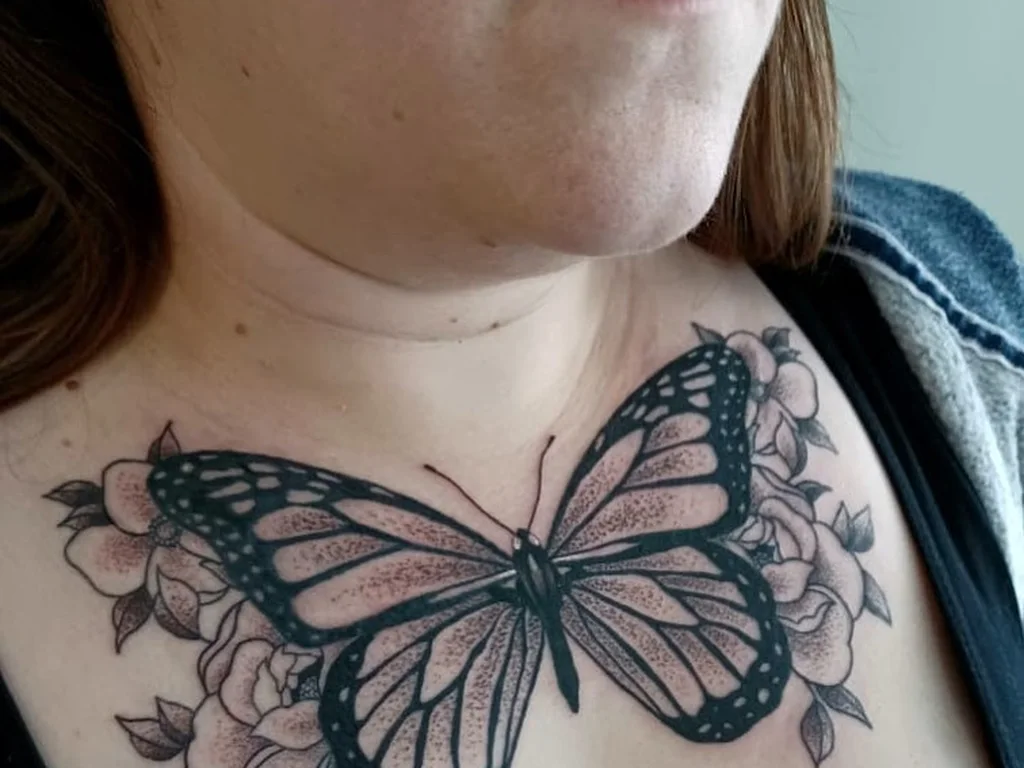
The plainest dial on the design. Wings open and raised is the butterfly at full display — flight, freedom, the finished change. It is the version on most backs and chests, drawn symmetrical, using the body’s own symmetry. Wings closed, seen from the side, is the resting insect: quieter, more private, often placed where only its profile shows, on a rib, a foot or a forearm’s edge. A closed-wing design keeps its colours hidden the way the real insect does, showing the plainer underside. Wearers who choose it usually want the meaning without the announcement. Neither is the sad version; a resting butterfly is between flights, not done flying.
Split designs: half butterfly, half something else
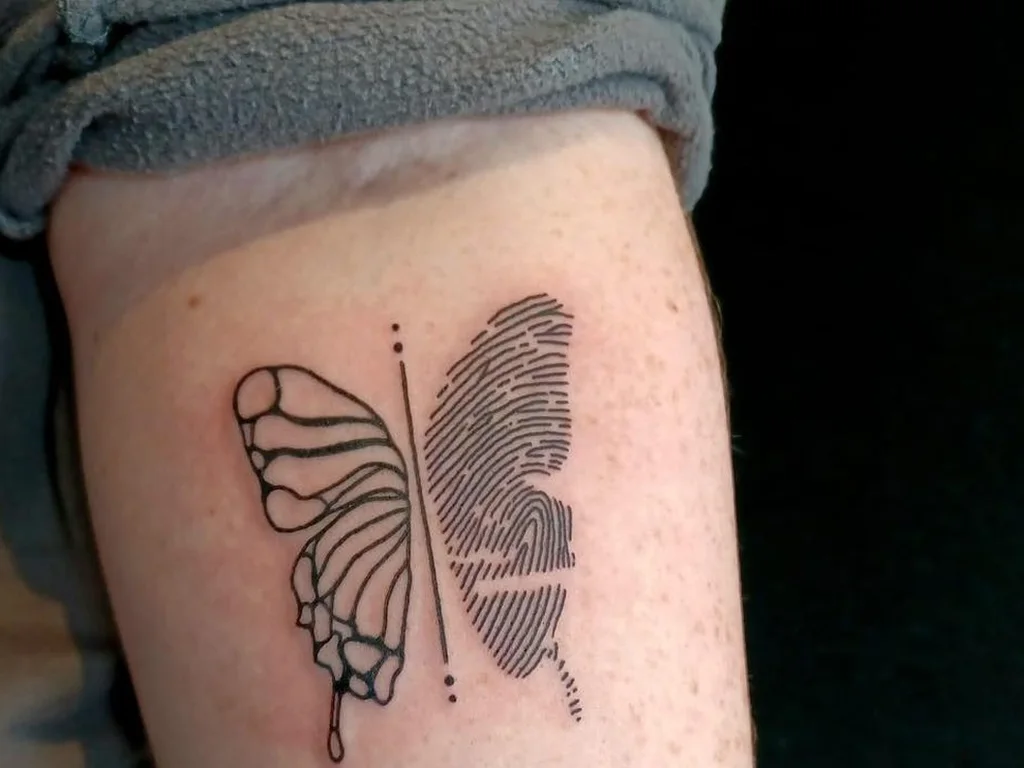
The half-and-half design has become the modern signature of the transformation reading: one wing a butterfly’s, the other side flowers, a skull, a second creature — or a semicolon worked into the body. The picture argues the meaning without words: two halves of one life, the before and the after sharing a spine. The semicolon version deserves its facts stated plainly. Project Semicolon, founded in 2013, uses the punctuation mark as a sign of continuing after suicidal struggle — a sentence the author could have ended but chose to continue — and the butterfly joined it because change is the project’s other half of the message. A semicolon butterfly is not decoration that happens to include punctuation. It is a statement with a specific history, worn by survivors and by people who lost someone. Our snake tattoo meaning page handles the snake’s shed skin the same way: a real behaviour first, a human reading second, and the two kept separate.
What a Butterfly Tattoo Does Not Automatically Mean
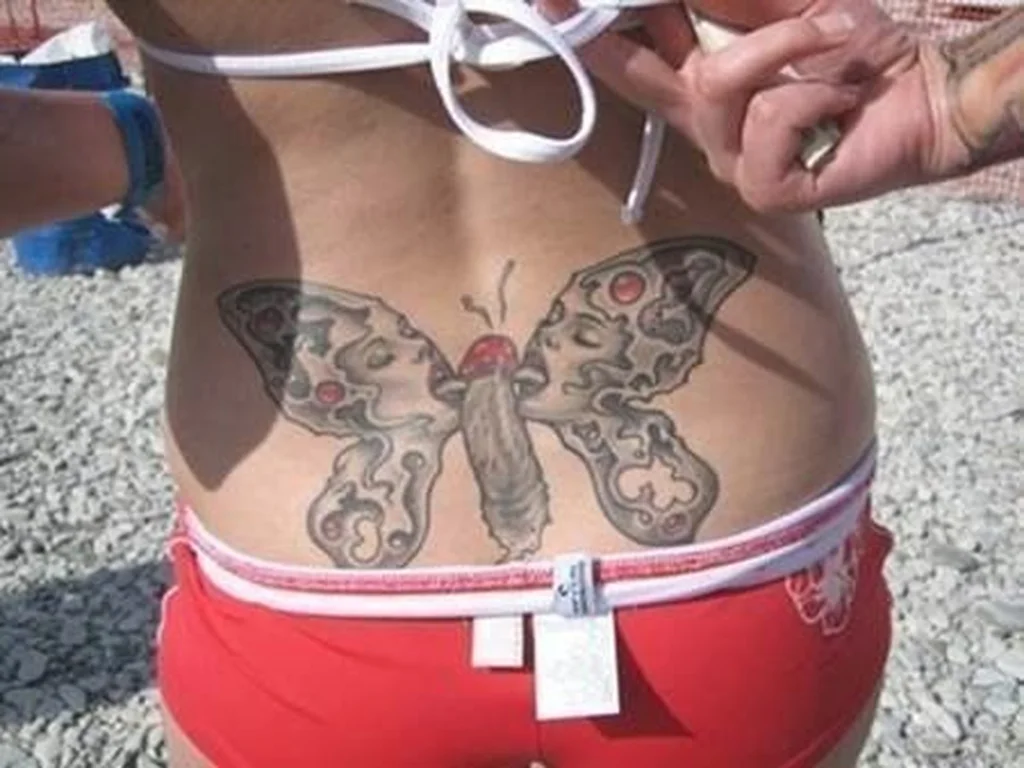
It is not a verdict on the wearer. The phrase “tramp stamp” attached itself to lower-back tattoos, butterflies very much included, during the 2000s, when the placement was at peak fashion and comedy writers needed a cheap target. The label says something about that decade’s humour and nothing about any individual person. Lower-back placement had practical roots: it is a flat, wide canvas, easy to cover at work, and it stretches less than most skin. Many wearers of that era chose the butterfly for the oldest reason on this page — change — and the design’s meaning did not expire when the jokes did. Plenty of those tattoos are now being refreshed, extended or covered, and plenty are simply being kept, which is also an answer.
It is not a women’s-only symbol. The marketing says otherwise; the history does not. Samurai families put the butterfly on their crests. Men wear butterflies as memorials, as matching pieces and as part of large Japanese and blackwork compositions, and the matching-pair photograph in our collection article is two men’s tattoos. The delicate fine-line sprig version is marketed at women the way pink razors are — that is packaging, not meaning. Size, style and placement set the tone of any tattoo. The insect itself is unisex, and has been for centuries.
There is no single official meaning to get wrong. Pages that hand down one fixed decoding — this many wing spots means purity, that colour means death — are tidying layered history into a chart. The real structure is the one on this page: a Greek word at the bottom, folklore about souls in the middle, a modern beauty reading on top, and the wearer’s own story over everything. Our flower tattoo design ideas page maps the same pattern across the garden: documented tradition below, studio convention above, and daylight between them.
Frequently Asked Questions
What is the main meaning of a butterfly tattoo?
Change. The insect’s life — caterpillar, chrysalis, winged adult — is the clearest picture of transformation nature offers, and most butterfly tattoos mark a before and after in the wearer’s life. Underneath that sit the older soul reading from Greece and the freedom and rebirth readings studios use today.
What does psyche have to do with butterflies?
Psyche is the ancient Greek word for both the soul and the butterfly, and in myth Psyche is a girl granted immortality and shown in art with butterfly wings. That double meaning is why the butterfly became a picture of the soul leaving the body — the oldest documented layer of the symbol.
What does a butterfly tattoo mean in Japan?
In Japan the butterfly, chocho, is tied to souls and to grace, and a pair of butterflies stands for a happy marriage — paired butterflies appear at weddings and in family crests, including crests of samurai families. A single butterfly visiting a room could be read as a spirit, of the dead or of a sleeping person.
What does a monarch butterfly tattoo mean?
The monarch is the migrant: a small insect that travels thousands of kilometres. Wearers use it for endurance and journeys, and in Mexican tradition the monarchs arriving in autumn are received as the returning souls of ancestors around the Day of the Dead, which makes a monarch a family and memorial symbol as well.
Is a butterfly tattoo only for women?
No. The design is marketed at women in its small, delicate versions, but the symbol itself belongs to everyone: samurai crests carried it, and men wear butterflies as memorials, matching pieces and parts of large work. Style and placement set the tone, not the insect.
What does a butterfly tattoo on the lower back mean?
Whatever its wearer chose it for — most often change, the same as anywhere else. The lower back was a fashionable, flat and easily covered canvas in the 1990s and 2000s, and the mocking nickname that followed says more about that era than about the tattoo. The placement carries no fixed meaning of its own.
What does a semicolon butterfly tattoo mean?
It joins two signs of continuing: the semicolon, used by Project Semicolon (founded 2013) for a life that could have ended and did not, and the butterfly for change and coming through. It is worn by survivors of suicidal struggle and by people honouring someone they lost. It is a statement, not a decoration.
What is the difference between a butterfly and a moth tattoo?
Moths fly at night and gather at light, so their readings run to darkness, instinct and being drawn to something — sometimes something dangerous. The death’s-head moth adds a death association butterflies do not carry. Butterflies stay with daylight meanings: change, souls, freedom. The two insects swap moods more than meanings.
Do butterfly tattoos age well?
The bold ones do. Solid blackwork and traditional butterflies keep their shape for decades. Fine-line and watercolour versions soften fastest, because their edges are light by design, and tiny wing details placed close together can merge as ink settles. Whatever the style, sun fades the bright wing colours first, so sunscreen is the cheapest upkeep there is.
What does a blue butterfly tattoo mean?
Usually the blue morpho, a large iridescent species from Central and South America. Modern readings attach joy, luck and a wish granted to the blue butterfly — those are young, studio-era meanings rather than old tradition, but the colour is the real point: it is the butterfly people notice across a room, chosen to be seen.
Final Thoughts
A butterfly tattoo can honestly mean a life changed on purpose, a soul remembered, a marriage, a homecoming timed to an autumn migration, or simply a beautiful insect chosen because it is beautiful — and the details are what choose between them: the species, the open or closed wings, the second half of a split design, the butterfly that flies alone or in a pair. Decide which layer is yours and the design mostly draws itself. The history on this page is solid ground, from a Greek word that meant two things at once to a Mexican forest full of returning monarchs. The rest is the part no chart can hand you. The butterfly tattoo ideas collection is built from real photographs only, counted one by one.
Photo credits: Image 1: Tattoo76, CC BY 2.0, via Flickr. Image 2: Mini Tatuajes, CC BY 2.0, via Flickr. Image 3: TattoosAll, CC BY-SA 2.0, via Flickr. Image 4: Tattoo76, CC BY 2.0, via Flickr. Image 5: TattoosAll, CC BY-SA 2.0, via Flickr. Image 6: TattoosAll, CC BY 2.0, via Flickr. Image 7: TattoosAll, CC BY-SA 2.0, via Flickr. Image 8: berkielynn, CC BY-SA 2.0, via Flickr. Image 9: TattoosAll, CC BY 2.0, via Flickr. Image 10: TattoosAll, CC BY-SA 2.0, via Flickr. Image 11: TattoosAll, CC BY-SA 2.0, via Flickr. Image 12: Nick Jackson, CC BY-SA 2.0, via Wikimedia Commons.