Short answer first: do butterfly tattoos age well? The bold ones do. A butterfly built on a clear outline, honest contrast and wings with room inside them can still read clearly after twenty years. The delicate ones are a different story. Fine-line wings, watercolour colour with no outline and tiny detailed pieces soften early, and a butterfly shows softening faster than most designs, because the whole picture hangs on two wings matching. This page walks through what changes over five, ten and twenty years, style by style and placement by placement, so you can choose the version of this design that still looks like a butterfly when it is older than the phone in your pocket. The designs themselves live in our butterfly tattoo ideas collection; this page is about what time does to them.
What actually happens to a tattoo as the years pass
A healed tattoo is ink sitting in the second layer of the skin, held in particles too large for the body to clear away quickly. It does not sit perfectly still, though. Sunlight breaks pigment down slowly, year after year. Skin stretches, thickens, thins and sheds its surface on a steady cycle. Lines that went in crisp settle and spread by a fraction, the way writing in wet sand blurs at the edges. None of this is damage, and none of it means the artist did poor work. It is the normal behaviour of ink in living skin, and every tattoo ever made is doing it right now.
Butterflies feel these changes early, for two reasons. The first is symmetry. A skull can go a little soft and still read as a skull. A butterfly whose left wing has blurred more than its right reads as lopsided, and the eye catches uneven wings before it notices anything else. The second is detail density. Wing patterns pack veins, spots and colour changes into a small space, and small spaces are where settling ink meets first. The gap between two close lines is the first thing to close.
Five years, ten years, twenty years
Five years in, a well-made butterfly looks much like it did once healed, with two small differences artists see again and again: the colours sit a touch flatter, and the finest lines — antennae, wing veins, tiny dots — have thickened slightly. Blacks that started out blue-black may read more like charcoal. Nobody worries yet, and there is no reason to.
At ten years, the gaps start to matter. Wing markings that began as separate dots can touch each other. Pale colours — yellows, pale pinks, light blues — have usually faded a step or two behind the darks, so a butterfly that started evenly coloured can look patchy in its lightest panels. Sun-exposed pieces sit visibly further along than covered ones of the same age. Ask an artist to compare two ten-year-old tattoos and they will look at the placement before they look at the style.
At twenty years, design choices decide everything. A traditional or blackwork butterfly with a strong outline usually still reads clearly across a room, because the outline holds the shape after the inner detail has softened into it. A fine-line or watercolour butterfly of the same age often reads as a soft coloured shape: pleasant at a glance, but the species, the pattern and the wing detail have gone. That is not a failure by the artist or the owner. It is what those styles are built from, and it is why the style decision matters more for this design than for almost any other insect or animal.
Style by style: how each kind of butterfly ages
Traditional
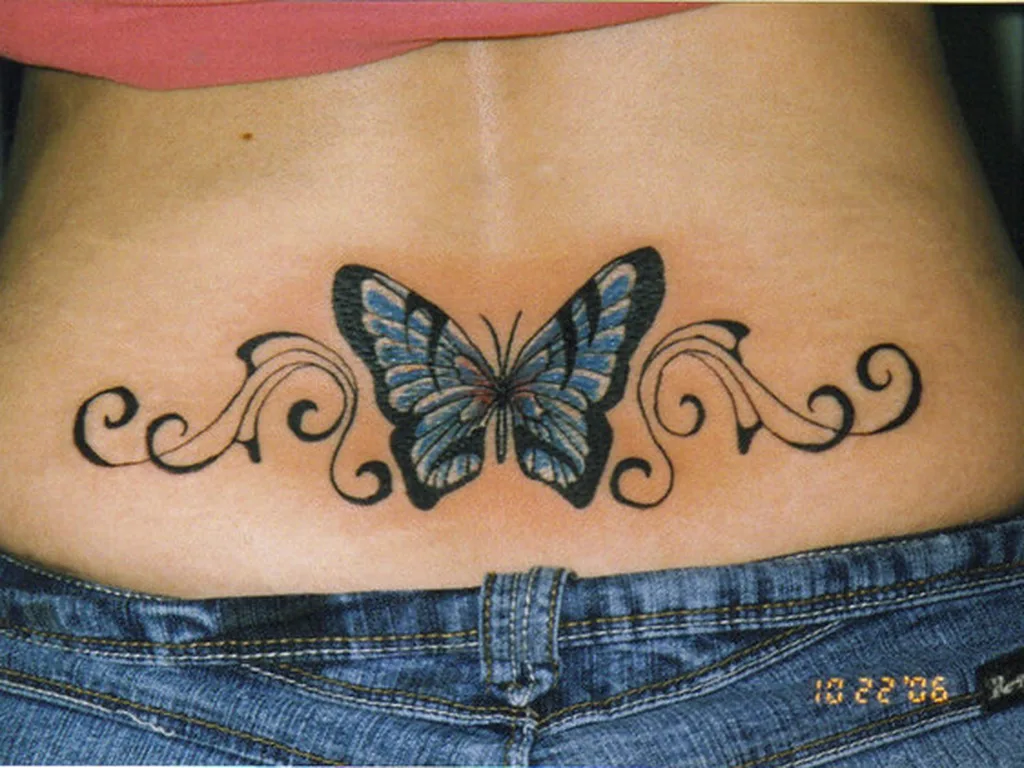
Traditional butterflies — bold outline, flat colour, simple wing shapes — are the best agers in the family. The style was shaped in street shops and on working skin, built to survive decades of exactly this. The outline is thick enough that a little spread reads as part of the look, and flat colour blocks fade evenly instead of going patchy. If a twenty-year horizon is the priority, this is the safest pair of wings you can buy.
Blackwork
Blackwork ages almost as well, for the same reason: it relies on shape and contrast instead of colour. Solid black can lighten a shade and dense dotwork can fill in slightly, but a black butterfly with clear skin gaps keeps its picture. The gaps are the weak point. They narrow as ink settles, so a blackwork butterfly needs its white spaces drawn generous from the start.
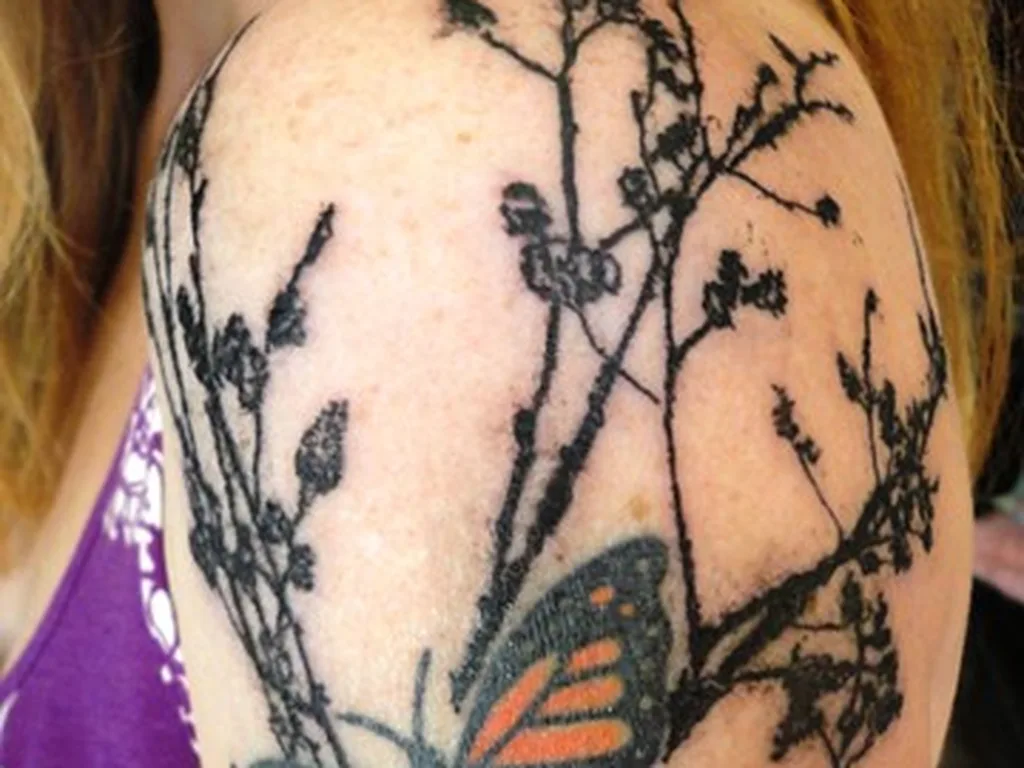
Fine line
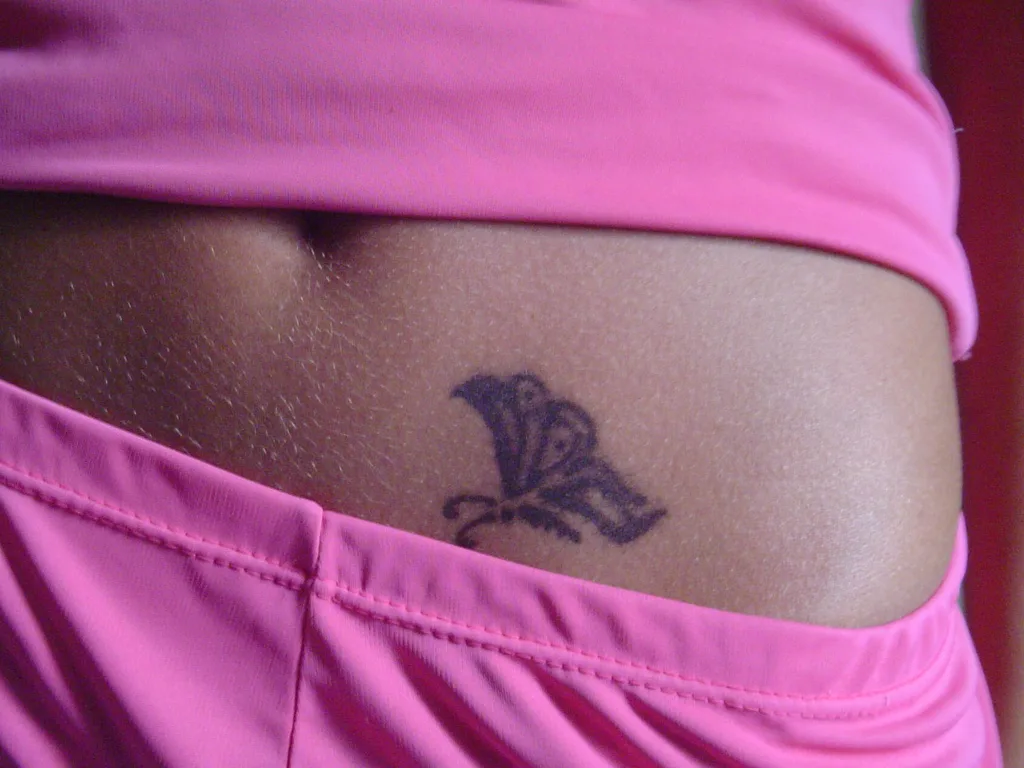
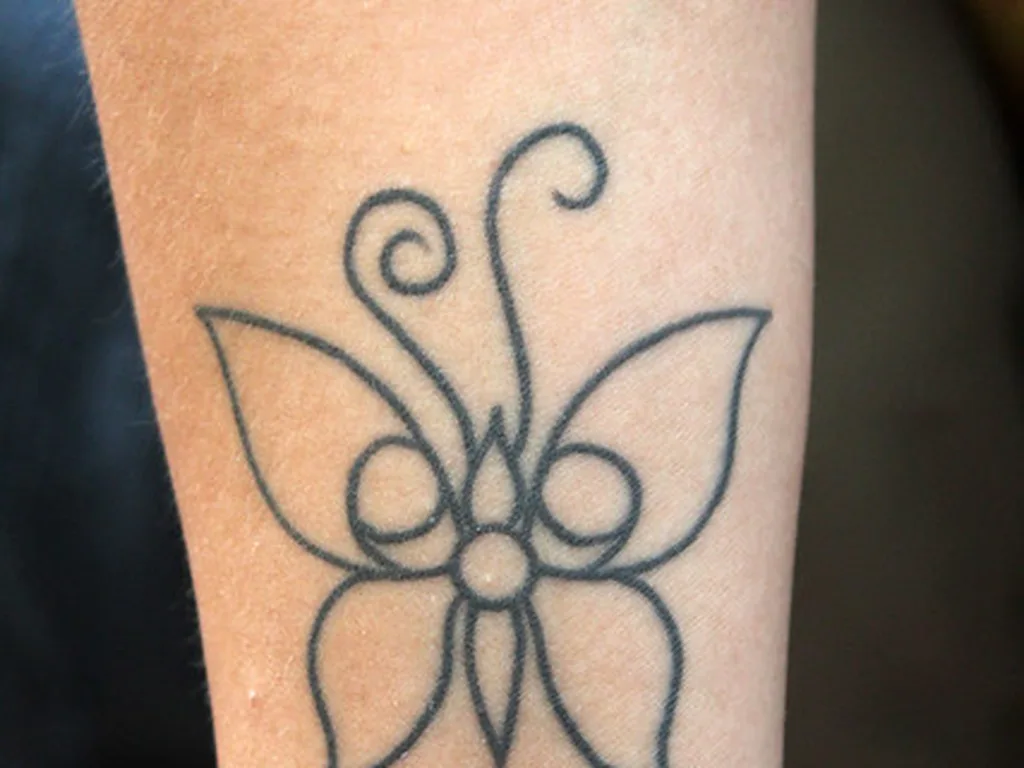
Fine line is the style people ask about most, and it carries the real risk. Single-needle lines are the thinnest marks a tattoo can be made of, so they hold the least ink to lose and leave the least room before two lines merge. On a butterfly, that means wing veins meeting, small circles closing up, and symmetry drifting as each wing settles at its own rate. Fine-line butterflies can look lovely for years, but they are the design most likely to need a touch-up — and the one where going bigger buys the most extra time.
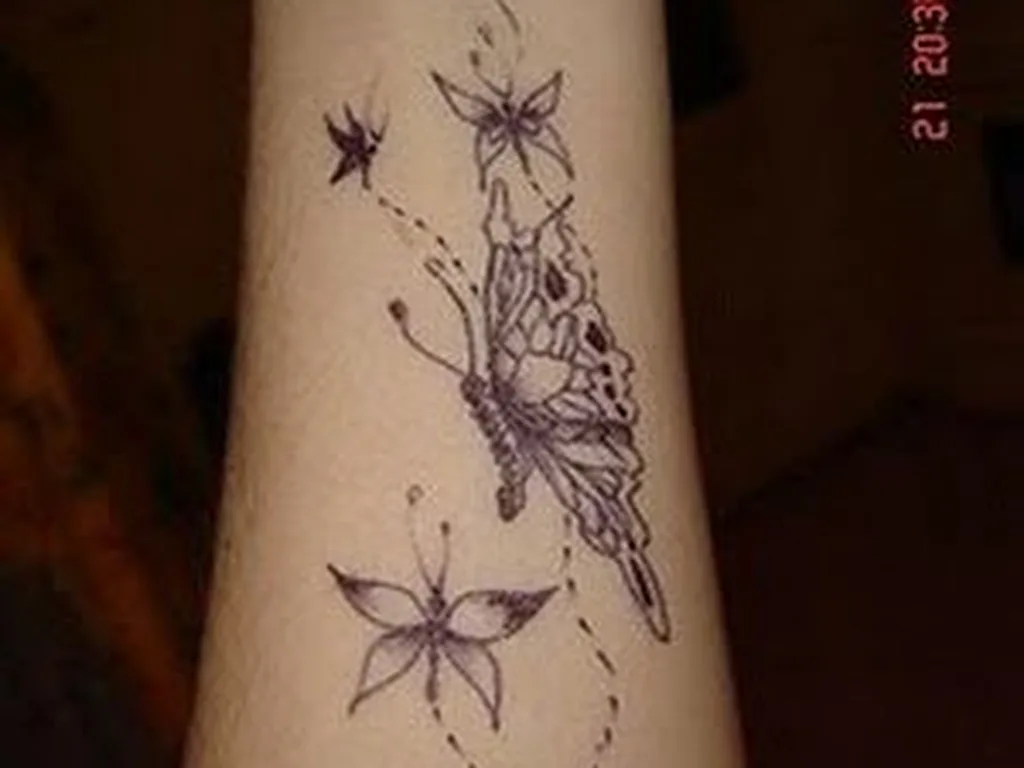
Watercolour
Watercolour butterflies skip the outline and build the wings from washes of colour. Fresh, they look like paint on skin. Aged, the washes lighten unevenly — the palest colour goes first, the edges lose their edge, and with no outline there is nothing holding the butterfly shape together. Artists who do this style well tend to say the honest version out loud: expect a soft watercolour mark in ten years rather than a crisp butterfly, and plan the design so it still looks good as one.
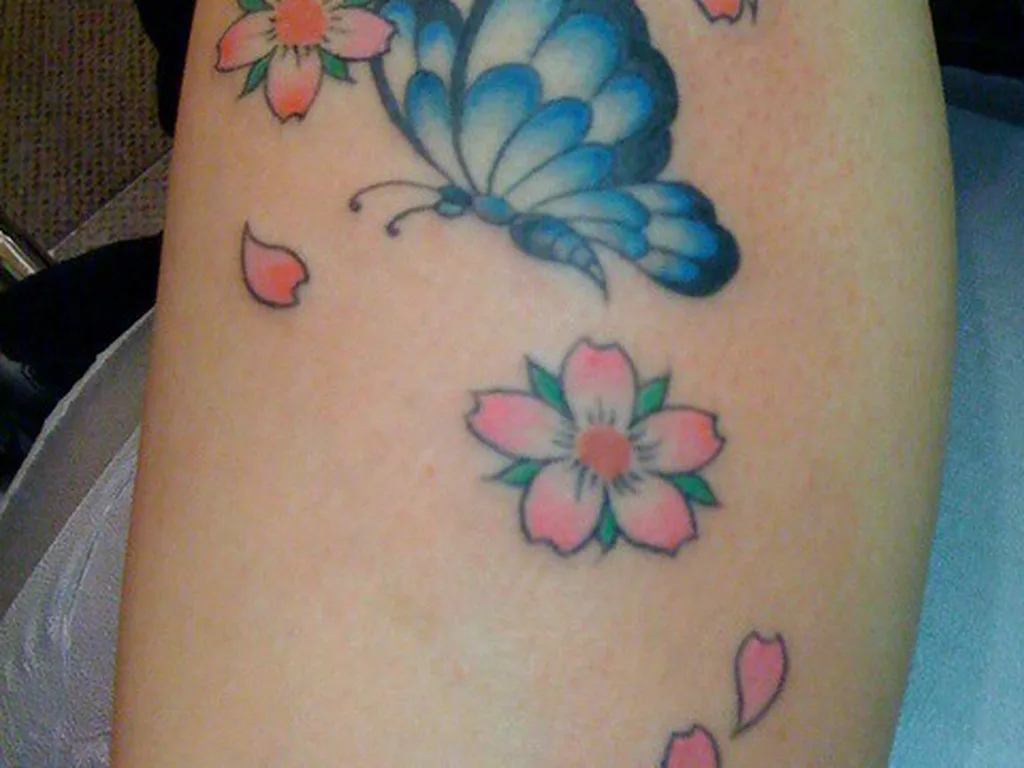
Realism
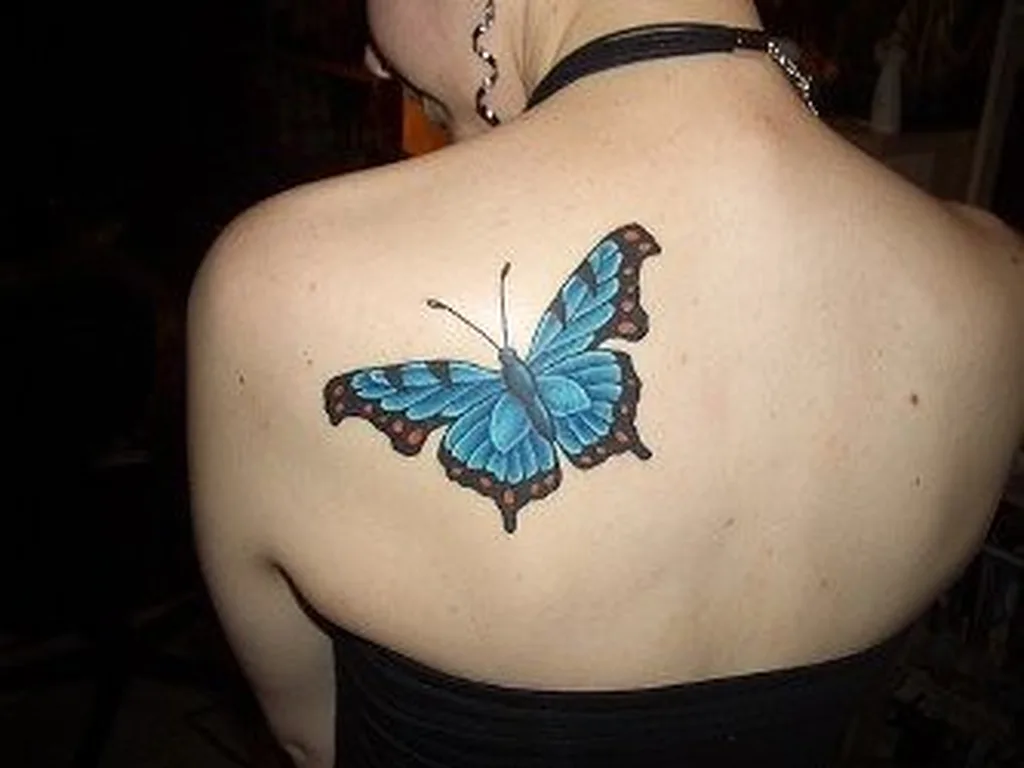
Realistic butterflies sit between the two camps. They have no outline to hold them, but they are usually drawn larger, with stronger darks anchoring the wings. The dark body and wing edges keep the shape readable while the softer colour detail on top fades. Small realism ages badly. Palm-sized and upward, with real contrast in it, realism holds up respectably.
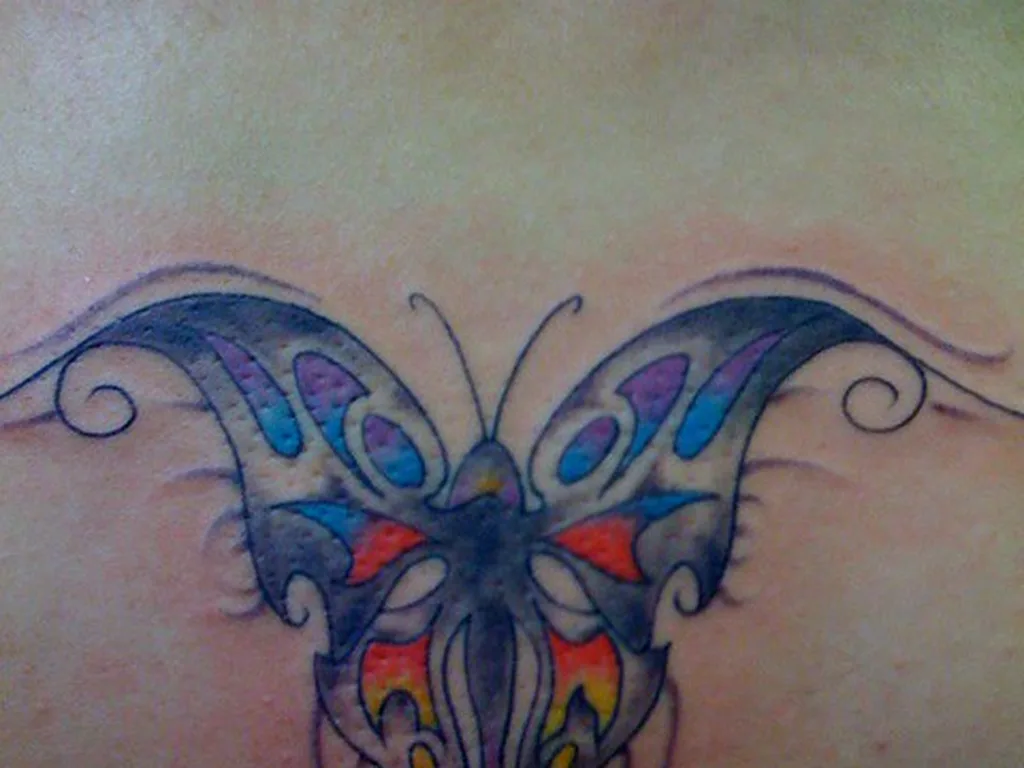
Placement makes a bigger difference than most people think
Sun is the biggest single factor in how fast a tattoo fades, and placements split into rough groups. Shoulders, forearms and the back of the neck catch sun week after week and age fastest. The back, the thighs and upper arms that live under sleeves age slower. Ribs and stomach sit in the middle for sun but lead the table for stretch: weight change moves that skin more than almost anywhere else, and a symmetrical design shows movement first. Wrists, hands, ankles and feet combine thin skin, friction from watches, socks and straps, and constant washing — small butterflies there fade and blur sooner than the same design nearly anywhere else.
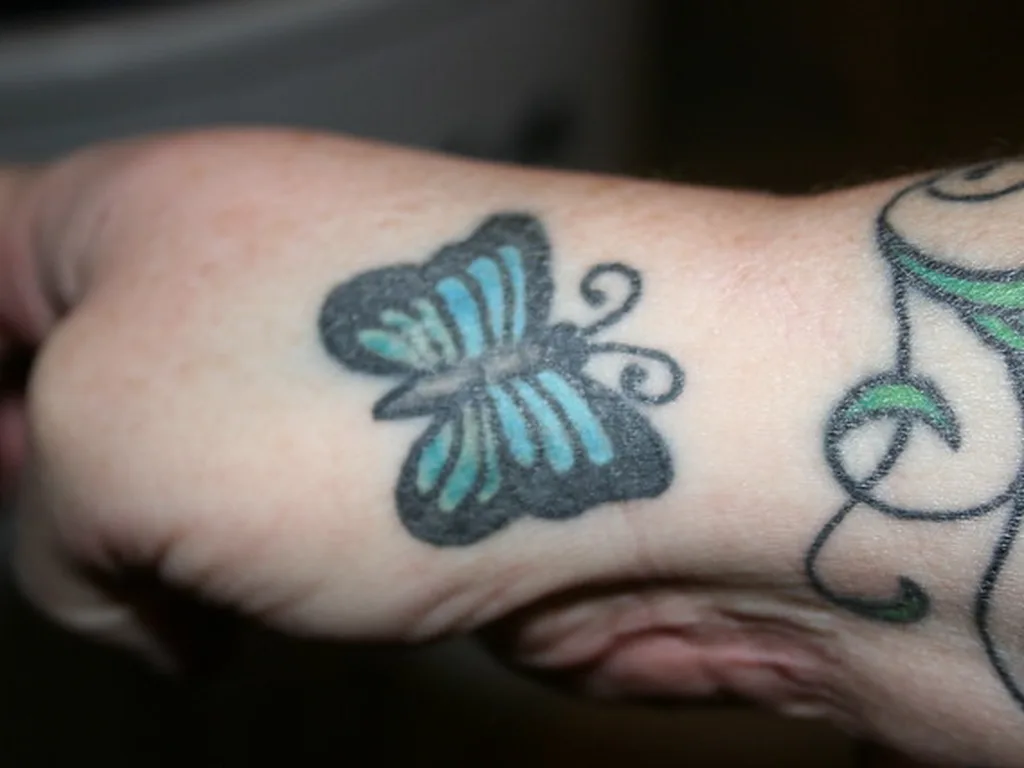
None of these placements is banned, and plenty of people wear ankle and wrist butterflies happily for decades. It just changes the deal: a high-friction or high-sun spot means choosing a bolder, simpler version of the design, and expecting a touch-up sooner than you would on covered skin.
Sunscreen is the cheapest anti-ageing product a tattoo in a sunny spot will ever get. Ink that spends its summers under factor 50 fades at a fraction of the rate of ink that bakes, and artists can often guess which of two matching tattoos belongs to the careful owner. It will not save a pale watercolour wing on a shoulder that lives in the sun, but it buys every other style real time.
Which colours go first
Artists generally agree on the fading order, even if skin type and sun exposure shuffle it. Yellows and pale pastels fade fastest. Light blue, light pink and lavender follow. Reds and oranges hold longer but can soften toward a brownish pink. Greens and dark blues are stubborn. Black lasts longest of all, which is why every long-lived style leans on it. White ink is a special case: highlights packed into wings often settle toward cream or near-skin within a few years, so a butterfly whose pattern depends on white detail is borrowing time.
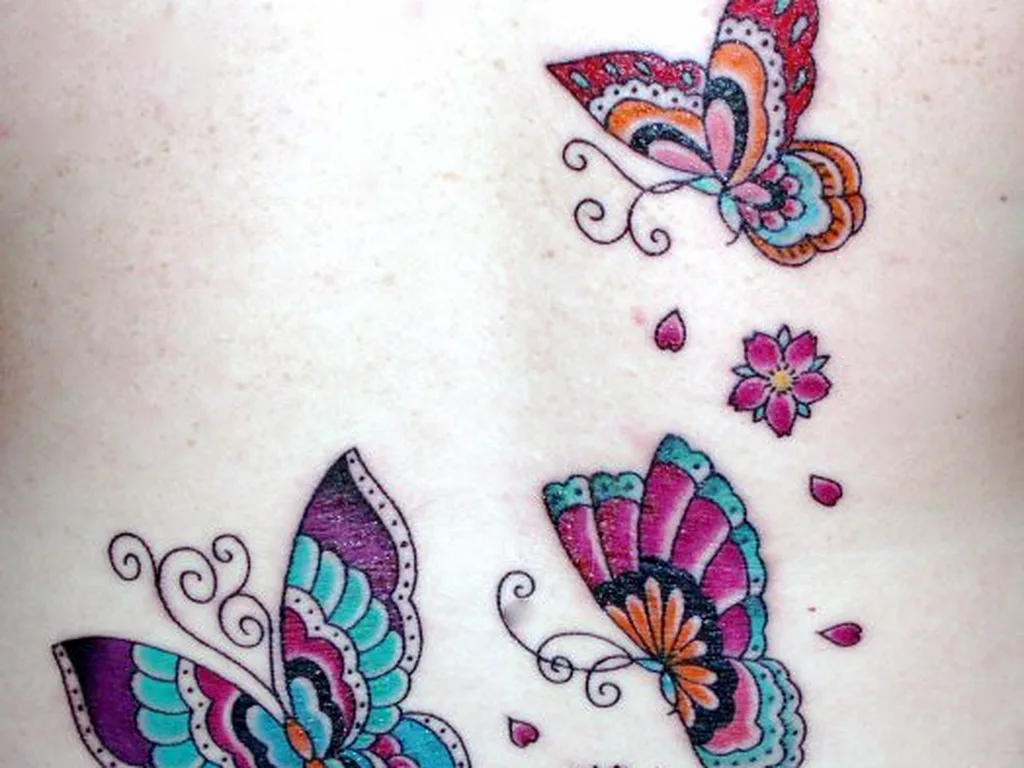
For a monarch or a morpho, where the colour is the identity, this order is the whole design problem. A monarch’s orange panels will outlast a morpho’s pale blue wash. If your heart is set on a pale species, size and outline have to do the work the colour will not.
Choosing a butterfly that is built to last
The advice artists give is plain and consistent. Go bigger than your first instinct: a palm-sized butterfly keeps its wing gaps open years longer than a coin-sized one. Keep the wing pattern simple — three or four clear markings per wing age better than twelve fine ones. Ask for an outline, even a soft dark grey or brown one, if you want the shape to outlive the colour. Leave real space between close lines. Put the contrast where it counts: a dark body and dark wing roots make the whole insect read from across a room long after the wingtips soften. And pick the species with ageing in mind. Bold-patterned species like monarchs and swallowtails translate into durable tattoos far better than pale, subtle ones.
Touch-ups, reworks and cover-ups
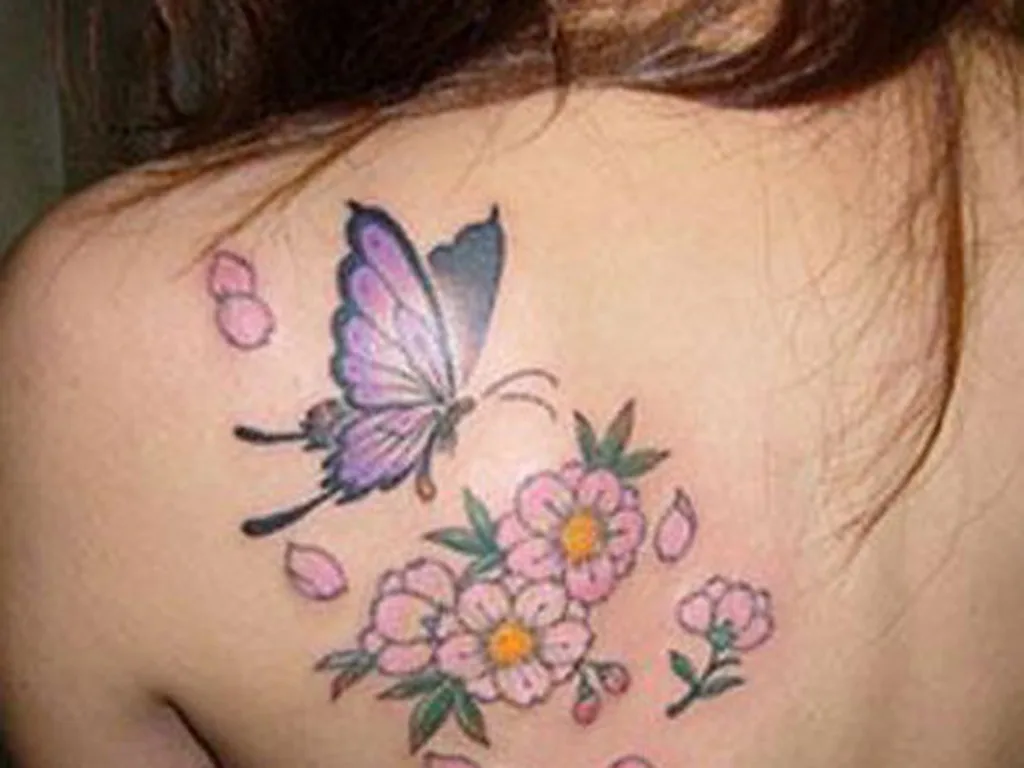
A touch-up is a short session that re-passes faded lines and re-packs colour that has lightened. For fine-line and watercolour butterflies it is closer to routine upkeep than to repair — many artists include one touch-up after healing, and a paid refresh some years later is normal practice. A rework goes further: the artist draws over the old piece, thickening lines, reopening gaps that have closed, and sometimes darkening the design a step to give it a second life. Butterflies take reworks well, because the old wings hand the new ones a map.
Cover-ups are the last resort, and the hardest to pull off with this subject. A butterfly is a light, open design; a cover-up needs the opposite — dark, dense and busy. An old butterfly usually ends up under something larger and darker that is not a butterfly at all, or it gets lightened with laser sessions first. If you are choosing a first butterfly while already suspecting you might want it gone one day, that is worth knowing before the appointment, not after.
What a good artist checks before inking small, detailed wings
Show an artist a small, detailed butterfly and watch what happens before they agree. They will usually ask to size it up, and that is not upselling — it is protecting the wing gaps. They check the spacing between the finest lines at the size you asked for, and simplify the pattern where lines sit too close. They think about symmetry on curved skin: wings drawn flat can land unevenly on a shoulder blade or an ankle, so they place the stencil, check it in a mirror, and sometimes place it twice. They ask where the tattoo is going, and may steer a detailed piece away from fingers, feet and the side of the wrist. And the honest ones say the quiet part out loud: how they expect it to look in ten years, and what they would change to make that picture better. An artist who talks about the ten-year version without being asked is telling you how they work.
Frequently Asked Questions
Do butterfly tattoos age well?
The bold ones do. Traditional and blackwork butterflies with a strong outline and clear contrast can stay readable for decades. Fine-line, watercolour and very small detailed butterflies soften much sooner, because their wings depend on thin lines and pale colour that fade and spread first.
Which butterfly tattoo style ages best?
Traditional ages best, with blackwork close behind. Both lean on strong outlines, solid darks and simple shapes, so a little spreading reads as part of the style instead of damage to it. Realism in a larger size holds up respectably; fine line and watercolour are the fragile end of the family.
Do fine line butterfly tattoos last?
They last, but they soften fastest. Single-needle lines hold the least ink, so they fade sooner and close lines merge earlier. A fine-line butterfly drawn palm-sized, with space between its wing markings and a touch-up planned down the road, can stay pretty for years — drawn tiny, it is the first design in this article to blur.
Do watercolour butterfly tattoos fade?
Yes, and unevenly. Watercolour work has no outline, so as the palest washes lift, the edges of the wings lose definition and the butterfly shape dissolves into a soft colour mark. Many wearers still love how it looks — just go in expecting a watercolour smudge in ten years, not a crisp insect.
How long before a butterfly tattoo needs a touch-up?
It depends on style and placement more than on the calendar. Artists commonly see delicate fine-line and watercolour pieces come back for a refresh within the first several years, while bold traditional work on covered skin can go far longer without one. Sun exposure can halve or double those spans, which is why artists talk about placement before they talk about years.
What placement makes a butterfly tattoo last longest?
Covered, low-friction skin: the back, the thighs and upper arms that live under clothing. These spots dodge the two biggest agers — sunlight and rubbing — so lines stay crisper and colours stay closer to how they healed.
Where do butterfly tattoos fade fastest?
On the hands, fingers and feet, and anywhere the sun lives: shoulders, forearms and the back of the neck. Thin skin, constant washing, friction from straps and shoes, and daily ultraviolet all stack up in those spots.
Do small butterfly tattoos blur?
Small and detailed blurs; small and simple holds up. The problem is not size alone but spacing — wing veins and spots packed into a tiny area close up as ink settles. A small butterfly with three clear markings per wing and real gaps between them can age gracefully.
Which butterfly tattoo colours fade first?
Yellows and pale pastels go first, then light blues, pinks and lavenders. Reds and oranges last longer but soften, greens and dark blues are stubborn, and black outlasts everything. White highlights usually settle toward a cream tone within a few years.
Can an old, faded butterfly tattoo be fixed?
Usually, yes. A touch-up re-passes faded lines and colour. A rework redraws over the old wings, thickening lines and reopening closed gaps — butterflies take this well because the old design maps the new one. A full cover-up is harder, since a light, open butterfly needs something darker and denser over it, sometimes after laser lightening.
Final Thoughts
A butterfly is one of the few designs where the ageing question deserves an answer before the meaning question, because the prettiest version on day one is often not the best version in year ten. Pick the style for the decade rather than the photograph: a bold outline, clear contrast, wings with room inside them, on skin the sun does not live on — and a butterfly will still be a butterfly long after most delicate designs have given up. If you want the soft, fine version anyway, get it with open eyes and a touch-up in the budget, and it can stay lovely too. When you are ready to think about what yours should stand for, the butterfly tattoo meaning guide covers the symbolism behind the wings.