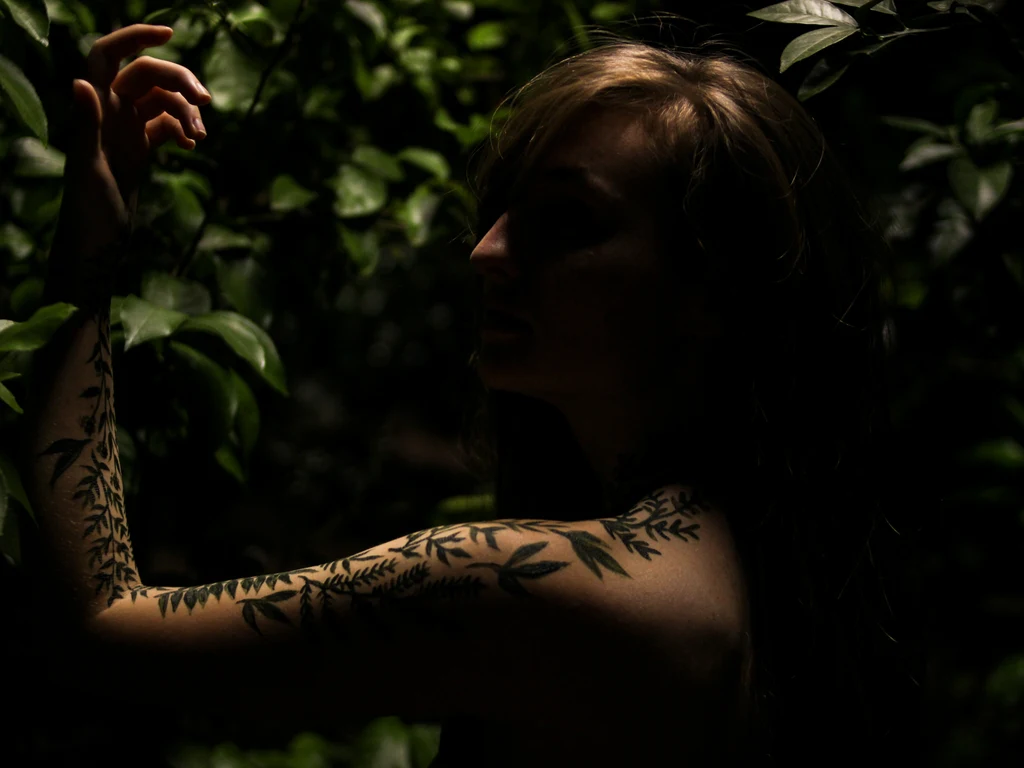
The peony is the flower tattooists reach for when a design needs weight. One bloom carries dozens of layered petals, so it can fill a shoulder, anchor a sleeve or hold its own next to a dragon without shrinking into decoration. If you are sorting through peony tattoo ideas, this list shows the flower the way it actually gets worn: blackwork half sleeves, Japanese backpieces, fine line forearms, a rib piece, and three cover-ups where the dense petals do real work.
Every design below is a real tattoo in a real photograph, counted one by one: 21 in total. No drawings, no flash sheets, no stencil photos dressed up as finished work. Two photographs show one tattoo from several angles and one catches a piece still in progress; where that happens, the design note says so. One studio photo that circulates as a “peony” was left out, because the flower in it is plainly a lotus.
This guide is the single-flower companion to our flower tattoo design ideas overview, which covers fifteen flowers at a shallower depth. Here the peony gets the whole page: where its meanings come from, the placements that suit a bloom this size, and notes on how each style holds up over the years.
What a Peony Tattoo Means
Start with China, where the peony (mǔdān) has been cultivated for over a thousand years and picked up the title “king of flowers” along the way. Britannica’s peony profile traces the plant from Chinese gardens to Luoyang, which still holds peony festivals every spring. In Chinese art the bloom stands for wealth and honour — the pair of ideas bundled into the word fùguì — and it turns up on porcelain, embroidery and wedding goods for exactly that reason. That reading is documented tradition, not studio decoration.
Japan took the flower, called it botan, and gave it a partner. In Japanese tattooing the peony is classically paired with the shishi lion: the king of flowers set against the king of beasts, beauty holding its ground next to power. Peonies also sit inside dragon and phoenix pieces, as several designs below show, the soft bloom balancing hard scales and feathers. Readings of bravery and good fortune attach to the flower in this tradition.
Korea embroidered peonies (moran) onto royal wedding robes, where they stood for happiness in marriage. In Victorian flower language the peony picked up a quieter meaning — bashfulness — odd company for a flower this loud. Even the Latin name carries a story: Paeonia comes from Paeon, physician to the Greek gods, so the flower has a healing thread in its history too.
Modern tattoo writing adds romance, prosperity and “living boldly” to the list. Those readings are popular retellings rather than old sources, and there is nothing wrong with choosing a peony for one of them — plenty of people here clearly did. Just know which layer you are standing on: a symbol with a thousand years of history behind it, or a meaning your studio gave it last year. They are not the same reason.
21 Peony Tattoo Ideas
1. Pink Peony in a Geometric Frame, Upper Arm
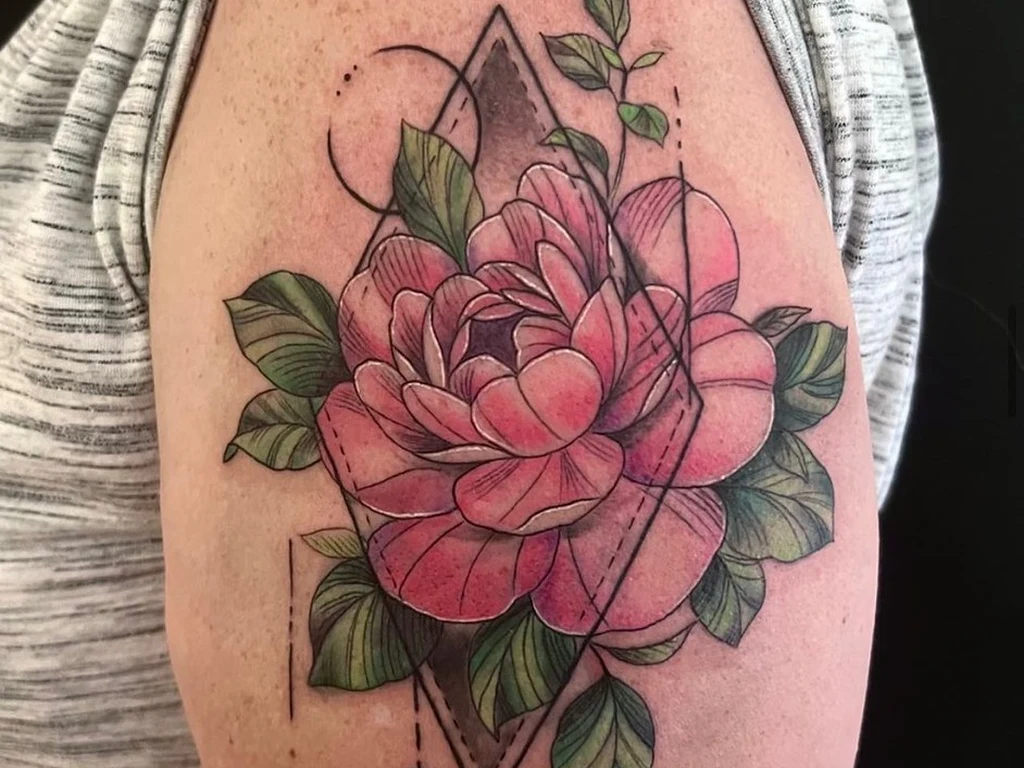
A full pink bloom with its petals opened flat and green leaves tucked around it, the whole flower pinned inside a thin geometric diamond with a small circle-and-line mark below. The frame does what frames do: it turns a flower into an emblem, closer to a badge than a bouquet.
The upper arm is the kindest canvas here — flat, easy to sit for, easy to cover at work. The fine dashed lines inside the diamond are the detail to watch over the years; they have enough air around them to survive the slight widening every line gets.
2. Blackwork Peony Half Sleeve
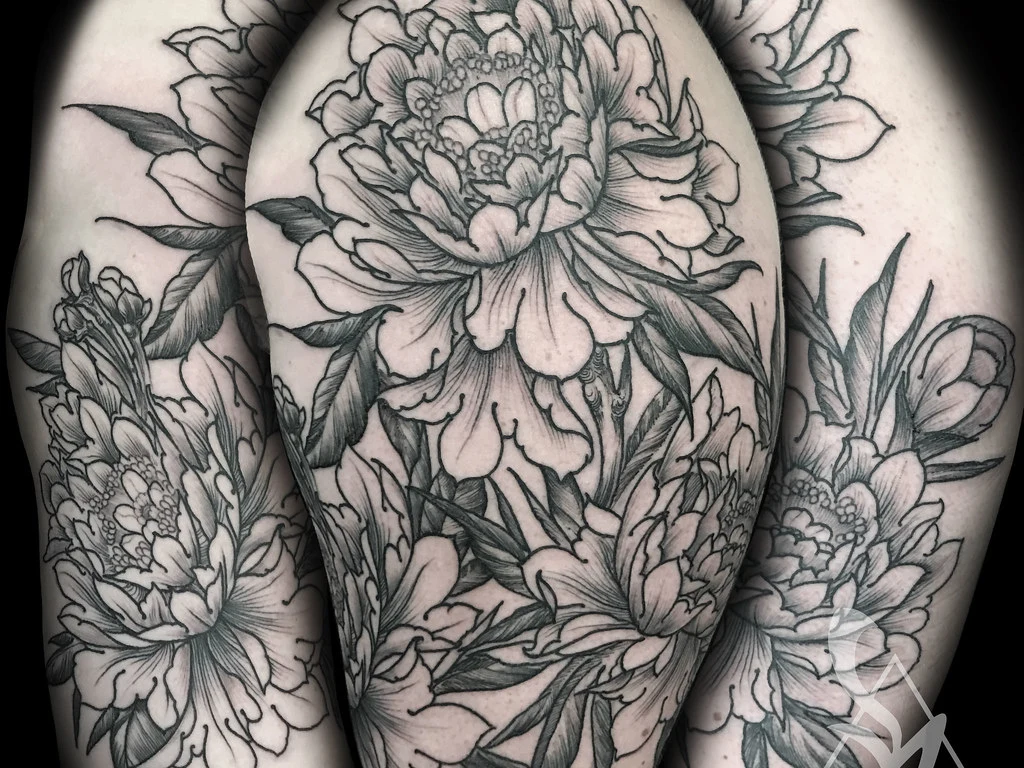
One half sleeve photographed from three angles: bloom after bloom of blackwork peonies from shoulder to elbow, petals built from line and stipple instead of colour. With no pigment to fade unevenly, the sleeve settles at one pace — the quiet advantage of blackwork at this size.
A half sleeve takes several sessions, and peonies suit the format: each flower finished as its own sitting as the sleeve grows. Bring your artist arm measurements, not just screenshots — spacing between blooms is what keeps it readable.
3. Peony and Dragon in Black and Grey, Upper Arm
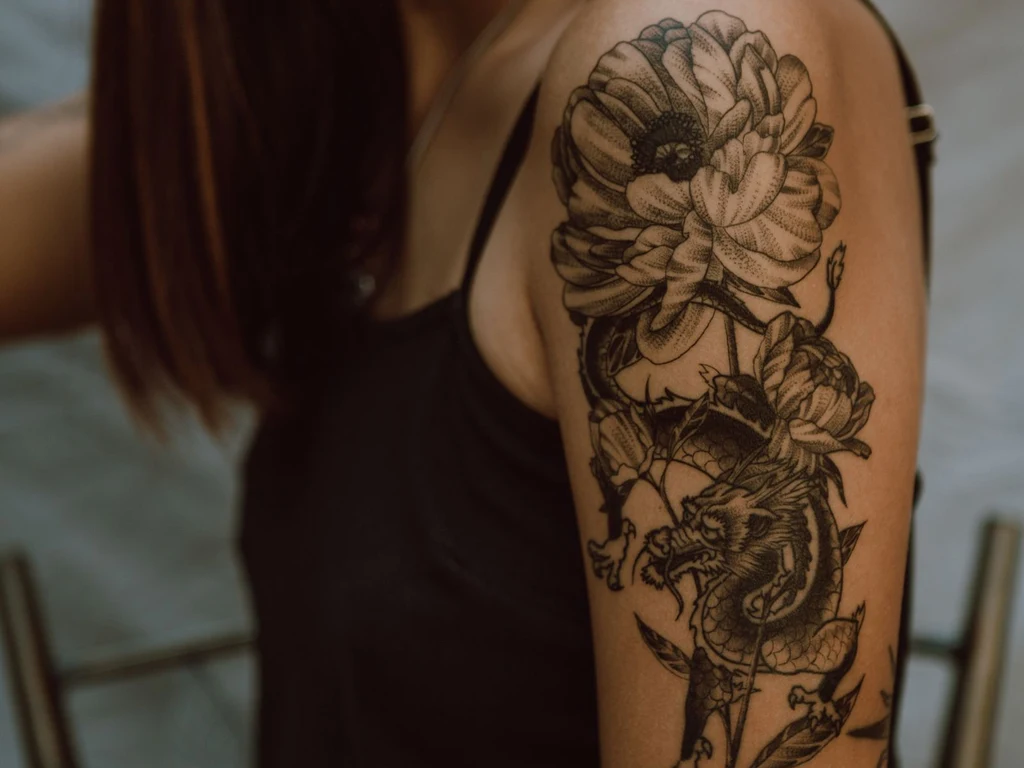
A large peony opens across the shoulder while a small dragon climbs through a second bud below it, the whole piece in black and grey. It is the Japanese pairing from the meanings section above, in miniature.
Black and grey is the most forgiving way to wear detail like this. The shading runs light to dark, so as it softens it softens evenly, and the petal edges are bold enough to stay separate.
4. Japanese Half Sleeve With Lantern and Kanji
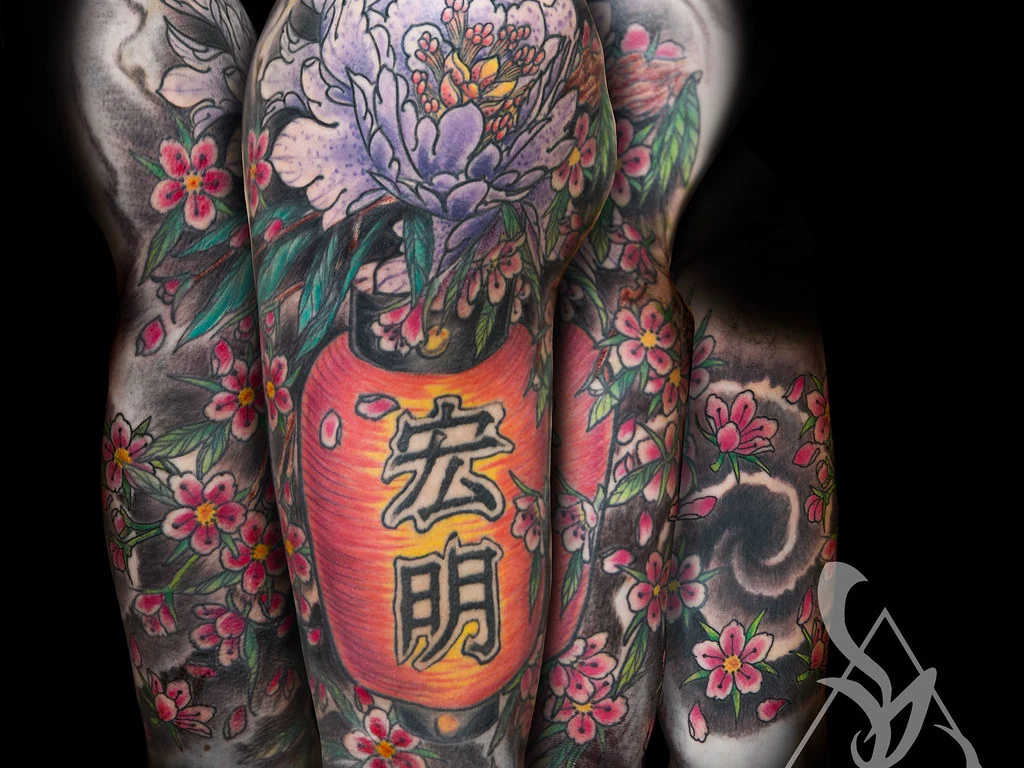
A colour half sleeve built like a small story: a purple peony at the top, cherry blossoms scattered through it, and an orange paper lantern carrying two kanji characters down the arm. The peony is one actor in a cast, which is how traditional Japanese sleeves are meant to work.
A note that applies to any script in a tattoo: characters you cannot read need checking by someone who can, before the stencil goes on. Here the lettering sits inside a lantern, one deliberate element rather than decoration.
5. Dragon Backpiece With a Big Orange Peony
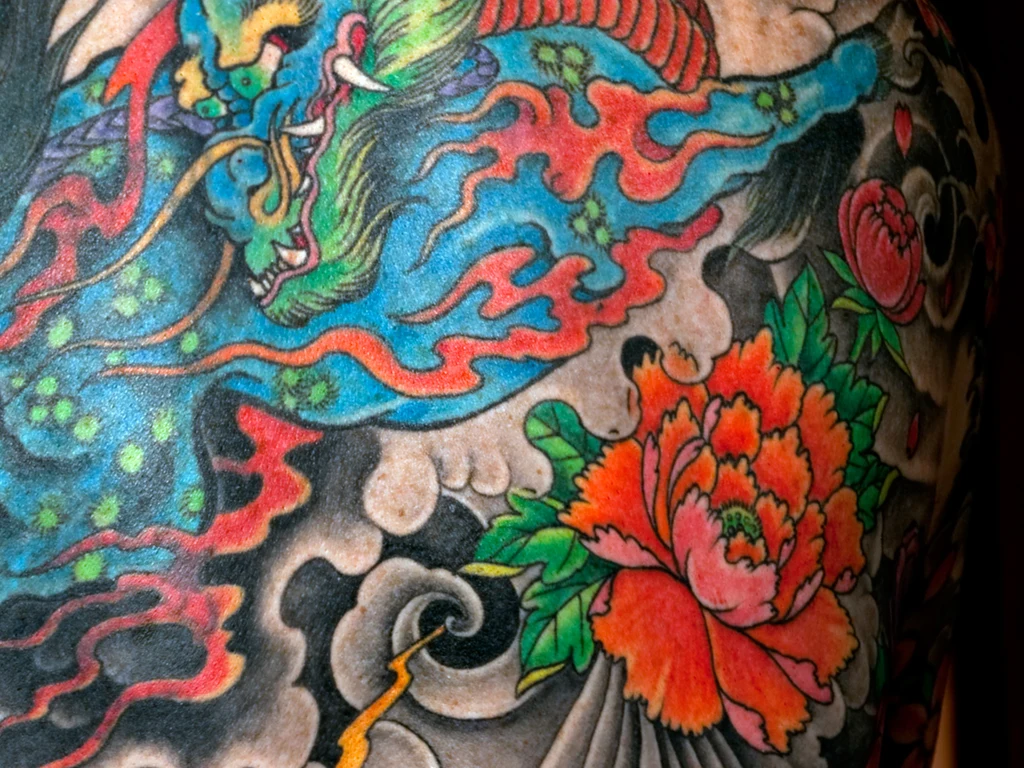
The photograph is cropped to the top of a full Japanese backpiece, where a green and blue dragon pours over the shoulder and a big orange-red peony opens underneath it, a smaller pink bud at its side. This is the classic botan placement: the flower set low, cooling down the dragon above it.
Backpieces are measured in seasons, not sittings, and priced by the hour. Saturated colour like this orange holds well on the back, where skin sees less sun than arms do — one of the few placements where colour has an easier life than line.
6. Phoenix Sleeve With a Peony at the Forearm
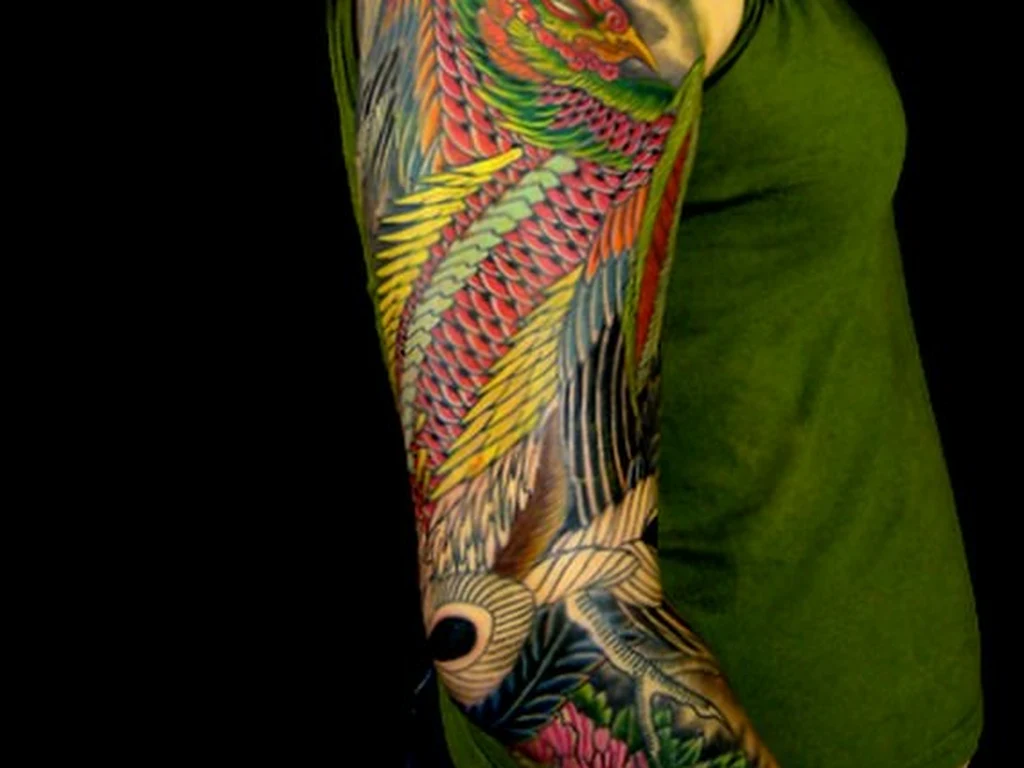
A full colour phoenix runs the length of this arm; the photograph runs from the bird’s body down to where a pink peony opens at the forearm. In Japanese work the two belong to the same garden: the phoenix stands for renewal, the peony for honour, and pairing them is older than tattooing itself.
Sleeves like this are planned as one drawing, not collected piece by piece. Commit to the whole composition early, even if the sessions spread across a year.
7. Dragon Sleeve With a Peony in the Waves
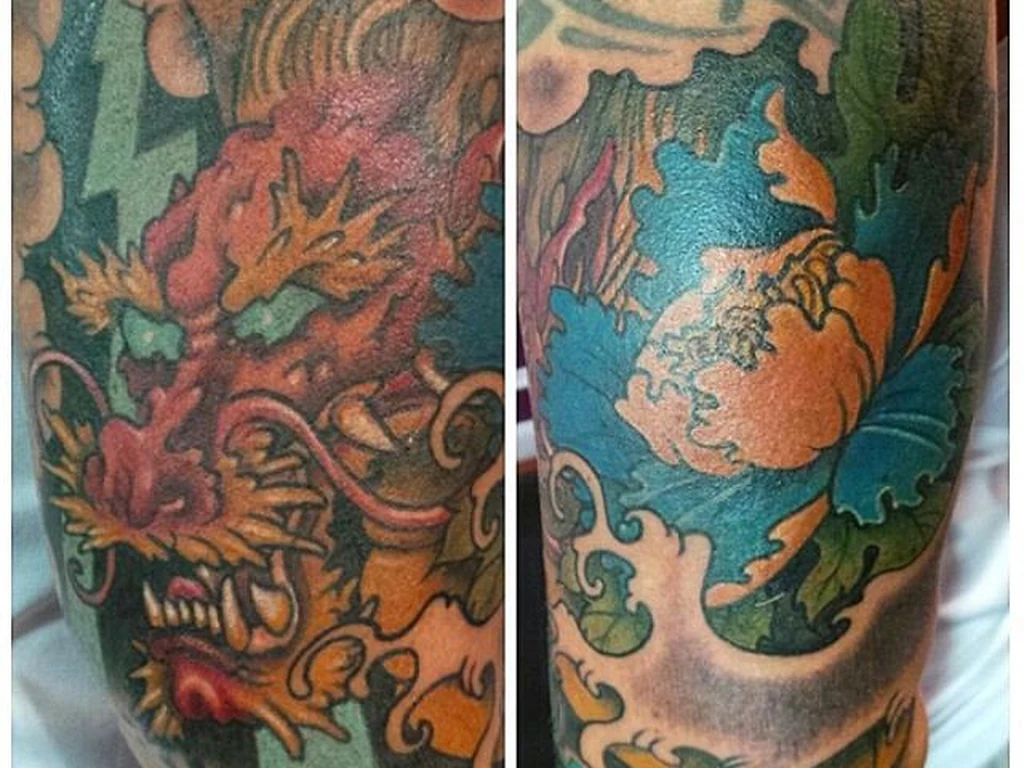
Two panels of the same Japanese sleeve: a red dragon’s head in one, and in the other a pale orange peony carried on teal waves. The flower is drawn softer than the dragon on purpose — in this style the peony is the calm surface the dragon moves through.
The wave background is what gives Japanese sleeves their movement. It also ages kindly, because a softened wave still reads as a wave.
8. Snake and Peonies, Thigh
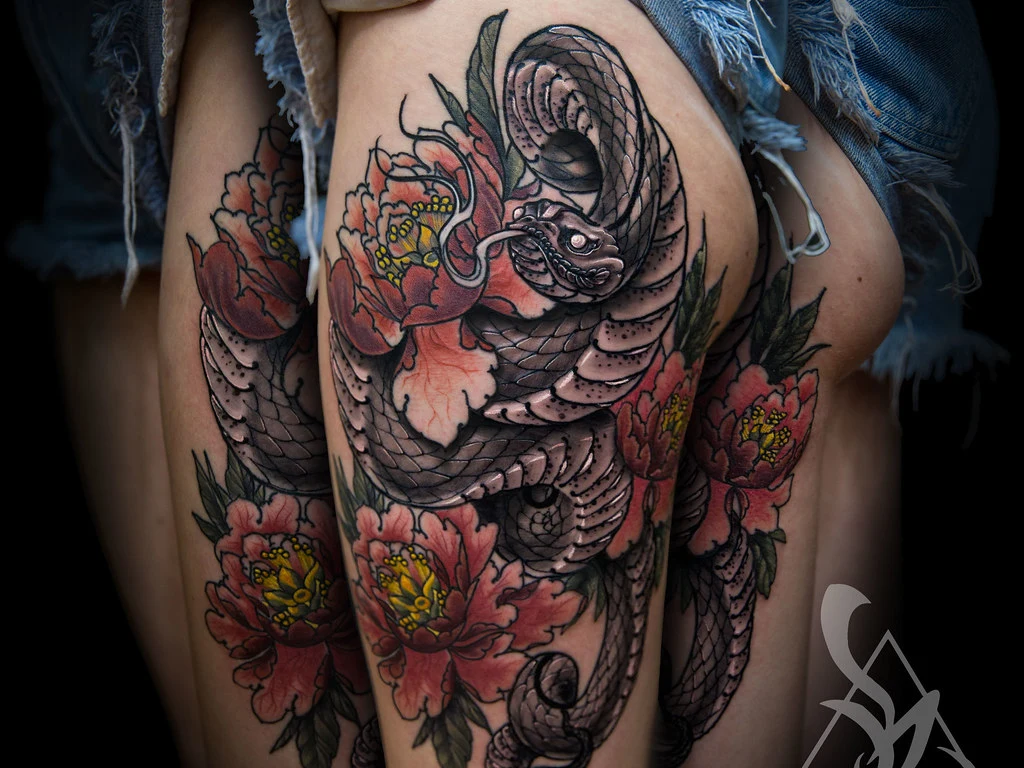
A dark snake coils down this thigh through red and pink peonies, its head finishing toward the knee. Snake and peony is a pairing with teeth: the flower stands for growth, the snake for shedding skin and starting again.
The thigh gives a long design room to coil without being cut at a joint, and it is one of the easier large placements to sit for — and to keep covered while it heals.
9. Tiger and Peony, Forearm (In Progress)
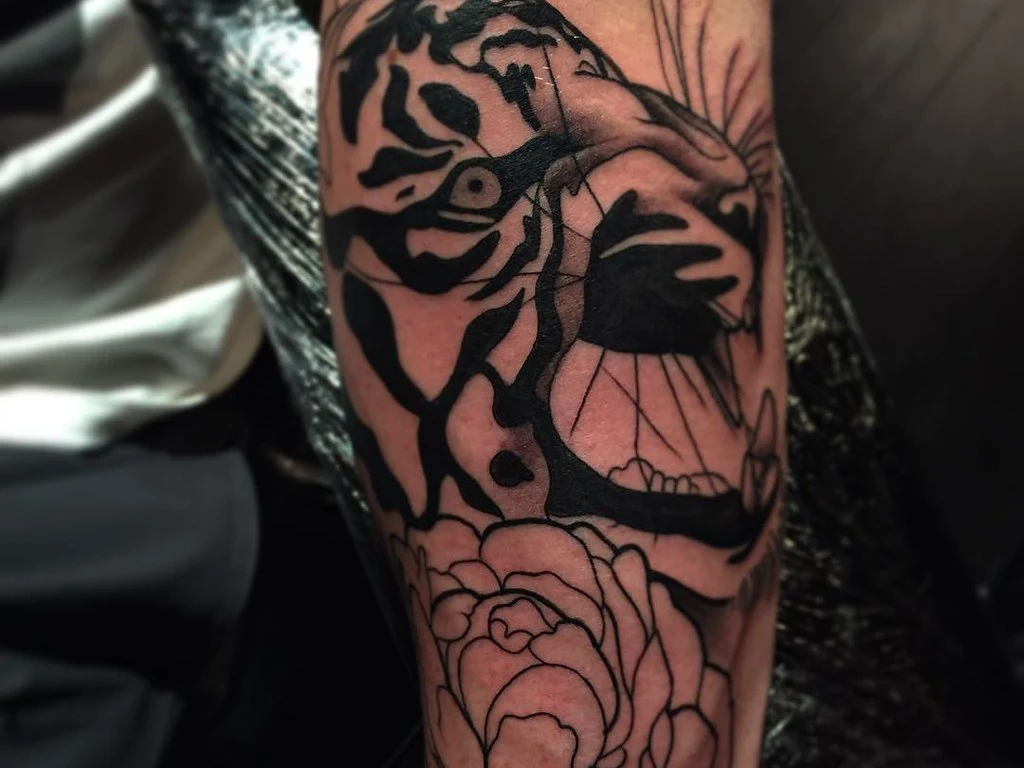
This photograph catches a forearm piece halfway home: the tiger’s head is laid in with bold black shapes while the peony beneath it is still mostly outline, its first pink shading just started. It earns its place because it shows what finished photos hide — a big design is built in layers, and the flower often waits its turn.
Tiger and peony is another traditional pairing, the animal’s force set against the flower’s rank. If your piece will take more than one session, agree the order of work at the start; a half-finished tattoo is a normal stage, not a problem, when the plan came first.
10. Crow and Peony, Arm
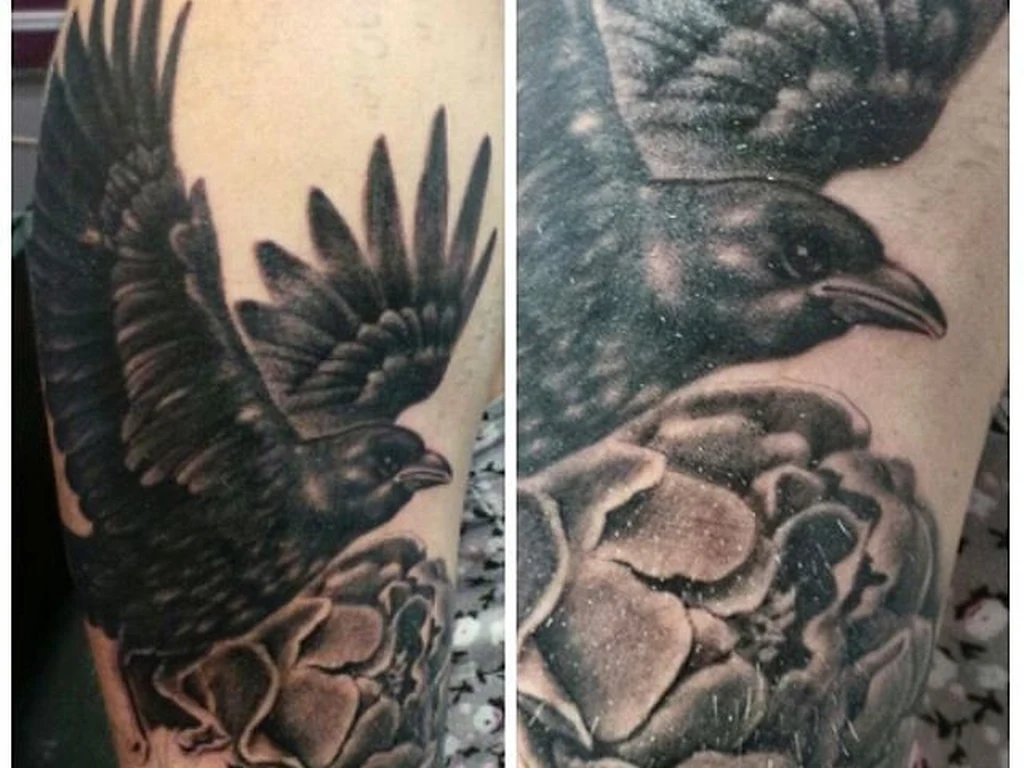
Shown in two panels: a black and grey crow with its wings spread, standing over a large shaded peony. The bird gets the drama; the flower gets the weight at the bottom.
It was photographed fresh, and black and grey always photographs darker on day one than it heals. Expect the peony’s soft greys to settle lighter than they look here — a good artist shades with that settle in mind.
11. Fine Line Peony With a Serpent, Forearm
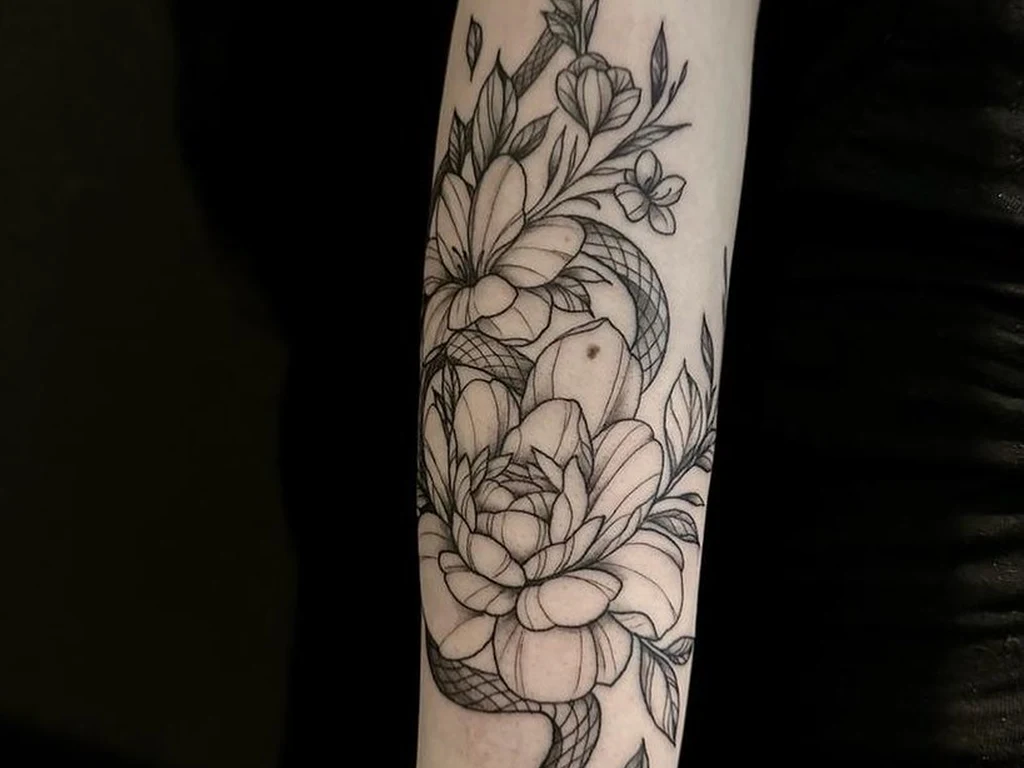
The quietest design on this page: a peony drawn in a single fine line weight, petals stacked tall, with a slender serpent threading down through the stem. No shading, no fill — the whole tattoo is contour.
Fine line is the style with the shortest memory, and this piece shows how to give it a chance: the petals have real space between them, so the slight widening lines get over the years widens into gaps that can take it. Our fine line tattoo ideas collection repeats that spacing lesson throughout.
12. Fine Line Peony, Forearm
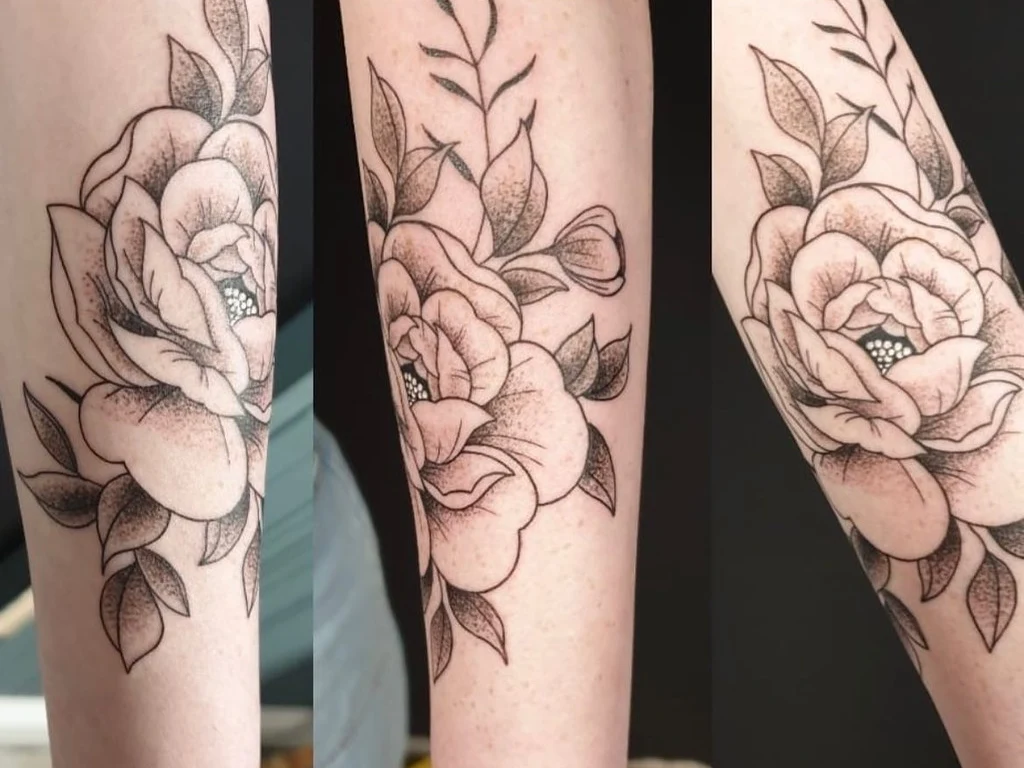
One forearm tattoo photographed from three angles: a soft peony on a leafy stem, fine line with the lightest touch of shading in the petals. The three sides show the real test of a forearm piece — it has to read as the arm turns, not just in the reference photo’s pose.
Forearms are where most first large flowers land: the skin is stable, and the shape suits a vertical stem. Keep a design like this out of the sun while it settles; fine lines show sun damage sooner than bold ones.
13. Fine Line Peonies, Lower Leg
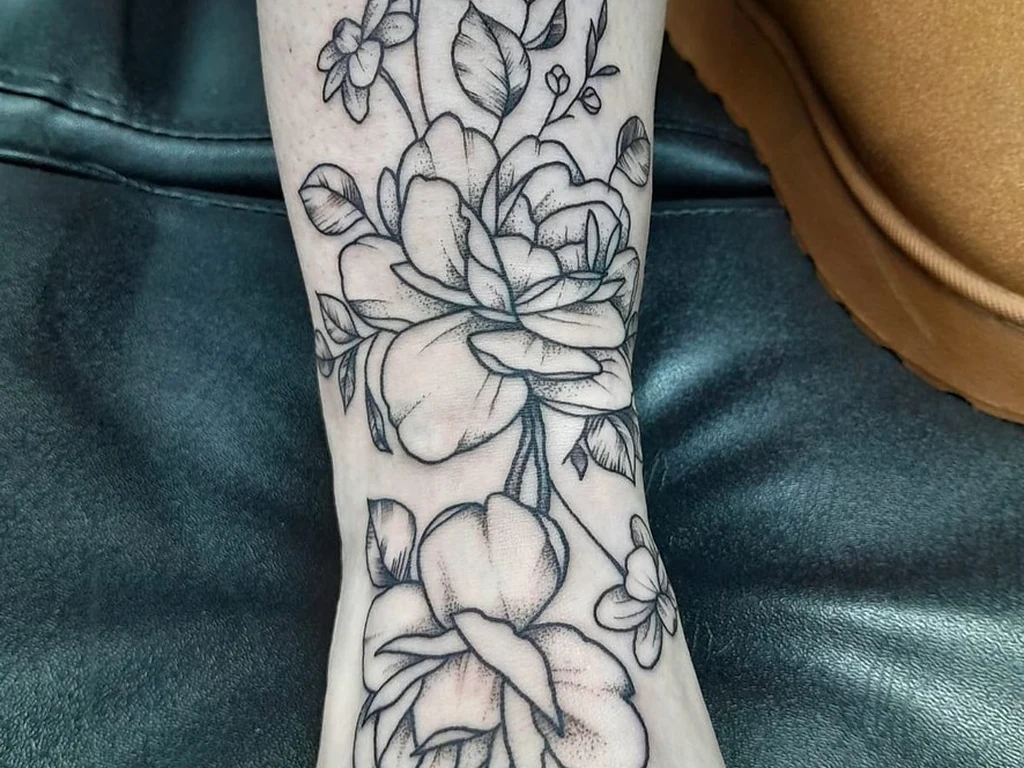
Two fine line peonies run down this lower leg, a larger bloom above the ankle and a smaller one below it, with little five-petal flowers filling the stem between. The spacing follows the leg’s own taper, which is why the design looks planted rather than pasted on.
Lower legs swell by the end of a day and rub against boots and socks, so plan a few quiet days after the appointment for healing. Fine line softens a touch faster on a leg than on an arm; the open drawing gives it room to do that gracefully.
14. Shaded Peony With a Soft Pink Wash, Forearm
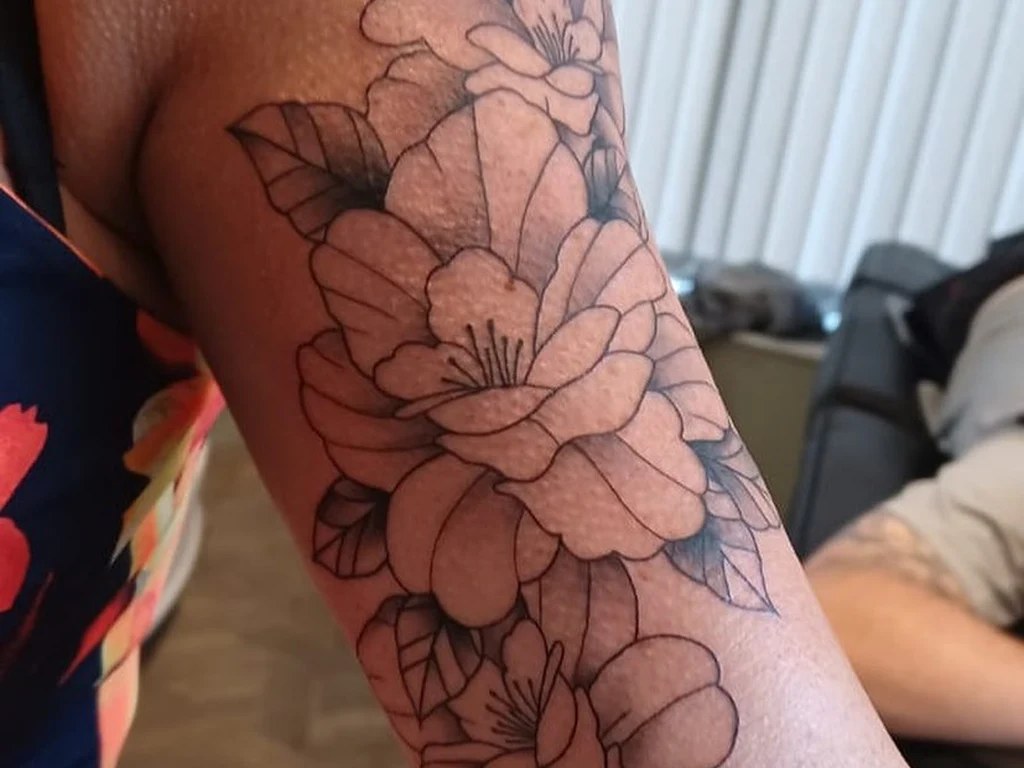
A cluster of peony blooms down a forearm, shaded in soft grey with a dusty pink wash over the petals. It sits between black and grey and full colour, with the manners of both: the grey does the structural work, the pink just warms it.
Light colour washes are the first thing sun takes from a tattoo. On a forearm, a wash this pale needs sunscreen as a habit if you want it to stay pink rather than drift to plain grey — which also looks good, and plenty of wearers let it happen.
15. Peony Trio With Mandala Lacework, Thigh
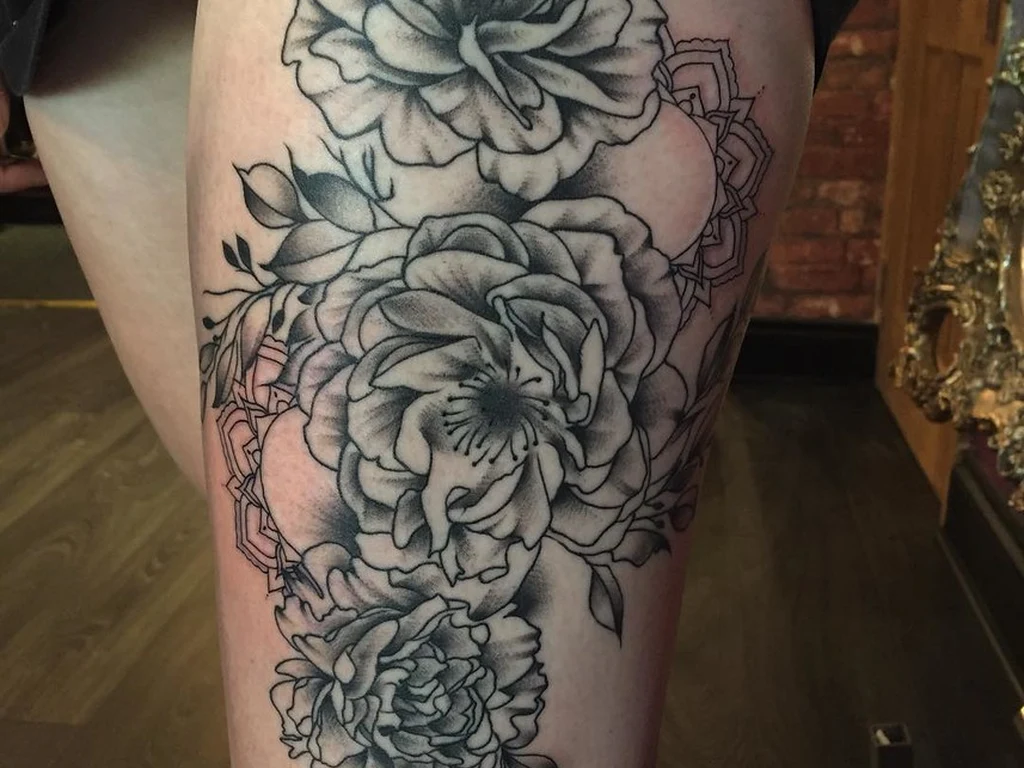
Three black and grey peonies stacked down a thigh, each bloom at a different stage of opening, with mandala lacework behind them and a trailing stem of leaves at the bottom. Stacking the same flower three times sounds repetitive until you see it done like this — the rhythm is the design.
The mandala sections are the ageing risk: lacework is small enclosed shapes, and small shapes merge first. These are drawn at a scale where each section still has air inside it — the difference between lace that lasts and lace that blurs.
16. Two Big Blackwork Peonies, Thigh
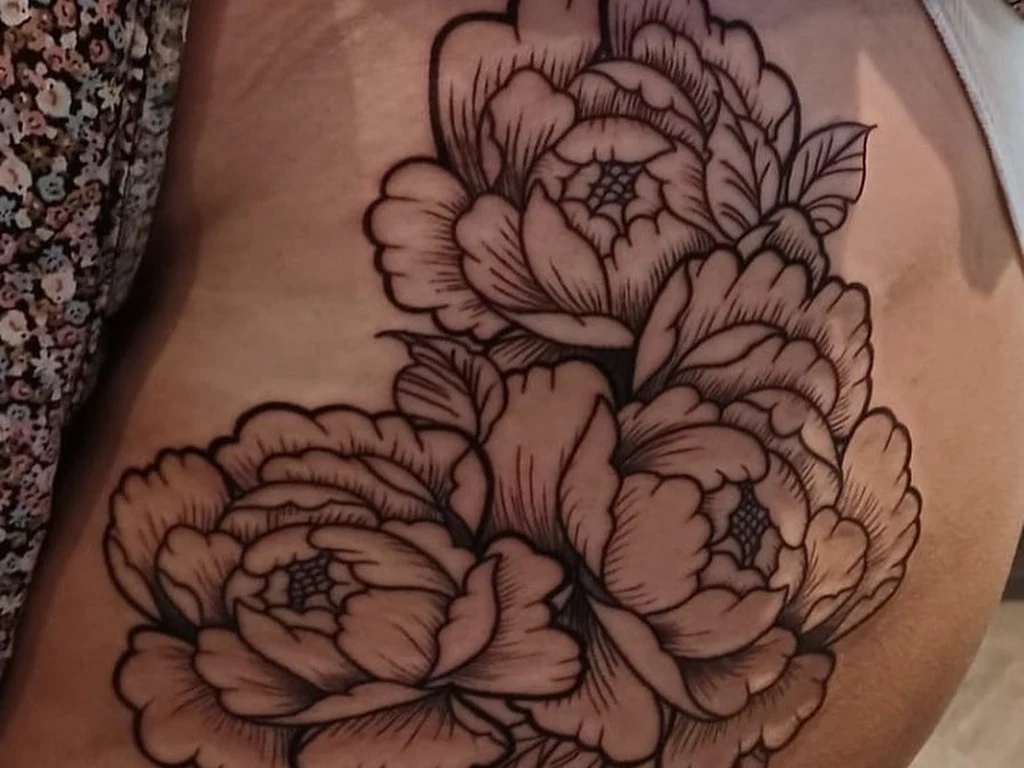
Two large peonies fill the front of this thigh, drawn in bold black line with the petals left mostly as open skin. It is the opposite approach to design 15’s shaded stack: no grey at all, just contour, and at this size the flowers read across a room.
Big outline work is a long-term bet on line quality, the same bet made by the thigh mandala in our lotus tattoo ideas list. It also leaves a door open: shading or colour can be added years later, and with peonies many wearers eventually walk through it.
17. Shaded Peony, Shoulder Blade
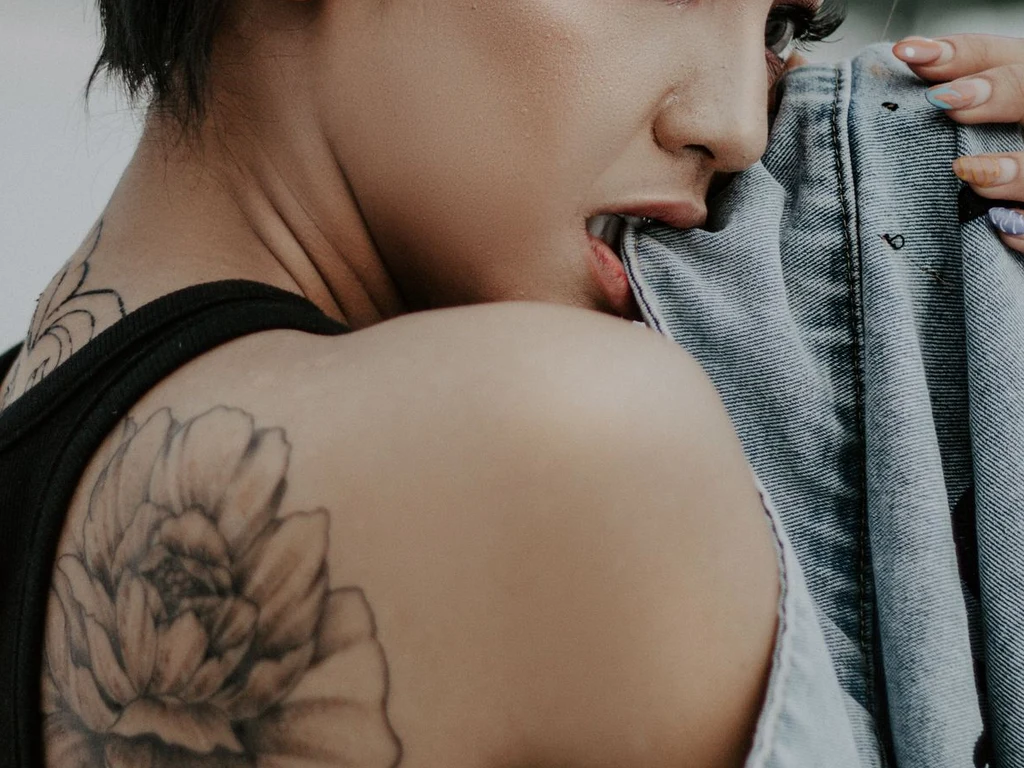
One big soft-shaded peony sits on this shoulder blade, its lowest petals flowing into a curved wind bar that follows the shoulder’s edge. The back is where a flower is allowed to be the size it wants to be, and this one takes the offer.
Shoulder blade skin stays stable across the years, which makes it kind ground for soft shading. The trade is practical: you cannot reach the middle of your own back while it heals, so plan help before the appointment, not after.
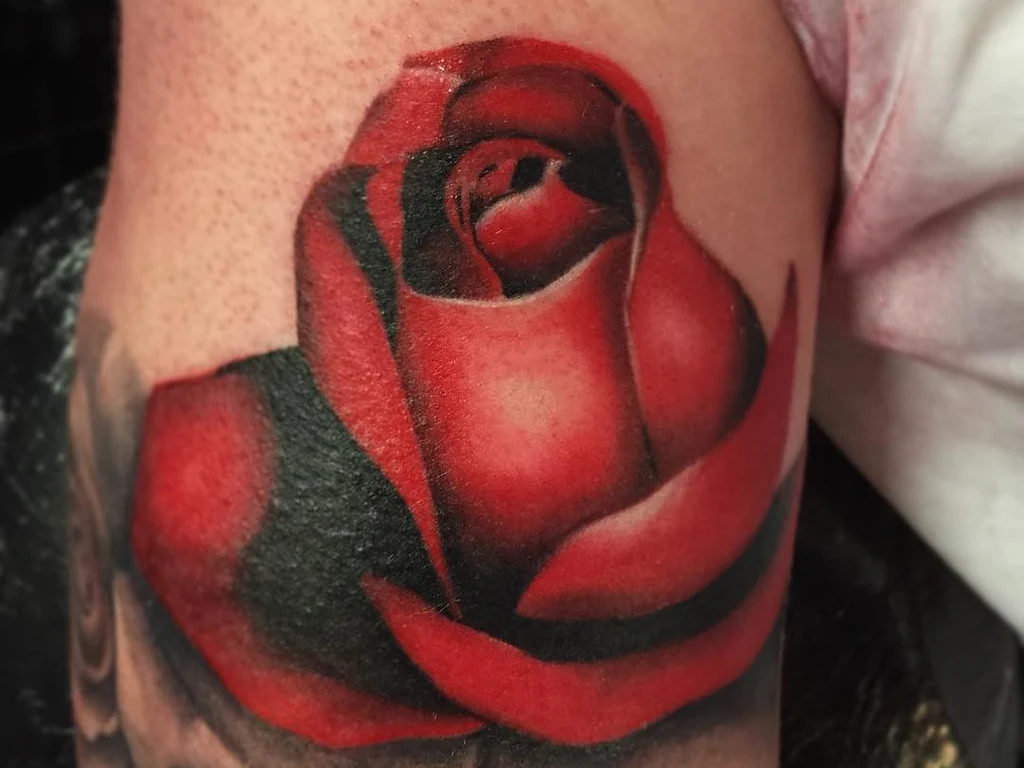
18. Red Peony, Ribcage
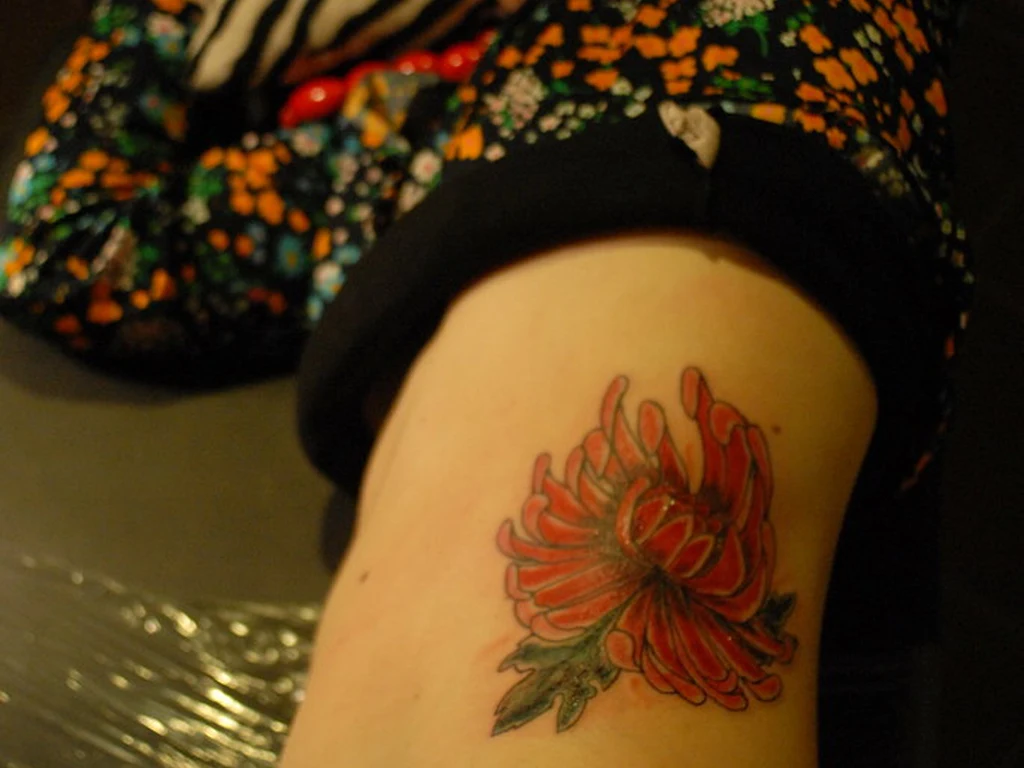
A single red peony in a traditional style, worn on the ribs and photographed as the wearer lies back — the photograph is cropped to the tattoo and the torso around it. One flower, no entourage: the ribs are a private placement, and a single bold bloom suits it.
Honesty about the ribs: skin sits close on bone, the area moves with every breath, and most people rate it among the sharpest placements on the body. A design this size is a short sitting — the sensible way to use the ribs.
19. Purple Peony Cover-Up, Forearm
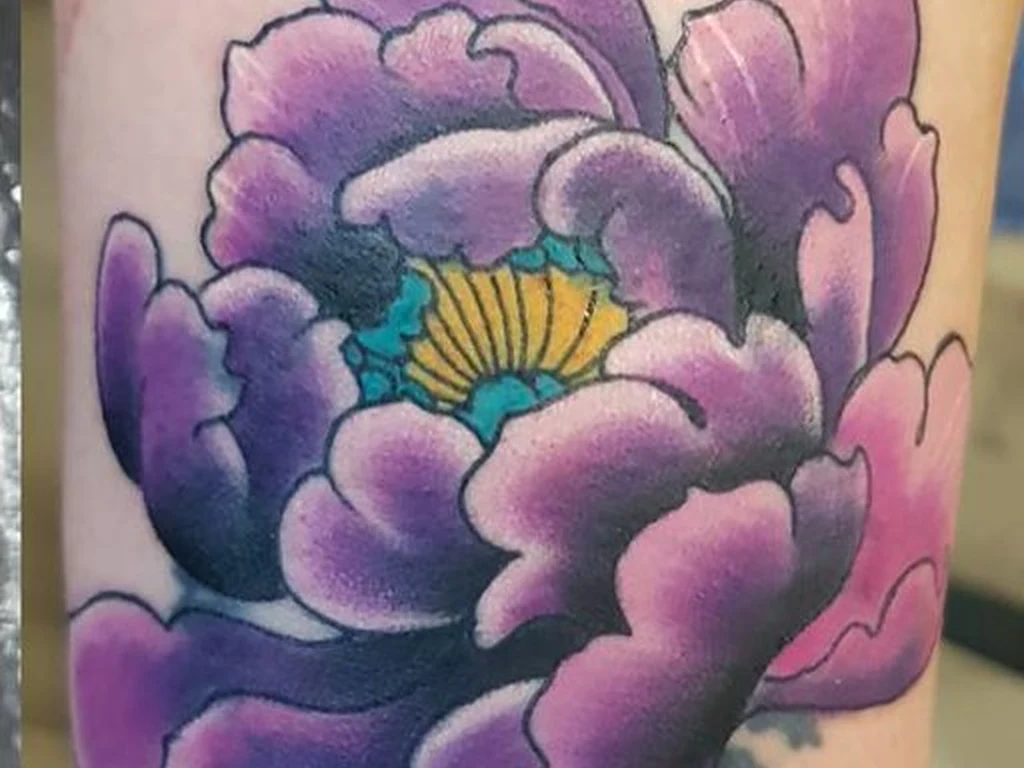
The finished half of a before-and-after pair, photographed close: a large purple peony with a teal and yellow heart, its petals packed tight enough to bury the older tattoo underneath. This is cover-up logic in one picture — layered petals are natural camouflage, and dark saturated colour does the rest.
Cover-ups follow fixed rules: the new piece must be bigger and darker than what it hides, and the artist needs to see the old tattoo in person first. Designs 19 to 21 are this list’s three worked examples — all flowers, all chosen because petals hide edges.
20. Red Peony Cover-Up, Forearm
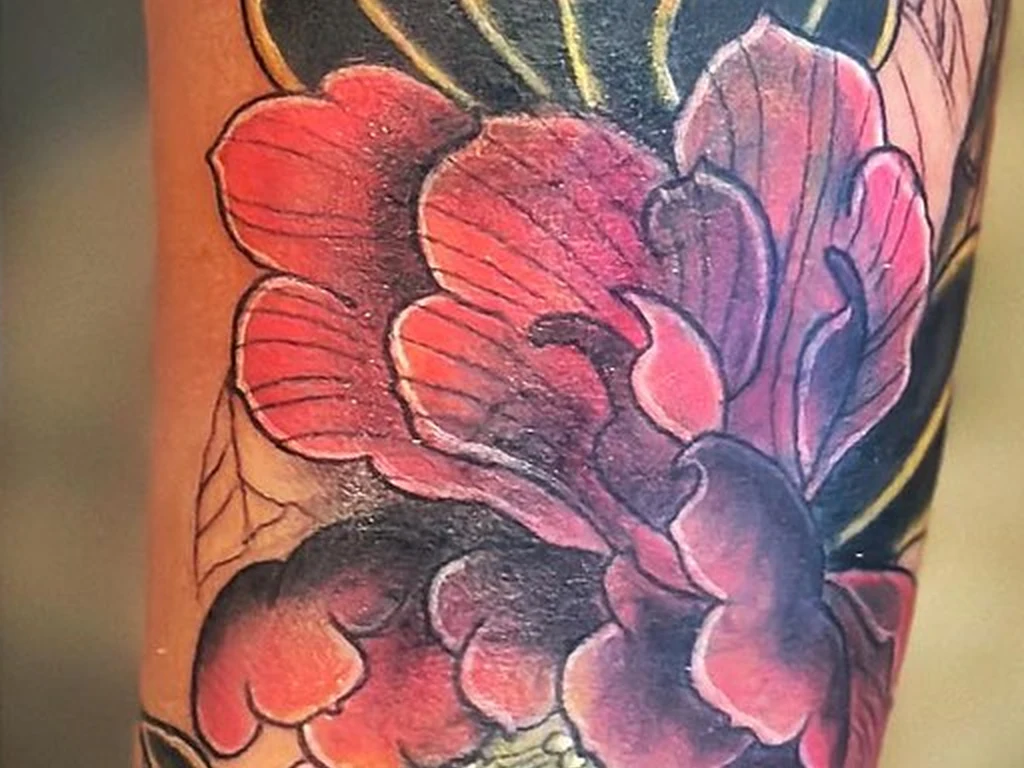
The peony half of another before-and-after photograph: a deep red bloom with purple shade in its folds and big dark leaves behind it, built over an older name-and-rose piece on the same forearm. The dark leaves do as much covering as the flower — cover-up artists plant shade where the old lines are strongest.
Notice what this design does not do: match the old tattoo’s shape. A cover-up works by giving the eye a new, stronger picture to read, not by tracing the old one in a different colour. Give your artist the freedom to go bigger, or expect the old lines to show through.
21. Dark Peony Cover-Up, Forearm
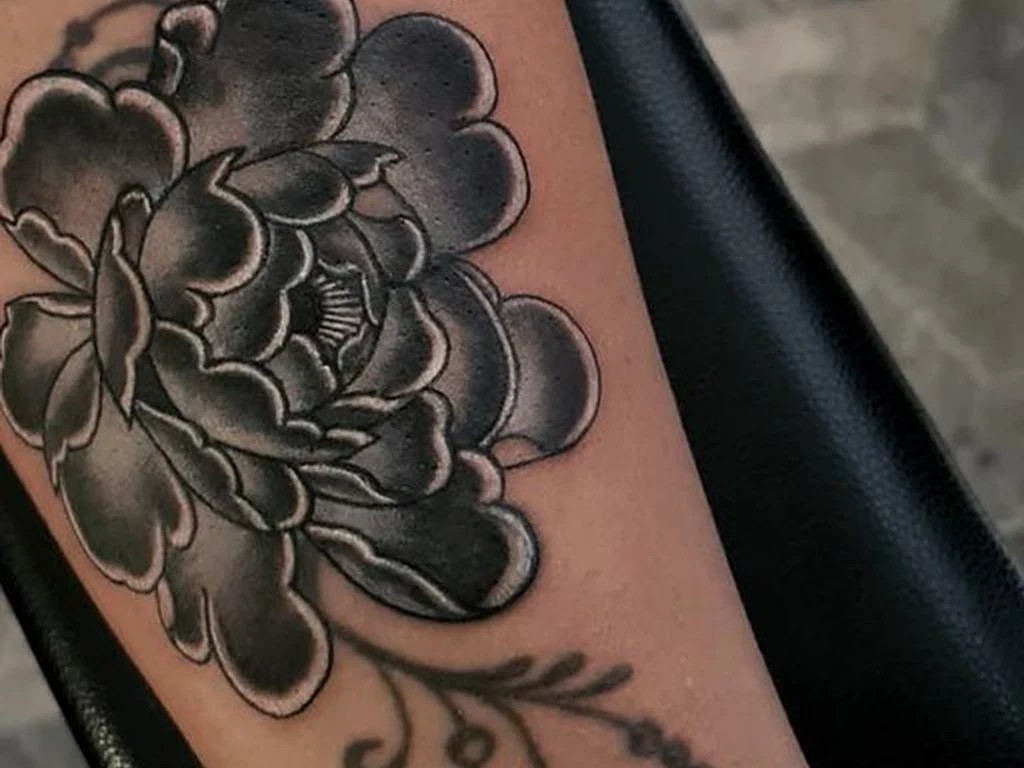
The peony half of a third before-and-after pair: a heavy black and grey peony with swirling ornament below it, laid over an older script tattoo on the same forearm. Of the three cover-ups here this is the darkest, and that is the point — solid black petals are the most reliable blanket old ink can get.
The cost of that reliability is contrast: a cover-up this dark will always be the boldest thing on the arm, so plan the rest of the arm around it. The swirl work under the bloom is a smart touch — it gives the eye somewhere to travel.
Best Placements for a Peony Tattoo
The upper arm and shoulder take the classic single bloom (designs 1 and 3) because the muscle is shaped like the flower: round, with room to open. It is the easiest large placement to sit for and to cover, and the one most artists suggest for a first peony. An arm peony can also grow into a sleeve later, as designs 2 and 4 show.
The back and shoulder blade (designs 5 and 17) are where peonies reach full size, alone or inside Japanese compositions. Back skin is stable and sees little sun, so colour and soft shading live easier lives there. The cost is reach: back pieces need help with aftercare.
Thighs (designs 8, 15 and 16) are the forgiving canvas for scale — big enough for stacked blooms and bold blackwork, private enough for a first large piece, and gentle to sit for by most accounts. Thigh skin records weight change; the loose shapes of peonies handle that movement better than geometric work does.
Forearms (designs 9 to 14 and the three cover-ups) suit the peony’s vertical habit: bloom on top, stem toward the wrist. The skin is flat and heals predictably, but it lives in daylight, so colour here needs sunscreen as a habit. The ribs (design 18) are the specialist option — private, striking, and rated the sharpest placement on the body by most wearers. Choose them for a single strong flower, not a long sitting.
Peony Tattoo Styles
Japanese work is the peony’s home style (designs 4 to 7): bold colour, black background bars of wind and water, and the flower set inside a story with dragons, phoenixes or lions. It is the oldest way of tattooing this flower — every element has a season and a meaning, and the whole composition is planned before the first session.
Blackwork and black and grey (designs 2, 3, 10, 15 to 17 and 21) trade colour for depth. With no pigment to fade unevenly, these age the most predictably of anything here, and stippled petal shading copies the way a real peony darkens toward its heart. If the drawing matters more than the colour, start here.
Fine line (designs 11 to 13) draws the peony as a single-weight contour with no fill. It asks the most of the drawing: petals need air between them, because fine lines widen as they settle. Worn at the sizes shown here, they settle into something like a pencil study of the flower.
Full colour splits two ways in this list. Bold colour with hard outlines (designs 1, 5, 6 and 8) holds its edges and reads across a room; pinks and reds fade faster than other pigments in sunlight, but the outline keeps the flower’s shape when they do. Softer washes (design 14) trade that protection for a gentler look and ask for more sun care. Our cherry blossom tattoo ideas list shows the same split in another Japanese garden flower.
Making It Yours
Start with the pairing, because the peony is rarely alone for long. A dragon or phoenix puts the flower inside the Japanese tradition (designs 3, 5, 6 and 7). A snake adds the shedding-and-starting-again story (design 8). A crow or tiger gives the bloom something wild to answer (designs 9 and 10). Each partner changes what the tattoo says; pick the story first, the style second.
Then decide on the bloom itself. A bud reads as potential; a flower half open is mid-change; a full blow-out bloom is the flower at its loudest, and it covers old ink best (designs 19 to 21). Colour carries the same choice: pink is the garden default, red is the traditional Chinese and Japanese statement, purple and black are modern, graphic turns.
Scale is the last lever and the strongest. A peony’s detail lives in its petal layers, and petal layers need room: the same drawing exists here at forearm size (design 12) and across a back (design 5), and they are not the same tattoo. Bring your artist a flower and a measurement, not just a flower.
Peony Tattoo FAQs
What does a peony tattoo mean?
In China the peony is the “king of flowers,” tied to wealth and honour for over a thousand years. In Japan it stands for bravery and good fortune and is paired with lions and dragons. Modern wearers add romance and fresh starts. The first layers are documented tradition; the last is studio convention.
What pairs well with a peony tattoo?
The classic partners come from Japanese work: the shishi lion, dragons, phoenixes and koi. Snakes and tigers are close behind, and birds show up often in black and grey work. This list alone holds dragons, a phoenix, a snake, a tiger and a crow.
Does a peony tattoo have to be Japanese style?
No. Japanese is its oldest tattoo tradition, but the flower is now drawn in blackwork, fine line, neo-traditional colour and soft black and grey just as often. Designs 11 to 17 in this list owe nothing to Japan at all.
What is the best place for a peony tattoo?
The upper arm and thigh suit most people: round, stable skin with room for a full bloom. The back takes the largest versions. Forearms suit a bloom-and-stem shape. Ribs are private and striking but are rated among the most painful placements, so they suit one strong flower, not a long composition.
Do fine line peony tattoos age well?
They age softly rather than badly. Fine lines widen a little as ink settles, so petals drawn close together can merge; petals with air between them (designs 11 and 13 show the spacing) stay separate. Go a size larger than feels necessary and keep the piece out of harsh sun while young.
Can a peony tattoo cover up an old tattoo?
Yes — it is one of the best cover-up subjects there is. Layered petals hide old edges, and the design tolerates the dark, saturated colour a cover-up needs. Designs 19, 20 and 21 are worked examples. The rules stay fixed: bigger and darker than what sits underneath, and your artist sees the old tattoo in person first.
Peony or rose — what is the difference in a tattoo?
A rose is drawn around a tight spiral centre; a peony is drawn as loose, ruffled layers with no spiral. Peonies also go bigger more naturally — one bloom can fill a shoulder where a rose would need company. The two get mixed up in photo titles constantly, which is why every design here was checked against the flower, not its caption. Our rose tattoo design ideas guide shows the other side of the comparison.
Do peony tattoos have to be pink?
No. Pink is the garden default and red is the traditional statement colour in China and Japan, but a third of this list is black and grey or blackwork, and purple shows up in the cover-ups.
How big should a peony tattoo be?
Big enough for the petals to keep their gaps. A single bloom wants the width of a palm if it carries detail; smaller versions should drop the detail and keep the silhouette, like the fine line pieces. If your artist suggests going bigger, that is petal spacing talking, not an upsell.
Is a peony tattoo only for women?
No. The flower’s oldest tattoo home is the Japanese bodysuit tradition, worn by men for over a century; this list’s backpieces and sleeves are worn by men, its forearm and thigh pieces by women. The flower belongs to anyone.
Final Thoughts
Twenty-one peonies, and they teach the same lesson: the flower rewards size, it rewards patience, and it carries more real history than most tattoo subjects — a king of flowers in China, a lion’s partner in Japan, a cover-up artist’s best friend everywhere. Pick the pairing that tells your story, give the petals the room they ask for, and let the drawing be as bold as the flower is. Torn between two blooms? The flower tattoo design ideas overview compares them side by side.
Photo credits: 1, 11, 12, 13, 14, 16, 20 and 21: TattoosAll, CC BY-SA 2.0, via Flickr. 9, 15 and 19: TattoosAll, CC BY 2.0, via Flickr. 2, 4 and 8: Ben Lucas (BenLucasTattoos), Public Domain Mark 1.0, via Flickr. 7 and 10: Ettore Bechis, CC BY 2.0, via Flickr. 6: jetsettica, CC BY-SA 2.0, via Flickr (tattoo by Regino Gonzales, per the photo page). 18: cayooo, CC BY-SA 2.0, via Flickr. 5: Tattooenthusiast, CC BY-SA 3.0, via Wikimedia Commons (tattoo by Greg James). 3 and 17: via Pexels (Pexels Licence). Full source links are in this article’s package notes.