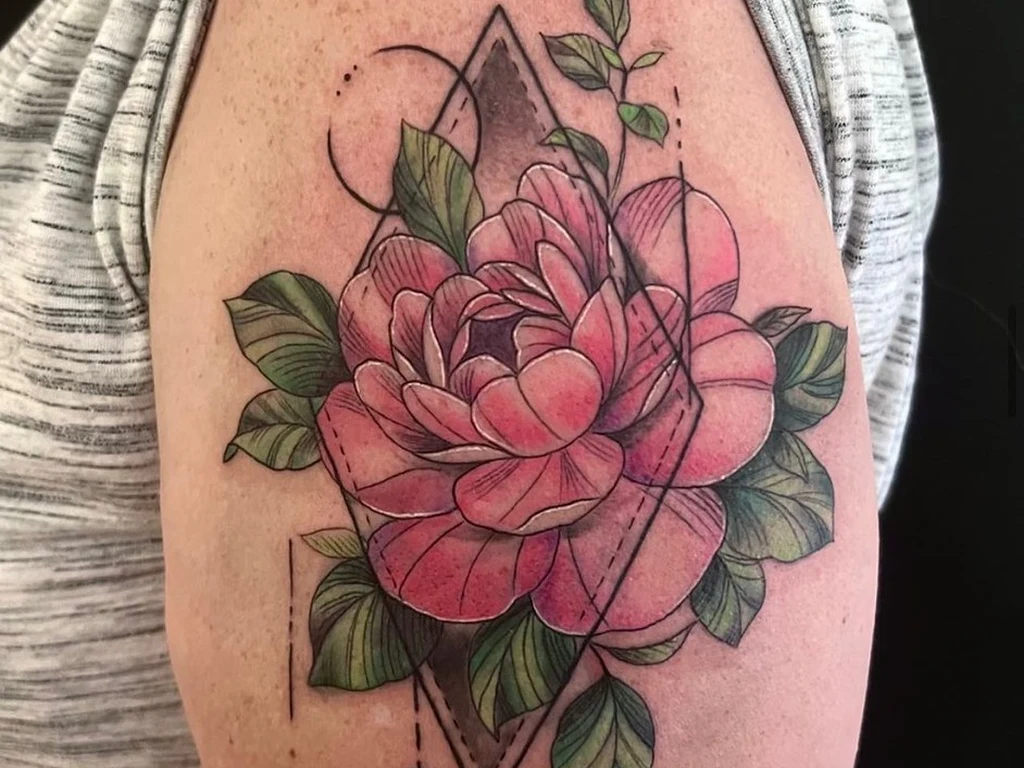
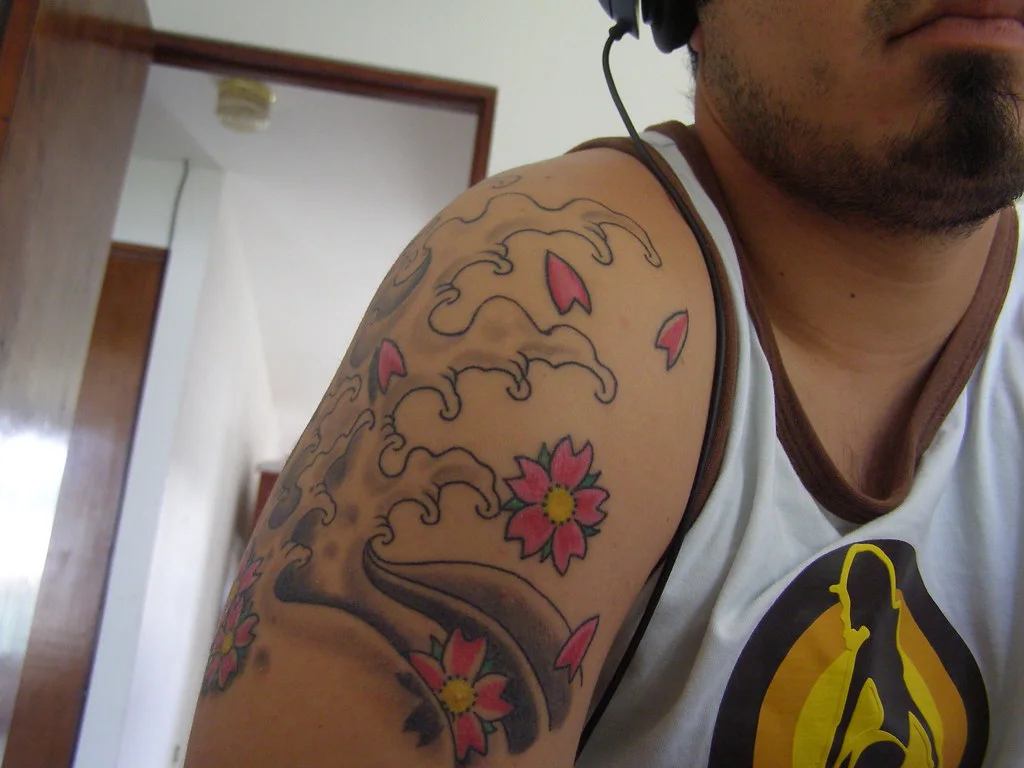
Short answer first: a rose tattoo meaning usually starts with love, and love really is the oldest layer — but it is not the only old one. The same flower has stood for secrets kept under a carved ceiling rose, for two royal houses on battlefield badges, and for the plain fact that anything beautiful enough to pick can cut you. Some of those readings are documented over thousands of years. Some were written by tattoo blogs last decade. This page keeps the two apart, because a meaning with history behind it and a meaning that sounds good in a studio are both fine reasons to get inked, and they are not the same thing.
The rose earns the weight put on it. It has been grown for thousands of years, painted on palace walls, stitched onto banners and inked onto sailors who wanted a sweetheart or a mother carried on the arm. The designs that carry these meanings fill our rose tattoo design ideas collection; what follows is the story underneath them, from a goddess’s flower to the black rose that no garden has ever grown.
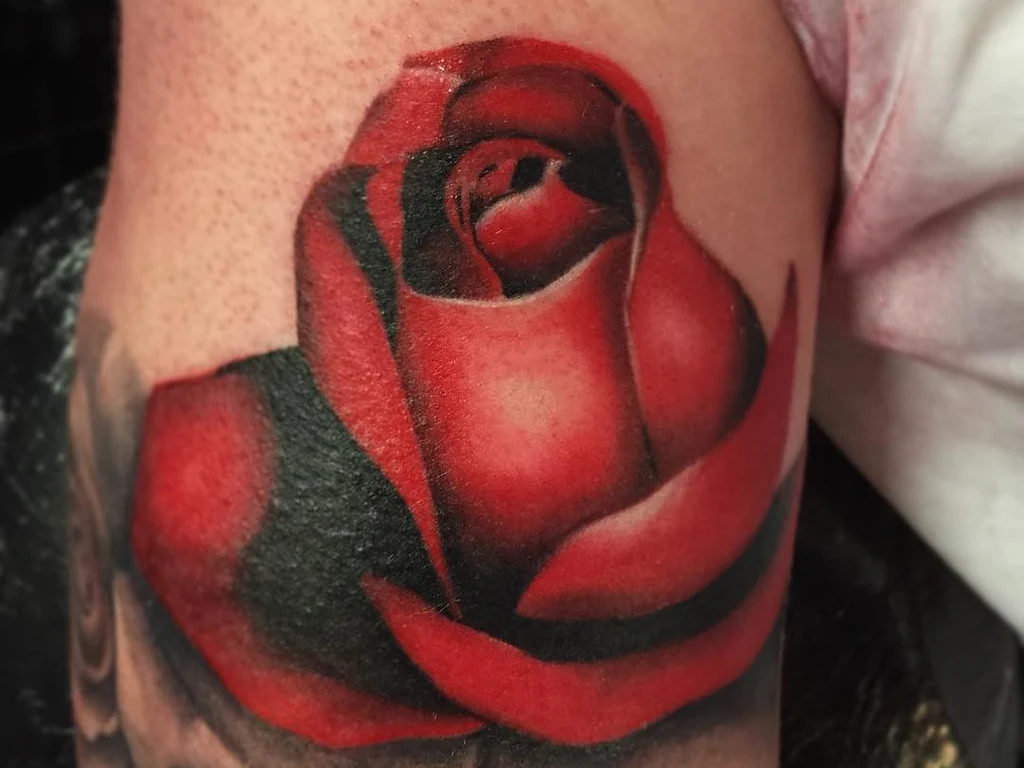
The Core Meanings, One by One
Love — the oldest layer
Greek myth gives the rose to Aphrodite, goddess of love, and Rome handed the flower on to Venus. In one telling, roses took their red from the blood of Aphrodite’s lover Adonis. In another, the goddess rushed to him, caught herself on a thorn, and her blood coloured the white blooms she passed. Myths shift in the retelling, but the link holds steady for two thousand years: where a rose shows up in old art, love is usually in the room. A rose tattoo worn for love is not a modern greeting-card idea. It is the flower’s first recorded job.
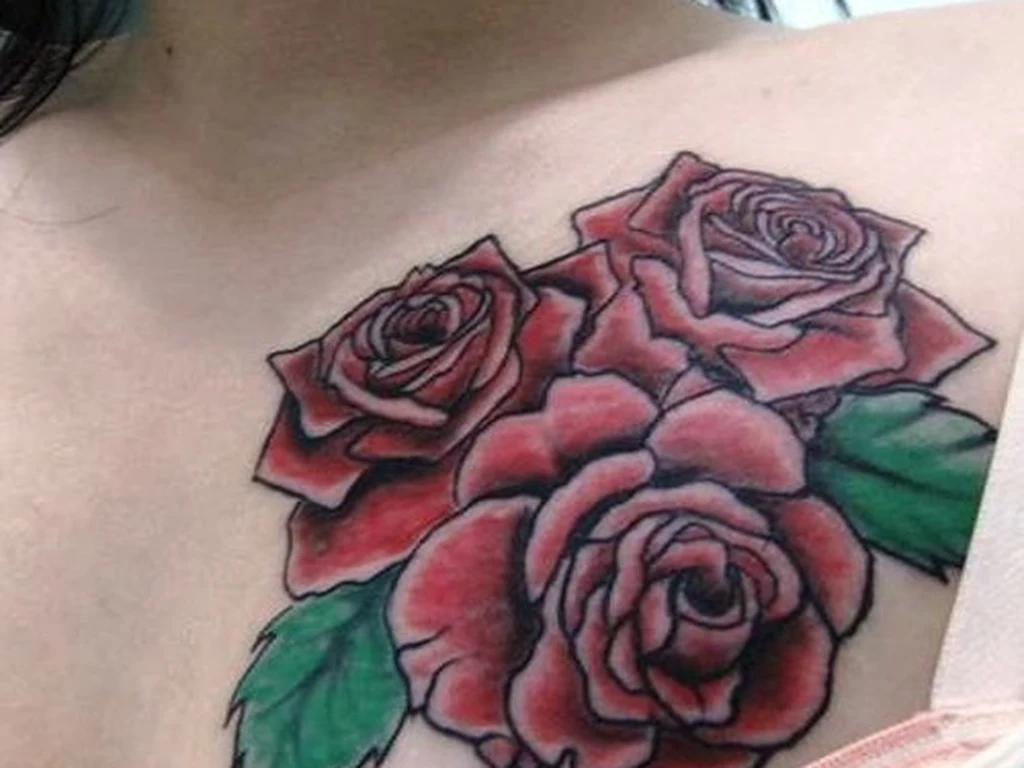
Balance: the bloom and the thorn
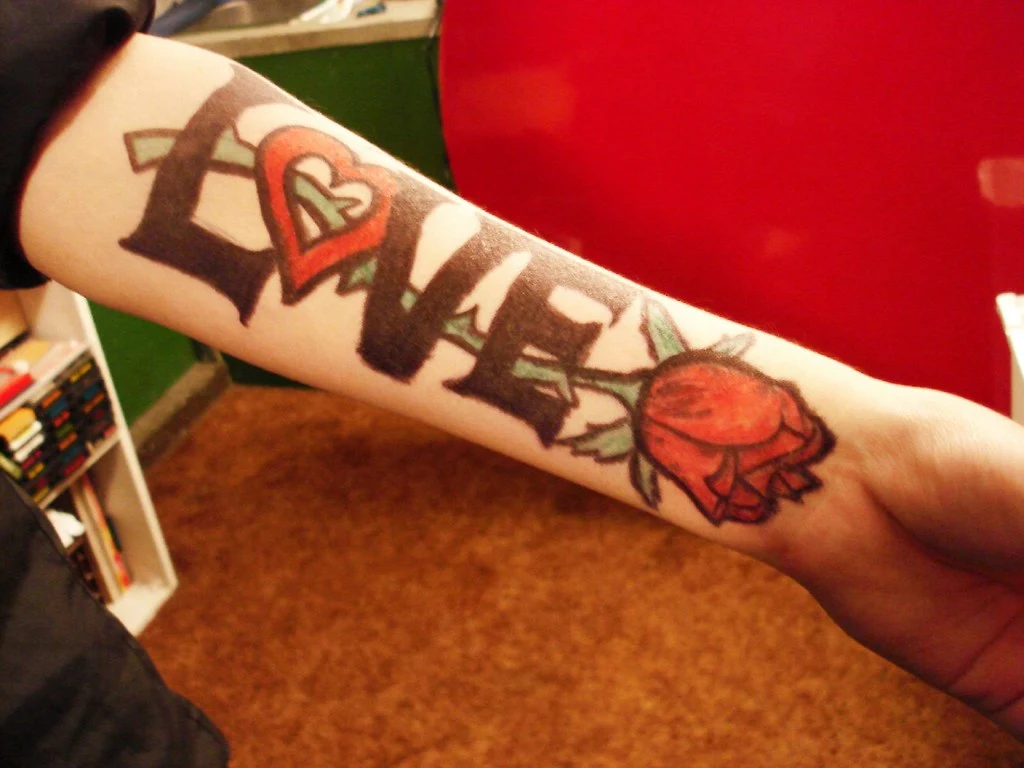
Every rose carries its own warning. The bloom is soft, layered and short-lived; the stem underneath it is armed. Tattooing has always liked that pairing, because it says two things at once: love with its cost attached, beauty that can defend itself, pleasure that can draw blood. People pick it after relationships that taught them something, and artists draw it literally — a clean bloom on a stem that keeps its thorns. Take the thorns off and the same flower turns gentler, which is why that choice gets made on purpose rather than by habit.
Secrecy: under the rose
The strangest old meaning is the quietest. In a story the Roman world told, Eros gave a rose to Harpocrates, the god of silence, to buy his silence about Venus and her affairs. From that tale came a habit: a rose hung, carved or painted over a dining table or a council table meant that whatever was said in the room stayed in the room. The Latin phrase sub rosa — under the rose — is still used now for anything said in confidence. A rose tattoo can carry that reading without announcing it: a thing known, and not repeated.
Death, memorials and the black rose
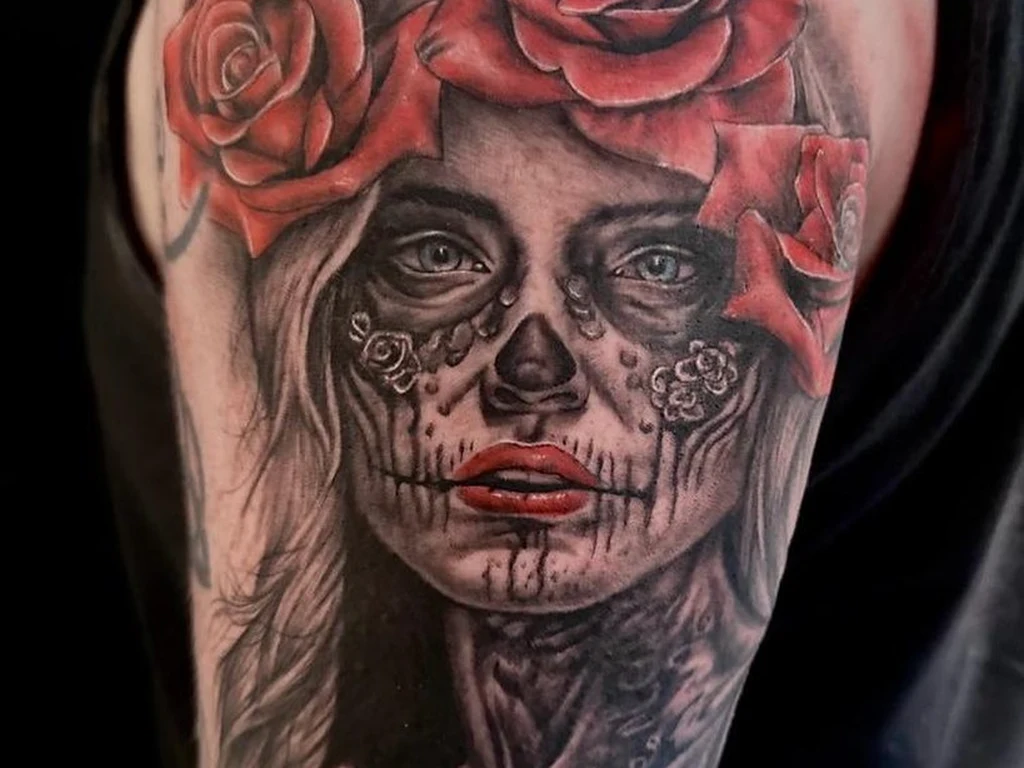
Roses are funeral flowers as well as wedding flowers, and tattooing uses them both ways. A rose beside a name and a pair of dates is one of the oldest memorial shapes in Western tattooing: the love stays, the person is gone, and the thorn does the quiet work of grief. The black rose sits at the far end of this — mourning, farewell, a door closed for good. Be plain about its age, though: as a symbol, the black rose is mostly a modern one. No Victorian flower dictionary gives it an entry, and no garden grows a true black rose; the darkest petals in any bed are a very deep red. In ink, black is a shading choice that picked up a meaning afterwards, not the other way around.
History and Tradition: Where the Meanings Come From
Greece and Rome: a goddess’s flower
Before the rose was a tattoo it was an emblem. Greek sanctuaries planted roses for Aphrodite. Roman hosts scattered the petals at feasts and crowned their guests with garlands of them, and Roman gardens grew the flower in quantity. Roses were laid on graves and burned at funerals as well as waved at weddings — the double duty starts at the very beginning, which is worth remembering when a list somewhere tells you the flower means one thing only.
Sub rosa: the rose over the table
The secrecy habit outlived Rome by a long way. Through the medieval centuries and after, a rose carved into the ceiling of a council chamber or a confessional, or painted above a meeting table, stood as an instruction that everyone present could read: what is said here is not carried out of here. The phrase survives in law and diplomacy now, used for talks held off the record. Few tattoo symbols can point to a piece of furniture as their evidence. This one can.
The rose without thorns: Mary and the rosary
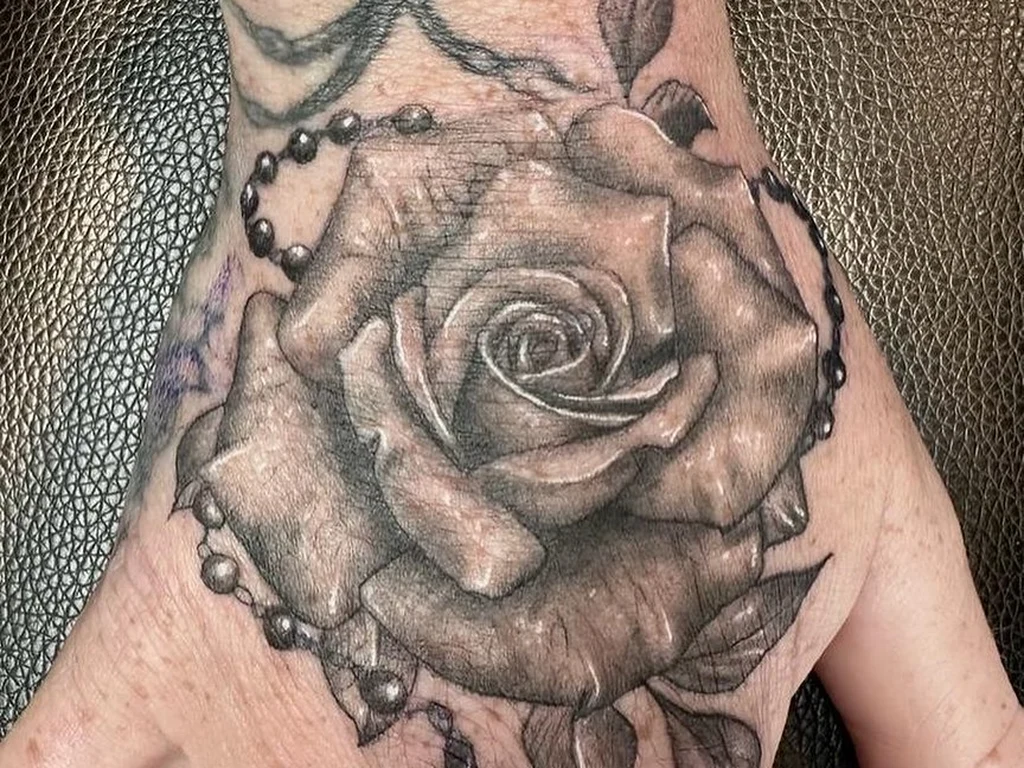
The Church took the flower up too. In medieval devotion the Virgin Mary was pictured in a rose garden and called the rose without thorns — the one rose, the teaching ran, that grew before the Fall gave the plant its weapons. The prayer beads counted in her honour took their name from the same garden: rosary comes from rosarium, a rose garden, and each prayer was counted as a rose offered. That is why a rose worked around a string of beads, like the hand piece pictured in this article, is no random pairing. It is one of the oldest combinations the flower has.
The Wars of the Roses
In fifteenth-century England the rose went to war. The house of Lancaster fought under a red rose badge and the house of York under a white one, through a long struggle for the crown that later took its very name from the flowers — Britannica’s account of the Wars of the Roses lays out the campaigns. When Henry Tudor won and married Elizabeth of York, the Tudor rose folded red and white into one badge: a peace treaty you could stitch. Historians add the honest footnote that the tidy red-against-white story was polished in the retelling, and the badges were real without being the whole heraldry of either side. Still, the rose as a sign of loyalty — to a house, a county, a cause — starts here, and English roses on skin draw on it to this day.
Sailors, sweethearts and the traditional rose
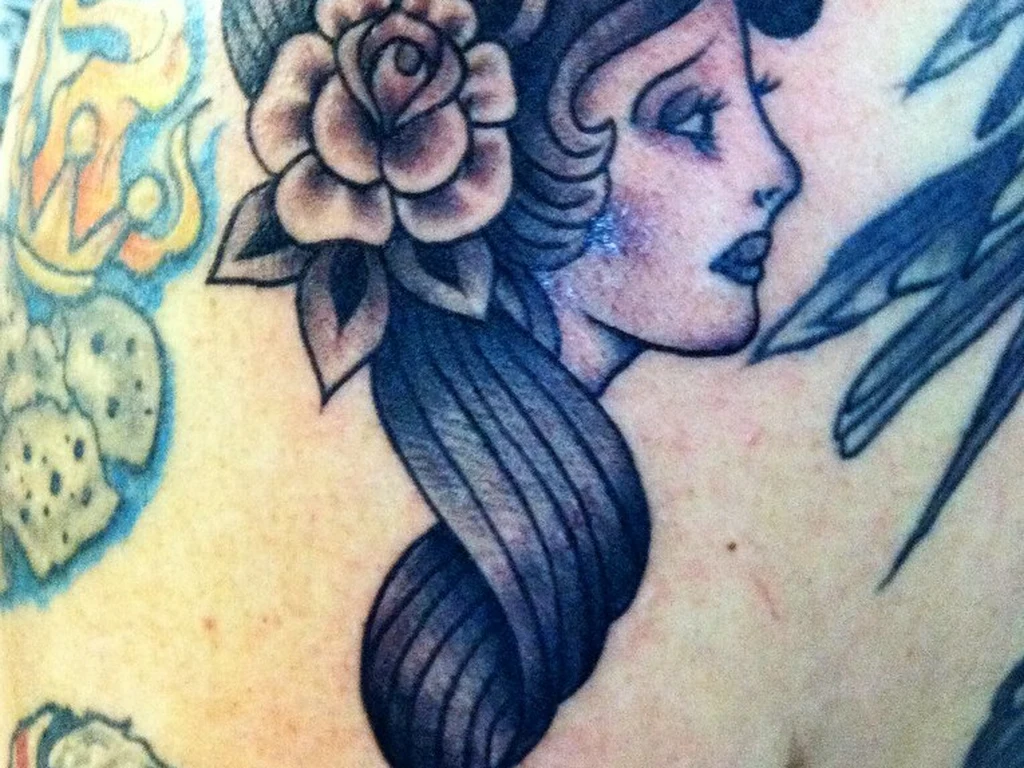
Western tattooing took the rose up early and hard. In the first half of the twentieth century, when a tattoo marked a man as a sailor, a soldier or a drifter, the rose was among the most-worked flowers in the shop: a bold outline, flat red petals, and a name in a banner across it when the flower stood for a mother or a girl back home. The pairing of a rose with a lady’s head — the sweetheart made permanent — comes off the same benches. Those designs fixed the rose’s tattoo grammar for good: readable across a room, stubborn with its colour, and meaning somebody.
Details That Change the Reading
Colour: a real chart with untidy edges
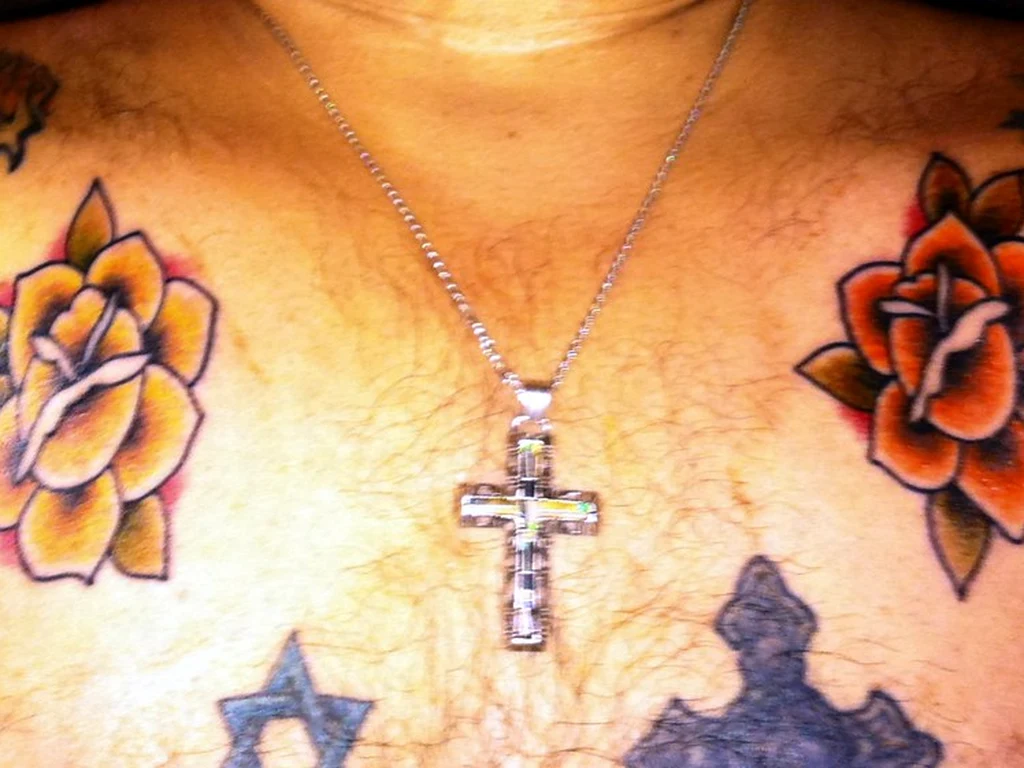
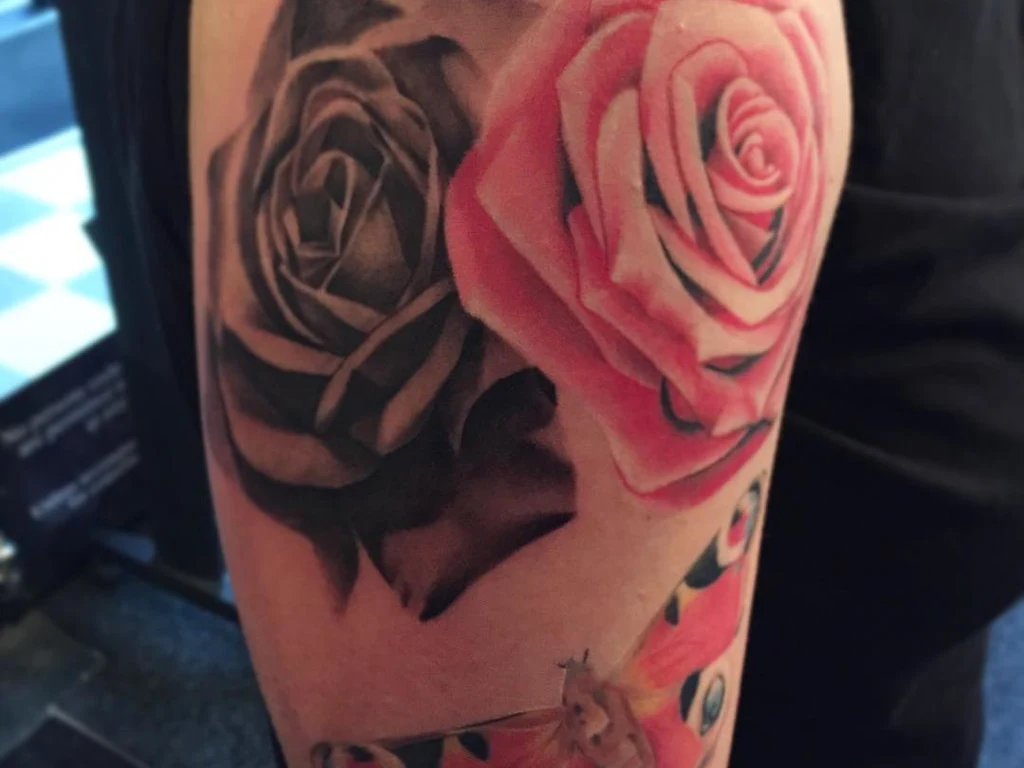
Colour lists for roses exist in genuine old books — the Victorian language-of-flowers dictionaries, Kate Greenaway’s 1884 edition among the best known — and the tattoo charts copied from them are tidier than the originals ever were. Red for love is steady in every list. White for purity runs nearly as steady. Pink drifts between grace, admiration and thanks, depending on which book you open. Yellow is the honest argument: several Victorian lists give it as jealousy, or a love that is cooling, and the cheerful friendship reading pinned to it now is a later softening. Black has no old entry at all, and blue cannot be copied from nature, because no blue rose grows without dye or a laboratory. So treat the chart as a real tradition with ragged edges, not a code. Pick the colour for the layer you mean, and know which parts of the chart are older than the rest. The same pattern runs through the colour lists in our lotus tattoo ideas collection, where the chart is also younger than the flower.
Thorns: kept, or taken off
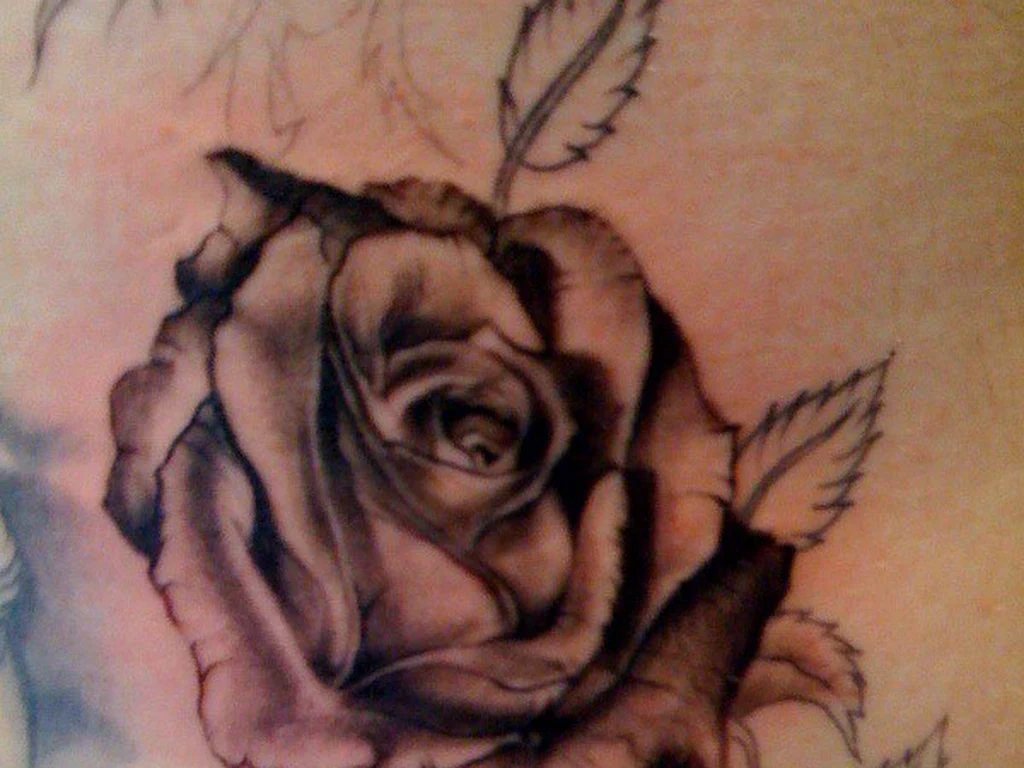
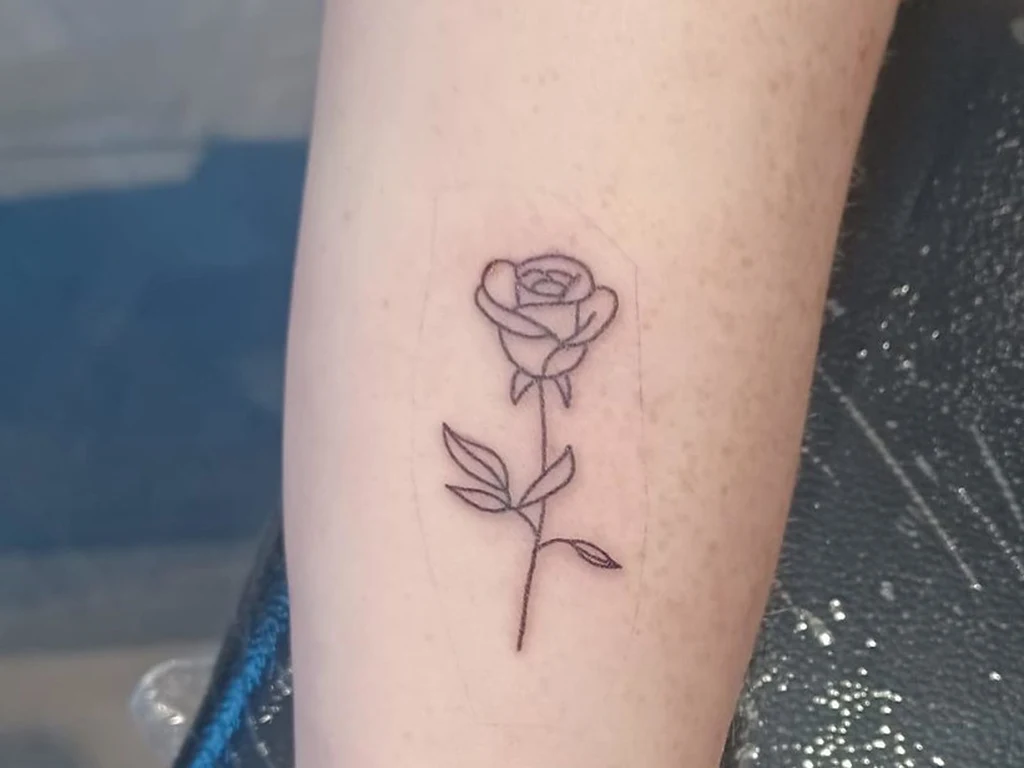
A thorn is a small line with a large effect. Kept, the thorns say the love cost something, or that the beautiful thing can defend itself; they are the reason the balance reading above works at all. Taken off, the rose goes soft and purely romantic, which is why so many small fine-line roses are drawn clean. Neither version is a mistake. It is the cheapest change on this page: one decision at the stencil stage, and the first thing a stranger reads in the design has already shifted.
Open bloom, or a tight bud
An open bloom is the flower at full stretch — love declared, a feeling at its peak — and it is the version most large work uses, because layered petals give an artist room to shade. A bud is the same flower earlier in its story: a beginning, something young, or something still protected. Buds get picked for new love, for a child, for a chapter that has only just started. The reading is modern convention rather than old law, but it is shared widely enough that other people will read your tattoo that way. Scale follows the choice: a bud suits a wrist or an ankle, and a full open bloom needs skin to breathe in.
The pairings: dagger, clock and compass
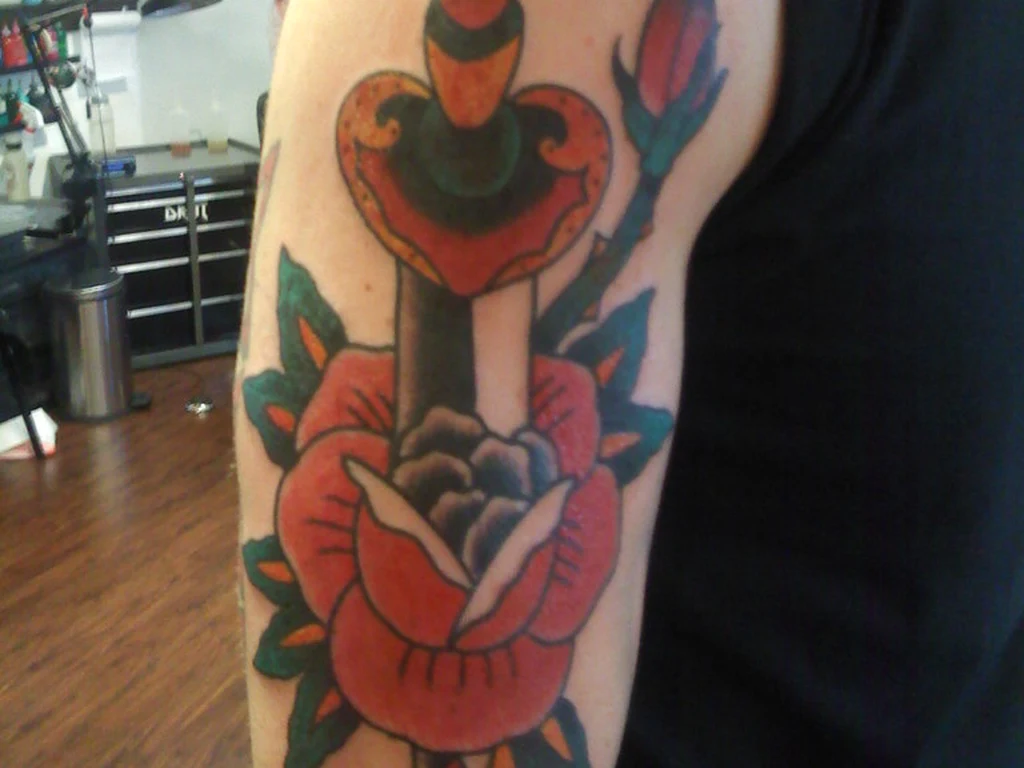
A dagger through a rose is traditional tattooing’s favourite argument: love and pain in a single frame, beauty pierced, a heart that bled. Shops read it as love lost, or love that wounded the person wearing it. No old book records that reading, but a century of shop walls does, and a trade tradition carried that long counts as its own kind of history.
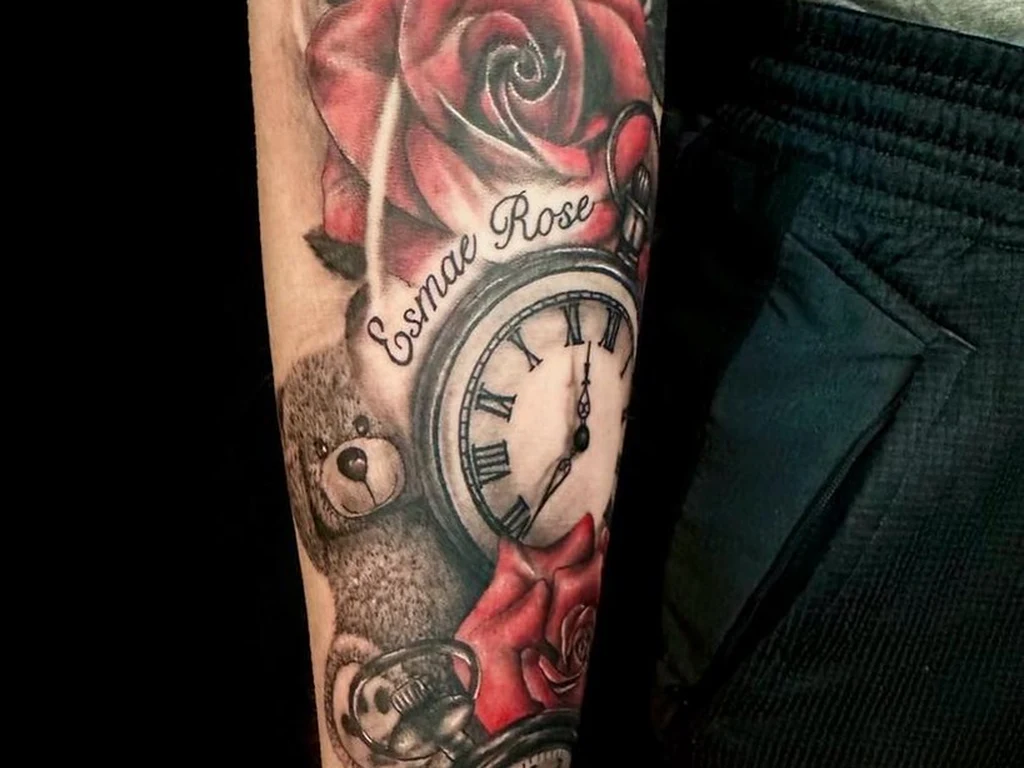
A clock beside a rose bends the meaning toward time: love against the clock, a moment somebody refused to let go of, or a memorial, where the hands are often set to an hour that mattered — a birth, a death, a meeting. That last use is standard practice in memorial work now, and it is labelled modern here because it is.
The compass pairing needs one honest footnote. A compass rose is the star printed on a chart, not a flower, and the two share nothing but a name. Sailors still set them side by side — the flower for whoever waits at home, the compass for the road out and back — and read together they say love and the journey. That is a fair modern use of both symbols, as long as nobody claims the chart star grew on a stem.
What a Rose Tattoo Does Not Automatically Mean
No colour is a crime. The strict version of the chart — wear yellow and you have declared jealousy, wear black and you have invited mourning — has no source behind it. The old dictionaries disagree with each other, none of them sets a penalty, and half the chart is younger than the telephone. A tattoo’s meaning is assigned by its wearer and read loosely by everyone else. Our lotus tattoo meaning guide keeps the same layers apart for a different flower: documented tradition at the bottom, studio talk on top.
A rose is not a gang sign. Blanket claims that a rose tattoo marks prison time or gang membership fall apart on contact with the obvious: the rose is among the most common tattoos on earth, worn by grandmothers and goalkeepers alike. A specific design, in a specific place, worked into a specific piece can carry a local meaning, as almost any image can. The flower on its own accuses nobody. Context is where such readings live, when they live anywhere at all.
Nobody is counting your petals. Charts that decode petal numbers — five petals for this, twelve for that — borrow the tidy look of the lotus and its eight petals and paste it onto a flower whose tradition never counted anything. Rose petals in a tattoo are drawn to fit the space and the style. If a number means something to you personally, that is reason enough to ask for it. It just is not an old code that you can break or keep.
Frequently Asked Questions
What is the main meaning of a rose tattoo?
Love, and it has the paperwork. The flower belonged to Aphrodite and then to Venus, and love has stayed its first reading for two thousand years. Balance, secrecy and memorial love sit close behind it, and most wearers mean some mix of the four.
What does sub rosa mean?
Latin for “under the rose”. From the Roman story of a rose given to Harpocrates, god of silence, a rose hung or carved over a table came to mean that words spoken there stayed there. The phrase is still used now for anything said in confidence.
What does a black rose tattoo mean?
In modern use, mostly mourning and farewell — grief, an ending, sometimes a streak of defiance. It is a young layer: old flower dictionaries give black no entry, and no true black rose grows, since the darkest garden roses are deep red. In a tattoo, black is a shading choice that gathered its meaning afterwards.
Do rose colours really change the meaning?
Partly. Red for love and white for purity are old and steady. Pink moves between grace and thanks from book to book. Yellow was written down by several Victorian authors as jealousy or cooling love, and its friendship reading arrived later. Treat the chart as a tradition with loose edges, not as rules.
What does a rose with thorns mean, compared with one without?
Thorns add the cost: love that hurt, beauty that can defend itself, a good thing not given cheaply. A rose drawn clean of thorns reads softer and purely romantic. It is a stencil-stage decision, and it changes the first thing strangers read in the piece.
What does a rose and dagger tattoo mean?
Love and pain in one frame — a heart pierced, love lost, or love that wounded. It is among the oldest pairings in Western shop tattooing, and its meaning is trade tradition: carried on studio walls for a century rather than written in any book.
What does a rose and clock tattoo mean?
Time laid over love: a moment kept, love racing the clock, or a memorial. In memorial pieces the hands are often set to a real hour, such as the time of a birth or a death. That use is modern studio practice, and it is widely understood.
What does a rose tattoo mean in memory of someone?
It is one of the standard memorial shapes: the flower for the love, a name or a pair of dates to say whose it is, and the thorn doing quiet duty as the grief. Sailors carried their mothers this way a century ago. The shape has not changed since; only the names have.
Is a rose tattoo only for women?
No. The rose was a working flower of sailors, soldiers and bikers for a hundred years before anyone marketed it as delicate. Size, shading and the company a design keeps decide how it reads. The flower itself belongs to everybody, and it always has.
Does the number of petals in a rose tattoo mean anything?
Not in any tradition that can be checked. Petals are drawn to fit the design and the space it sits in. If a number carries a private meaning for you — a date, a count of children — that is a perfectly good reason to ask for it, but no old code stands behind petal numbers.
Final Thoughts
A rose tattoo can honestly carry love that is two thousand years documented, a secret kept under a ceiling carving, loyalty to a house that fought under the flower, or grief with the thorn left in — and the details are what pick between them: the colour, the thorns, the company the design keeps. Decide the layer first and the style second. The history here is unusually solid ground for a tattoo symbol, solid enough that the parts invented later stand out plainly, and there is no harm in choosing one of those either, as long as you know which shelf it came from. The designs themselves are gathered in our rose tattoo design ideas collection, photographed on real skin and counted one by one. The wider flower symbolism behind them is mapped on our flower tattoo design ideas page.
Photo credits: Image 1: TattoosAll, CC BY 2.0, via Flickr. Image 2: ishtar loves ice cream, CC BY 2.0, via Flickr. Image 3: videocrab, CC BY-SA 2.0, via Flickr. Images 4, 5, 10 and 12: TattoosAll, CC BY-SA 2.0, via Flickr. Images 6 and 7: Tobyotter, CC BY 2.0, via Flickr. Image 8: TattoosAll, CC BY 2.0, via Flickr. Image 9: mytat_2s, CC BY 2.0, via Flickr. Image 11: stingy48, CC BY-SA 2.0, via Flickr.