Ten years ago, hardly anyone walked into a studio asking for fine line work. Now it is the first thing a lot of people ask for. Search interest in the style has climbed steeply since the mid-2010s, and you can see why: these tattoos look like drawings. A flower stem no thicker than a strand of hair. A snake you could trace with one finger. They sit quietly on the skin instead of shouting.
So here are 25 fine line tattoo ideas, every one a real photograph of a real tattoo, counted one by one. No illustrations, no gallery filler. And because most pages skip this part, we will also talk honestly about how these tattoos age. Fine line work is beautiful. It is also the least forgiving style you can pick, and you deserve to know that before the needle touches you, not five years after.
What counts as fine line, exactly?
Fine line tattoos are drawn with a single needle, or a tight grouping of three, instead of the fatter groupings used for standard outlines. A traditional outline might be laid in with seven or nine needles bundled together. A fine line artist reaches for a 1RL or 3RL, pulls one clean pass, and the line comes out closer to a pen stroke than a marker stroke.
That is also how you spot the real thing in a portfolio. Zoom in. The lines should hold one consistent weight, thin as thread, with edges that stay sharp where two lines meet. Shading, when there is any, is peppered in with the same needle rather than packed in. Be suspicious of portfolios showing only fresh work under studio lighting. Ask for healed photos, a year old or more. Fresh fine line always looks perfect. Healed fine line is the truth.
The honest downside nobody puts on the pretty pages
Here is the trade you are making. Ink sits in skin, and skin is alive. Over the years your immune system slowly nibbles at the pigment, and every line softens and spreads a fraction. On a bold traditional tattoo you barely notice. On a line this thin, a fraction is a lot. Tiny details placed close together can melt into each other, and the lightest lines sometimes drop out in patches as they heal.
There is a second risk, and it is about depth. If the artist pushes too deep, pigment migrates sideways under the skin and the line heals with a fuzzy blue-grey halo. That is a blowout, and it cannot be undone, only covered or lasered. The FDA’s own fact sheet on tattoos puts it plainly: if pigments are injected too deeply, they may migrate beyond the original sites, resulting in a blurred appearance. Fine line leaves no margin for a heavy hand.
Plan on a touch-up at some point. Most people need the lightest lines strengthened somewhere between one and five years in, depending on placement and sun habits. And accept that size has a floor: detail needs breathing room, so a good artist will refuse to shrink a detailed design past a certain point, and that refusal is a sign you picked the right person. Sunscreen matters more for this style than any other, because a thin line has less pigment to lose. Cover it or cream it.
25 fine line tattoo ideas, counted and checked
Every design below is a separate tattoo on a separate person, photographed as it actually looks on skin. Some are fresh, some healed and softer, and we say which is which, because healed is what you will actually live with.
1. A peony bouquet that takes up the whole upper arm
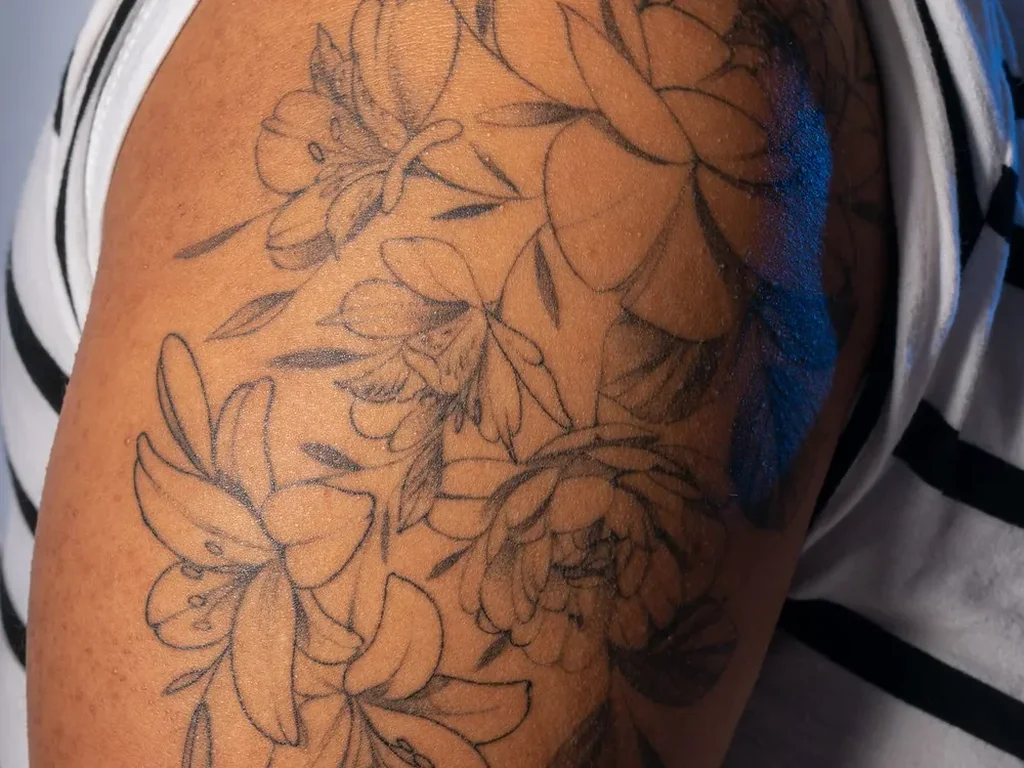
Peonies, lilies and leaves, all outline, almost no shading, overlapping like a sketchbook page across the full outer arm. It is the big floral statement, yet the thin lines keep it delicate.
The upper arm is the kindest canvas: flat, slow to stretch. Swap in your own flower via our flower tattoo design ideas page. The tightest petal centres will want checking at the three-year mark.
2. A laurel wreath with a motto tucked inside
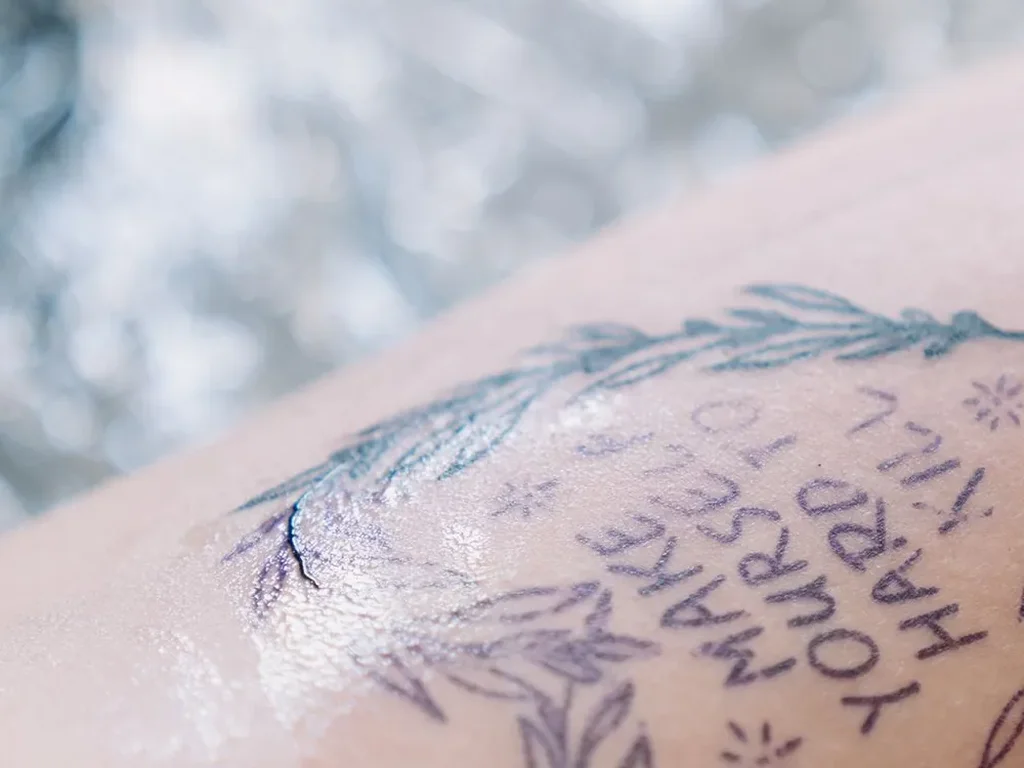
Two curved laurel branches frame a few words of lettering: “make yourself hard to kill.” Part trophy, part private joke. This photo catches it fresh, sheen and all.
Small lettering is the gamble: words spread as years pass. Keep the phrase short, the letters tall. At twice the size on a thigh, it stays readable far longer.
3. Leafy stems and a crescent moon across the shoulder
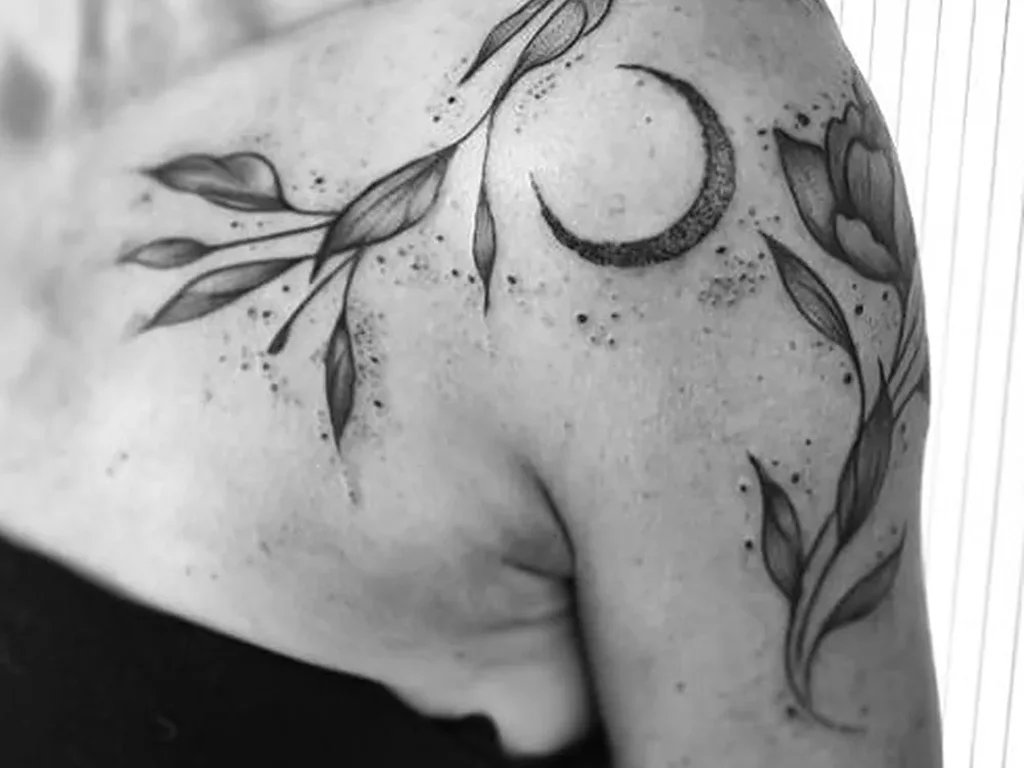
Botanical stems drift from collarbone over shoulder, leaves alternating along each stem, a plain crescent moon where the shoulder rounds. Nothing filled in. The whole piece is contour and air.
Shoulders move a lot, so stems nearest the joint soften first. Forgiving design, though: a blurred leaf still looks like a leaf. Tiny text gets no such mercy.
4. A snake that wraps the forearm
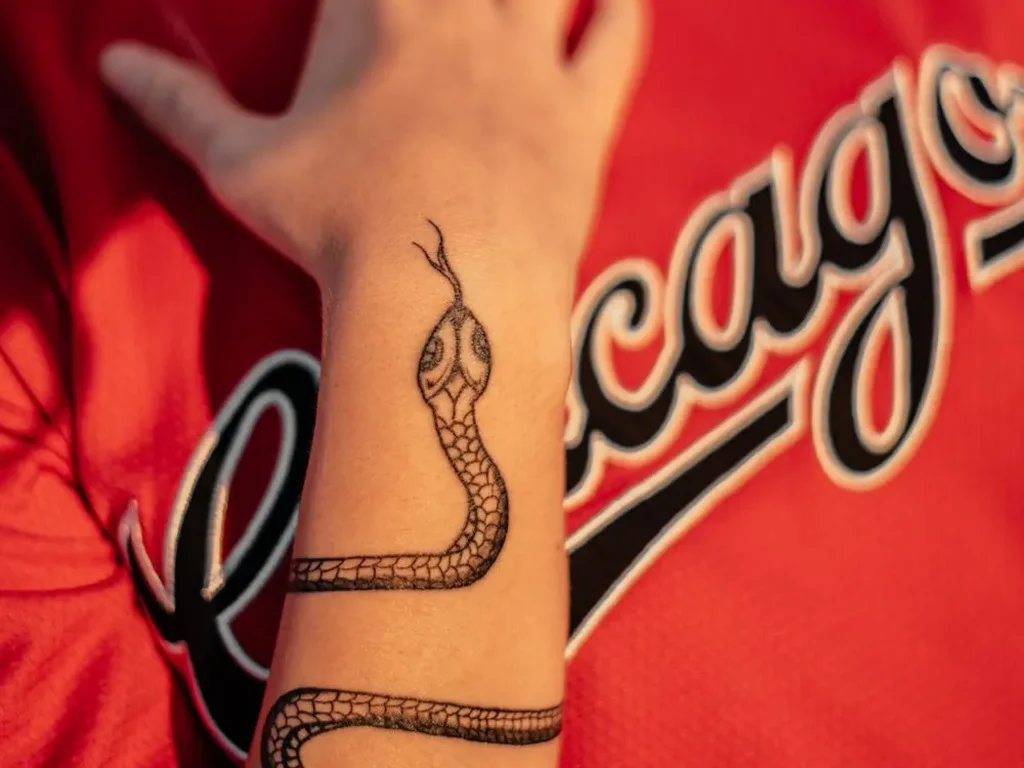
One unbroken snake in a single weight of line, coiling down the forearm, head near the wrist. No packed scales, just belly marks and a flicker of tongue. The wrap changes as your arm turns.
Ask for generous coil spacing. Tight coils merge first as lines spread. Spaced like this, it should still read clearly in ten years.
5. A sun and moon sharing one face
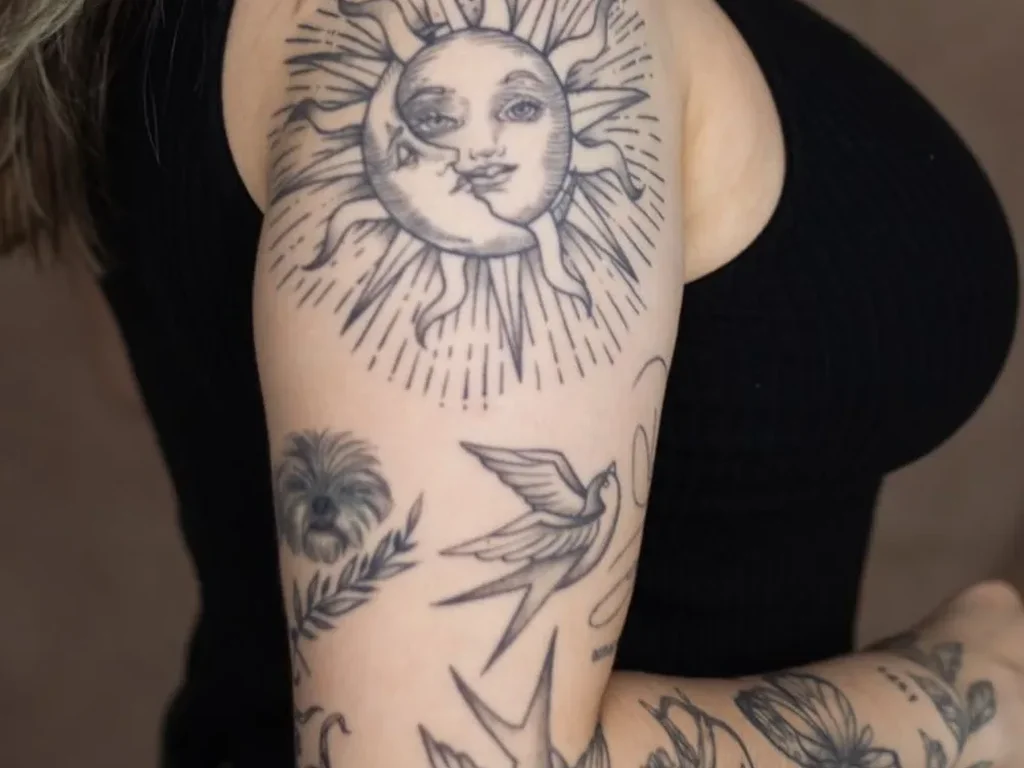
A round sun face with calm features, a crescent moon at its cheek, straight and wavy rays in every direction. It takes the whole upper arm and earns it. Two fine line swallows sit below.
Faces are the hardest subject here: a millimetre of spread changes an expression. Simple features at a big size are why this works. Going smaller? Drop the face, keep the rays.
6. Moon phases across the chest
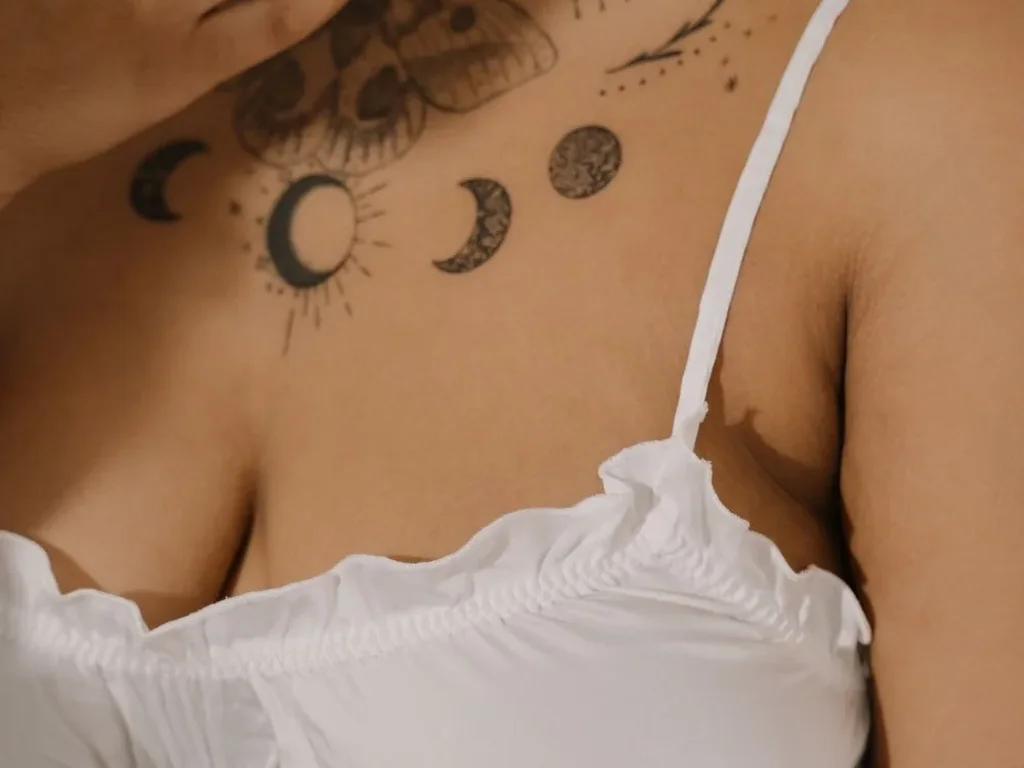
Five moons in a row along the collarbones, crescent to full and back. The full moon gets stippled texture; the crescents stay bare outlines. A moth piece sits higher on the same chest.
Chest skin catches summer sun, so this fades faster than an arm piece. Our moon tattoo design ideas page shows other layouts, including a vertical run down the spine, safely out of the sun.
7. A butterfly under a crescent moon, worn high on the back
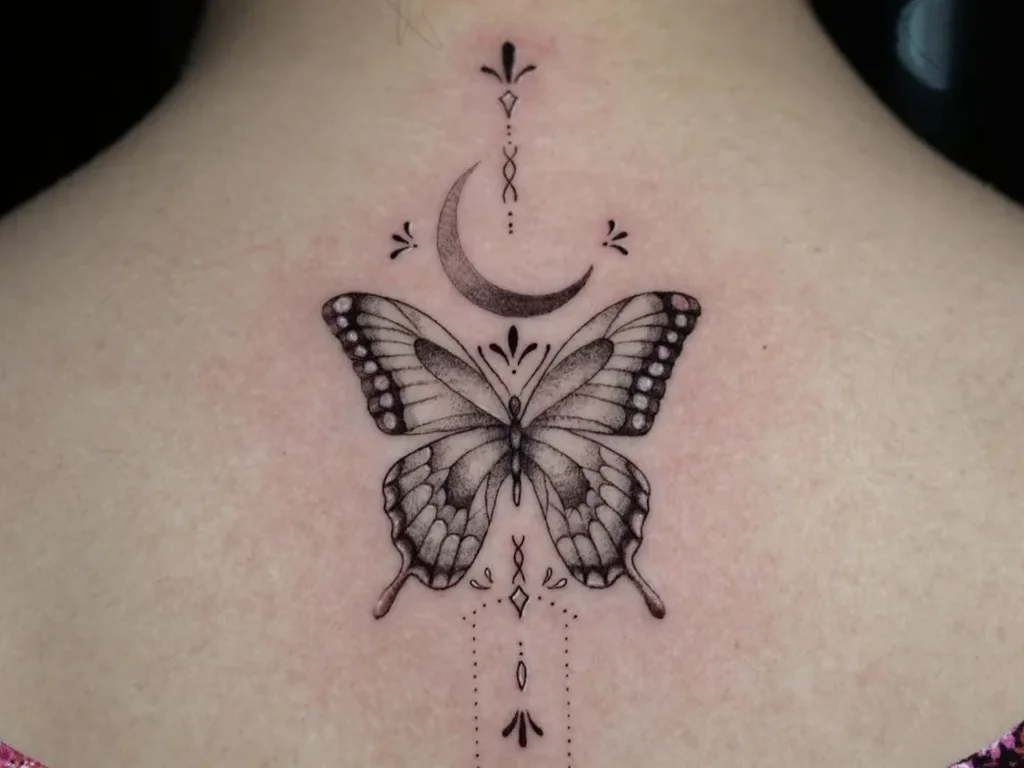
Symmetrical wings, a crescent moon above, tiny dots and charms dangling below like jewellery. The upper back is the classic spot: flat, hidden by most tops, shown when you choose. Every wing vein is drawn line.
Symmetry is unforgiving: if one wing heals lighter, every mirror tells you. Pick an artist whose healed butterflies match. Next stop for winged insects: our dragonfly tattoo design ideas page.
8. A butterfly with red ink trails, on the hip
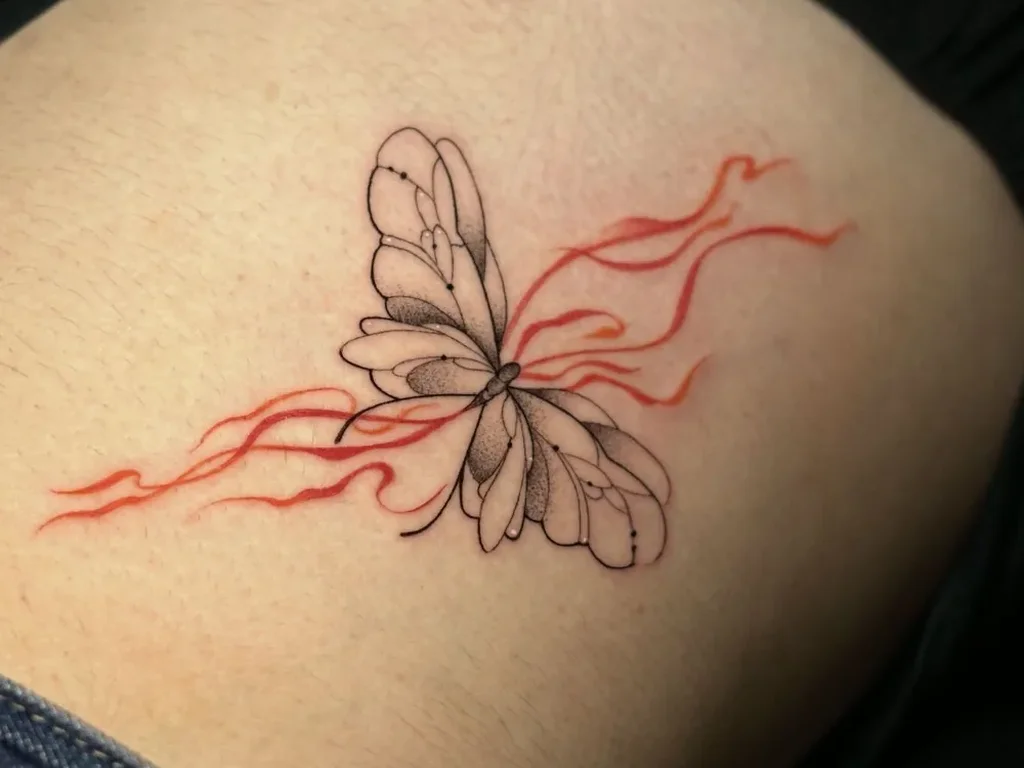
Proof fine line is not black-only. A small black-outline butterfly sits on the hip while thin red lines stream behind it like ribbon, or slow flame. The one colour piece in this list.
Be clear-eyed about red: colour holds less pigment per pass, and light red lines usually go quiet first. Budget a colour refresh every few years.
9. A face drawn in a single line
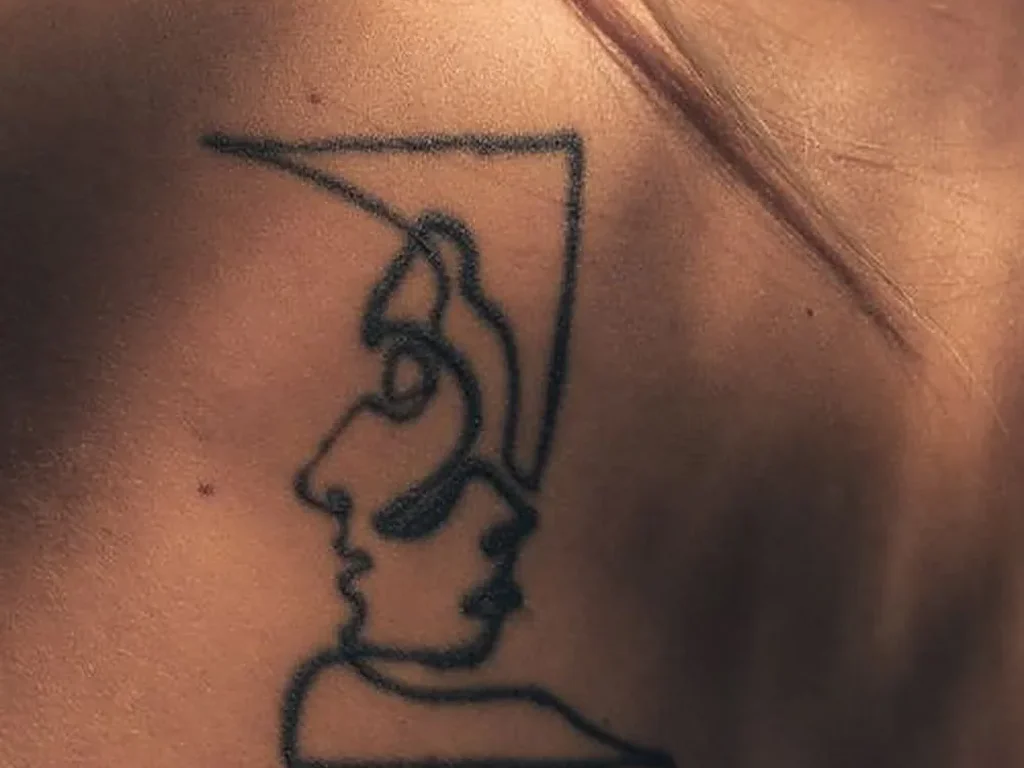
The needle never lifts. One continuous line becomes a forehead, an eye, a nose, a mouth, inside a thin rectangular frame on the shoulder blade. Gallery art, carried on skin.
No shading exists to rescue a wobble, so let the artist redraw your reference in their own line rather than trace it. A natural stroke ages better than a copy.
10. A lioness split with flowers
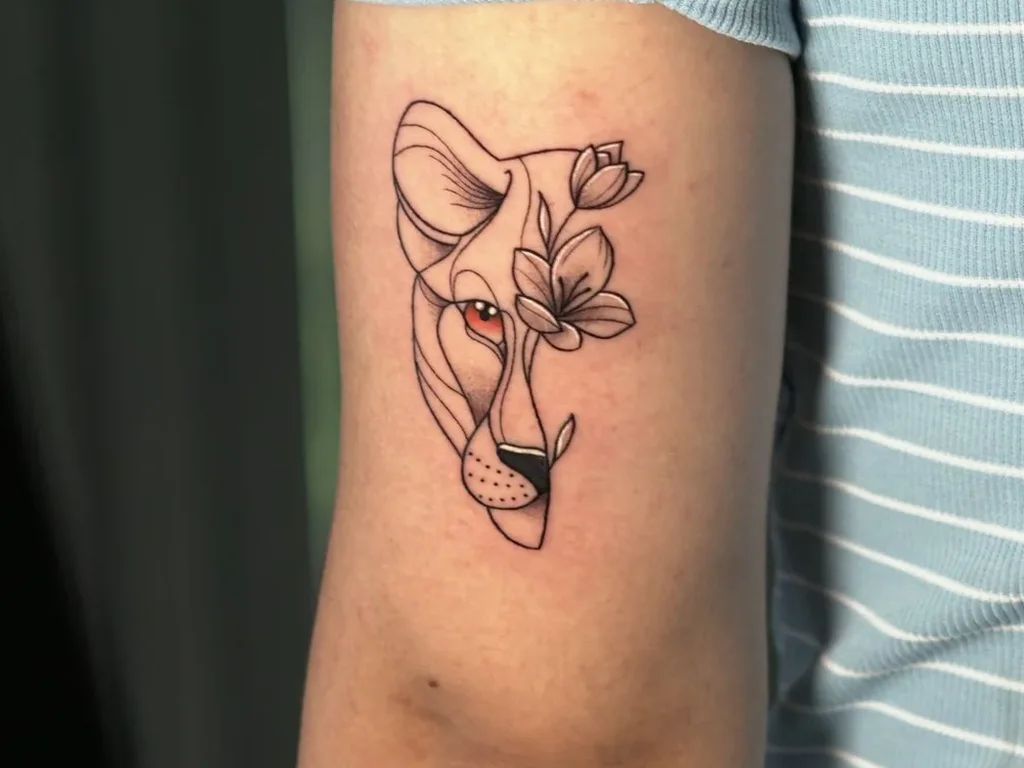
Half a lioness’s face meets flowers taking over the other half. In fine line it stays gentle, not fierce: whiskers are single hairs of ink, the flowers do the decorating.
The eye is the risk: one small dark eye anchors the face and must sit deep enough to survive. Upper-arm size works. On a wrist, this turns to mush in a few years.
11. A dragon in Japanese style, all line
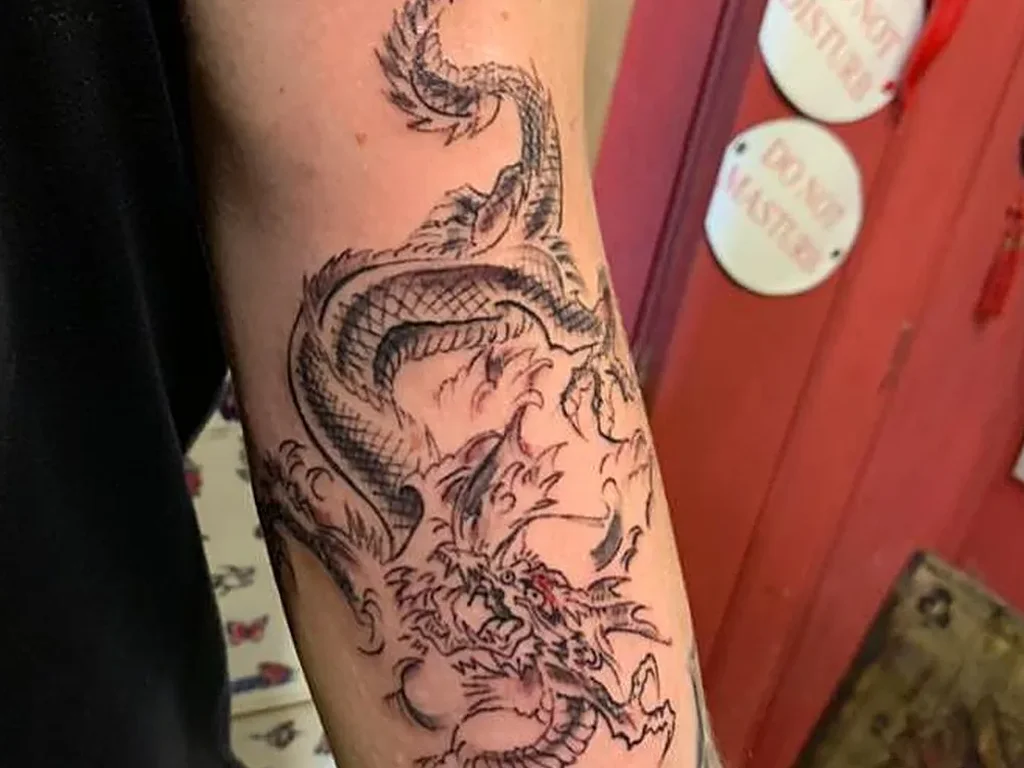
Dragons usually mean packed colour and heavy scales. This one, by Milan artist Gian Maurizio Fercioni, is the opposite: a Japanese dragon down the forearm in fine black line, claws and whiskers drawn, nothing filled.
Note the truce with detail: scales suggested in places, skipped elsewhere. Agree the same truce, or future you will squint at a forearm of merged diamonds.
12. A dog in one continuous line
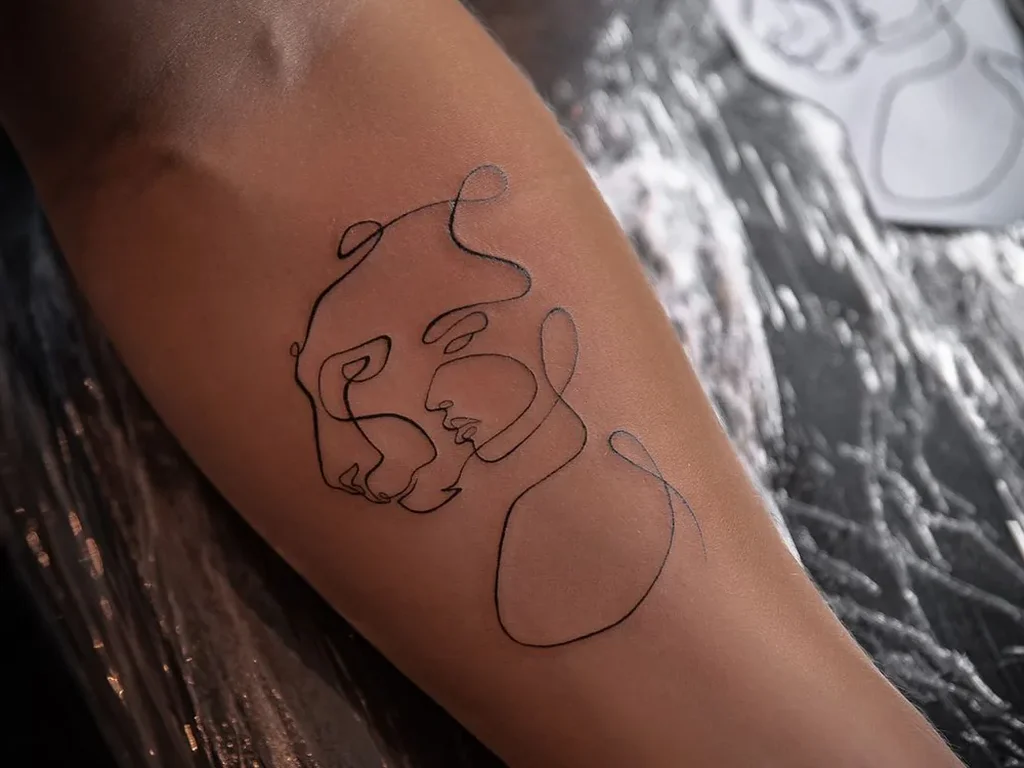
A dog’s head and floppy ear from one looping line that doubles back on itself. Clearly a portrait of somebody’s actual dog, not a generic pup. The artist’s stencil sheet sits in the background, mid-session.
Bring clear photos and let the artist find the line. Long ears and simple muzzles translate best; heavy wrinkles and brindle coats resist a single thread of ink.
13. A tiny duck with a sprig
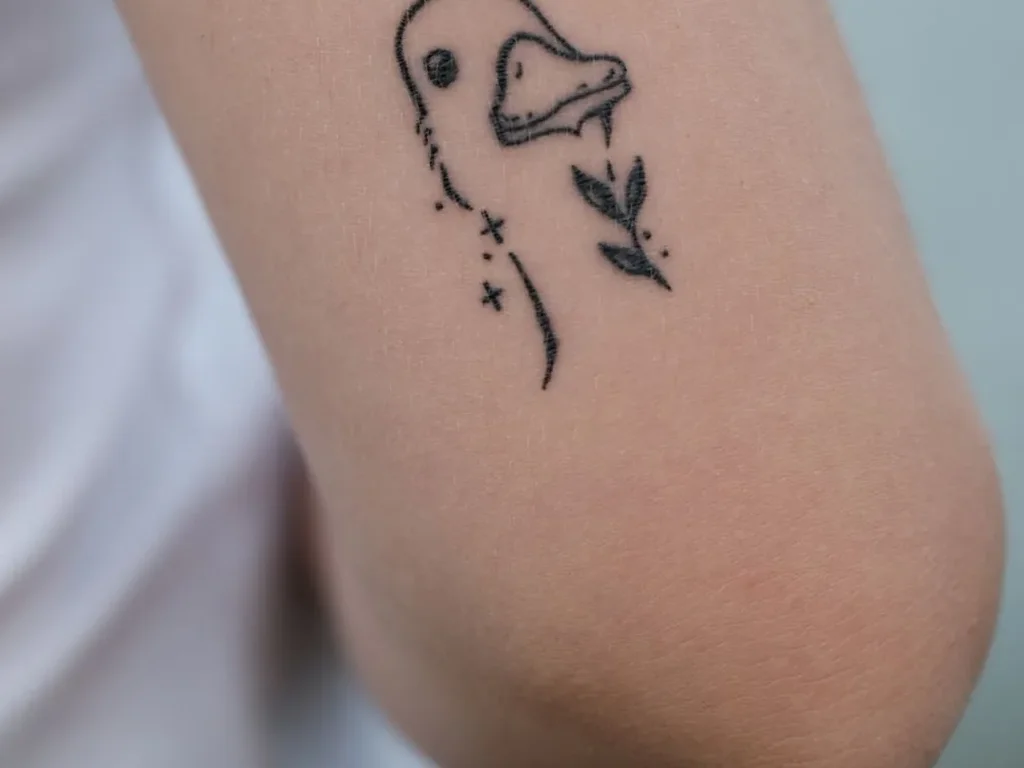
Thumbnail-sized: a duck in profile, one dot for an eye, a leafy sprig beside it, on the inner arm where pale skin shows lines crisply. Almost nothing to it. That is the charm.
Micro pieces soften fastest; so little ink holds the shape. Expect gently fuzzy edges over the years. Bothered by that? Double the size. Still small.
14. A paw print the size of a coin
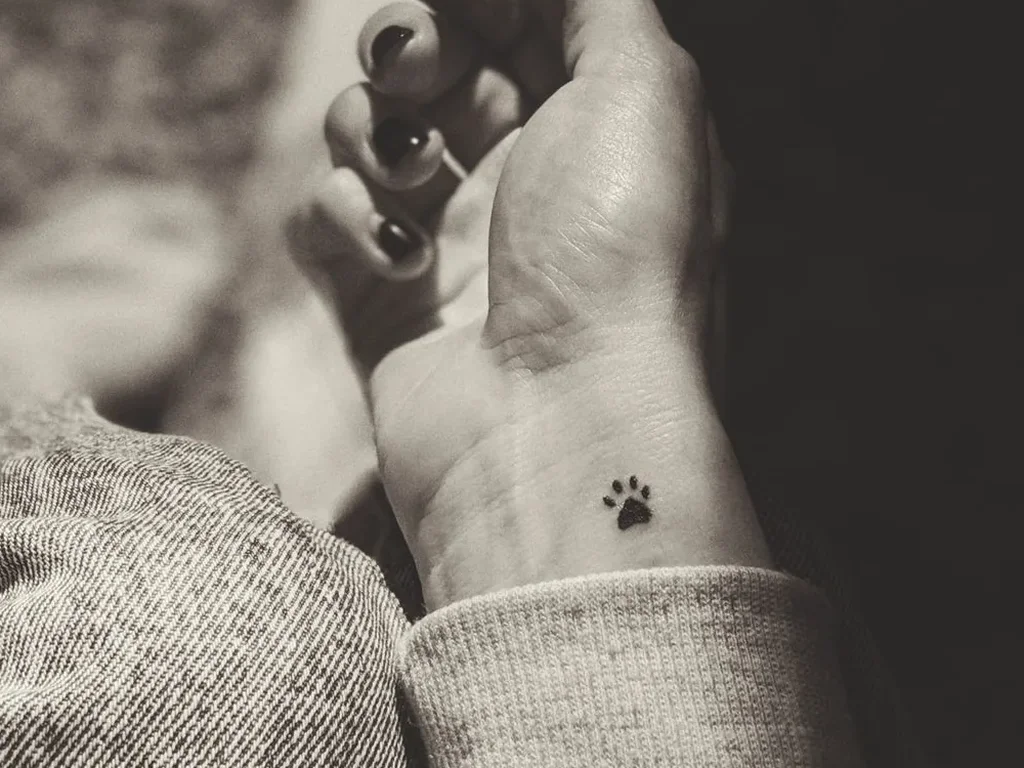
One small paw print inside the wrist: four toes and a pad, each a simple soft shape. Memorial pieces do not get quieter, and the wrist means you see it daily, usually the point.
Wrists flex and rub desks, sleeves and straps, so edges fade sooner. Paw shapes are chunky enough to cope. Keep it coin-sized or bigger; miniatures lose their toes.
15. A baby’s footprint, with her name and date
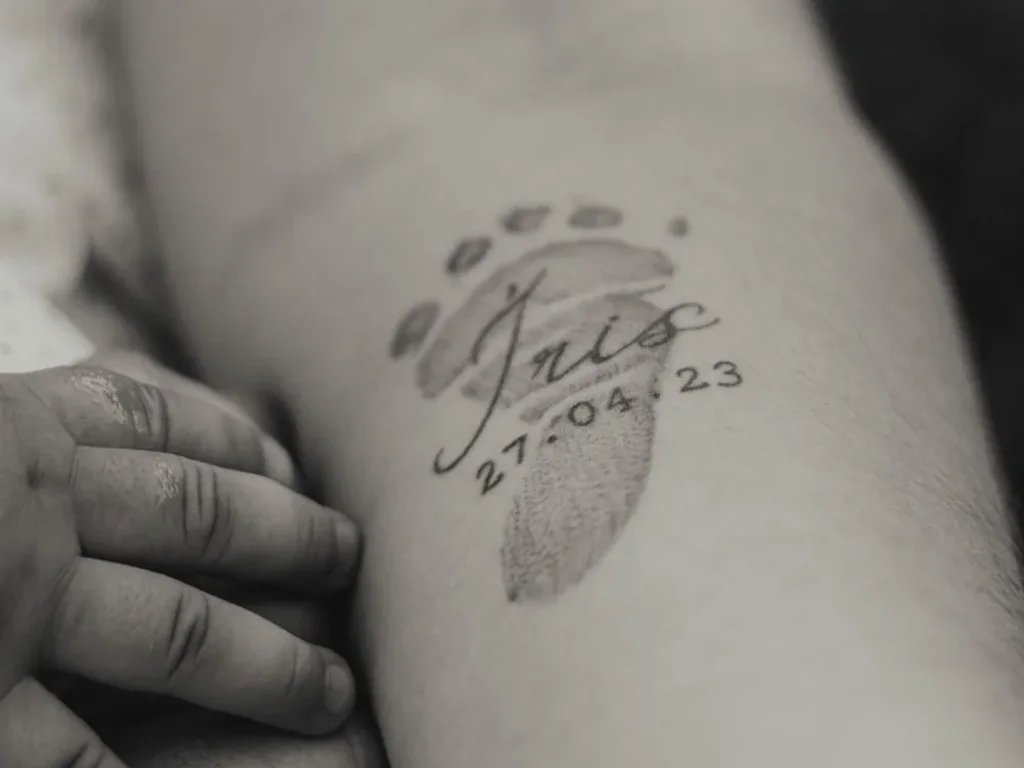
A newborn’s footprint on her mother’s forearm, the name Íris looped through it in fine script, birth date underneath. One of the most requested family tattoos there is, kept tender by the thin lines.
Real footprints have ridges too fine to tattoo honestly, so artists simplify: outline, heel, toes. Check the drawing first, and the spelling of everything twice. Twice.
16. An anatomical heart in one weight of line
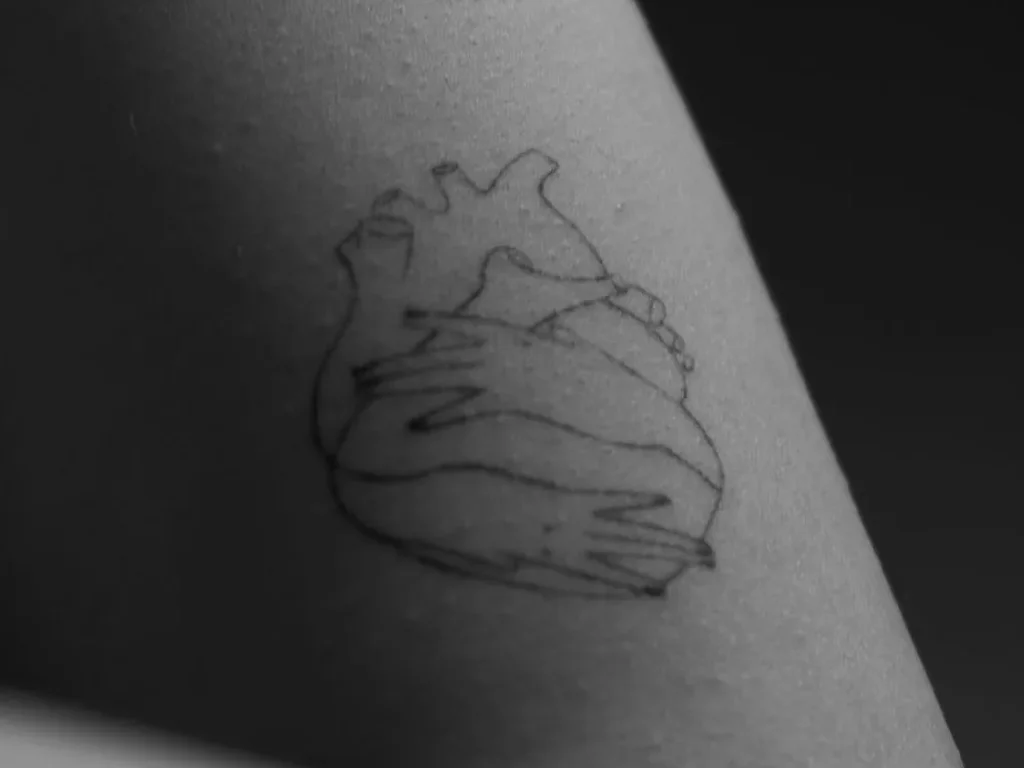
Not the cartoon heart. The real one, chambers and arteries included, in one unvarying line weight on the inner bicep. The photo shows it healed and pale, the honest end state of much fine line work.
The inner bicep hides from the sun, so contrast lasts longer here than most spots. More hearts of every style live in our heart tattoo design ideas collection.
17. A heart-shaped wreath with the words inside
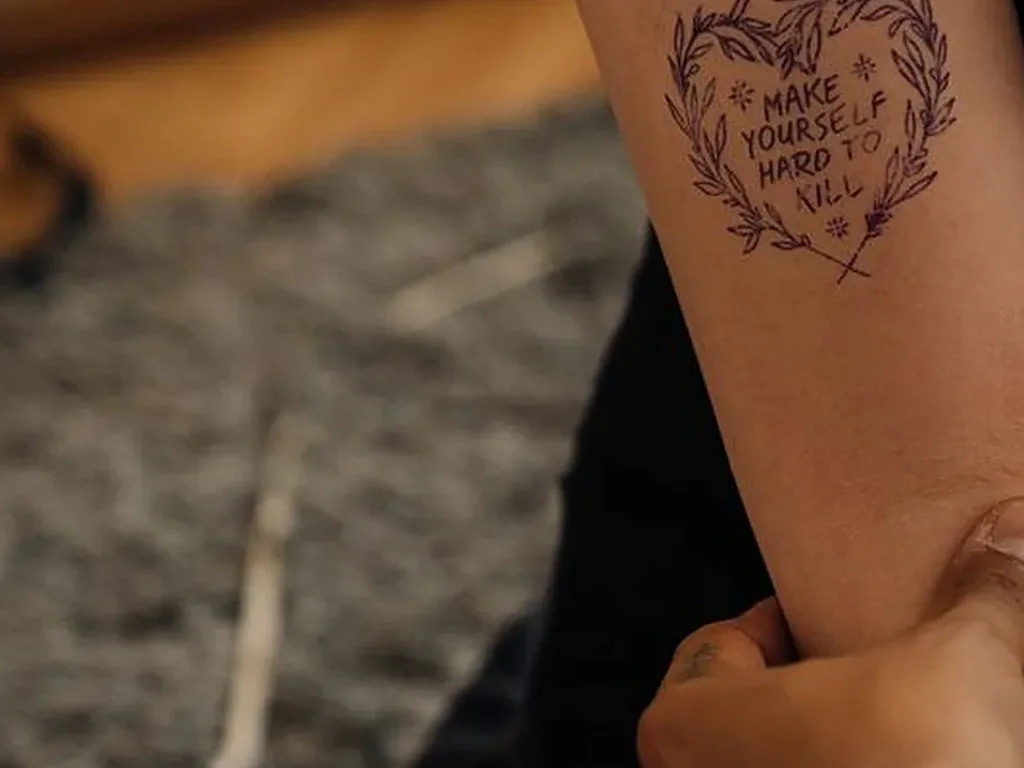
Design 2’s laurel idea, folded into a heart. Leaves curve up both sides, meet at the top; a short motto in small capitals fills the middle. On the forearm it sits neat as a brooch.
Two risks stack: tiny lettering, tight border. Go bigger than first imagined, with fewer words than first wanted. Three or four words is the sweet spot.
18. A trail of stars down the forearm
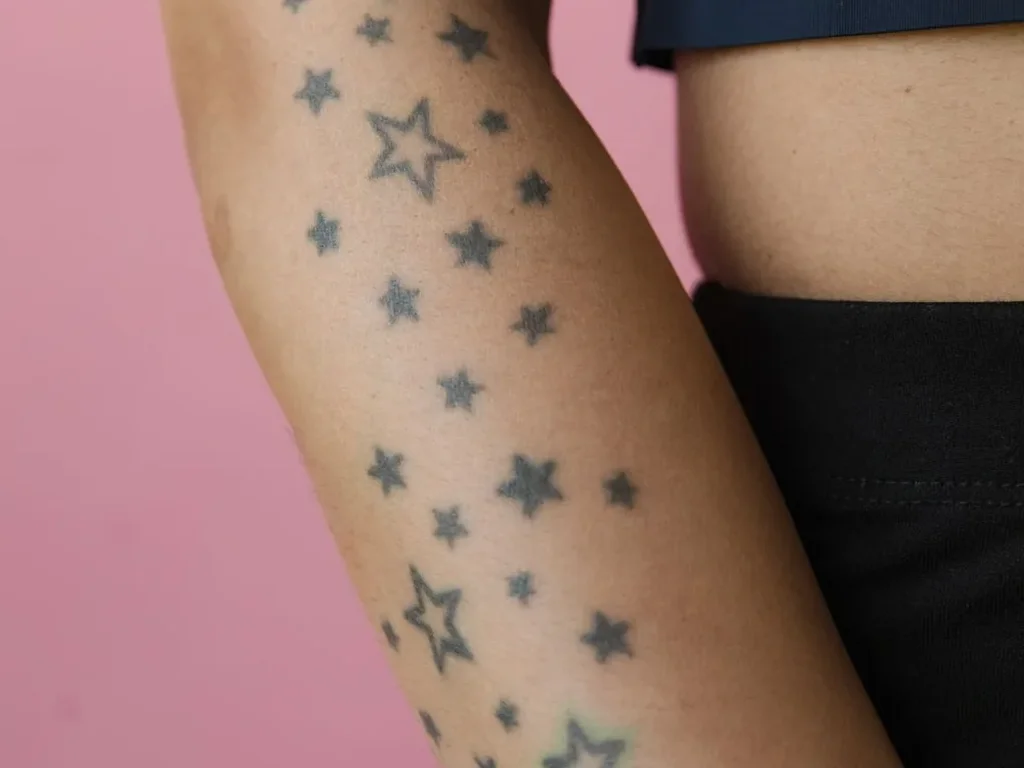
Dozens of small stars down the forearm, some open outlines, some soft solids, denser at the elbow, drifting apart toward the wrist. Like an arm dipped in a night sky. Shown healed, slightly grey.
Scattered sets grow easily; people add a star per milestone. Prefer one hero star? Our star tattoo design ideas page covers the bolder versions.
19. Three tiny birds behind the ear
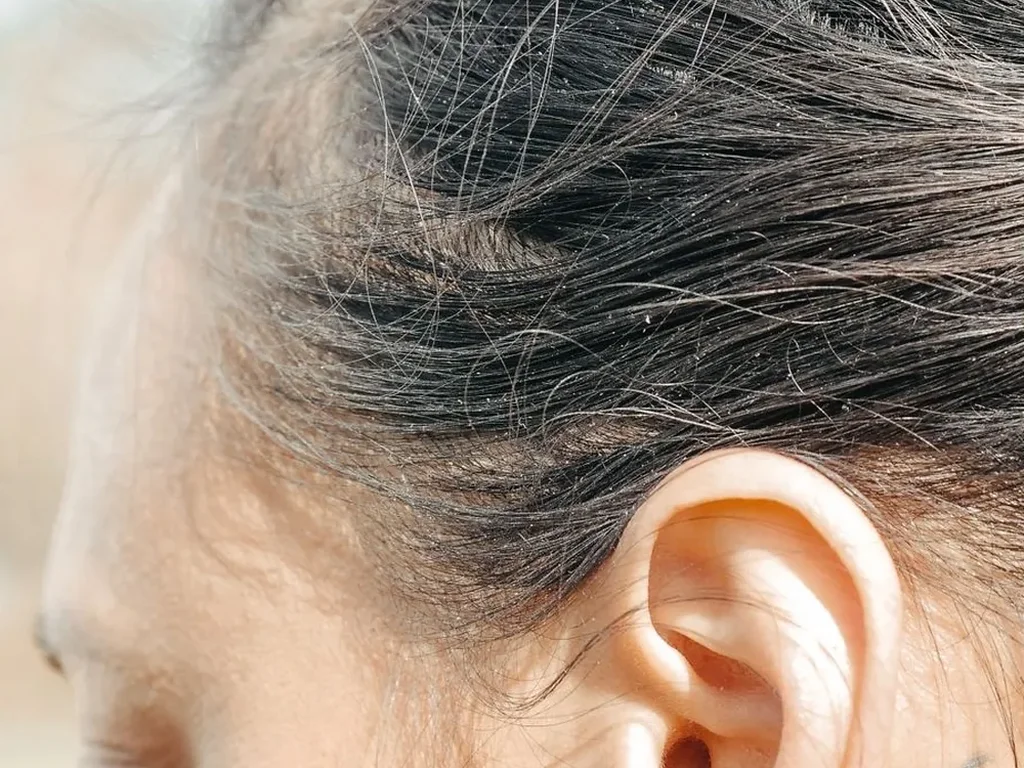
Three small birds in a loose diagonal behind the ear, where hair hides them on demand. Each is barely a curved body and a wing stroke. Among the most discreet placements there are.
Thin, oily skin plus shampoo and sunglass arms: file this under “will need a refresh” from day one. Luckily, a touch-up this small takes minutes.
20. A rose outline behind the ear
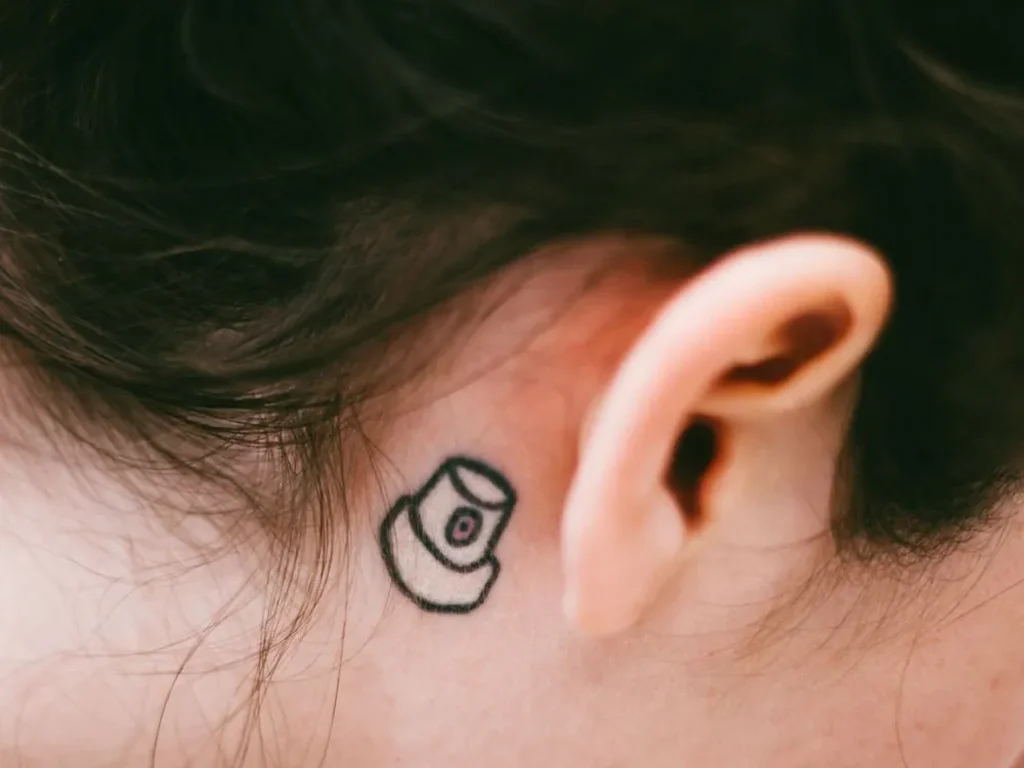
Same hidden spot, different subject: a single rose as one looping outline behind the ear. No leaves, no stem, just the bloom’s spiral. It appears only when the hair goes up.
A rose needs its spiral spaced wide or the centre closes as ink settles; this one keeps the turns open. More roses, stems to sleeves, on our rose tattoo design ideas page.
21. Typewriter script at the ankle
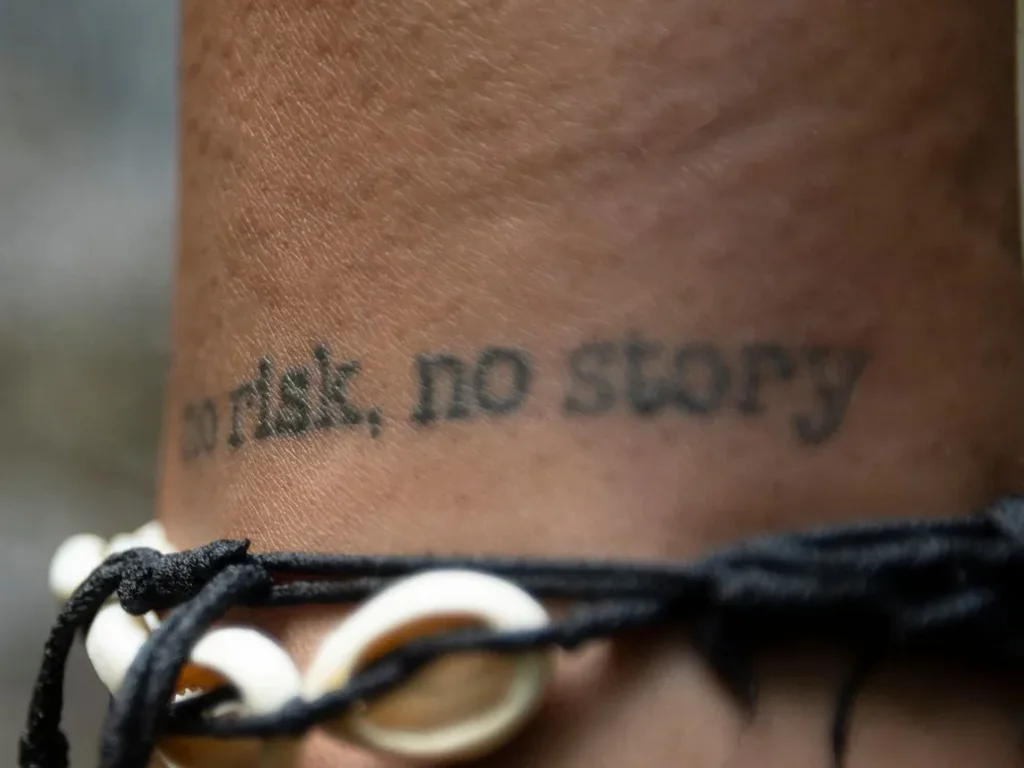
“No risk, no story,” in a small typewriter font around the ankle, above a shell anklet. Script suits fine line: a sentence in hair-thin letters reads whispered, not announced.
Ankles swell, rub shoe collars and catch sun. Letters survive at this height if the font stays simple; typewriter and plain handwriting age best.
22. One word, two meanings: the amour/haine ambigram
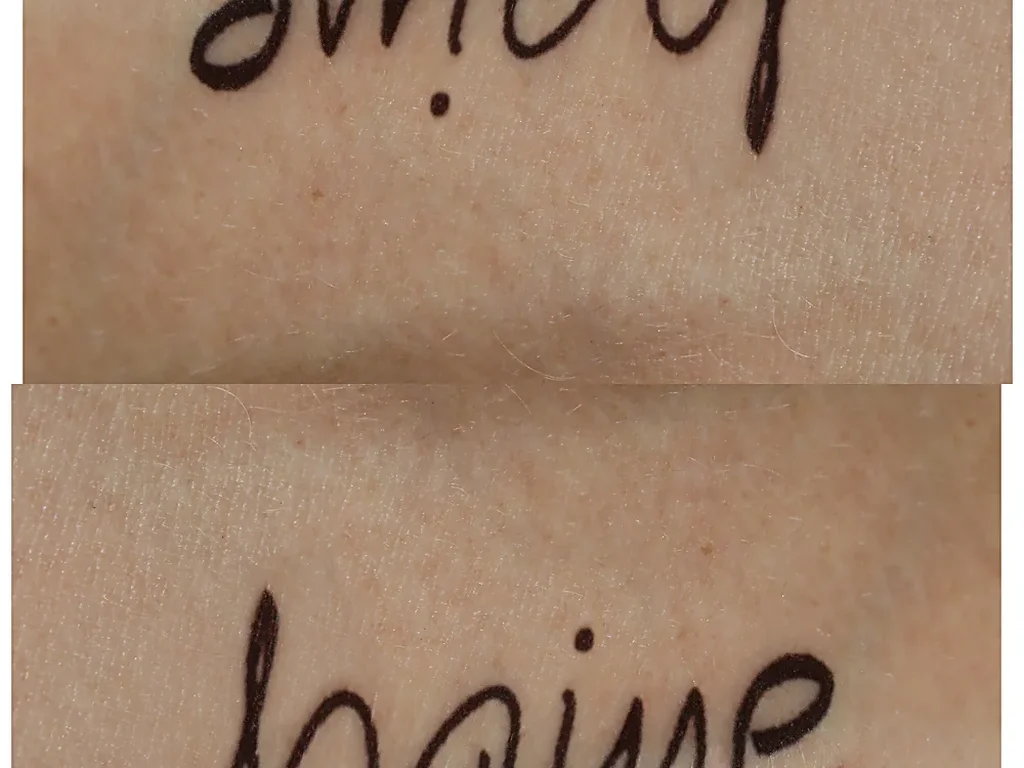
Across both wrists, one French word reads two ways. One way up: “amour,” love. Flipped: “haine,” hate, from the very same strokes. Ambigrams only work in a clean single line, a natural fine line subject.
Also the least forgiving script here: every curve must stay exact in both directions, and spread blurs the trick. Go larger than feels necessary; test-print at true size first.
23. Matching compasses for two people
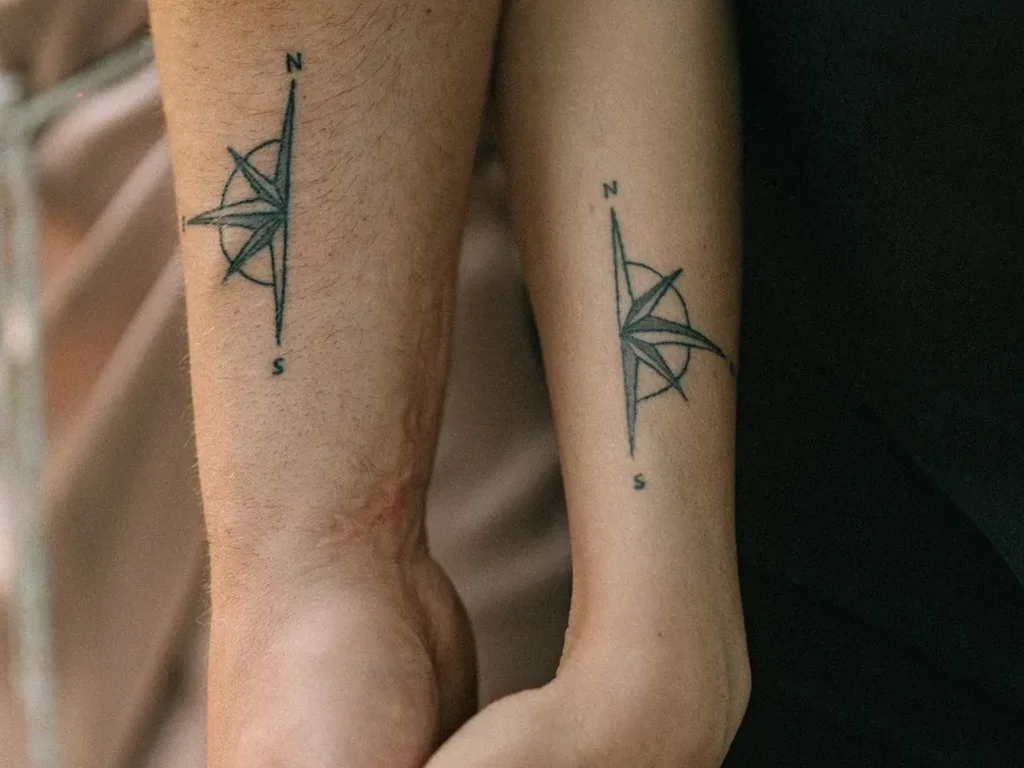
Two forearms, one slim compass each: long needle point, small cross axis, tiny degree marks. Matching tattoos usually mean hearts or initials. A compass says it better: same direction, separate journeys.
Get matched pieces in one session from one artist so weight and size truly agree. And choose a design each of you would wear alone. That makes the pair stronger.
24. Interlocking triangles on the back of the hand
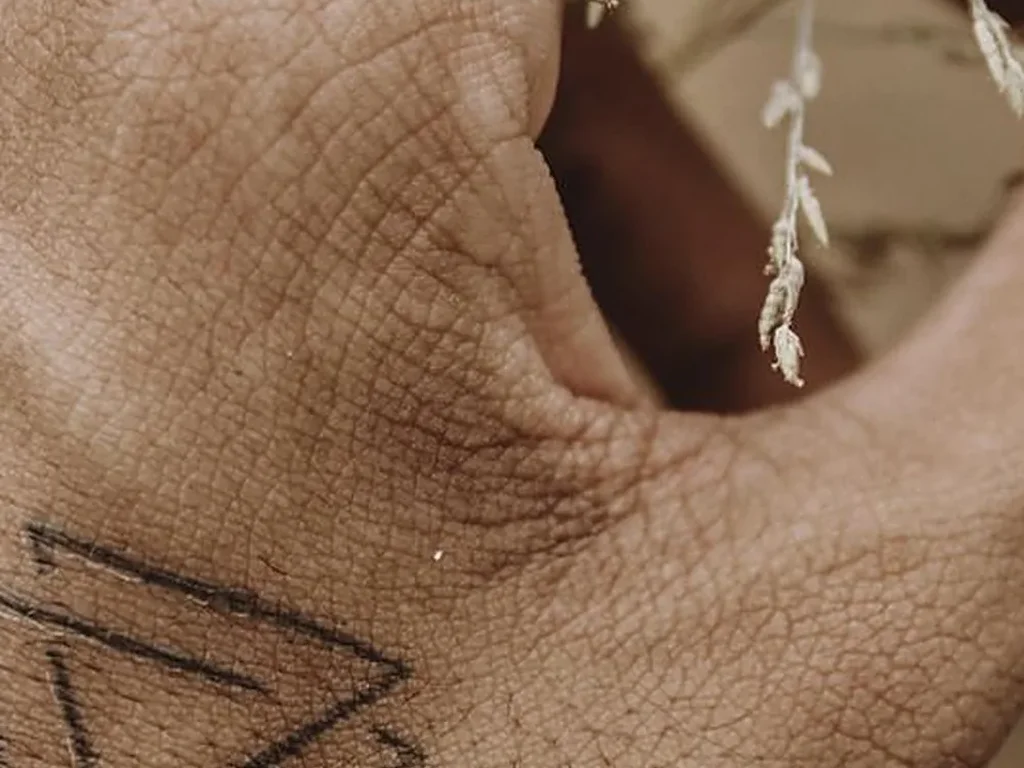
Two plain triangles, one up, one down, locked through each other on the back of the hand. Six straight lines, zero ornament. The strictest test of a steady hand there is.
The warning: hands shed skin fast, get washed constantly and live in the sun, so they fade quickest on this list. Expect standing touch-ups, and choose an artist who guarantees hand work.
25. An ornamental line running down the spine
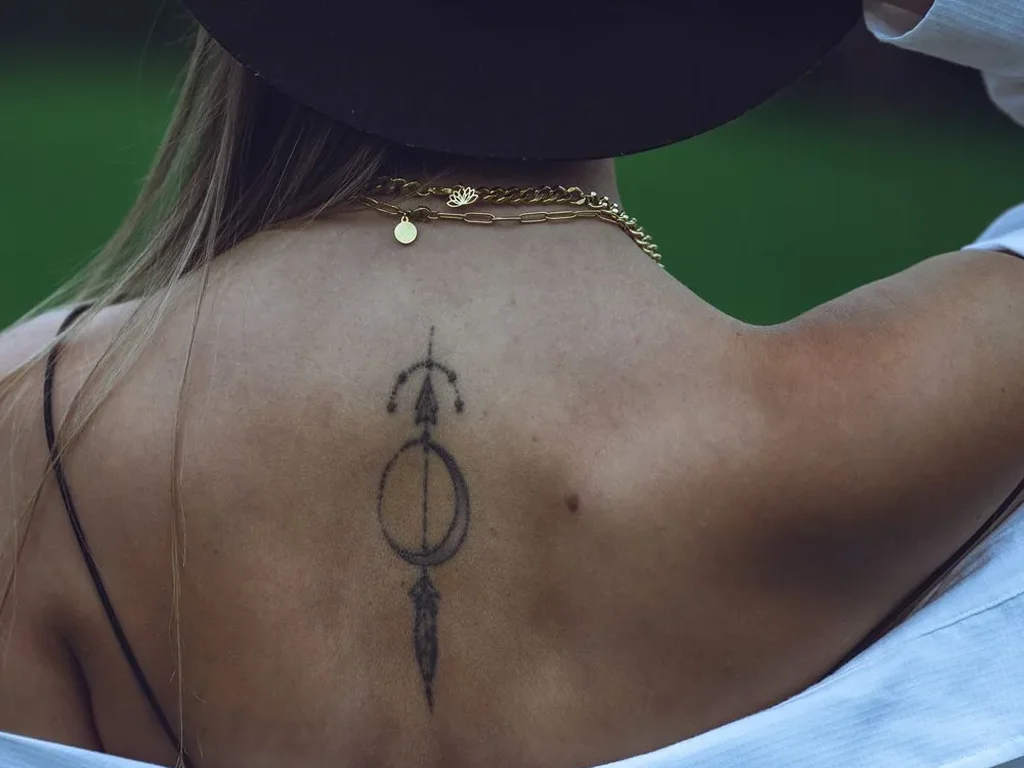
A vertical ornament down the spine: small circle, diamond, ring, and a fine drop hanging at the end, a pendant worn backwards. The family borrows from the unalome, simplified into pure jewellery.
The spine is kind: flat, sheltered, slow to change. Centring is everything — millimetres off and the eye catches it forever. Good artists check the stencil standing, sitting and bending first.
Fine line vs traditional: which one is actually for you?
These styles age in opposite directions. Traditional work is built on thick outlines and packed colour, and trades delicacy for stamina: it looks broadly the same at year twenty as at year two. Fine line trades stamina for detail and softness. You get a drawing instead of a poster, and you pay with touch-ups and lines that slowly relax.
Cost surprises people. Fine line looks like less tattoo, so people expect it to cost less, but specialists often charge more per hour because the work is slower and the skill rarer. Small pieces still hit the shop minimum either way. The honest way to choose: picture the tattoo at sixty. If you want it crisp at sixty, go traditional, or big and simple. If you love the sketch-like softness and accept the upkeep, fine line is yours. Going in with the wrong expectation is the only wrong move.
Questions people actually ask about fine line tattoos
How long does a fine line tattoo last before it fades?
It never disappears, but it softens. Expect lines slightly wider and lighter after the first year, then slow change from there. Sheltered spots like the inner arm stay clean for many years; hands and sun-exposed chests fade sooner. Most people refresh the lightest lines somewhere between years one and five.
Do fine line tattoos hurt less?
A little, usually, but not for the reason people think. The needle goes to the same depth. Fine line pieces tend to be smaller, with no heavy colour packing, so sessions are shorter and the same ground is not gone over repeatedly. A single needle can feel scratchier, though. Placement matters more: ribs hurt, outer arms do not.
How much does a fine line tattoo cost?
Small pieces usually start at the shop minimum, which in many US cities runs from about $80 to $150. A detailed palm-sized design from a sought-after specialist can reach several hundred dollars. Agree the final size and quote at a consultation; guessing sizes over messages is how budgets blow up.
When should I get a touch-up?
First, check it once fully healed, at around six weeks. Lines that healed light can be strengthened then, and many artists include that pass free if you return within a set window. After that, touch-ups are as-needed. If you have to squint to tell whether a line is fading, it is not time yet.
What is the smallest size that is still safe?
Detail is the limit, not the outline. A simple heart or star can work at two centimetres. A face, a wreath with words, or anything with inner detail usually needs at least five to seven centimetres, so inner lines can spread without touching. If an artist happily shrinks anything to any size, walk away.
Which placements fade the fastest?
Fingers and hands top the list, then feet, then anything with heavy sun or friction: the chest in summer, ankles under shoe collars, behind the ear. Skin that renews fast or rubs all day sheds ink faster. The slowest spots are the boring ones: inner arm, ribs, spine, thigh.
Can fine line tattoos be done in colour?
Yes. Design 8 on this page is black line with red streaming behind it, and soft colour washes are a whole branch of the style. Just know colour, especially pale colour, carries less pigment and quiets down faster than black. Plan refreshes sooner, and skip very pale yellows and whites for anything you want read from a distance.
How do I choose an artist who really specialises in fine line?
Look at healed work first, a year old or more, and zoom in. Lines should hold one weight and stay separate where they run close. Check that the artist’s page is mostly fine line, not one delicate piece among fifty bold ones. And notice how they handle size requests: a real specialist will sometimes tell you no, or tell you to go bigger. That honesty is the strongest credential there is.
What does a blowout look like?
A line with a shadow. Ink bleeds sideways under the skin and the line sits inside a fuzzy blue-grey haze, like a biro mark on wet paper. It usually shows once the tattoo has healed, a few weeks in, and it does not fade back to sharp. Shallow blowouts can soften over the years; deep ones need a cover-up or laser.
Can a faded fine line tattoo be covered up or fixed?
Usually yes, and faded fine line is one of the easier problems to fix. Often it does not need covering at all: an artist can re-line it slightly bolder and it looks new again. If you want it gone, light lines respond well to laser compared with packed traditional work, and a cover-up needs far less darkness to hide what is underneath.
Final Thoughts
Fine line is not a lesser tattoo for people afraid of tattoos. It is a different bargain: delicacy now, upkeep later. Pick a design with space inside it, size it a notch bigger than your first instinct, hire someone whose healed work you have inspected up close, and keep sunscreen on it. Do those four things and the little drawing on your skin can still look like itself in twenty years, softer at the edges, like a page you have read many times. That softness, honestly, is part of the charm.
Photo credits: tattoo photographs via Pexels (Pexels licence, free to use) and Wikimedia Commons — “Flower tattoo” by Bruno Antonio Menei / Inksecte studio, Belgium (CC BY 4.0); “Tatouage ambigramme Amour Haine” (CC BY-SA 4.0); dragon tattoo by Gian Maurizio Fercioni (CC BY-SA 4.0). Full source list in the package notes.
Pingback: Animal Tattoo Ideas: The Complete Guide by Animal, Style and Placement