
Black rose tattoo ideas start with a small lie, and it is worth clearing up first: there is no true black rose in nature. The darkest bred roses are a red so deep it reads as black in the shade, and florists who sell “black” roses are usually selling dyed ones. On skin, though, the black rose is completely real. Tattooists build it from black ink and grey wash, petal by petal, and the twenty-four designs below are all real black rose tattoos photographed on real people — realism pieces, outline work, memorial roses, cover-ups and one full back. Every photograph was checked one by one before it earned a place here.
That checking matters more with this subject than most. Search results for black rose tattoo ideas are full of red roses photographed in shadow, temporary tattoos, drawings and game characters wearing ink they do not own. What survived the screening has a genuine range: single bold roses, roses paired with skulls, clocks, lions and rosary beads, and a few soft grey pieces from the gentle end of the style. If you want the wider rose family first, our rose tattoo design ideas collection covers every colour, and the flower tattoo design ideas page puts the rose among its rivals.
What a Black Rose Can Mean
The oldest reading is mourning. In the flower-language lists that Victorian gift books made popular, black roses were tied to farewell, loss and remembrance, and that link never really left. You can see it all over this page: the pocket watch memorial at design 11, the rosary roses at design 10, the names worked into banners and sleeves. A black rose says the love is still there and the person is not — a heavier sentence than any red rose can carry. Plenty of black rose tattoo ideas are, under the shading, memorials.
The second reading is mystery. A black rose is a flower in the wrong colour, and people have always read that as secrecy and the unknown — it turns up in gothic fiction and album covers for exactly that reason. The third reading pushes the other way: rebellion. Choosing the black version of the most romantic flower there is can be a small refusal — of softness, of other people’s taste, of the obvious. And a fourth reading is quietly growing: a new chapter. The old life is dead, the black rose marks the grave, and the wearer is the thing that grew next.
One honest footnote on the flower itself. The rose family runs to thousands of bred varieties, and even the darkest — sold as near-black, like the deep claret ‘Black Baccara’ — are red or purple under daylight. A tattoo is the only place a black rose grows true. That is part of the appeal: a flower that can only exist as ink.
Black Rose Tattoo Ideas: 24 Designs in Real Photographs
Twenty-four designs, arranged roughly from the single-flower pieces up to the full back. Read the ageing note inside each entry before you fall for a style — black rose tattoo ideas split into two camps: deep solid black that holds for decades, and pale grey wash that softens as the years pass. Both camps are worth wearing. They just ask for different things.
1. One Bold Black Rose, Thigh
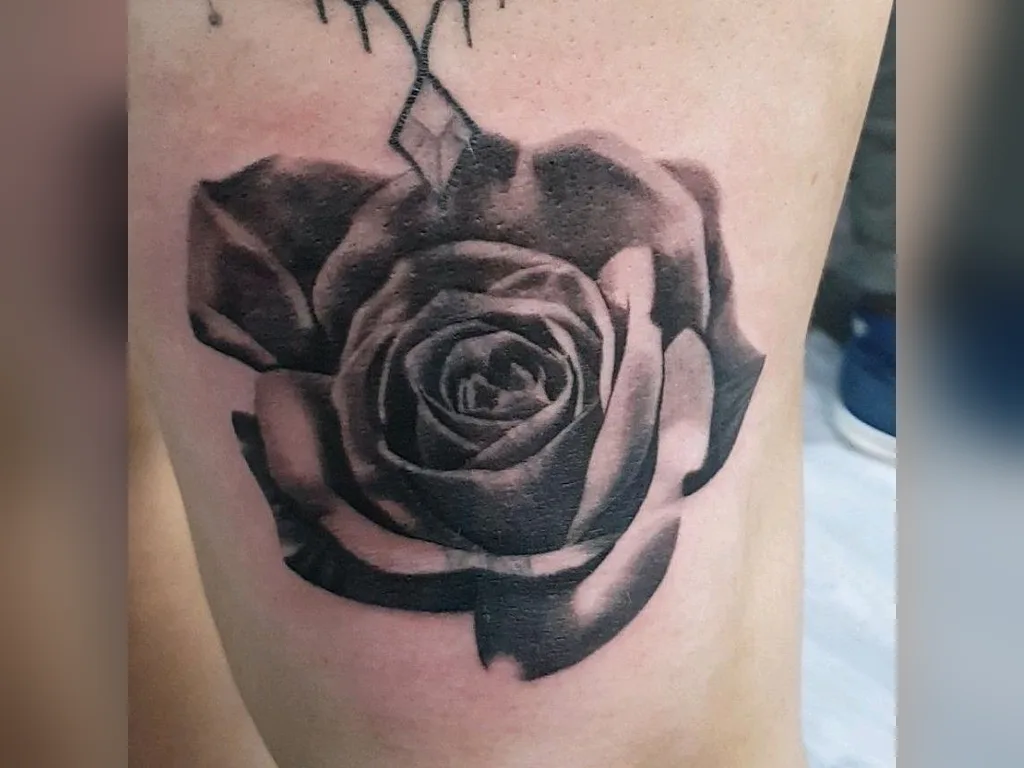
The cover design, and the simplest idea on the page: one large rose, petals packed in deep black with soft grey highlights along the folds, and a small diamond charm outlined above it as if the flower hung from a chain. Nothing else competes with it. This build ages best of any here — solid black at the petal edges, grey only where light would fall — so the rose will still read clearly in twenty years. The thigh gives it room, and big is what a single rose wants.
2. Realism Rose, Thigh
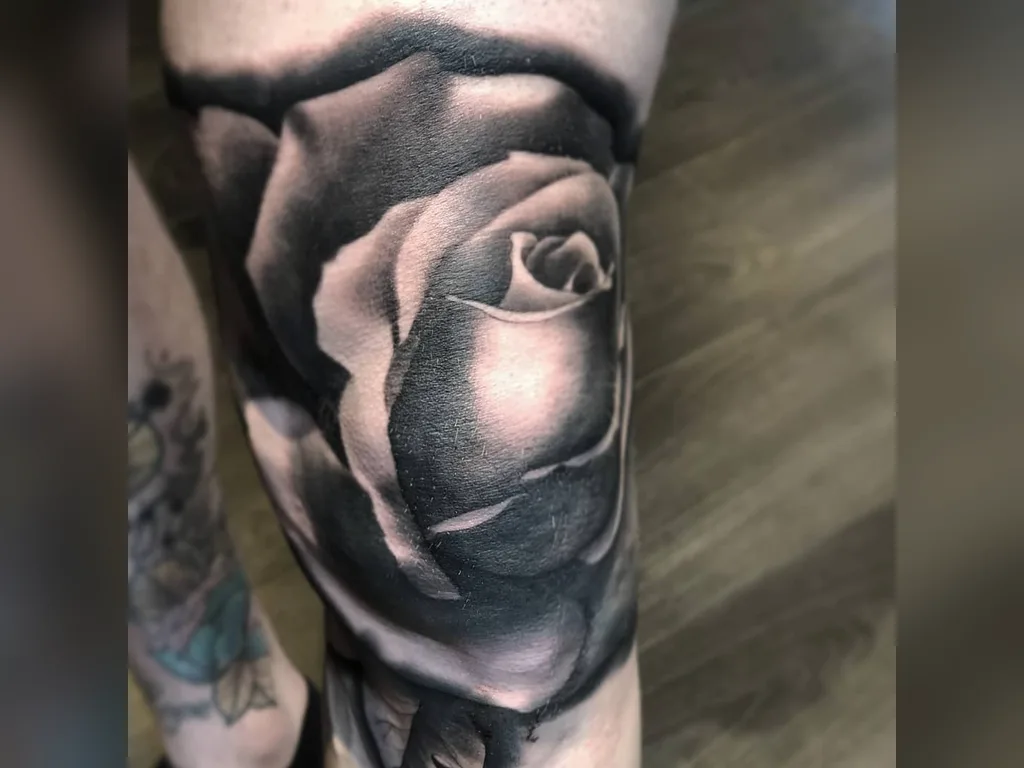
A second thigh rose, worked the opposite way: no hard outline at all, just folded petals built from layered grey wash with the darkest tones buried in the centre. It reads almost like a photograph of a flower rather than a drawing of one. The trade is the usual realism trade — those soft edges will relax as the ink settles over the years, so the rose will look gentler at year ten. The deep centre is the anchor that keeps it a rose.
3. Soft Grey Rose, Shoulder
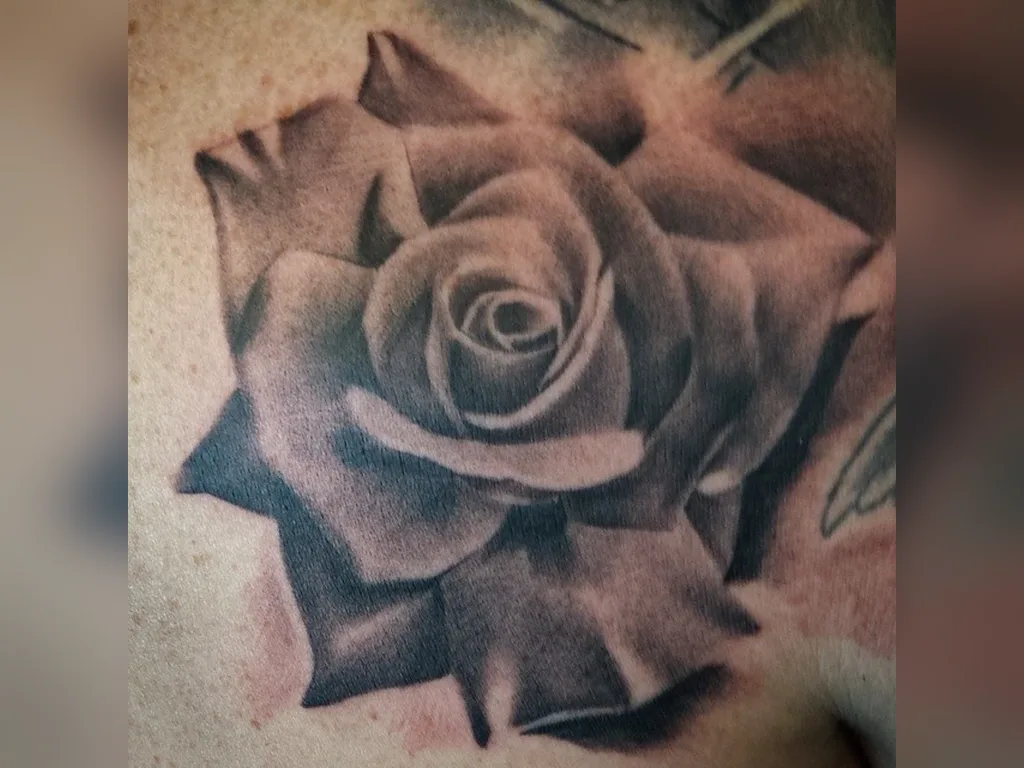
The palest single rose in the list, worn on a shoulder: wide petals washed in light grey, the dark kept to the folds under each petal lip. It is a quiet piece, closer to a pencil drawing than to the bold blackwork elsewhere here. Honest warning: this style changes most with age. Pale wash lightens as skin renews, so expect the petals to fade toward the skin tone and the dark folds to do more and more of the work. Drawn this big, it has the margins to survive that.
4. A Rose on Its Stem
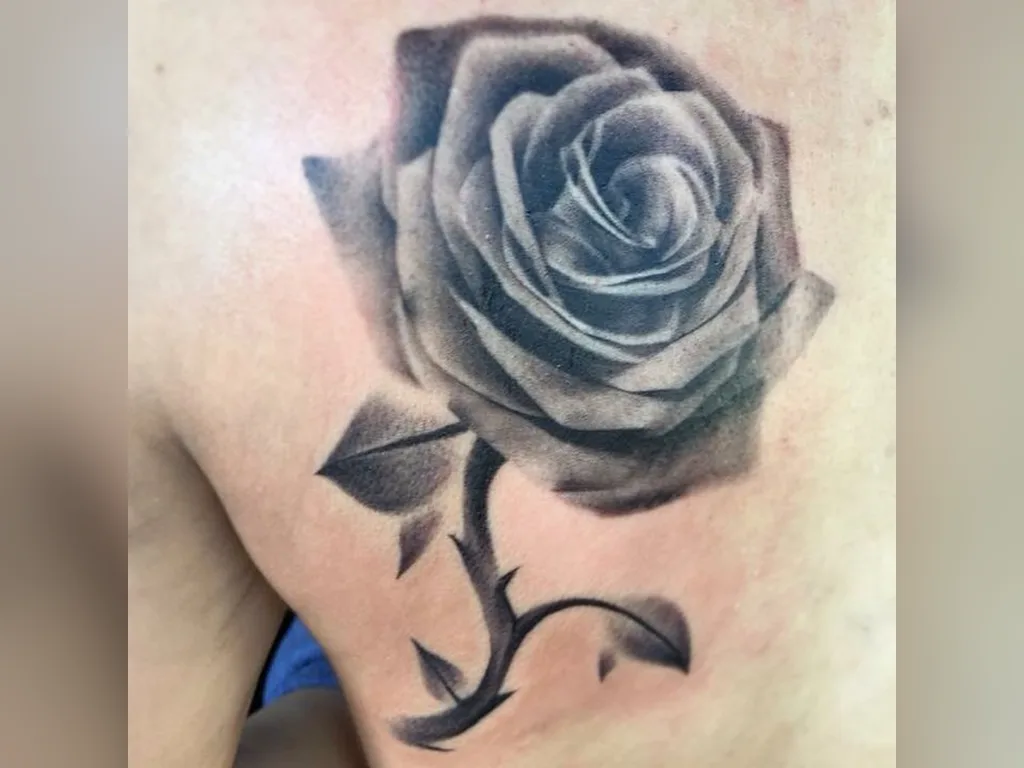
Most designs on this page crop the flower down to the bloom. This one keeps the whole plant: a shaded rose on a curving thorny stem with two solid black leaves. The stem changes the meaning a little — this is the full flower, thorns included, the version that says the beautiful thing and the sharp thing are the same thing. The thin stem line is the part to watch as it ages; fine lines soften, so artists draw them a touch heavier than the reference suggests.
5. Realism Rose, Forearm
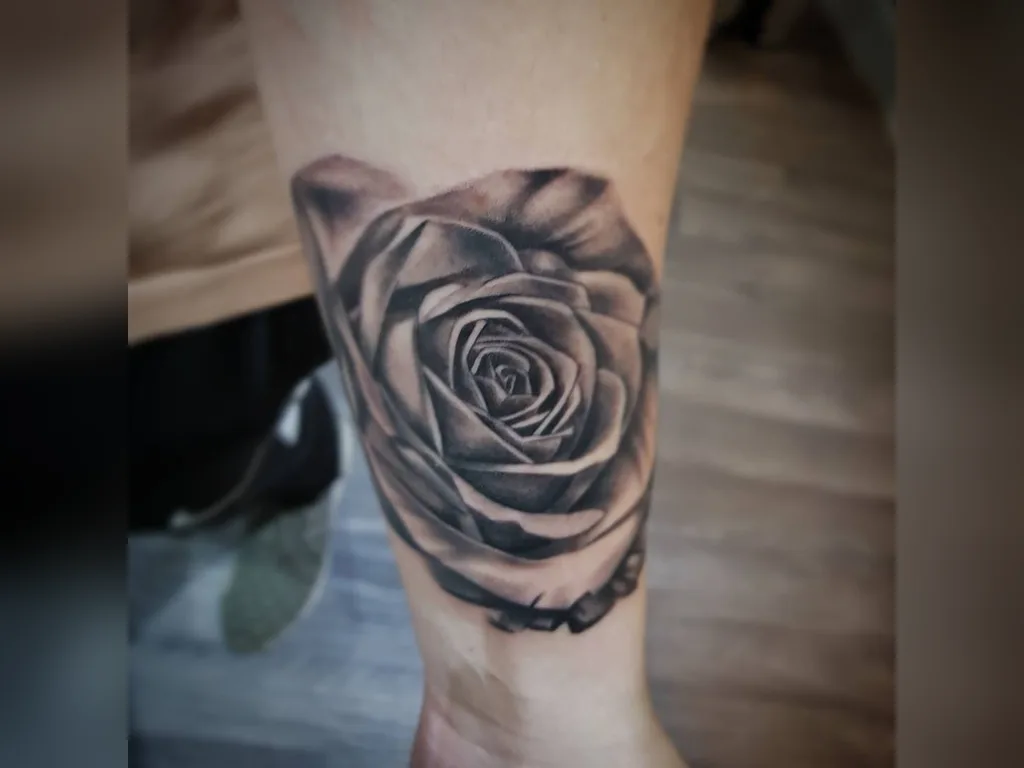
A forearm wrapped in one big bloom, the petals turning around the arm so the rose reads from every angle. The shading runs deep at the heart of the flower and lightens toward the outer petals, giving it a slow spiral effect when the arm moves. Forearms are kind to realism — flat, stable skin, easy to shade evenly — and this piece uses the full width. The outer petal tips are the lightest grey in the design and will soften first; the dark heart will hold the shape.
6. Dark Rose, Lower Leg
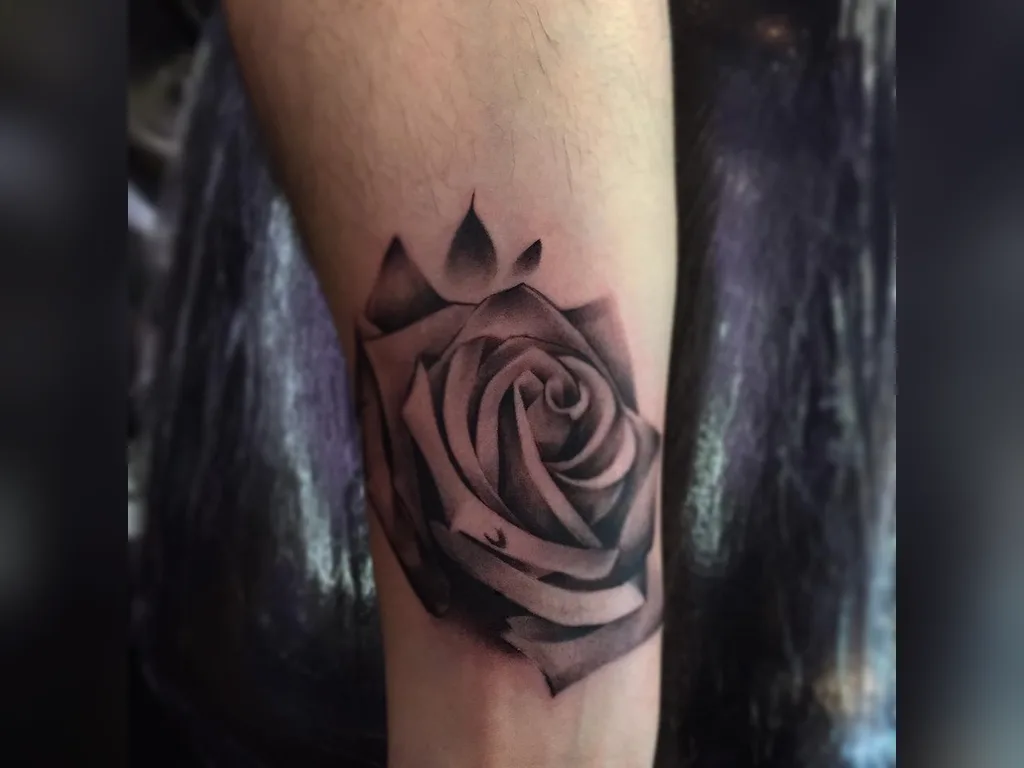
A heavy, dark rose on the shin, petals shaded almost to black at the edges with a slightly lighter spiral at the centre. This is the moodiest single flower here, and the most forgiving: there is so much deep tone in it that a decade of gentle fading still leaves a clearly dark rose behind. Lower legs move more than forearms, so detail blurs a little faster there — one more reason this boldness suits its placement.
7. A Rose Across the Back of a Hand
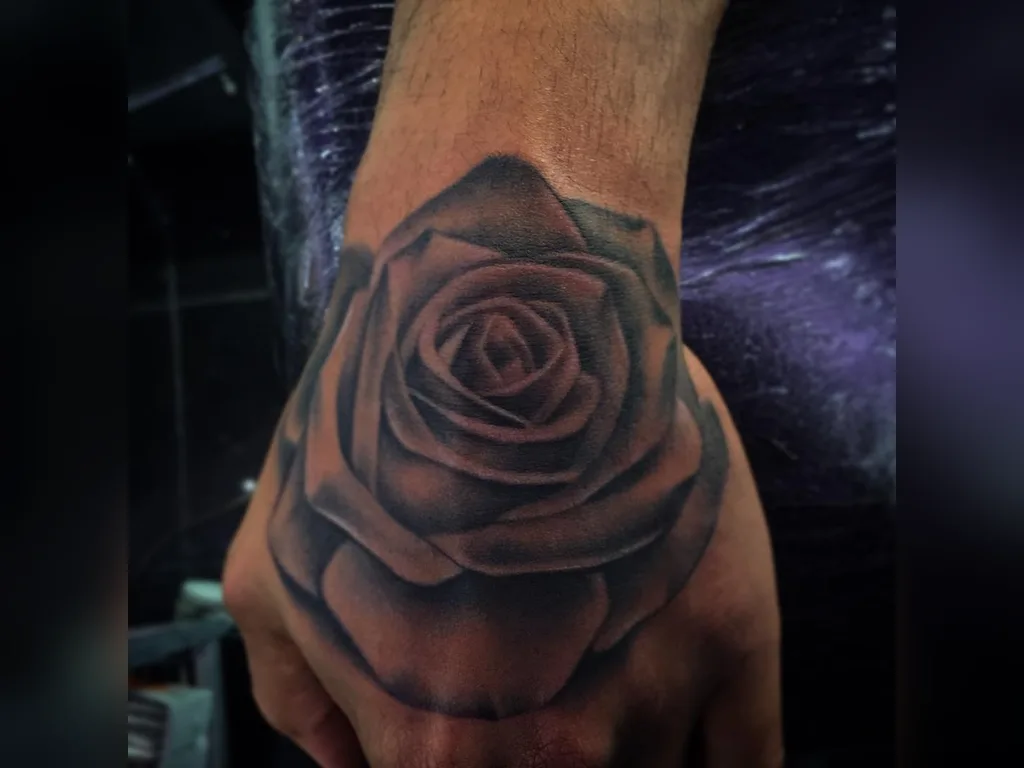
One rose, scaled to cover the whole back of a hand, petals spreading from wrist to knuckles. It is beautifully drawn — soft grey folds over deep black shadow — and it comes with the hardest ageing brief on the page. Hands wash, grip, sunburn and shed skin faster than anywhere else, and no design escapes that. Expect this rose to need a refresh years before an identical one on a forearm would. Wearers who choose hand pieces knowingly tend to accept that deal — and the bold size here gives the artist something to refresh.
8. Outline Rose, Forearm
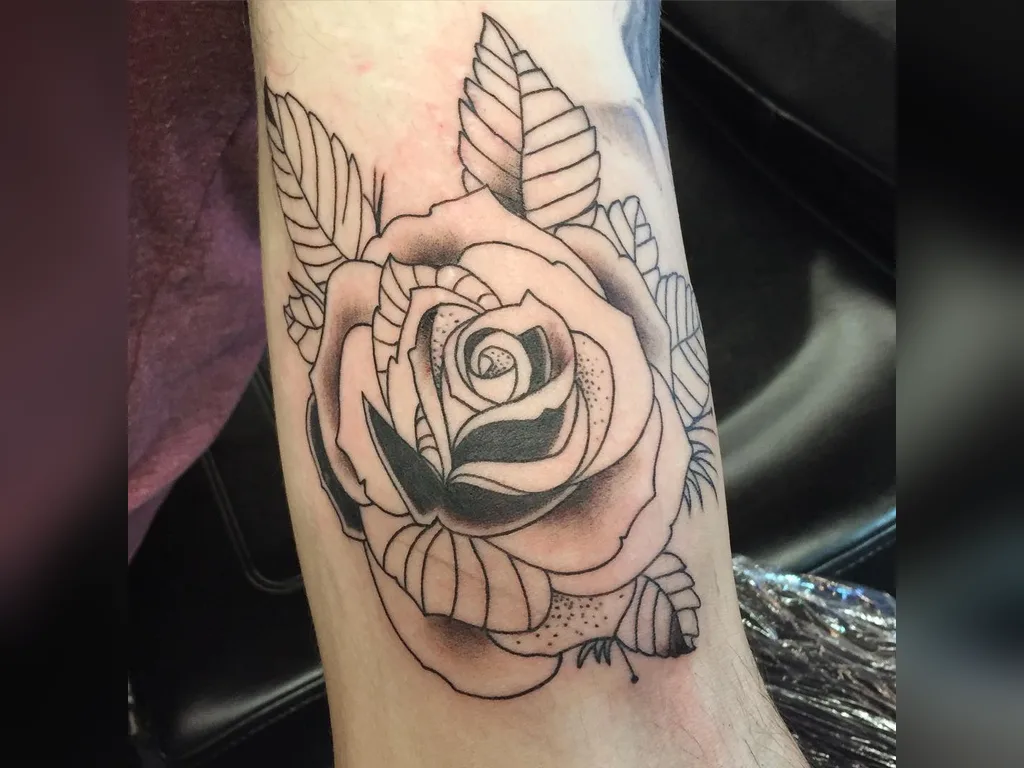
The lightest touch in the list: a rose drawn mostly in black line, petals and leaves outlined with just a breath of grey wash inside them. Outline work lives or dies on spacing, because lines thicken slowly as the years pass — and this artist left generous bare skin between the petal lines, which is exactly right. It is also the most flexible design here: an outline rose can stay an outline forever, or take shading and even colour later, petal by petal.
9. Rose With a Ribbon, Upper Arm
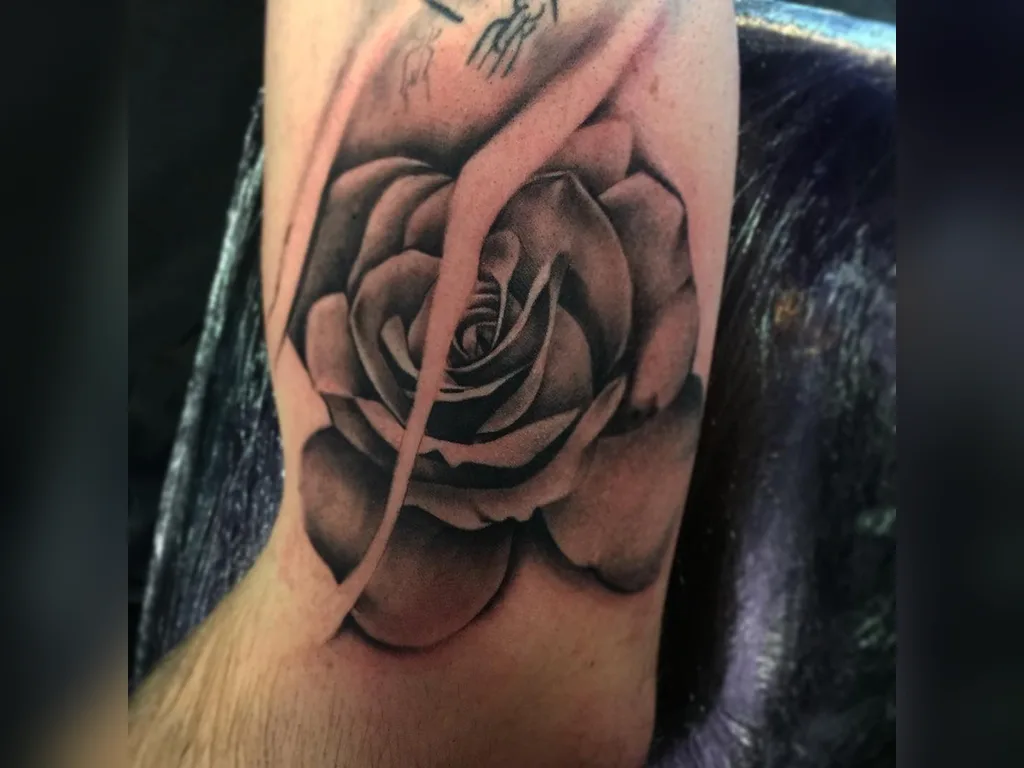
A dark rose with a ribbon banner curling through its petals, left blank in this version — ribbon pieces usually carry a name, a date or a word, and the empty banner is where that text would live. The rose itself is shaded deep and smooth, the lightest grey reserved for the topmost petal edges. Banner lines are bold, so they age well, and lettering set on the bare skin inside a ribbon stays readable for a long time.
10. Roses and a Rosary, Thigh
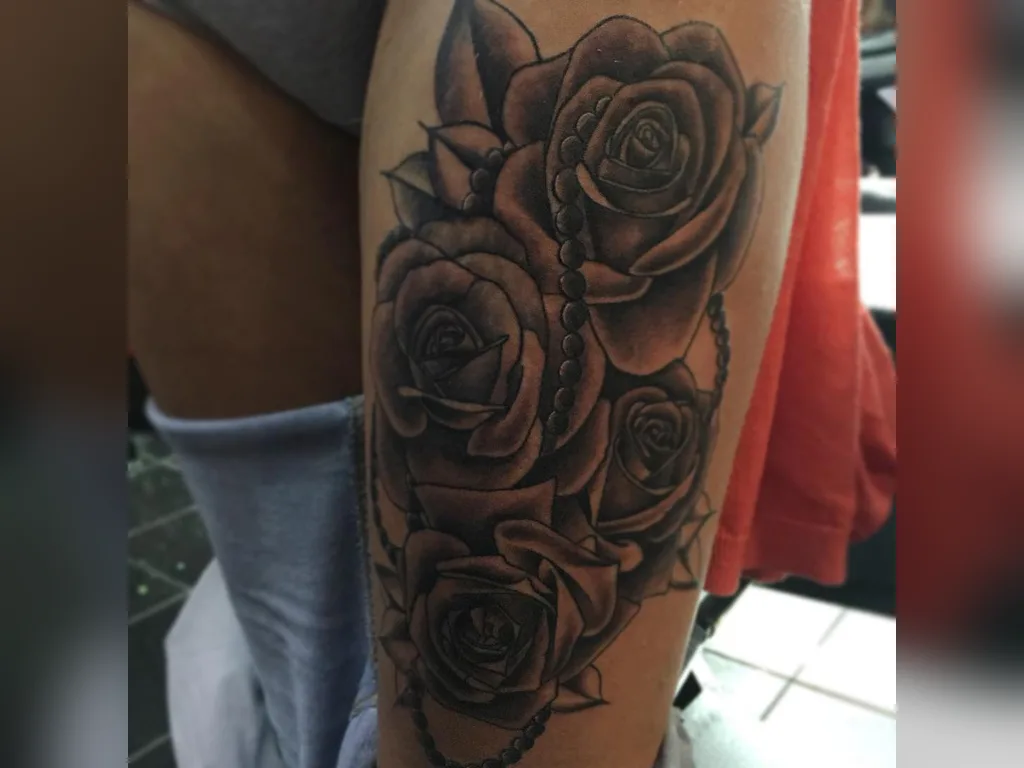
Four roses running down a thigh, threaded through with a rosary — bead by bead, ending in a cross. This is the devotion version of the black rose, the one that pairs mourning with faith, with deep roots in Chicano and Catholic tattooing. The roses are shaded dark enough to hold their own against the fine bead chain, and that contrast is the technical heart of the piece: beads are small, repeated detail, the first thing skin softens, so the roses carry the design’s long-term readability.
11. The Pocket Watch Memorial, Forearm
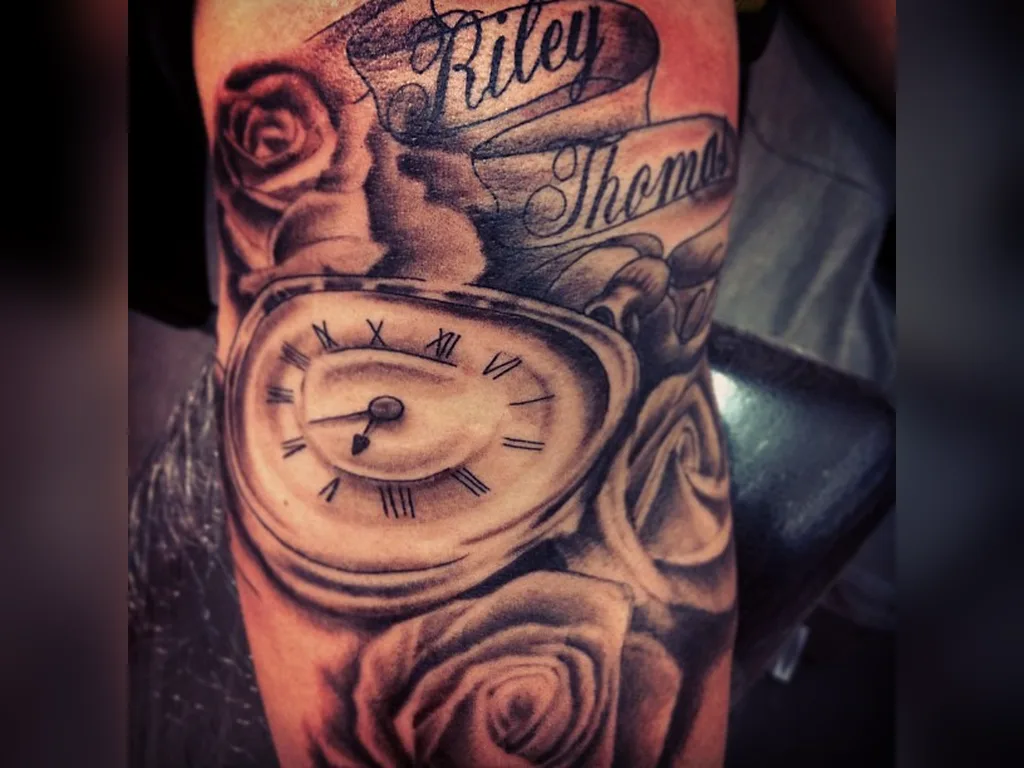
A pocket watch with Roman numerals, roses above and below it, and banner scrolls carrying names — the classic memorial arrangement, photographed fresh, which is why the skin is still pink. The watch is usually set to a time that matters: a birth, a death, a meeting. The roses are shaded in mid-grey rather than full black, giving the piece a softer, older feel, like a photograph in a locket. Memorial pieces like this are the most common reason people choose a black rose.
12. Skull and Rose, Upper Arm
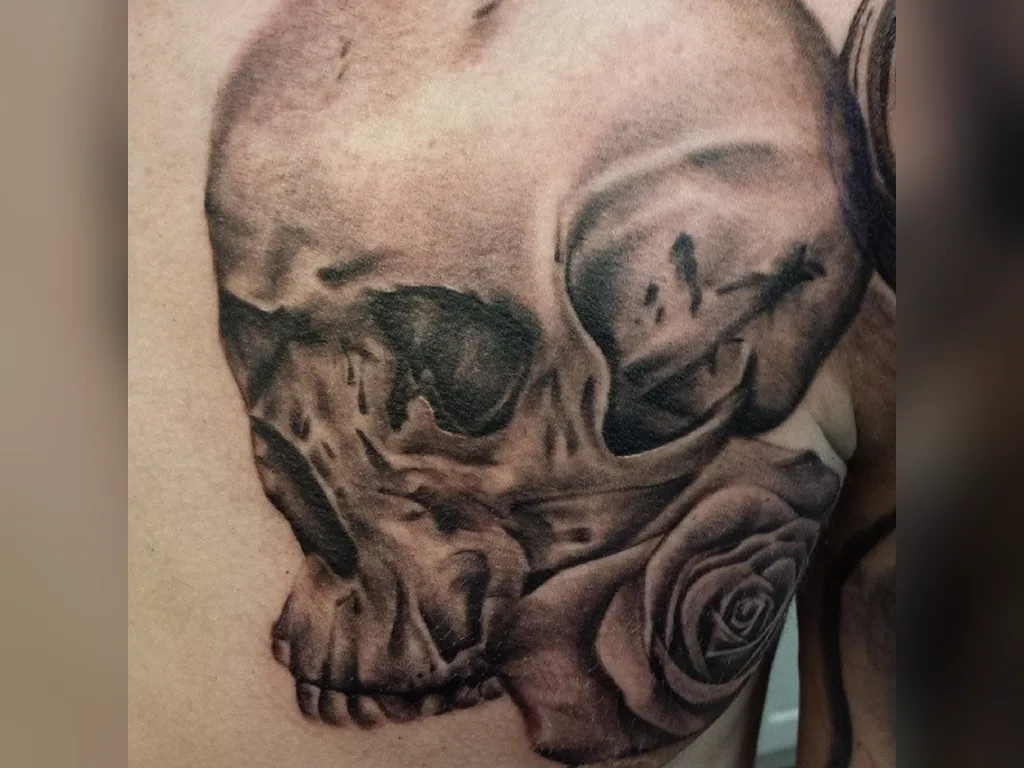
A realism skull with a single rose tucked at its jaw — the oldest partnership in this list. Skull and rose have been paired for centuries in memento mori art, the art that reminds viewers life is short: the skull is the fact, the rose is what you do with the time. Both are shaded in the same grey range here, so the rose does not decorate the skull so much as grow out of it. Deep shadow in the eye sockets and under the rose keeps the composition readable for decades.
13. Roses Under a Mandala, Forearm
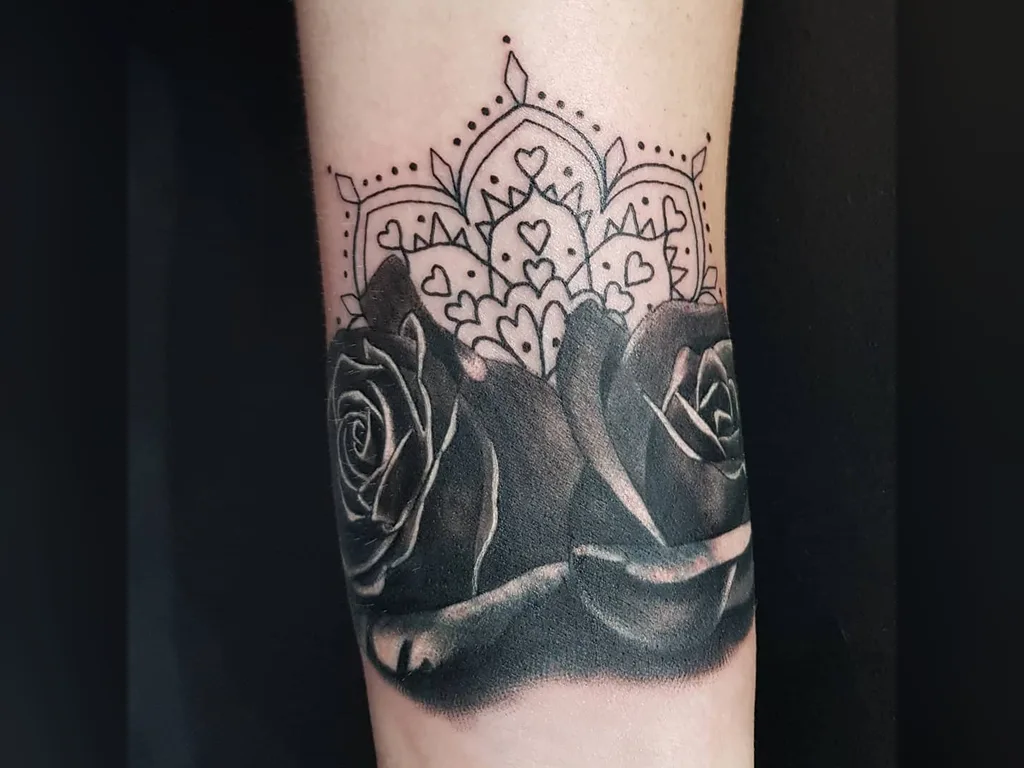
Two dark roses side by side, with a pale dotwork mandala opening above them like a paper crown. The contrast is the design: the roses are nearly solid black in their depths, the mandala is all air and dots. Dotwork spreads gently as it ages, so the mandala will soften into a halo while the roses stay dark and definite — a good division of labour, since the part built from dots can afford to blur a little and the part built from black cannot.
14. Two Roses and a Mandala, Upper Arm
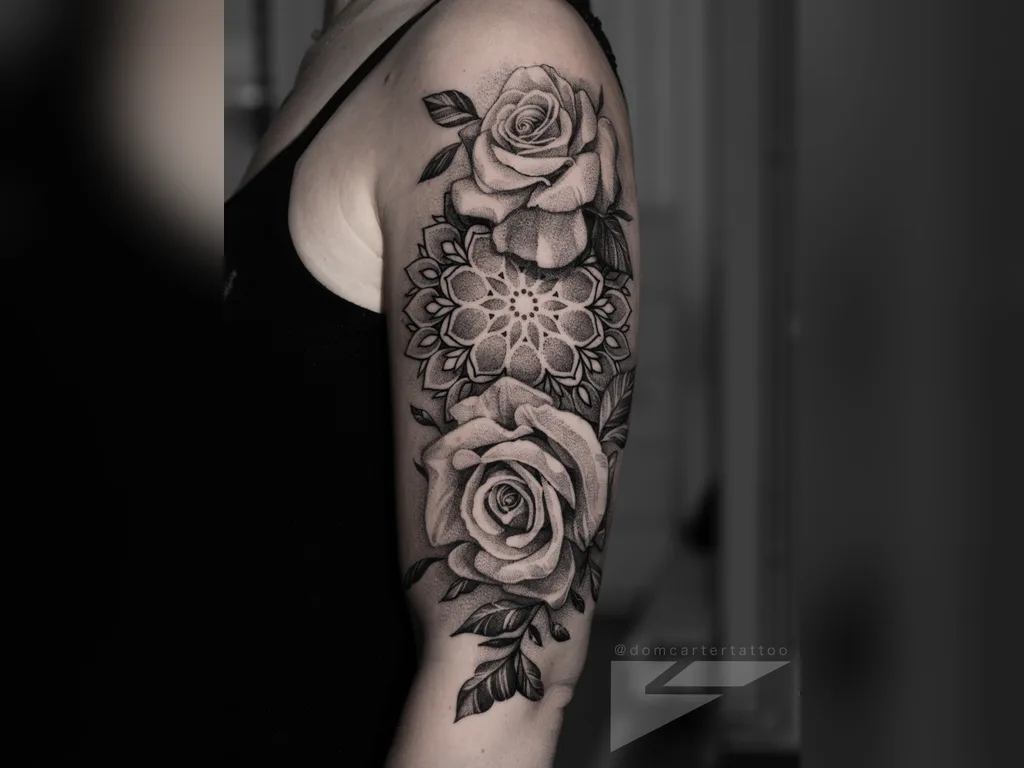
The same family as design 13, arranged vertically: a rose at the shoulder, a detailed mandala at the centre, a second rose below, running down an upper arm. This photograph is black and white, so the piece reads higher in contrast than it will on skin, where it is black and grey work. The mandala’s fine geometry is the fragile element — tight dot patterns merge slowly — while the two roses are shaded boldly enough to outlast it. As a half-sleeve starter, the layout leaves the inner arm free for whatever comes next.
15. Family, in Script and Roses
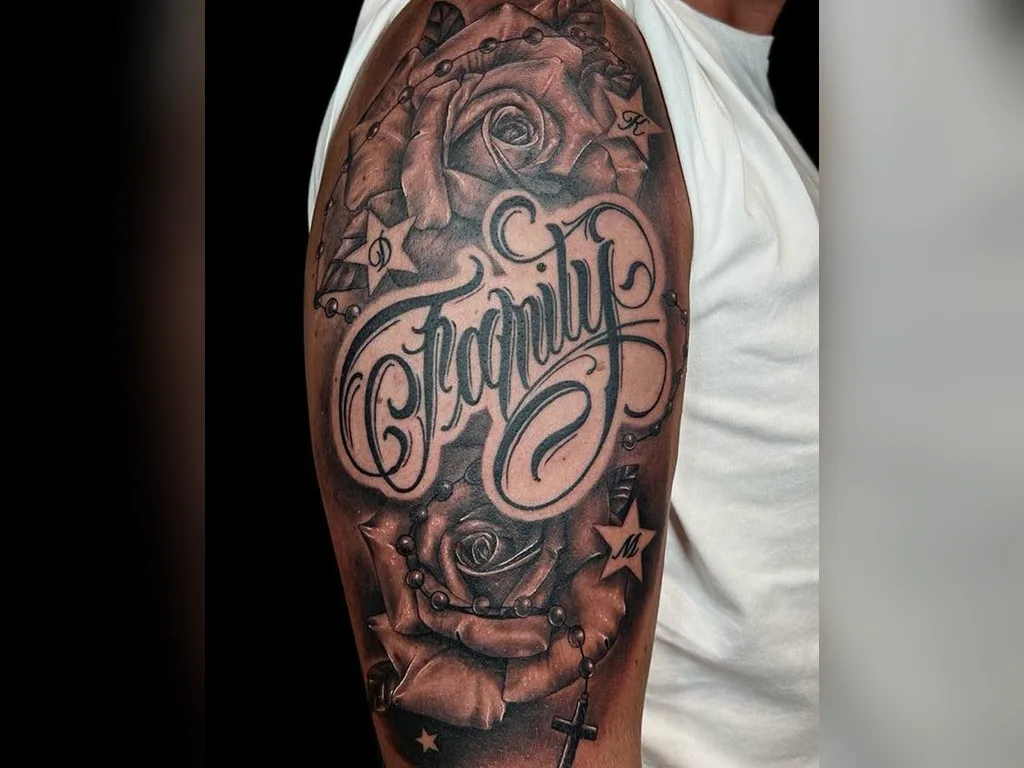
A whole upper arm given to one word — Family, in large flowing script — with roses shaded above and below it and small stars scattered through. The roses earn their place by softening what would otherwise be all text. Script ages by thickening, so the wide open loops in this lettering are a practical choice, not just a pretty one. The roses are worked in mid-to-deep grey, dark enough to frame the word without fighting it.
16. Lion and Rose Cover-Up, Upper Arm
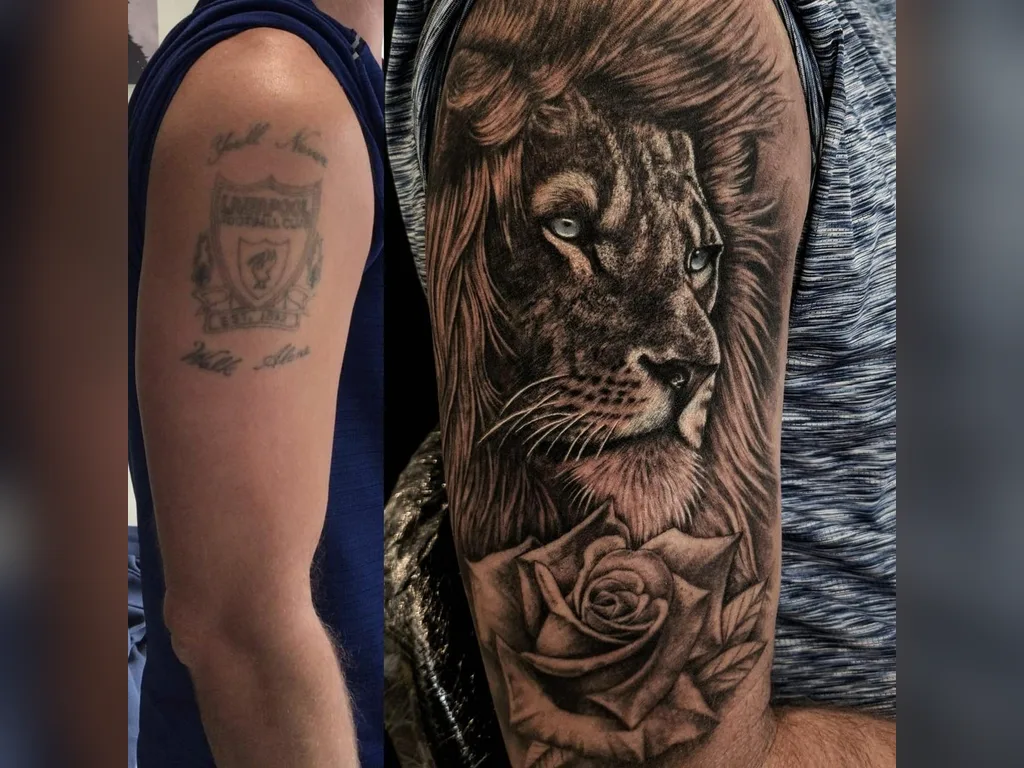
A lion’s head in fine grey detail, with a large shaded rose below it — shown next to the smaller panel of the faded tattoo this sleeve replaced. Cover-ups are where black and grey roses do their most practical work: the petals are busy, tonal and dark, so they swallow old lines that a lighter design would show through. The rule this piece follows is the cover-up rule — new work bigger and darker than the old, with the rose sitting where the deepest cover was needed.
17. The Cover-Up Rose, Lower Leg
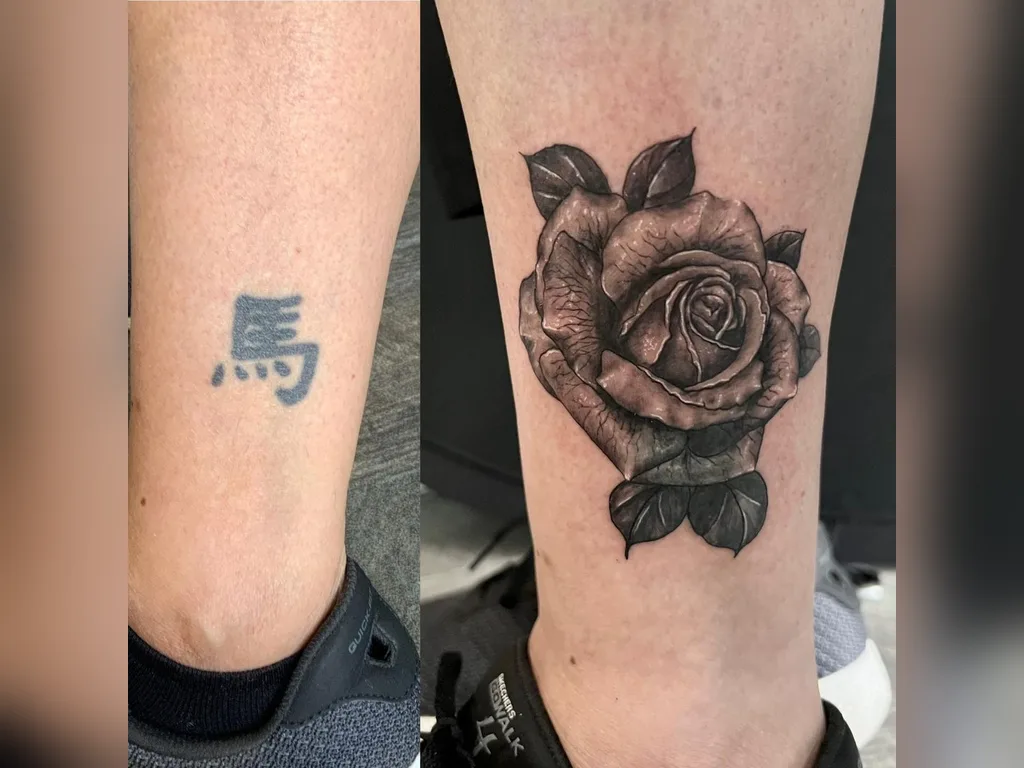
A bold, dark rose on a lower leg, photographed beside the small older character tattoo it was drawn to cover. Look at how the cover was planned: the old tattoo was small and dark, so the rose did not need to be enormous — it needed to be darker, and its deepest shading sits right over the old lines. Small dark tattoos are the easiest covers there are, and a black rose is close to the ideal tool for the job.
18. Microphone and Rose, Upper Arm
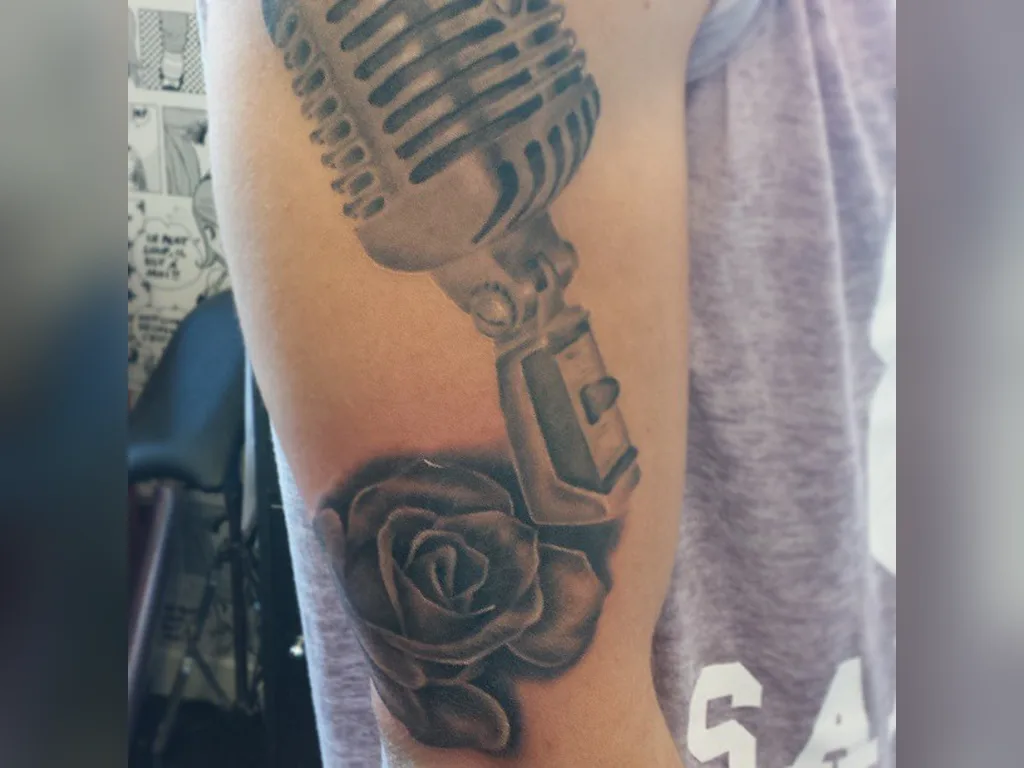
A vintage microphone, drawn with its grille and clip in careful grey detail, standing over a single dark rose. Music pieces like this are usually memorials of a different kind — for a singer, a band, a parent whose records filled a house. The rose does the emotional work while the microphone tells the story. The mic’s fine parallel grille lines will soften first; the rose beneath, shaded deep and simple, will still be reading clearly when they do.
19. Rose and Veiled Portrait, Chest
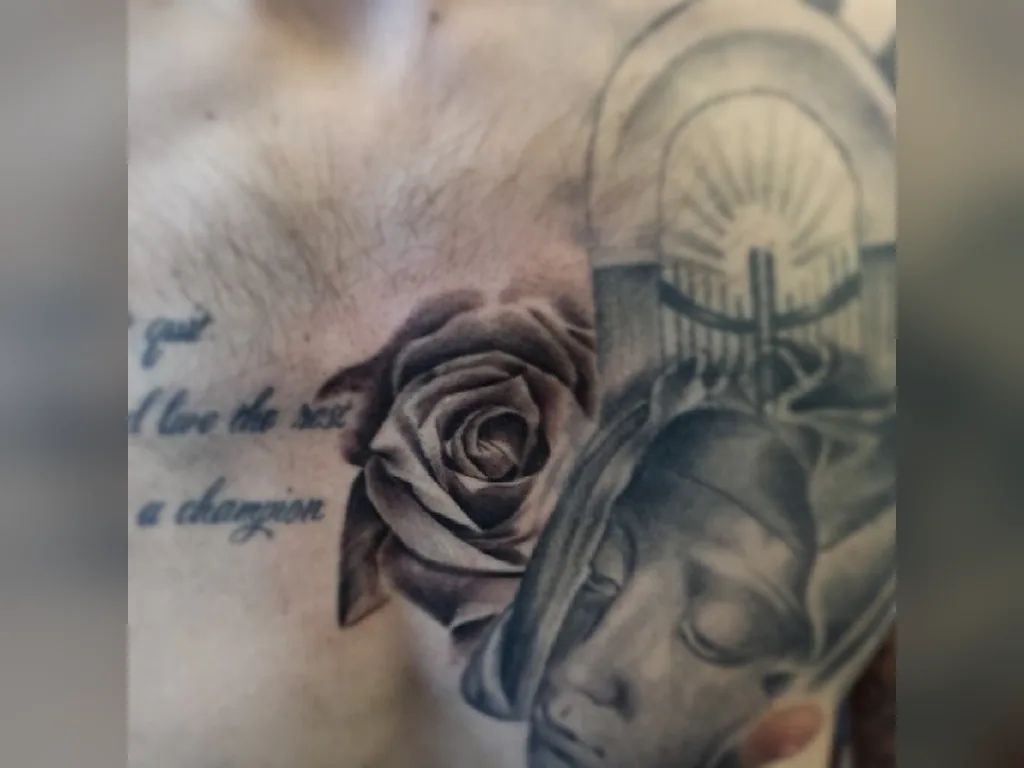
A chest piece pairing a shaded rose with the face of a veiled woman, a church window rising behind her — devotional imagery in soft grey, with the rose carrying the darkest tones in the design. Chest skin is flat and sheltered, kind ground for fine shading, and this piece uses it: the face is built from gentle tones that would not survive on a hand or a wrist. The rose anchors the composition — dark against the pale portrait — and anchors are what soft pieces need most as they age.
20. Rose and Portrait at the Elbow
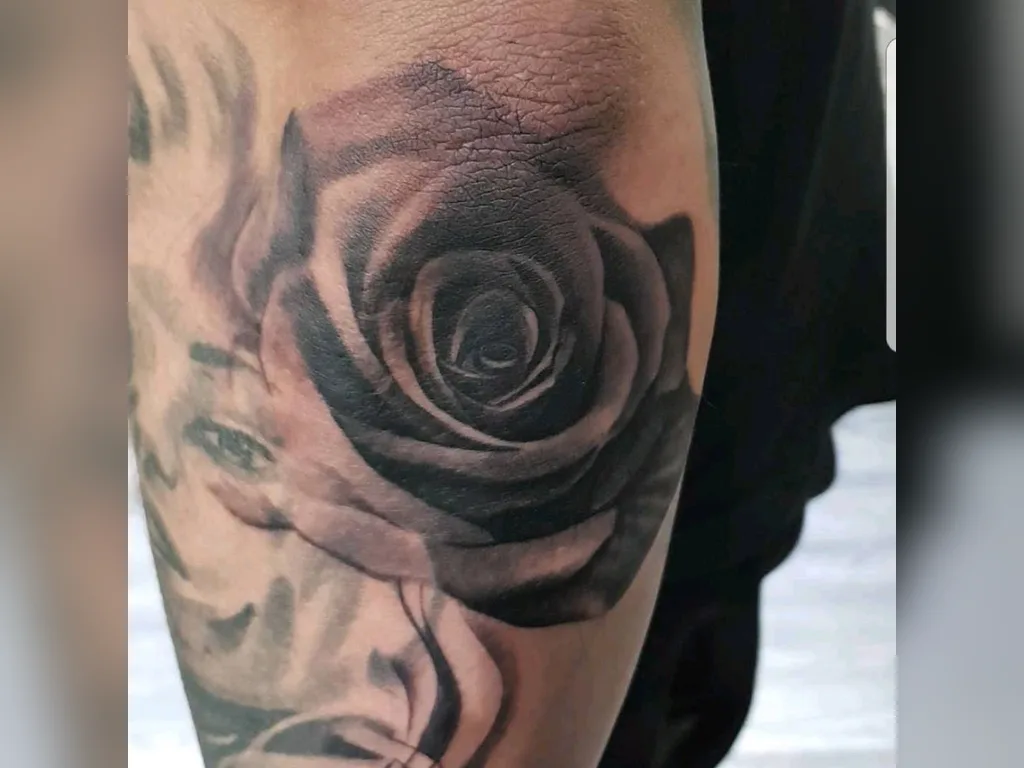
A very large rose sitting over an elbow, with a woman’s portrait fading in beside it. Elbows are difficult ground — the skin stretches, folds and moves all day — and this design copes by scale: the rose is big enough that its petals still read when the arm bends and the image distorts. Fine detail would be chewed up by the joint within a few years; bold shapes bend and recover. If an elbow or knee is your spot, this is the size logic to copy.
21. Roses Down a Whole Leg
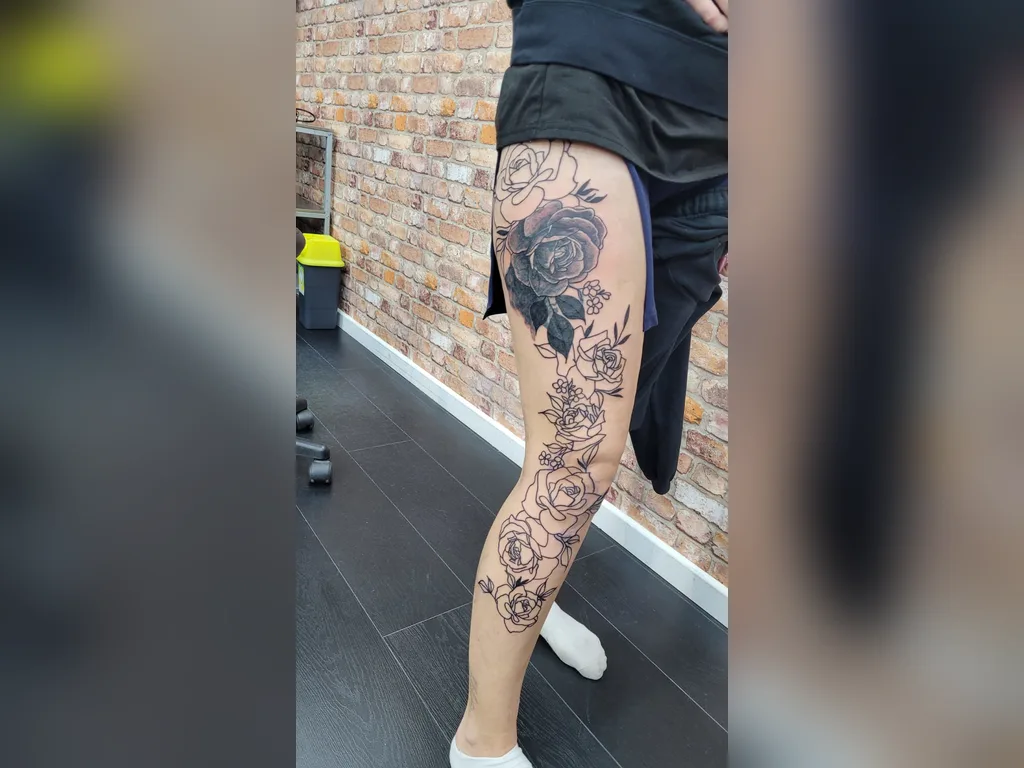
A full leg of roses: two large dark blooms on the thigh, then a trail of smaller flowers — some shaded, some left as outlines — winding down the calf. It shows how a leg piece gets built in stages, big anchors first and connecting flowers added session by session. Mixing finished and outline work is honest, common practice, and the leg wears it well because the eye follows the trail rather than grading each flower. The dark thigh roses will hold the composition together as the lighter work ages.
22. The Full Back: Roses and Skulls
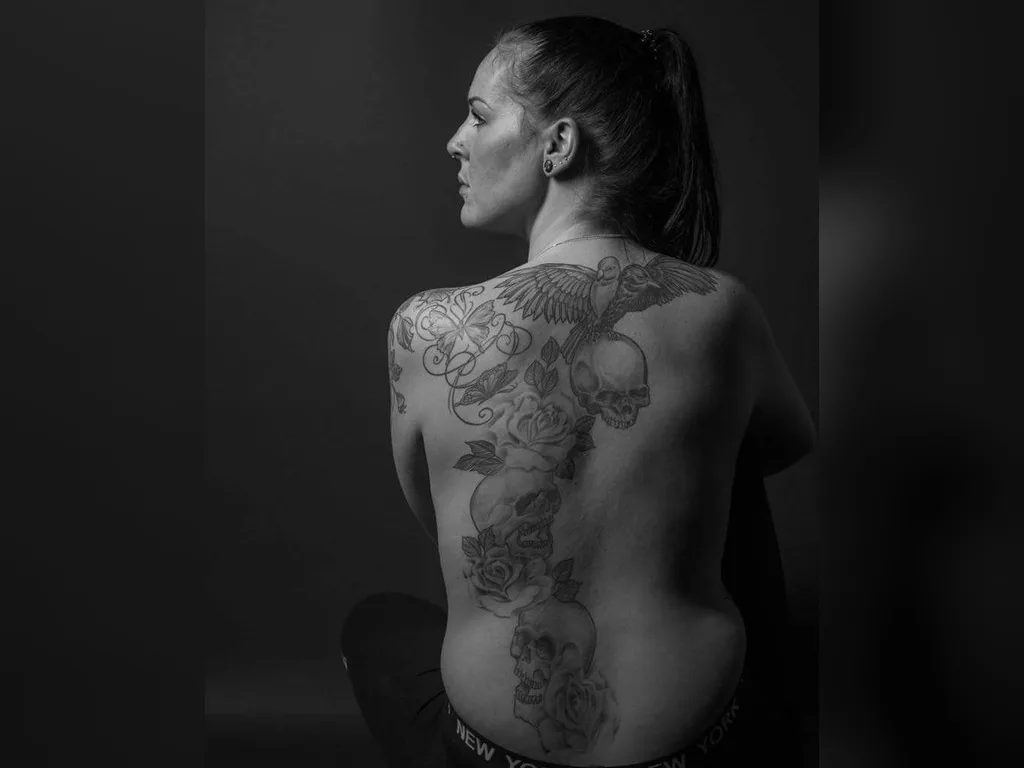
The biggest canvas here, photographed in black and white: a full back piece where roses and skulls wind together down the spine. At this scale the memento mori pairing stops being a symbol and becomes a landscape — bloom, bone, bloom, bone, the whole cycle running down the back. Backs are the kindest skin on the body for large grey work: flat, stable, out of the sun most of the year. A piece like this is years of sittings, and the roses make those years read as a garden rather than a graveyard.
23. The Soft Grey Sleeve, Upper Arm
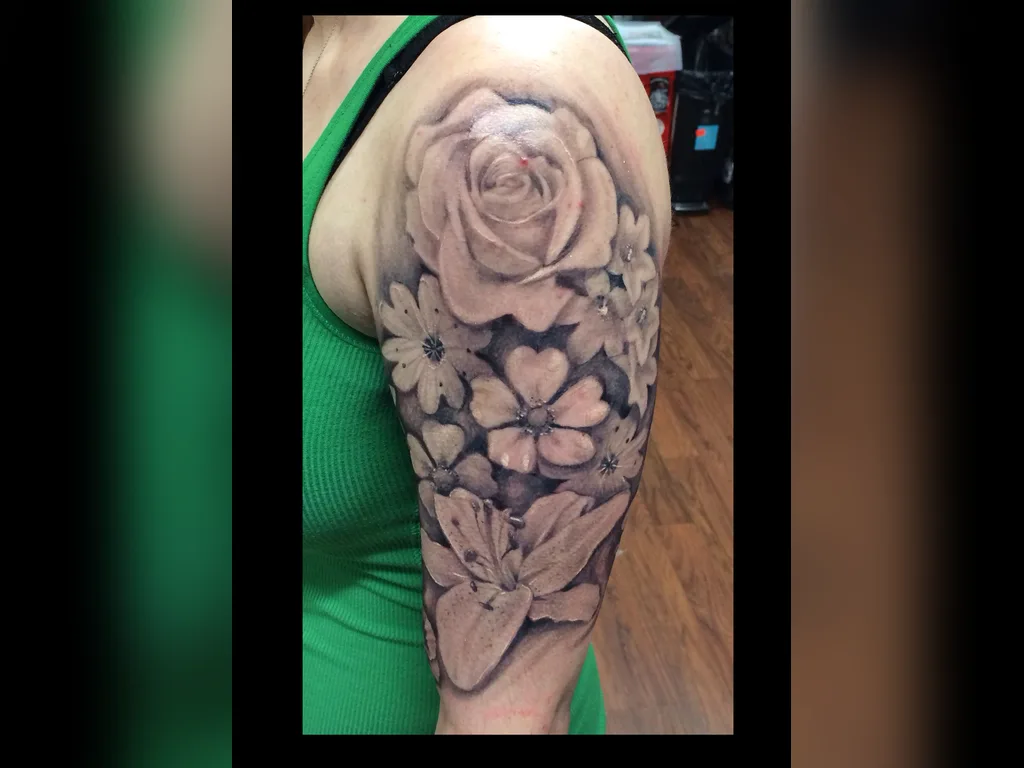
The gentlest piece in the list: a pale grey rose at the shoulder with smaller flowers and leaves flowing down the arm, all washed in light tones with barely a true black anywhere. It is lovely, and it is the design most likely to disappoint anyone who expects it to stay this crisp. Soft grey work settles into something even softer — a ghost of the fresh photograph. Chosen knowingly, that fade is part of the aesthetic; chosen by accident, it is the most common complaint in black and grey tattooing.
24. Four Small Black Roses
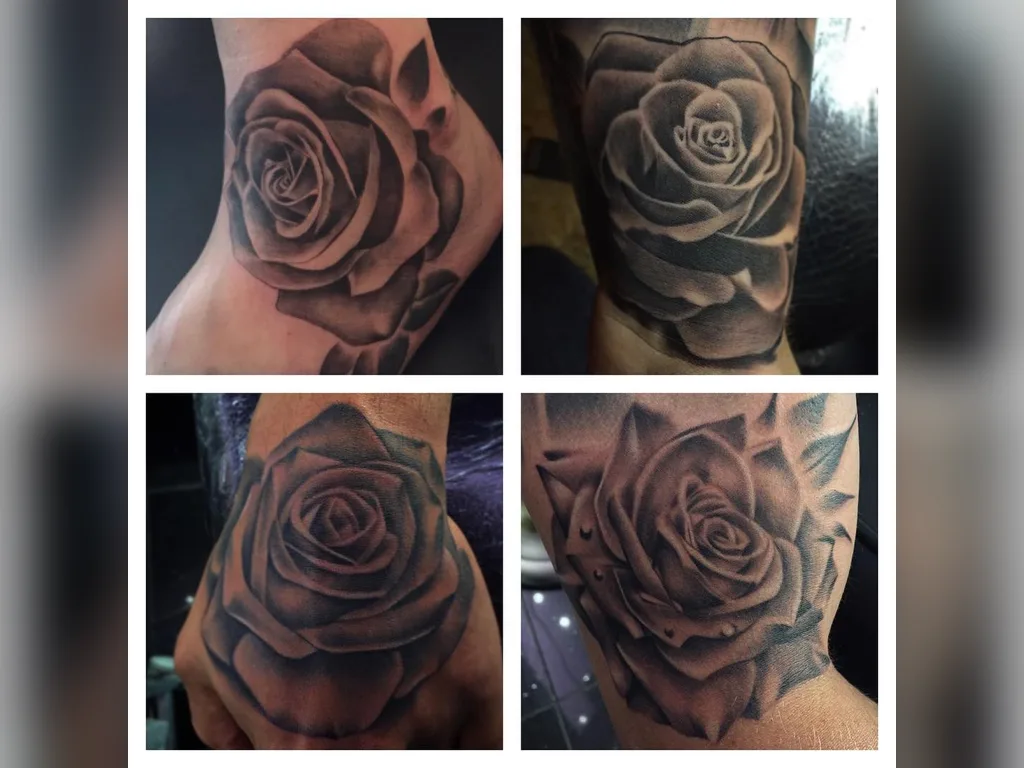
The last entry is four designs in one frame: smaller black roses on a wrist, a forearm, the back of a hand and a shoulder, shown as a four-panel collage. Together they make the small-rose case honestly. Every one is built from bold shapes and deep shading rather than fine detail, because small roses have nowhere for detail to hide. If you want a black rose at this scale, copy their structure — dark heart, clear petal shapes, outlines that will still separate the petals in fifteen years. For more small-scale inspiration, our small rose tattoo ideas guide works through the same problem in every colour.
Placement, Pain and How Black Roses Age
Black roses are, as a family, among the best-ageing flower tattoos there are, and the reason is simple: black ink is the most stable pigment in the skin, and a black rose is built mostly from it. The designs above split by how much of that stability they use. Solid-black and deep-shaded pieces — designs 1, 6, 17 and 21 — will look close to their photographs for a very long time. Pale grey pieces — designs 3 and 23, and the soft realism of 2 and 5 — will lighten and soften, because grey wash is diluted black and there is less pigment to hold. Neither is a mistake. Just choose with your eyes open: black rose tattoo ideas built on contrast age in years; ones built on delicacy age in seasons.
Placement follows the same logic. Broad, still, sheltered skin — thigh, upper arm, calf, back — keeps shading smooth and detail separate, and most of this list lives there for that reason. Joints and high-friction spots ask for the bold treatment: the elbow rose at design 20 survives by scale, and the hand rose at design 7 will need refreshing however well it is drawn. Pain is unremarkable almost everywhere a rose fits; the hand and elbow are the tender entries here, the thigh and outer arm the easy ones. Size is the quiet decision underneath all of it. A black rose can go smaller than a red one, because black holds an edge better than any colour — but petal separations still need room, and the collage at design 24 shows the floor: bold, dark, and no finer than it has to be.
Black Rose Tattoo Ideas: Frequently Asked Questions
What does a black rose tattoo mean?
The meanings wearers choose most often are mourning and remembrance, mystery, rebellion against the ordinary, and a new chapter after a hard ending. None is official — flower symbolism was never a fixed code, and tattoo meanings are personal. If a black rose is marking a loss, the memorial arrangements on this page, like the pocket watch at design 11, show how most people build that meaning in.
Do black rose tattoos age well?
The bold ones age better than almost any other flower tattoo, because black ink fades slowest. Deep-shaded roses can look close to their fresh photographs for decades. Pale grey wash roses soften and lighten faster — they do not fail, but they become gentler versions of themselves. Ask your artist which camp a design sits in before booking, and judge by healed work, not fresh photos.
Are black roses real?
Not truly. The darkest real roses are extremely deep reds and purples that can look black in low light, and the “black roses” sold by florists are often dyed. A genuinely black rose exists only in art — which is one reason black rose tattoo ideas appeal to people in the first place. The tattoo is the flower’s natural home.
How big should a black rose tattoo be?
For a shaded realism rose, palm-sized is a sensible floor: the petals need room to stay separate as ink spreads gently with age. A bold, simple rose can go smaller — the wrist rose in the design 24 collage works at near coin size because it is built from a few dark shapes. Fine detail sets the minimum, not the flower itself.
Where is the best placement for a black rose tattoo?
Flat, stable skin: the thigh, upper arm, calf and back hold shading best and age slowest, and most designs on this page sit in one of those four places. The shoulder suits a single medium bloom. Hands, wrists and elbows can all work, but they ask for bolder, simpler drawing and, on hands especially, earlier touch-ups.
Can a black rose tattoo cover up an old tattoo?
Yes — it is one of the best cover-up subjects there is, and two designs on this page (16 and 17) are exactly that. Dark, busy petals hide old lines well. The rules are the usual ones: the cover must be larger and darker than what sits underneath, pale old work covers easiest, and an in-person consultation beats any photo exchange for judging what is possible.
Does getting a black rose tattoo hurt more than a colour one?
Not in any way that should drive the decision. Solid black packing and heavy shading mean repeated passes over the same skin, so a big realism rose can feel like a long session — but placement matters far more than colour. A black rose on the outer arm is an easier sit than a small red one on the ribs.
How much does a black rose tattoo cost?
Honestly, it varies too much by city, studio and artist to quote one figure. As a guide to scale: a small bold rose is often near a shop’s minimum charge; a palm-sized realism rose is several hours of work; a sleeve or back piece built from roses is priced by the session and can run to many sittings. Send two or three studios the design and the size you want, and compare real quotes.
Black rose or red rose — which ages better?
Black, and it is not close. Red pigment lightens and can turn rusty or patchy over the years, while black holds its value and its edges. A red rose can be refreshed with a colour pass; a black rose rarely needs more than its darkest areas re-packed, if that. If longevity is the deciding factor between the two, black rose tattoo ideas win on structure alone.
Which tattoo styles suit a black rose?
Most of the major ones, and this page holds examples of nearly all: black and grey realism (designs 2 and 5), bold blackwork shading (design 1), fine outline work (design 8), dotwork pairings (design 13), and Chicano-style arrangements of roses with script, rosaries and clocks (designs 10, 11 and 15). Pick the style by how you want it to age — realism softens, blackwork endures, outline work stays flexible.
Final Thoughts
Twenty-four designs, and not one of them is the flower from the greeting card. That is the whole argument for black rose tattoo ideas: the rose carries the love, the black carries everything else — the grief, the defiance, the fresh start, the secret. Pick the meaning first, then pick the build that will still be saying it in twenty years, which usually means deeper blacks and bigger petals than the photograph that first caught your eye. Do that, and the black rose stays in bloom, in its impossible colour, for as long as you wear it.