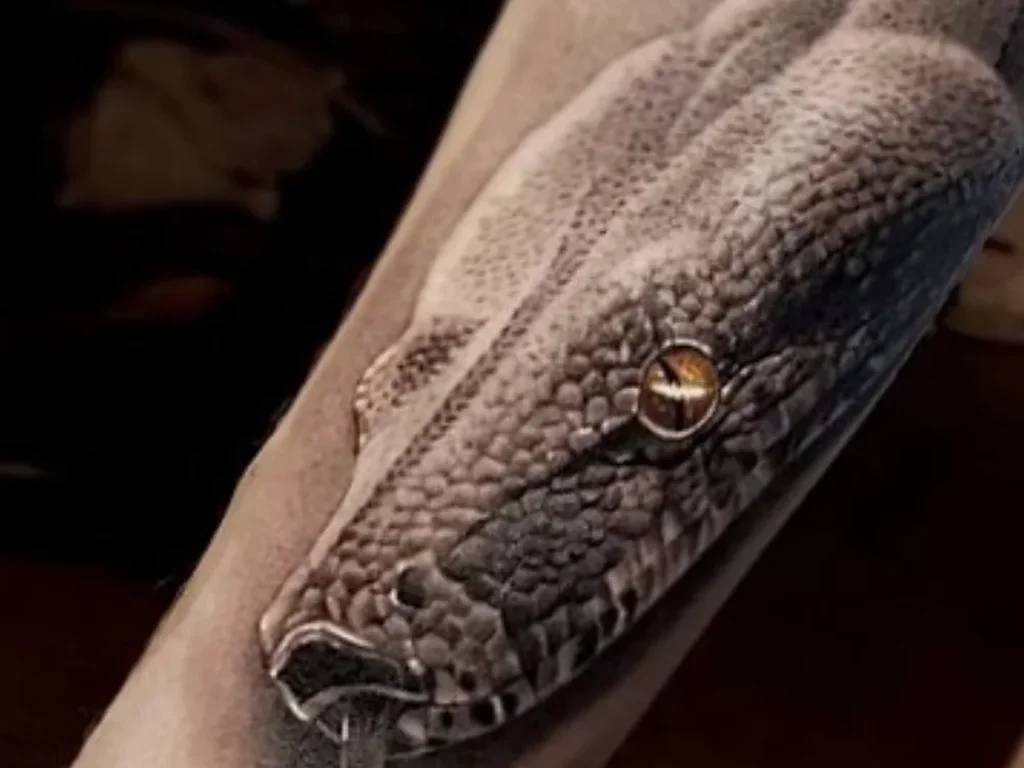
Pet tattoos used to mean a cartoon paw on an ankle. Not anymore. Search interest in pet tattoos has roughly tripled in the last couple of years, and the work getting booked has changed with it: full realism portraits, tattoos copied from an actual paw print, tiny fine-line faces no bigger than a coin. If you’re looking through pet tattoo ideas right now, you’re probably not short of inspiration. You’re short of a way to choose.
So that’s what this page is for. Below are 22 real pet tattoos — every one photographed on actual skin, counted honestly — split into the three routes most people take: a portrait, a print, or a character piece that captures personality rather than an exact face. Each comes with notes on placement, sizing and ageing, because a design that looks great fresh can blur within five years if it’s drawn too small.
Portrait, paw print or outline?
A portrait is the closest thing to having them with you, and the most demanding route. Realism lives or dies on the artist — a mediocre portrait doesn’t look “a bit off”, it looks like a different animal. Expect to pay for that skill: a palm-sized portrait usually means several hours in the chair, and a big piece can run across two sessions. Done well, it’s the most personal tattoo on this page. Done cheaply, it’s the one people cover up.
A paw print is the opposite trade. It’s simple, it’s usually quick and affordable, and it carries the same emotional weight because it comes from your actual pet — their print, their exact pad shape, nobody else’s. The catch is detail. A real print is basically a bold black shape, which is good news for ageing, but if you shrink it too far the toes merge into the pad. Palm-sized or a touch smaller is the sweet spot for most dogs; cat prints can go smaller because the shapes are cleaner.
An outline or character piece sits between the two. A fine-line outline of your dog’s ears, a silhouette, a playful cartoon version of your cat — these don’t try to be photographs, so they age more forgivingly and work smaller. They’re also the easiest to personalise: the wonky ear, the head tilt, the thing they do that nobody else’s pet does. For a subtle first tattoo, start here.
How paw prints actually work
Half the paw print tattoos in this list started as a print taken at home, so it’s worth getting that bit right. You want a pet-safe, washable ink pad (the kind sold for baby handprints works well) or a thin layer of non-toxic paint on a sponge. Press the paw down once, firmly, on smooth white card — don’t rock it. Take five or six prints, not one. Paws smudge, toes splay, and the third attempt is usually the clean one.
What can an artist fix? Smudged edges, a missing toe blob, prints that are slightly faint. What they can’t do is invent detail that isn’t there — if the print is a black splodge, the tattoo will be one too. Bring all your attempts plus a clear photo of the paw. And if you’re taking a print from a pet who has already died, ask your vet or crematorium: many will take an ink or clay print if you ask early. It’s a normal request. They hear it every week.
Portraits: pet tattoo ideas that start with a photograph
1. The husky portrait, in black and grey
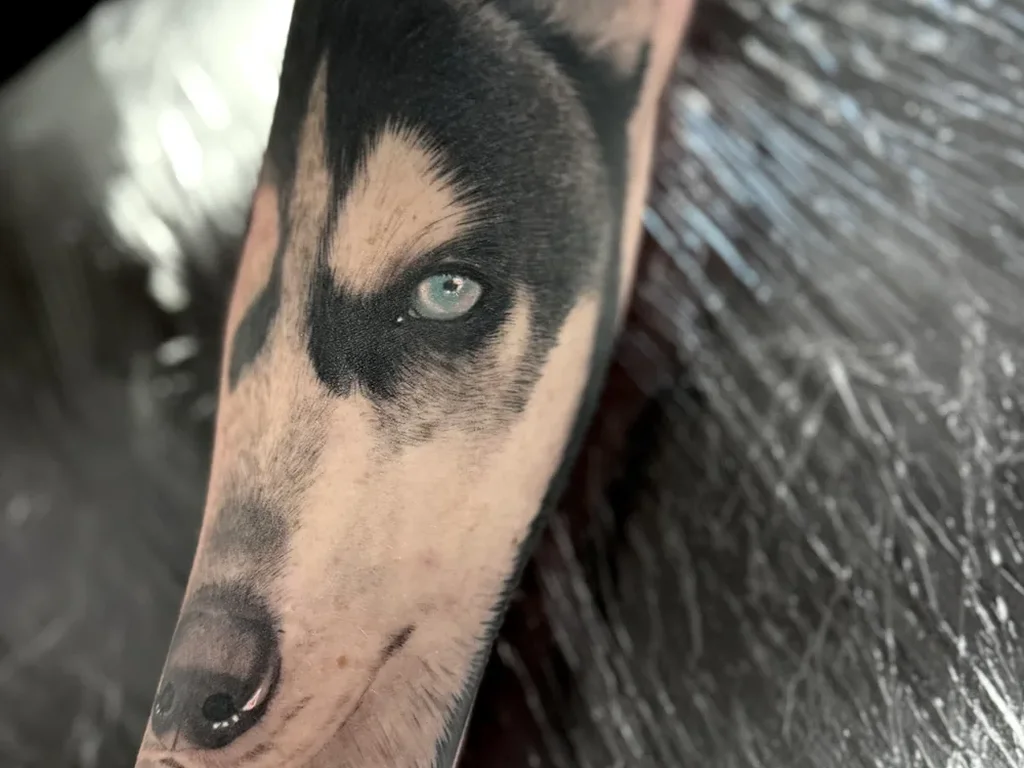
This is the benchmark for dog portraits: a husky’s face stretched along the forearm, ice-blue eye left as the single hit of colour in a black and grey piece. The long muzzle suits the forearm’s shape, which is no accident — good portrait artists pick the panel of skin that matches the animal’s face.
Forearm portraits at this size (roughly hand-length) hold their detail well. Go much smaller with this much fur texture and the shading turns to soup. If your dog is pale-coated, ask how the artist plans to keep contrast — light fur on light skin fades first.
2. A colour portrait, start to finish
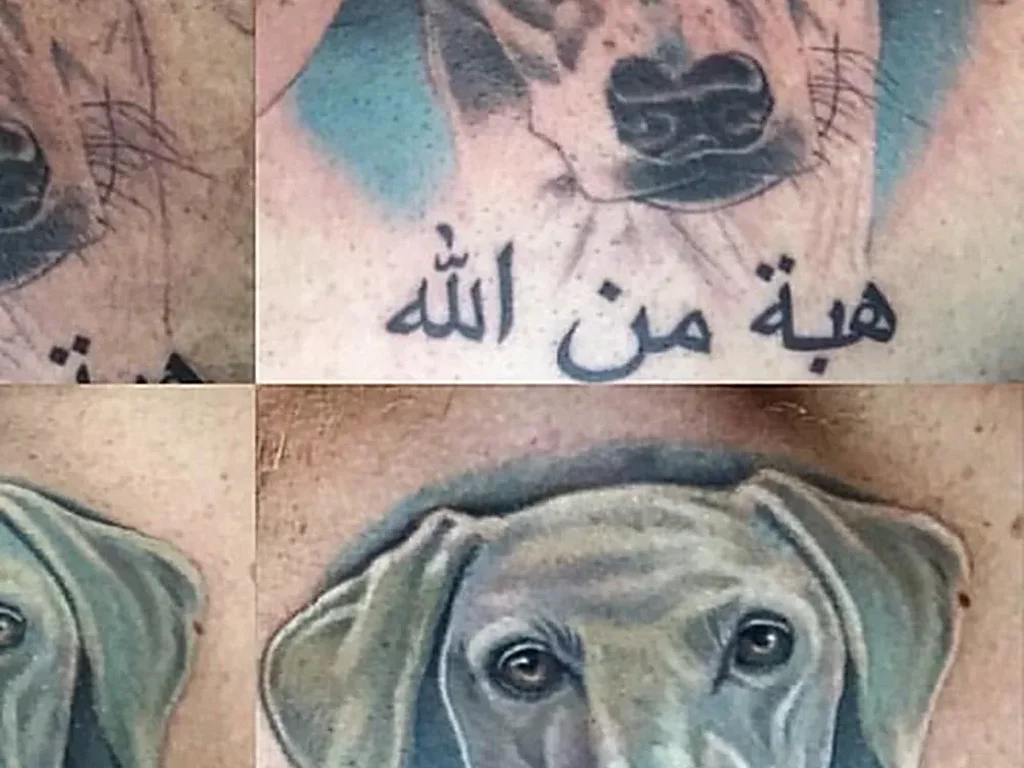
This photo shows the same Weimaraner portrait at different stages, outline through to the finished colour piece, with a line of script worked underneath. It’s a useful reality check: a colour portrait looks wrong for most of the session. The flat, patchy middle stage is normal. Judge your artist on healed photos, never on the fresh ones.
Colour realism is the highest-maintenance style on this page. Reds and yellows fade fastest, and a silver-coated dog depends on subtle blue-grey tones that soften over the years. Budget for a refresh down the line, and wear sunscreen on it. Really. Sun is the enemy.
3. The bull terrier in a bowler hat
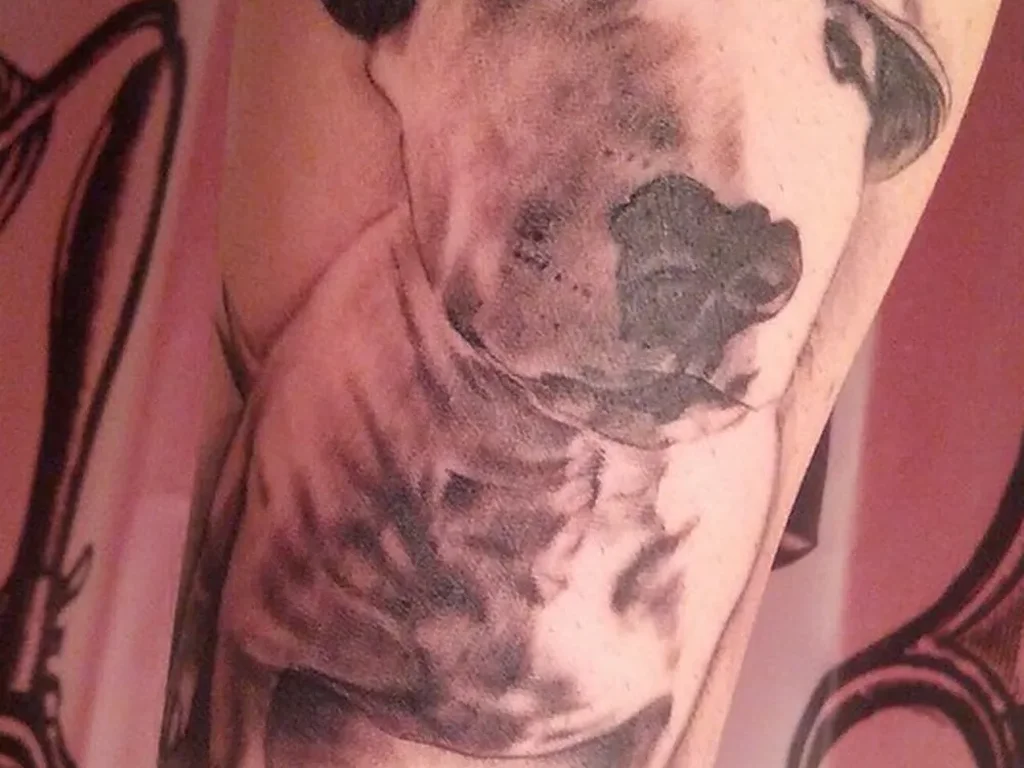
A bull terrier’s egg-shaped head is recognisable from almost any angle, and this portrait leans into it — then adds a bowler hat, because the dog apparently had that kind of energy. Black and grey keeps it from tipping into novelty. It’s a portrait and a joke at the same time, and it works.
Props like hats, collars and favourite toys are the easiest customisation there is. Bring the artist a photo of your dog wearing or chewing the thing if you can. It gives the piece a story that a stranger can read without you explaining it.
4. A shaggy dog caught mid-stride
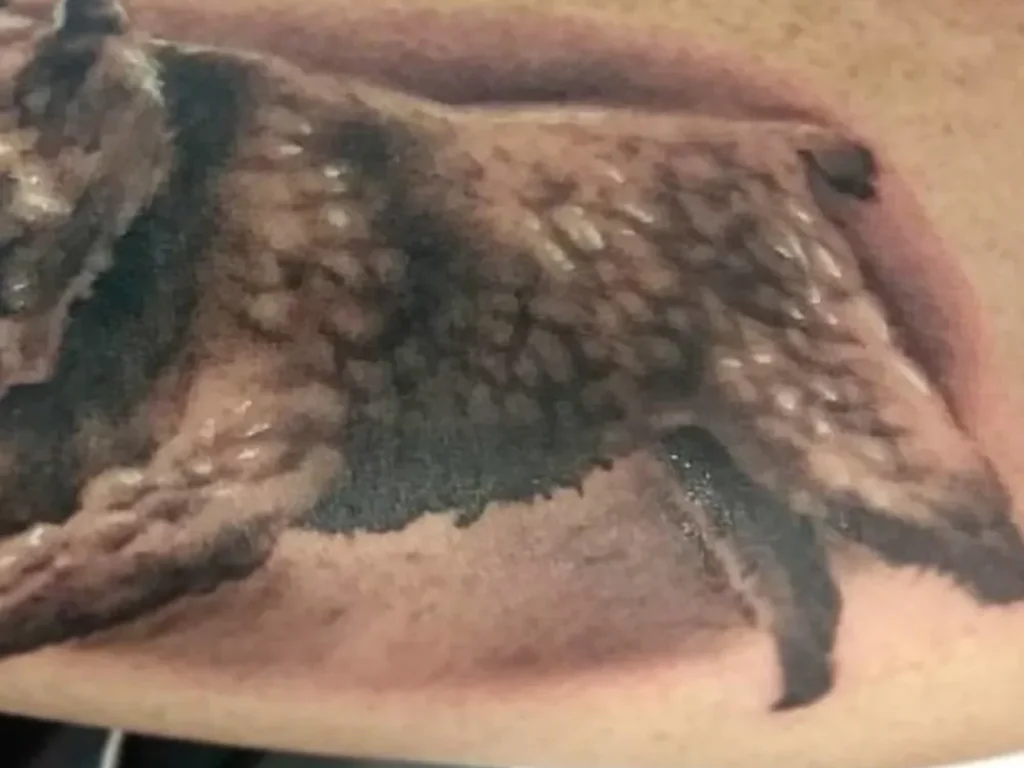
Most portraits are head-only. This one takes the whole dog — a rough-coated, wolfhound-type stride rendered in soft black and grey across the forearm. Full-body portraits need length rather than width, so forearms, calves and ribs are the natural homes for them.
The trade-off is scale per detail: the face ends up small, so the artist sells the likeness through coat texture and posture instead of eyes. If your dog’s whole vibe is the point — the trot, the tail, the scruff — this format captures it better than a head shot.
5. Old-school pit bull with a banner
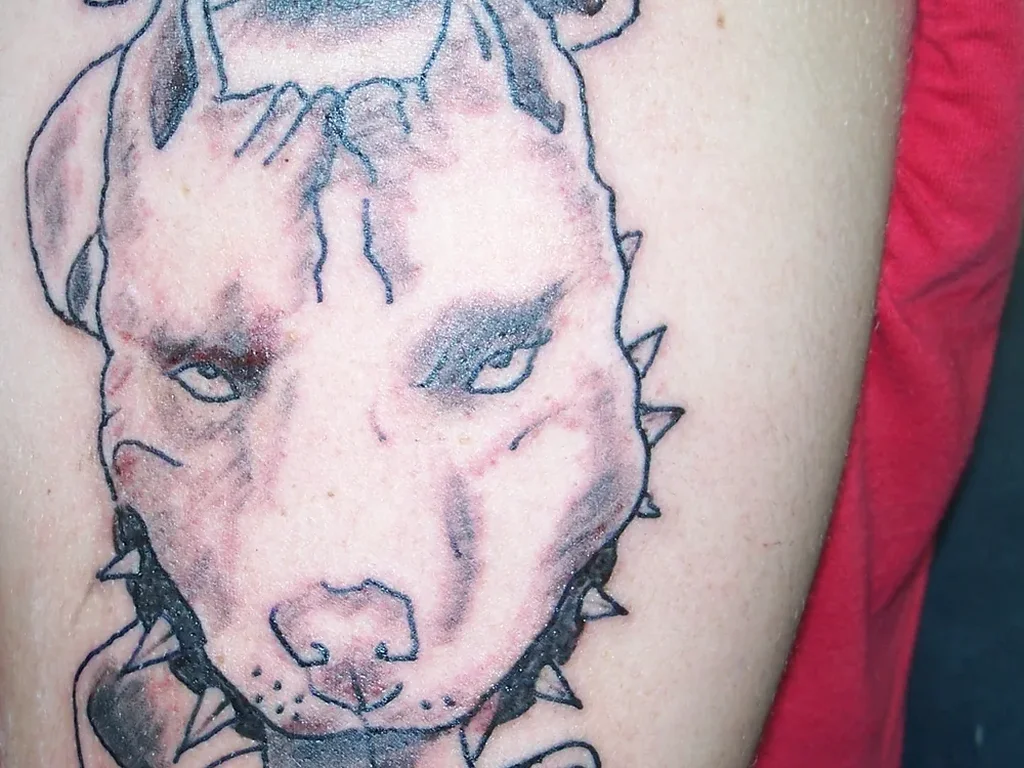
Before realism took over, this was the dog portrait: bold outline, flat colour, a banner top and bottom, planted on an upper arm. This pit bull was photographed back in 2006 and the design language is pure American traditional — the same rules as an anchor or an eagle.
That’s why it ages well: thick lines and simple colour fields are close to indestructible. If your dog has a strong, blocky head — pit bulls, staffies, boxers, bulldogs — traditional will outlast every fine-line piece on this page.
6. A dog’s head inside a cog badge
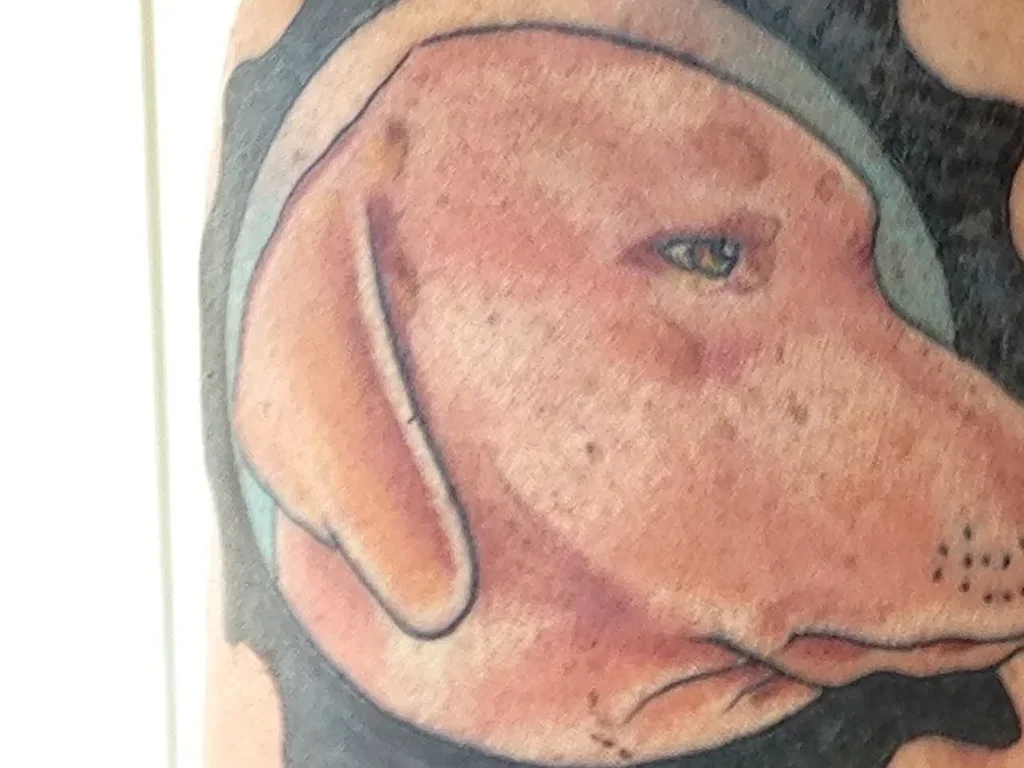
A soft colour profile of a long-eared dog, set inside a heavy black cog outline on the shoulder. The frame does two jobs: it gives a gentle portrait some graphic punch, and it gives the tattoo a clean edge that reads from across the room.
Framed portraits — badges, ovals, circles, arches — are a smart option for shoulders and thighs, where a floating head can look lost. Swap the cog for whatever suits your life: a horseshoe, a steering wheel, a flower wreath. The portrait stays the same; the frame tells your story.
7. The colour cat portrait with a bell
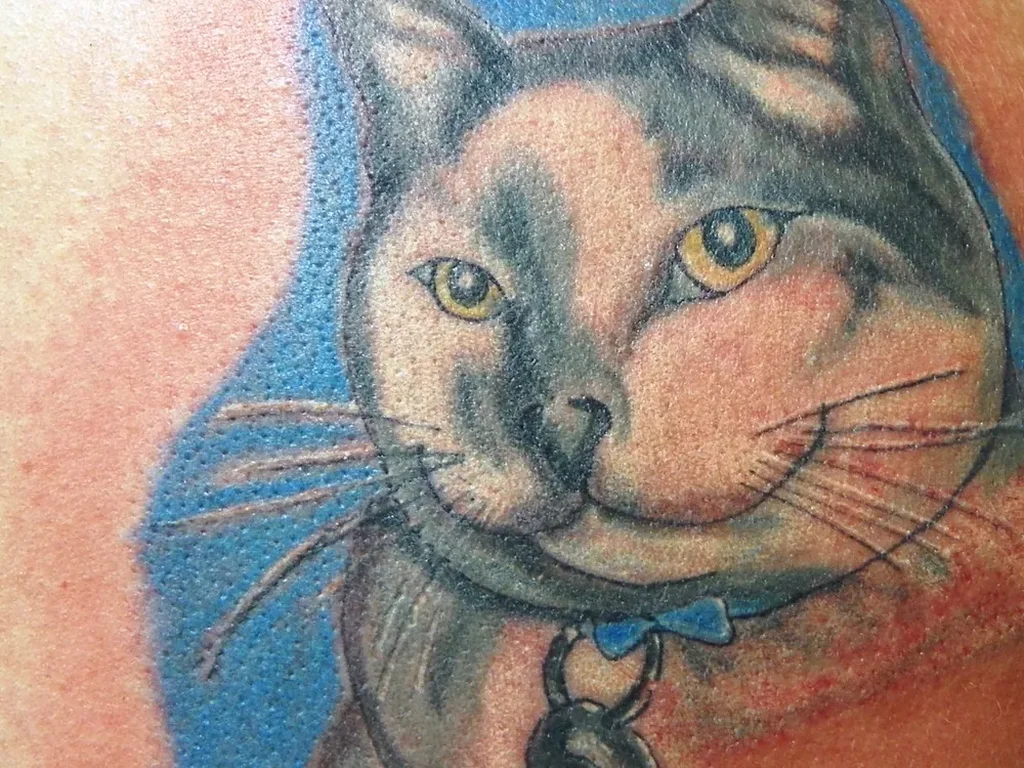
A grey cat against a wash of blue, bell collar and all, sitting on a shoulder blade. The background colour is doing real work here — a grey cat on bare skin can wash out, and that blue field keeps the portrait readable at a distance.
Shoulder blades are prime portrait territory: flat, roomy, easy to keep out of the sun, and simple to cover at work. If your cat has pale or silver fur, ask your artist about a background wash or a darker outline for exactly this reason.
8. A sphynx, all ears and wrinkles
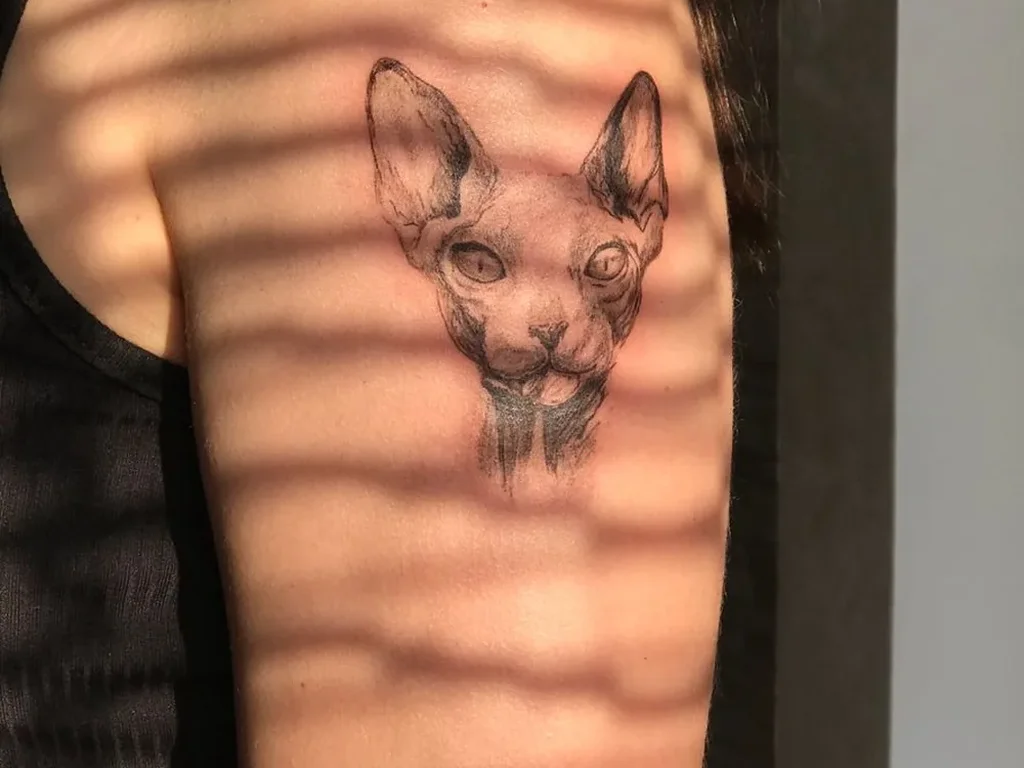
No fur, no problem. A sphynx portrait is all structure — huge ears, heavy brow, wrinkled forehead — and black and grey shading suits that perfectly. This one sits high on the upper arm, small but completely unmistakable.
Hairless breeds, short-coated dogs and anything with strong facial architecture (frenchies, pugs, boxers) make the best small portraits, because the likeness lives in shapes rather than fur detail. It’s the one portrait style that survives being shrunk.
9. Traditional cat with flowers and a moth
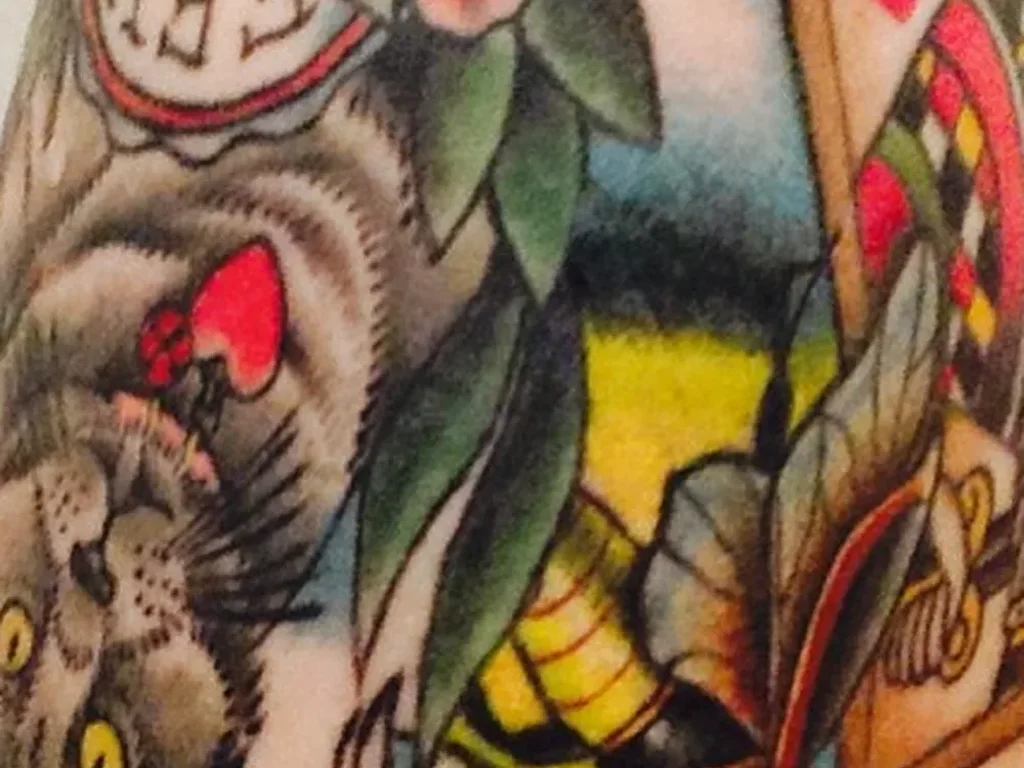
A cat’s face built into a bigger traditional composition — flowers above, a big ornamental moth below, saturated colour throughout. The cat isn’t the whole tattoo; it’s the centre of one. That’s a different way to honour a pet: woven into the style you already wear.
Adding to an existing sleeve? Copy this approach. Take your pet to an artist who works in that style and let them design the animal their way, the way people add rose tattoo designs or any other classic motif. It’ll sit better than a realism portrait dropped into a traditional arm.
Character pieces: personality over photo-realism
10. The graphic black cat
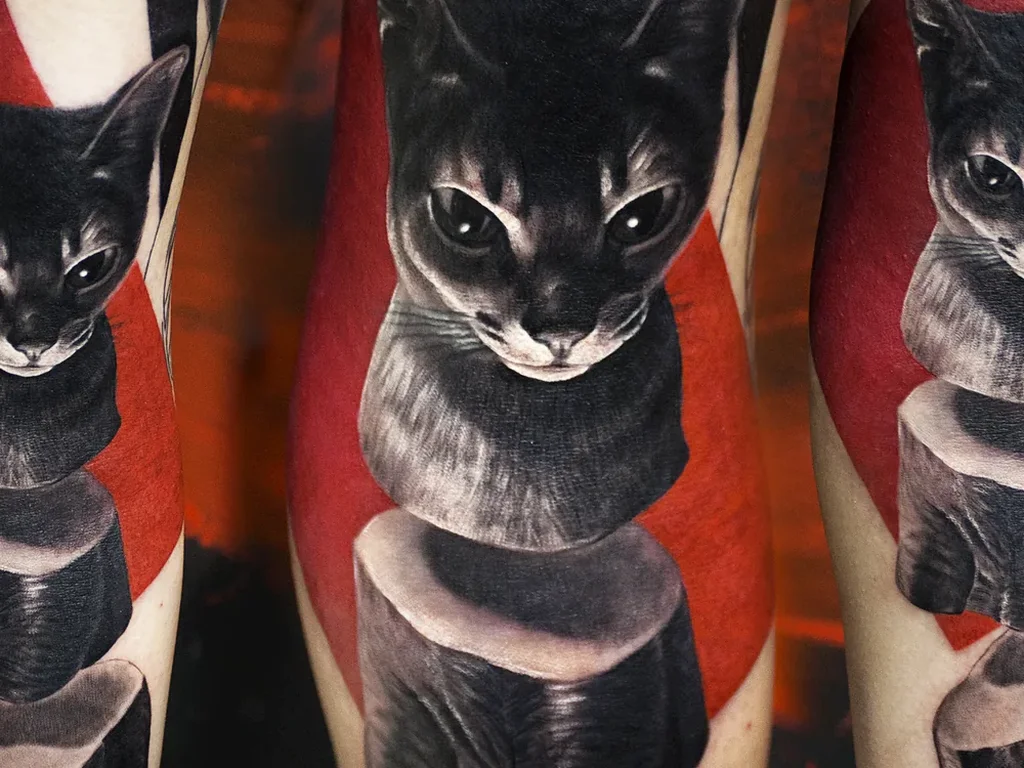
This black cat is photographed from three angles because it wraps the leg — a bold, graphic portrait built from solid black shapes and hard red geometry, not soft shading. It’s a portrait the way a poster is a portrait: not lifelike, but instantly that cat.
Graphic styles like this are a strong pick for black cats, who defeat realism artists — a black animal in soft shading can heal into a dark blob. Solid black with sharp negative-space highlights keeps the ears, eyes and whisker pads readable for decades.
11. Samurai cat, drawn in blackwork
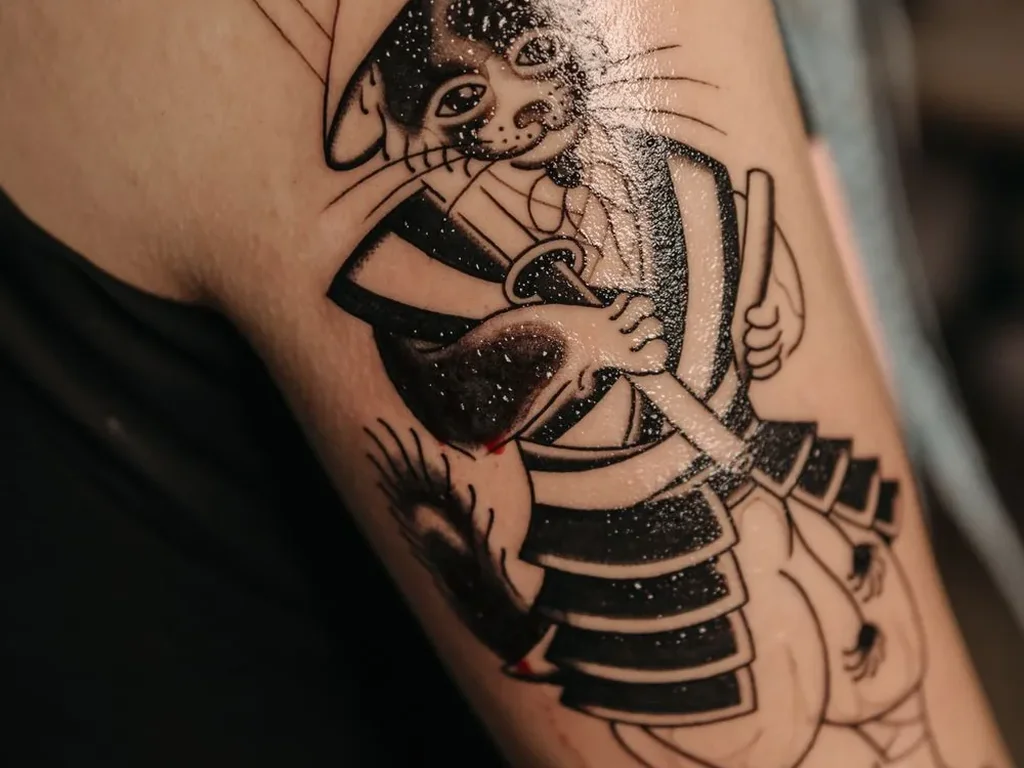
A cat in samurai armour, sword raised, worked entirely in black line and stipple. It’s not a likeness — it’s a tribute to a cat who clearly ran the house. Costume portraits like this (knights, astronauts, royalty, chefs) have become a genre of their own, and blackwork keeps them classy.
The forearm placement suits the tall, narrow composition. If you go this route, the likeness hides in the markings: ask the artist to keep your cat’s exact face pattern inside the costume, and anyone who knows the cat will recognise them instantly.
12. Tabby in a tangle of yarn
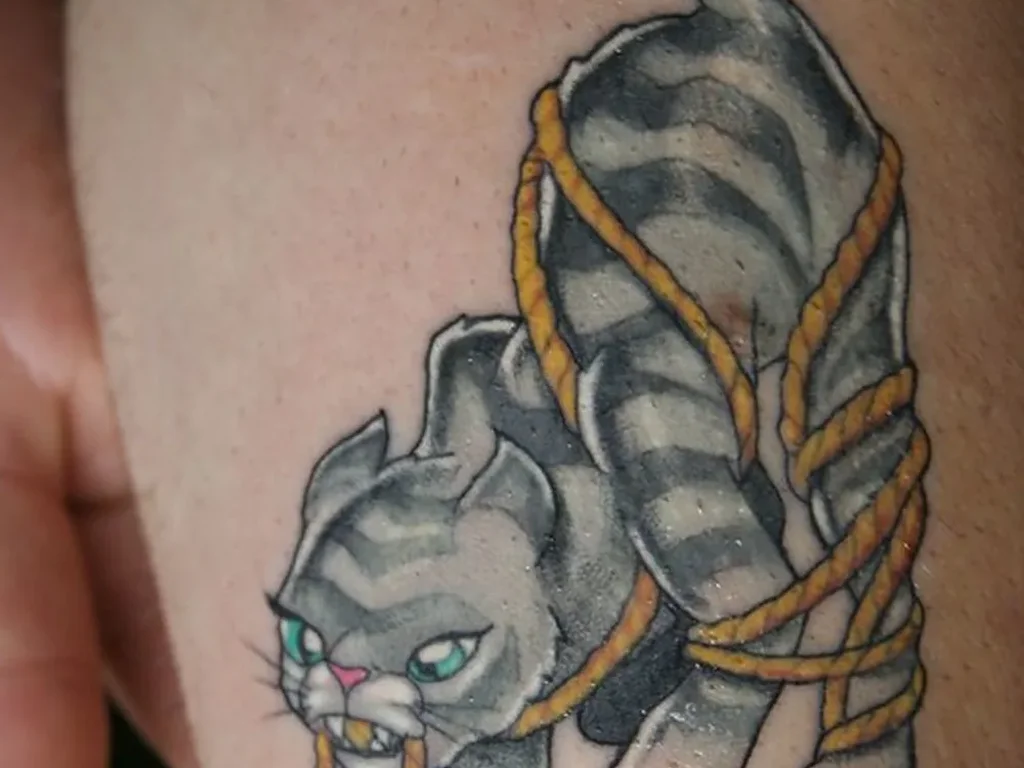
A stripy tabby completely wound up in yellow yarn, wearing the guilty expression every cat owner knows. This is the story approach: don’t tattoo the cat, tattoo the thing the cat does. The stripes carry the likeness; the yarn carries the personality.
Cartoon-leaning colour work like this needs confident outlines to survive — check that your artist’s healed colour still has its edges. Soft, outline-free colour is the first thing time eats.
13. Two storybook kittens
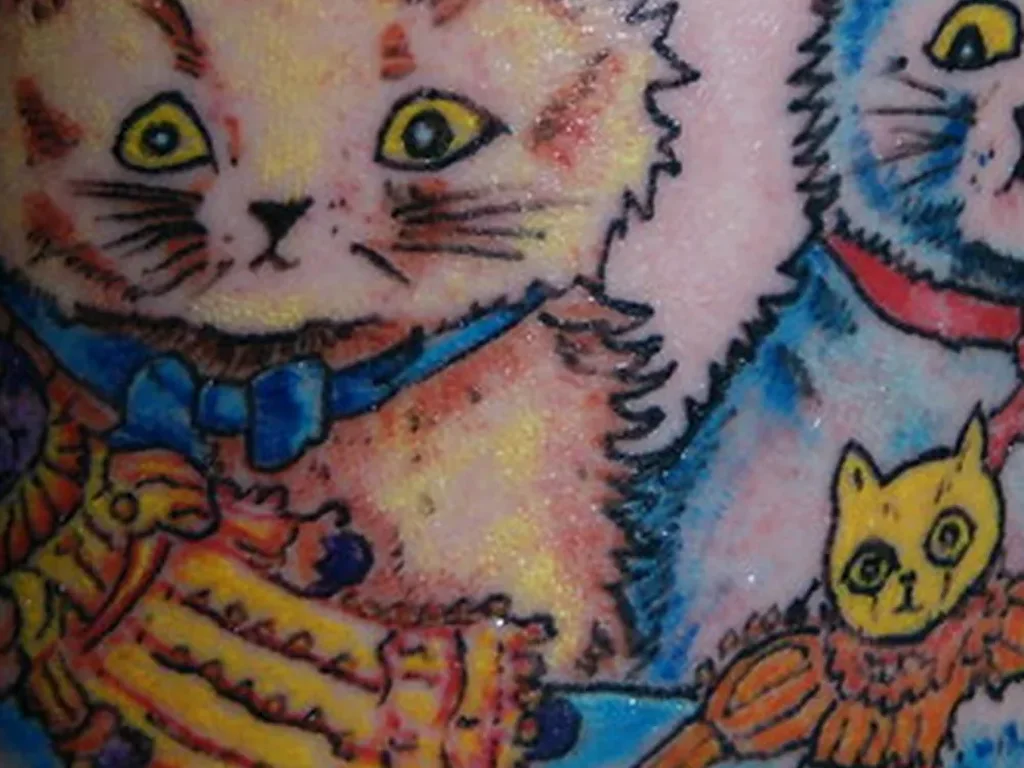
Two kittens drawn like illustrations from an old children’s book — one with the knitting, one with the fish — in soft vintage colour. For two-pet households, a paired design like this beats two separate portraits: one composition, one session, and the relationship between them is the subject.
Siblings, bonded pairs and old-and-young combinations all suit the format. Keep the two animals the same size and style even if they’re very different in real life; matching treatment is what makes it read as one piece.
Paw prints: pet tattoo ideas taken from the real thing
14. The big tribal-pattern paw
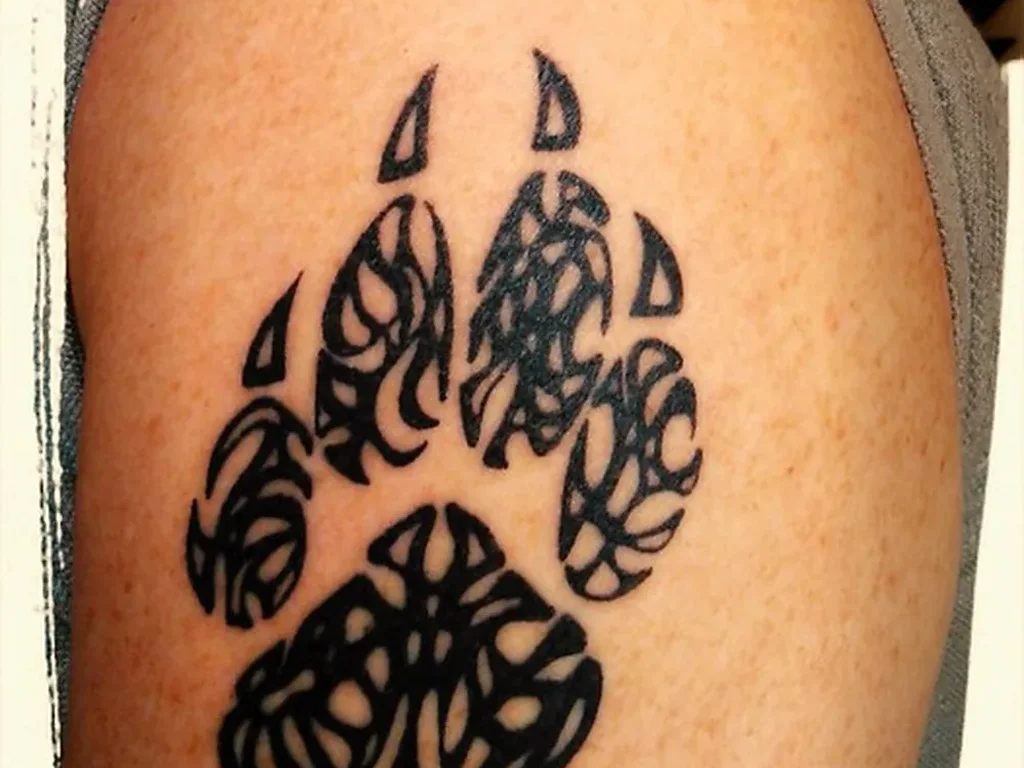
An oversized paw print, each pad filled with tribal patterning instead of flat black, sitting high on the upper arm. Blown up to this scale, a paw stops being a symbol and becomes a statement — and the patterned fill gives it texture that a plain silhouette doesn’t have.
Scaling a print up is always safe. Scaling down is where prints die. If you love this look but want it smaller, drop the internal pattern first and keep the clean paw shape; pattern needs room.
15. A paw filled with tiny flowers
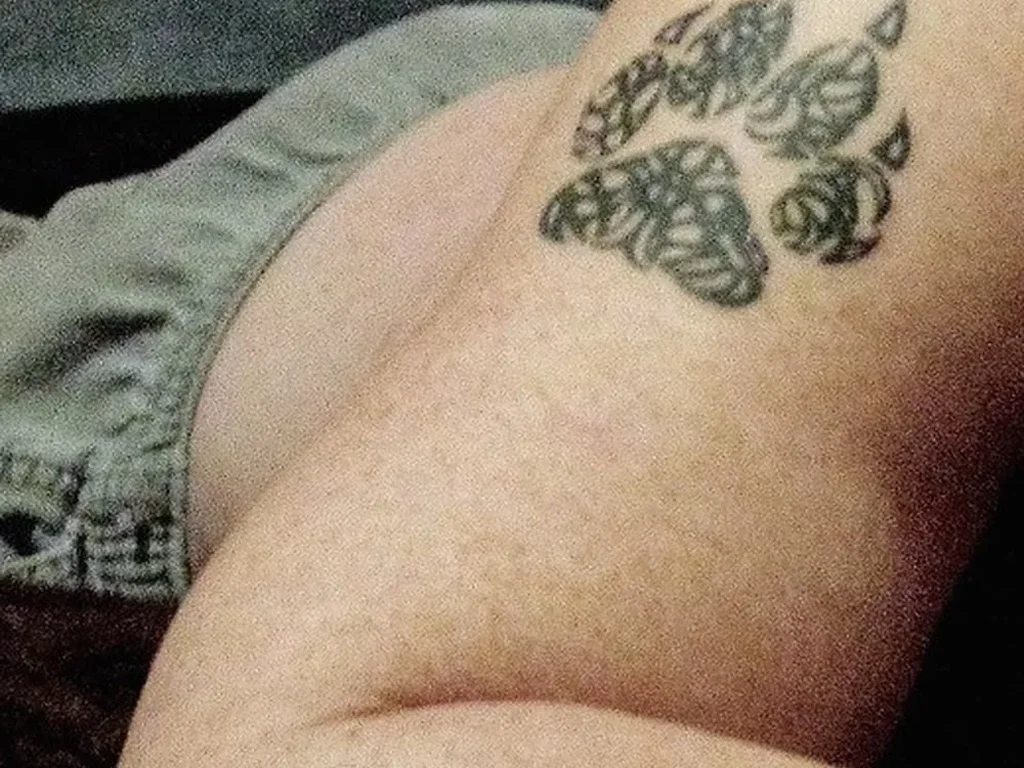
The opposite approach: a small, soft paw on the thigh where every pad is filled with miniature flowers and leaves instead of ink-black. It’s a paw print and a piece of floral work in one, and the thigh gives it a private, just-for-me placement.
Honest warning: detail this fine will soften. The flowers blur into texture over the years — many people accept that, since the paw shape stays crisp. If the tiny detail is the whole point, size up. The same applies to full flower tattoo designs: petals need millimetres.
16. Matching paws for the whole group
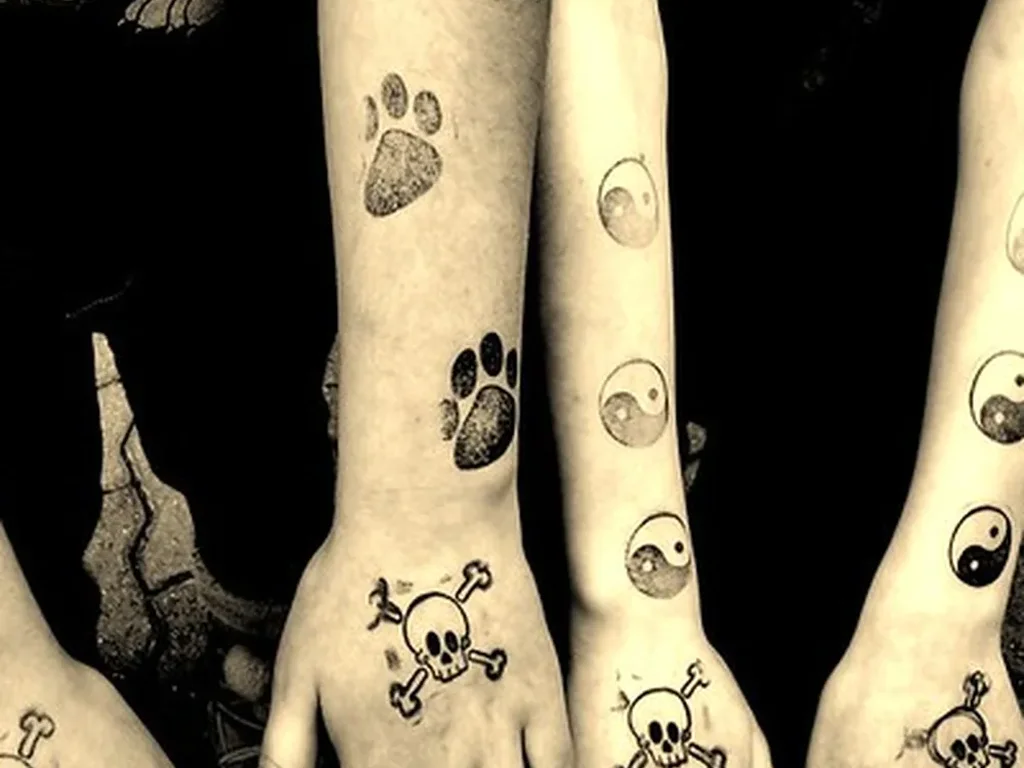
Three friends, a spread of small paw prints across hands and wrists, shot in black and white. Shared pets — the family dog, the house cat everyone fed at uni — are one of the few matching-tattoo subjects that nobody regrets, because the bond is with the animal, not each other.
Practical notes: hand and finger tattoos fade faster than anywhere else, and most artists warn you in writing that touch-ups are part of the deal. Keep matching paws simple, thick-lined and identical — same stencil for everyone, ideally in one session.
17. Her name, with a paw in the middle
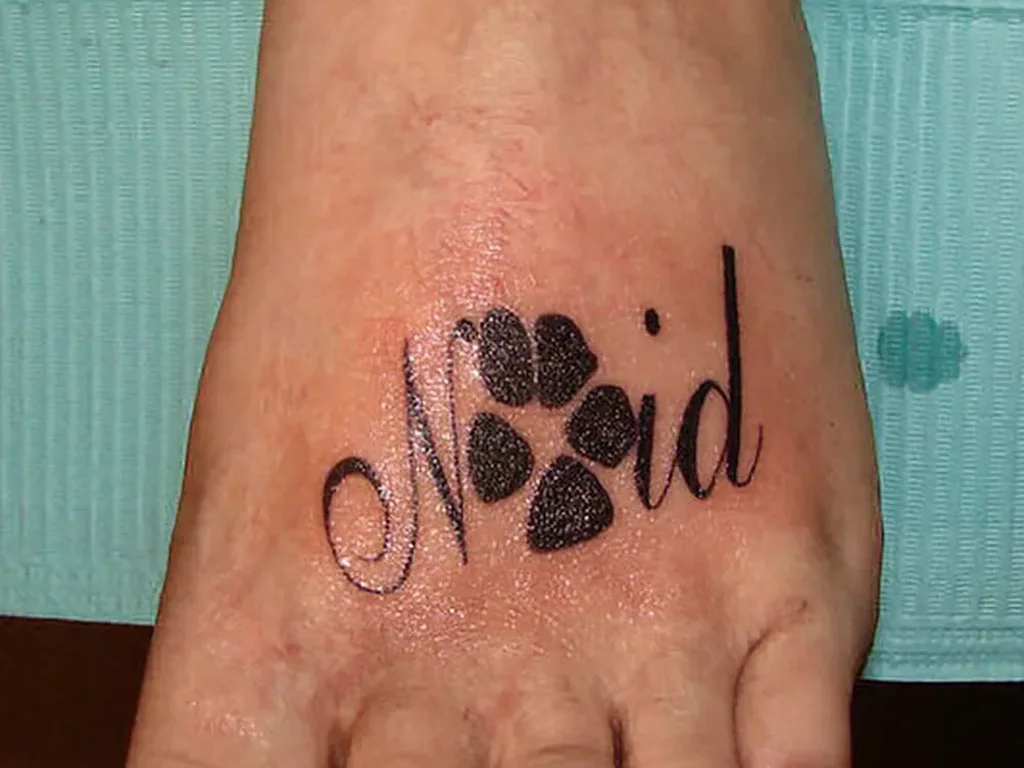
Across the top of the foot: a pet’s name in flowing script, with a paw print standing in for one of the letters. It’s a small idea executed perfectly — the paw isn’t decoration next to the name, it’s part of the word.
Feet are a high-wear placement. Socks, shoes and sun all take their toll, and fine script on feet needs a touch-up sooner than almost anywhere else. Bold script, generous letter spacing, and an artist honest about all that — then it’s worth it.
18. A heart, a poppy and one black paw
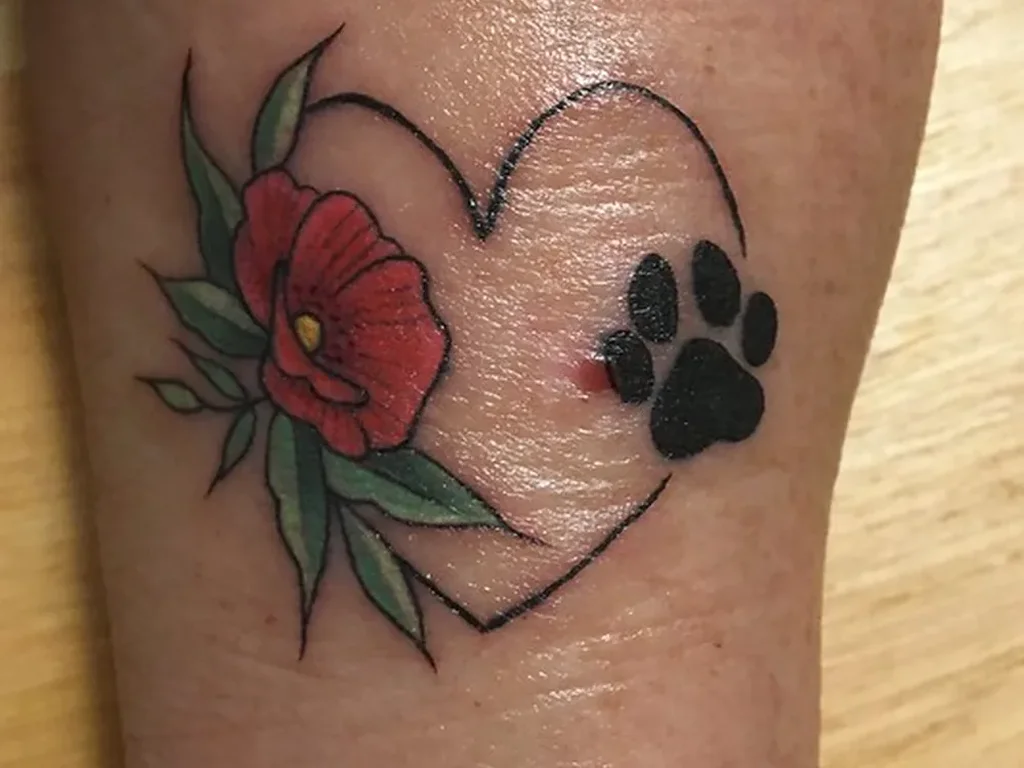
A single line draws a heart; a red poppy grows on one side; a small black paw print sits inside the other. Three symbols, one small forearm tattoo, no clutter. Pieces like this are often memorials, but plenty of people get them for a living pet too — it reads either way.
This is the template to steal if you want a design built from your own symbols. Our guide to heart tattoo designs covers the heart shapes themselves; here the trick is restraint — one flower, one paw, one line, done.
19. The real print, framed in laurel
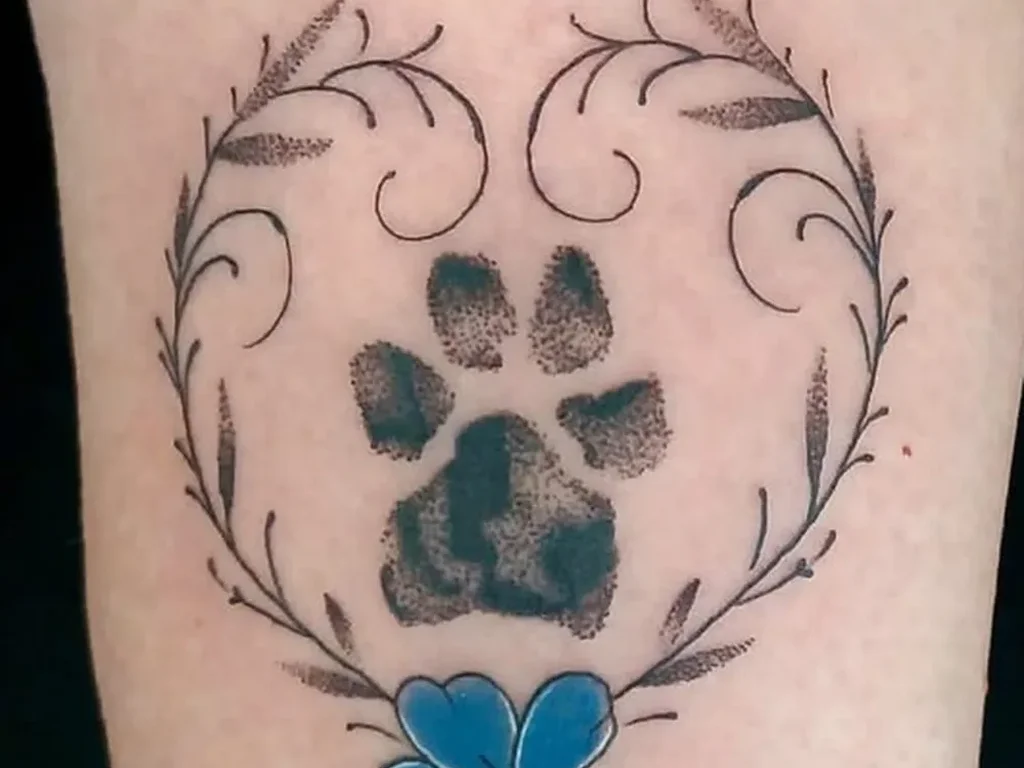
Look closely at the paw in the middle: it isn’t a cartoon paw, it’s a real print, complete with the rough, uneven edges a pad actually makes. Around it, a fine laurel wreath drawn into a heart shape and finished with one blue flower. Print in the middle, artwork around the edge — the best of both routes.
Wreaths and frames turn a print into a finished piece without touching the print itself. Laurel, olive branches and your pet’s birth flower all work; keep the frame’s lines thinner than the print so the eye lands in the middle first.
20. Print on paper, print on skin
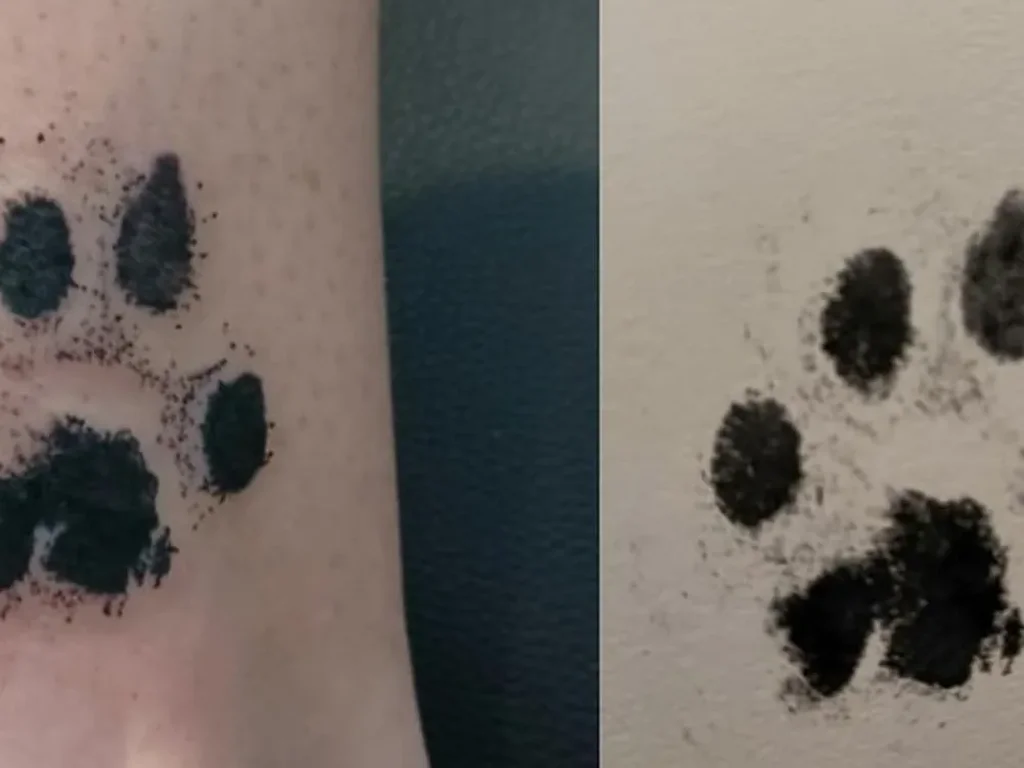
The most honest photo in this whole list: on the right, the ink print on paper; on the left, the same paw tattooed on the wrist. Same size, same ragged edges, same slightly squished toe. This is what “taken from the real print” actually means, and it’s the standard to hold your artist to.
Wrist prints are popular for a reason — it’s the spot your eyes land on all day. Just know the wrist flexes constantly, so lines there spread a touch faster. Actual-size prints (most dog paws land between 5 and 8 cm) sit nicely on an inner wrist or ankle.
21. Ted’s rainbow paw
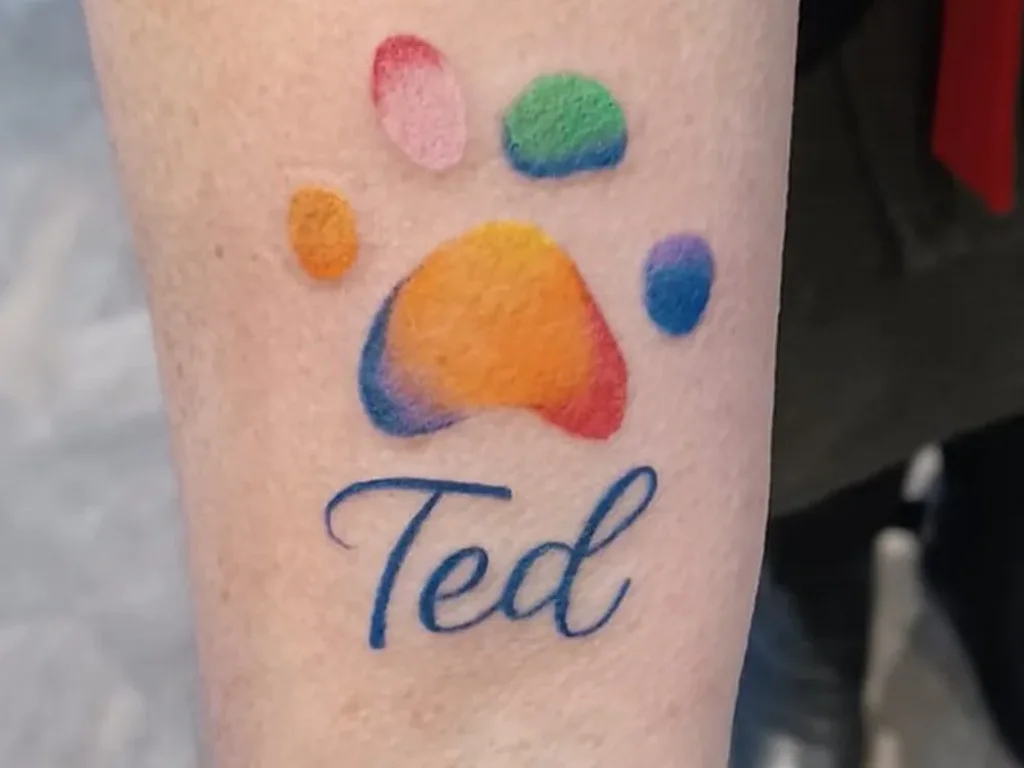
Each toe a different colour, the main pad blending orange into pink, and the name — Ted — in loose script underneath. Rainbow-bridge energy without a single word saying so. Watercolour-style work like this, with no black outline, is the most debated technique in tattooing, and this piece shows both sides: it’s soft, bright and joyful up close.
Now the honest part: unlined colour fades faster than anything else here, and pastel edges blur. Owners usually accept a refresh every few years as the cost of the look. If that trade doesn’t suit you, take design 18 or 19 and add colour inside a proper outline.
22. The orange paw with a cat inside
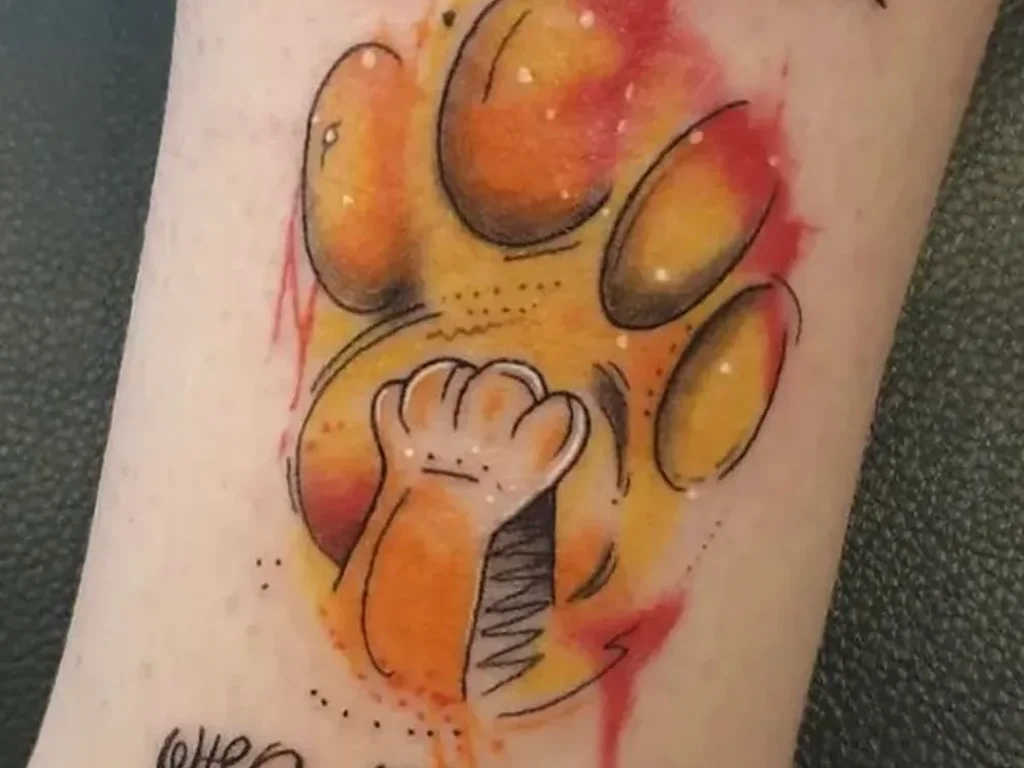
A big painterly paw in orange and red on the lower leg, a tiny cat silhouette hiding inside the main pad, and curved lettering around it: “Remember who you are.” Anyone who grew up on a certain lion film will feel that in their chest. It’s a memorial, a fandom nod and a paw print in a single design.
Hidden details inside a bigger shape — a silhouette in a pad, an initial in a collar — layer meaning without crowding a design. Keep the hidden element bold and simple; drawn fine, it would be the first thing to disappear.
A note on memorial tattoos
Several designs above are memorials, and if yours will be too, a few things help. Many people pair the pet’s portrait or print with a small guardian symbol — an angel design watching over them, or a dove for peace. Names and dates in your own handwriting — or copied from a card you actually wrote — is the detail people treasure most. Keep the handwriting at a size where the letters stay open; your artist can tell you the minimum. And there’s no rule that says you have to do it straight away. Plenty of people wait months, until the tattoo feels like a celebration instead of a fresh wound. If you’re in the thick of it, Blue Cross runs a pet loss support service that’s free and genuinely kind.
One thing this page won’t recommend: ink mixed with a pet’s ashes. It surfaces in forums constantly, but it isn’t regulated, sterilisation claims can’t be verified, and many reputable studios refuse it on hygiene grounds. A print or portrait carries the same meaning without the unknowns.
Frequently asked questions
How do I get a clean paw print from my pet?
Use a pet-safe washable ink pad or non-toxic paint on smooth white card. Press once, firmly, without rocking, and take five or six attempts — the middle ones are usually cleanest. Trim long fur between the toes first if your pet tolerates it. Photograph or scan the best print at high resolution and bring the original card to your consultation too.
What photo makes the best portrait reference?
Sharp, well-lit and at the animal’s eye level — not shot from above. The eyes must be in focus and true to colour. Avoid heavy filters, blurry action shots and photos where a collar or shadow cuts across the face. Bring three or four favourites; a good portrait artist will tell you honestly which one will tattoo best, and it isn’t always the one you expect.
How much does a pet tattoo cost?
A small paw print or outline usually sits near a studio’s minimum charge or a short appointment. Portraits are priced like all custom realism: by the hour or by the piece, with a palm-sized portrait typically taking several hours and large pieces running to multiple sessions. The real cost driver is the artist’s skill level — with portraits, paying for the right person is the whole decision. Get the quote after a consultation, with the size agreed.
Do pet portrait tattoos fade?
All tattoos soften; realism softens most visibly because it relies on gentle shading rather than hard outlines. Black and grey portraits hold up better than colour, and bold traditional portraits hold up best of all. Expect a realism piece to look slightly softer at five years — still clearly your pet if it was sized and placed well, but not photo-crisp. Sunscreen and moisturised skin genuinely slow it down.
How small can a pet portrait go?
For a face with real likeness, most portrait artists want at least 8–10 cm. Below that, drop the detail, not the standards: switch to an outline, a silhouette, or a breed-shaped portrait like the sphynx in this list, where the likeness lives in big shapes. A tiny face crammed with fur detail is the single most common pet tattoo regret.
What are the best placements for a pet tattoo?
Forearms suit long faces and full-body pieces. Shoulder blades and thighs give portraits the flattest, roomiest skin. Inner wrists and ankles are lovely for actual-size paw prints. Calves take vertical designs well. Hands and feet look great in photos and fade fastest in real life — go in knowing that, or pick them for simple bold shapes only.
How do I find an artist who’s good at pet portraits?
Search for healed pet portraits specifically — not fresh ones, not human portraits. An artist brilliant at faces may still flatten animal features. Look for correct eye shine, noses that read as wet rather than grey, fur that follows its growth direction. At the consultation, watch how they talk about your photo: the good ones discuss size and placement trade-offs before price.
Can any pet be tattooed — rabbits, birds, reptiles?
Yes. Portraits and outlines work for any species, and prints work for anything with a foot — people have taken them from rabbits, ferrets and even bearded dragons. Scaled and feathered pets make striking outline pieces because their patterns are so graphic. Bring extra reference photos for unusual species; your artist may be brilliant at dogs and have never drawn a cockatiel in their life.
How long does a pet portrait session take?
A print or small outline is often under an hour. A palm-sized realism portrait typically runs three to five hours. Bigger colour pieces are commonly split into two sessions — linework and shading first, colour and detail second — which also lets the artist check how the first pass healed before finishing. Ask at the consultation; session length affects price, healing and how much coffee you should drink beforehand (less than you think).
My pet just died. Should I get the memorial tattoo now?
You can, and many people find real comfort in it. Just make the decision about the design slowly even if the appointment is soon — grief is a bad art director. Choose the photo or print on a calm day, sit with the design for a week, and avoid adding elements in the studio chair. If the print is what matters most, ask your vet or crematorium about taking one now, while it’s still possible; the tattoo itself can wait as long as you need.
Final thoughts
The best pet tattoo here isn’t the most detailed one — it’s the one you’d still recognise as your animal from across the room in ten years. Portraits ask the most of your artist and budget. Prints ask almost nothing and give back something no photograph can: the actual shape of them, at actual size. Character pieces split the difference with charm to spare. Pick the route that fits your pet, take the print or photo properly, and don’t shrink a good design to fit a small idea. They’d wait for you. The tattoo can wait a week for the right artist too.
Photo credits: Design 1: Wikimedia Commons, CC BY 4.0. Design 5: Wikimedia Commons, public domain. Design 6: Wikimedia Commons, CC BY 2.0. Design 7: Wikimedia Commons, CC BY-SA 3.0. Design 10: Wikimedia Commons, CC BY-SA 4.0. Designs 2 and 4: tatuaggi on Flickr, CC BY 2.0. Design 3: fredisonfire on Flickr, CC BY-SA 2.0. Design 9: lo_and_behold on Flickr, CC BY 2.0. Design 12: hvc on Flickr, CC BY-SA 2.0. Design 13: nauright on Flickr, CC BY-SA 2.0. Designs 14 and 15: a-herzog on Flickr, CC BY 2.0. Design 17: crestedcrazy on Flickr, CC BY 2.0. Designs 16 and 18: via Flickr, CC BY 2.0. Designs 19–22: via Flickr, CC BY-SA 2.0. Designs 8 and 11: Pexels, Pexels License.