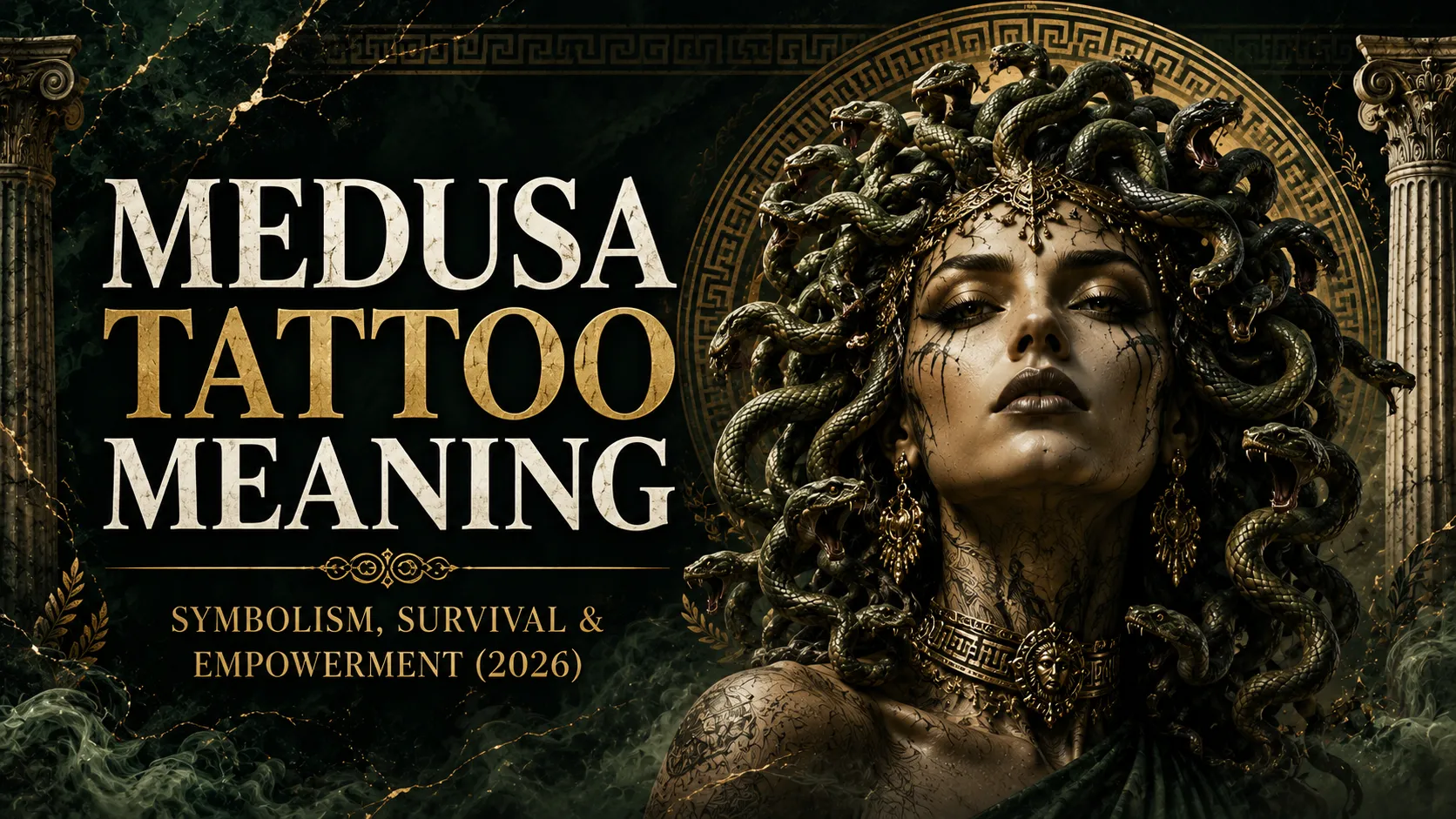
The Medusa tattoo meaning has become one of the most searched tattoo topics in recent years, attracting people who appreciate Greek mythology, artistic tattoo designs, and meaningful body art. While Medusa is often remembered as the woman with snakes for hair whose gaze could turn people into stone, her story is much more complex than the popular myths suggest. Today, a Medusa tattoo can symbolize strength, survival, transformation, justice, feminine power, protection, resilience, wisdom, and personal growth. Because of these powerful associations, many people choose a Medusa tattoo not only for its striking appearance but also for the story it tells.
The origins of Medusa date back thousands of years to ancient Greek mythology. According to the myth, Medusa was once a beautiful woman before being transformed into a Gorgon. Over time, her image evolved from that of a feared monster into a symbol of protection and empowerment. In modern tattoo culture, Medusa has taken on new meanings, especially among individuals who identify with overcoming hardship or reclaiming personal strength. This transformation has made the Medusa tattoo one of the most meaningful mythological tattoos available today.
A Medusa tattoo is also highly customizable. Some people prefer realistic black-and-grey artwork, while others choose colorful traditional designs or minimalist line art. The tattoo’s meaning may also change depending on its placement, artistic style, facial expression, or accompanying elements such as snakes, roses, swords, or ancient Greek patterns. Understanding these details helps you choose a design that truly reflects your personality and life experiences.
This comprehensive guide explores every aspect of the Medusa tattoo meaning, including its historical background, symbolism, significance for women and men, popular tattoo styles, placement meanings, and practical tips for selecting the perfect design.
What Is the Medusa Tattoo Meaning?
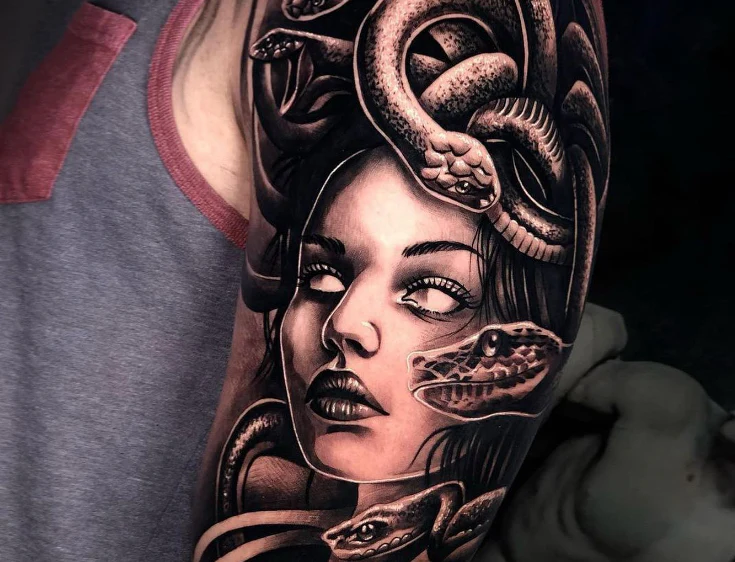
The Medusa tattoo meaning goes far beyond its striking visual appearance. At its core, it represents transformation, resilience, protection, justice, wisdom, and the ability to overcome adversity. Unlike many tattoos that focus solely on aesthetics, a Medusa tattoo tells a story rooted in mythology and interpreted through personal experiences. Because of this depth, it has become a favorite choice for people seeking body art with lasting emotional significance.
In Greek mythology, Medusa’s image inspired fear because anyone who looked directly into her eyes would instantly turn to stone. While this ability made her one of mythology’s most feared figures, many modern interpretations view her powers differently. Rather than representing evil, Medusa’s gaze is often seen as a symbol of self-defense and protection against those who intend harm. This perspective has greatly influenced how people interpret the tattoo today.
For many tattoo enthusiasts, Medusa symbolizes personal transformation. Just as her life dramatically changed through circumstances beyond her control, many individuals choose this tattoo to represent overcoming major life challenges. Whether someone has survived difficult experiences, started a new chapter in life, or developed greater inner strength, the Medusa tattoo serves as a permanent reminder of resilience and determination.
Another common interpretation involves independence and confidence. Medusa is often portrayed with an intense expression that reflects courage rather than fear. People who value self-respect, emotional strength, and personal boundaries may find this symbolism especially meaningful. In this way, the tattoo becomes more than decorative art—it becomes a visual representation of one’s identity, values, and journey.
Although the meaning varies from person to person, most modern interpretations emphasize empowerment instead of fear. This shift has contributed significantly to the tattoo’s growing popularity worldwide.
The History Behind the Medusa Tattoo Meaning
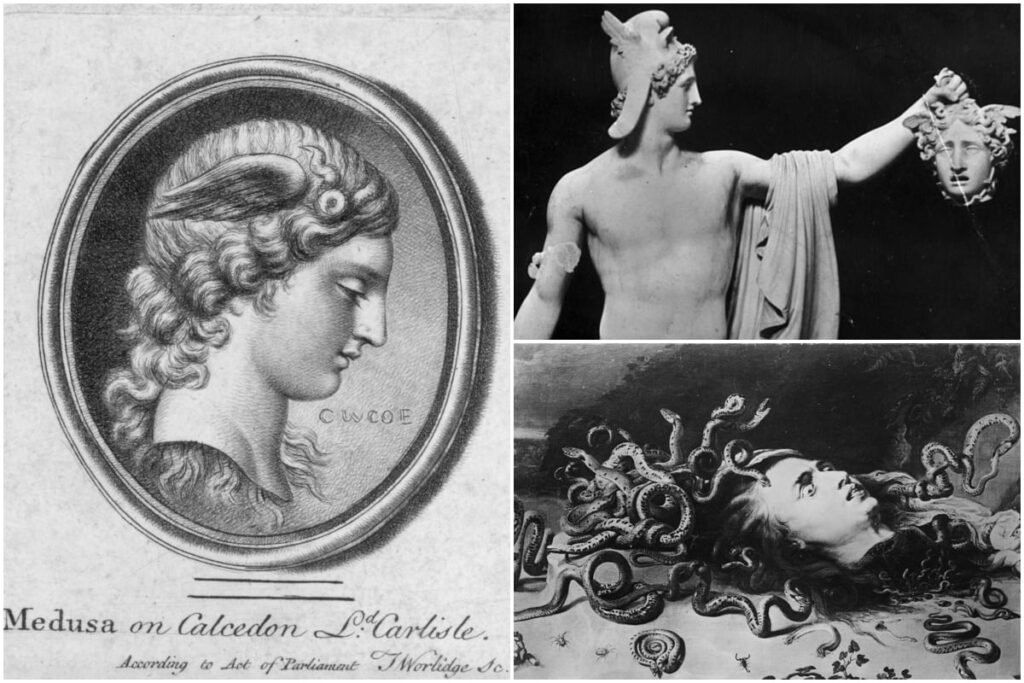
Understanding the history behind the Medusa tattoo meaning begins with exploring one of the most famous stories in Greek mythology. Medusa was one of the three Gorgon sisters, but unlike her immortal siblings, she was mortal. Early versions of the myth describe her as an exceptionally beautiful woman admired for her appearance before her tragic transformation into the snake-haired figure recognized today.
According to the Roman poet Ovid’s retelling, Medusa was transformed after being assaulted by Poseidon in the temple of Athena. Instead of punishing Poseidon, Athena turned Medusa’s beautiful hair into venomous snakes and gave her the terrifying ability to turn anyone who looked at her into stone. While this version of the story has influenced modern culture, historians note that there are multiple ancient accounts, and not all describe the transformation in the same way.
In ancient Greece, Medusa’s image was not always viewed negatively. Her face, known as the Gorgoneion, appeared on shields, armor, temples, coins, and doorways. People believed her frightening appearance could protect against evil spirits, bad luck, and enemies. Rather than representing danger alone, Medusa also served as a powerful protective symbol.
Centuries later, artists, writers, and historians reinterpreted Medusa’s story. During the Renaissance, she became a popular subject in paintings and sculptures, often symbolizing beauty, tragedy, and power simultaneously. Modern literature and media further expanded her symbolism, portraying her as a misunderstood figure rather than simply a monster.
Today’s Medusa tattoo meaning reflects these evolving interpretations. Many people see her not as a villain but as a symbol of survival, resilience, and personal strength. Her journey from admired beauty to feared creature—and eventually to an icon of empowerment—explains why the Medusa tattoo continues to resonate with so many people across different cultures and generations.
Medusa Tattoo Meaning in Greek Mythology
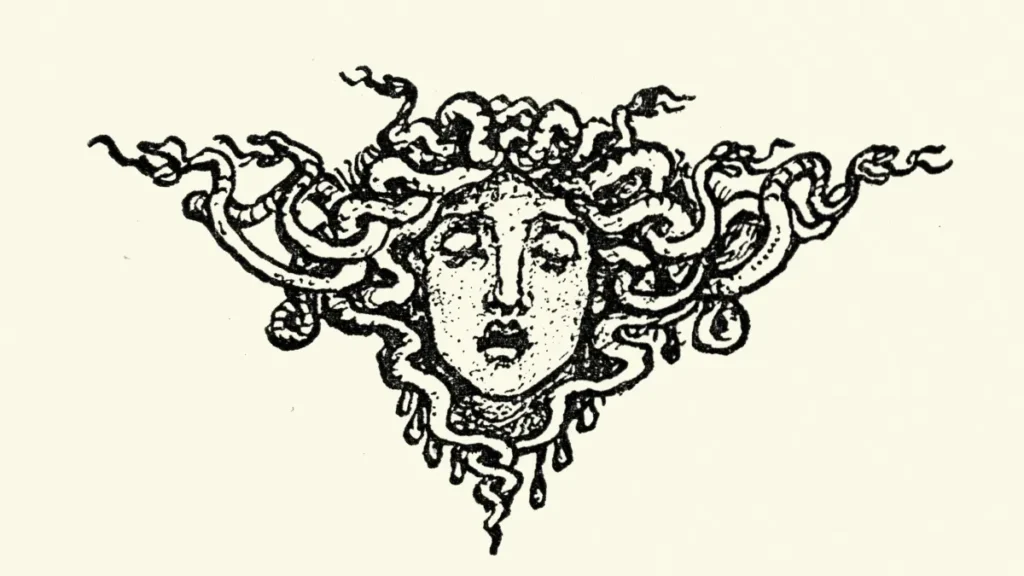
Greek mythology forms the foundation of the Medusa tattoo meaning, making it essential to understand her original role within these ancient stories. Medusa is one of the most recognizable mythological figures, and her tale has fascinated people for more than two thousand years. While many know her as the snake-haired Gorgon capable of turning people into stone, her story includes themes of fate, power, tragedy, and transformation that continue to influence modern interpretations.
In mythology, Medusa’s terrifying appearance served both as a curse and as a powerful defense. Her gaze prevented others from harming her, making her one of the most feared beings in the ancient world. Eventually, the hero Perseus was tasked with defeating her. With help from Athena and Hermes, he avoided looking directly at Medusa by using a polished shield as a mirror. After defeating her, Perseus carried Medusa’s severed head, which retained its power to petrify enemies. This story demonstrates that even after death, Medusa remained a symbol of extraordinary power.
Ancient Greeks often viewed Medusa as a protective figure despite her fearsome reputation. Her image decorated buildings, weapons, jewelry, and ceremonial objects because people believed it could ward off evil and protect communities from danger. This protective symbolism remains an important reason many individuals choose a Medusa tattoo today.
Modern scholars frequently examine Medusa through different perspectives, focusing on themes of injustice, survival, transformation, and resilience. While interpretations vary, one consistent idea remains: Medusa represents someone whose story cannot be reduced to simple labels of hero or villain. This complexity makes the Medusa tattoo especially meaningful, allowing each person to connect with the myth in a personal way while honoring one of history’s most enduring legendary figures.
Why Is the Medusa Tattoo So Popular?

The Medusa tattoo has become one of the most recognizable and meaningful tattoo choices in recent years. Its popularity is not based solely on its artistic beauty but also on the powerful symbolism it carries. Unlike many tattoo designs that are chosen mainly for their appearance, a Medusa tattoo often represents a deeply personal story. People from different cultures, backgrounds, and age groups are drawn to this design because it can symbolize strength, resilience, protection, wisdom, and transformation.
One major reason for the growing popularity of the Medusa tattoo meaning is the renewed interest in Greek mythology. Books, movies, television series, and social media have introduced mythological characters to new audiences, making figures like Medusa more familiar than ever before. However, modern interpretations often present Medusa as more than just a mythical monster. Instead, she is seen as a complex character whose story includes injustice, survival, and personal transformation. This deeper understanding has encouraged many people to view Medusa as a symbol of empowerment rather than fear.
The artistic possibilities also contribute to the tattoo’s popularity. Medusa tattoos can be created in many different styles, including realistic portraits, black-and-grey designs, neo-traditional tattoos, fine-line artwork, geometric patterns, and colorful illustrations. Each style offers a unique interpretation of Medusa while allowing individuals to express their personality through custom artwork. Some people prefer a calm and elegant Medusa, while others choose a fierce expression that highlights her legendary power.
Another reason why the Medusa tattoo has gained attention is its versatility. It looks impressive on almost any part of the body, including the forearm, upper arm, thigh, back, chest, ribs, calf, and shoulder. Both small minimalist tattoos and large, highly detailed pieces can successfully capture the essence of Medusa.
Social media platforms have also played a role in increasing its popularity. Tattoo artists regularly showcase creative Medusa designs that inspire thousands of people worldwide. As a result, many individuals discover new artistic interpretations and personalize them to reflect their own experiences.
Ultimately, the enduring appeal of the Medusa tattoo meaning comes from its ability to combine mythology, history, art, and personal symbolism into one unforgettable design. Whether someone values its protective symbolism, connection to Greek mythology, or message of resilience, the Medusa tattoo remains one of the most meaningful choices available.
Medusa Tattoo Meaning for Women
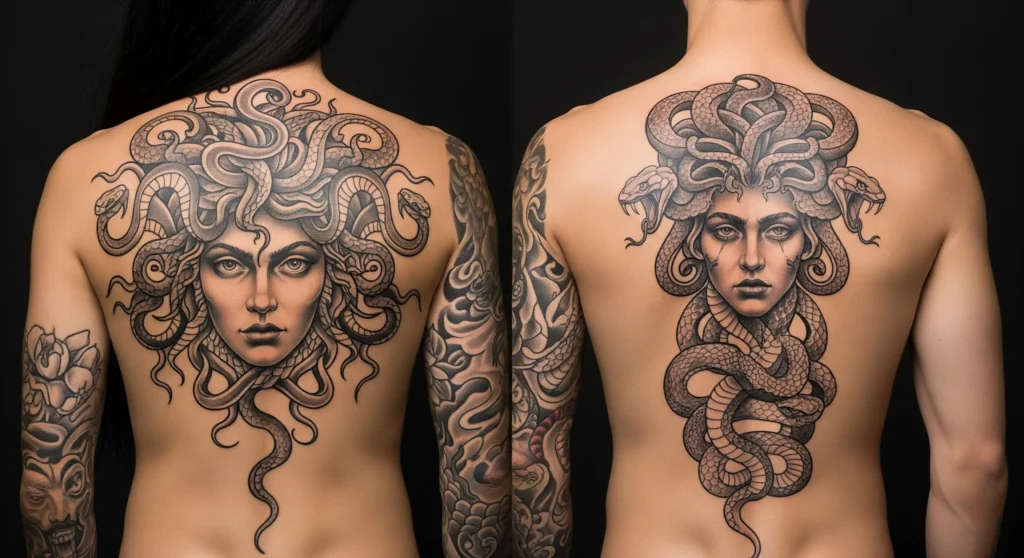
The Medusa tattoo meaning for women has evolved into one of the most powerful symbols of strength, resilience, independence, and personal empowerment. Although Medusa was traditionally portrayed as a terrifying figure in mythology, many modern interpretations focus on her humanity rather than her monstrous appearance. Because of this shift in perspective, countless women tattoo ideas choose a Medusa tattoo as a reminder of their inner strength and ability to overcome life’s challenges.
For many women, the tattoo represents personal transformation. Medusa’s story is often interpreted as one of dramatic change, where an ordinary life becomes permanently altered by circumstances beyond one’s control. While different versions of the myth exist, modern readers often identify with themes of resilience, recovery, and rebuilding after hardship. As a result, the tattoo can symbolize the ability to move forward despite difficult experiences.
Another common interpretation is feminine power. Medusa is frequently depicted with a confident expression, emphasizing courage rather than fear. Her image reminds many women that strength can exist alongside beauty, intelligence, and compassion. Instead of representing weakness, Medusa becomes a symbol of self-respect and emotional resilience.
Protection is another important aspect of the Medusa tattoo meaning. In ancient Greece, Medusa’s image was believed to ward off evil and protect people from harm. Today, many women view the tattoo as a personal symbol of protection against negativity, toxic relationships, or emotional challenges. It serves as a visual reminder to maintain healthy boundaries and value one’s self-worth.
Artistic expression also plays a role in the tattoo’s popularity. Some women choose elegant black-and-grey portraits that highlight Medusa’s beauty, while others prefer colorful neo-traditional or realistic designs filled with intricate snake details. Additional elements such as roses, moon phases, Greek columns, or floral patterns can personalize the tattoo even further without changing its central meaning.
It’s important to recognize that while some communities have adopted the Medusa tattoo as a symbol connected to survival and reclaiming personal power, not everyone chooses the design for that reason. For many, it simply represents resilience, wisdom, independence, or a love of Greek mythology. The meaning remains deeply personal and should never be assumed based solely on someone’s tattoo.
Today, the Medusa tattoo meaning for women continues to inspire individuals who value courage, transformation, confidence, and the strength to define their own identity.
Medusa Tattoo Meaning for Men

Although the Medusa tattoo meaning is often associated with feminine empowerment, it has also become an increasingly popular choice among men tattoo ideas. For male tattoo enthusiasts, Medusa represents courage, wisdom, discipline, protection, resilience, and the ability to face fear without hesitation. Her legendary image conveys authority and strength while maintaining an artistic style that stands out in both traditional and modern tattoo designs.
Many men are attracted to Medusa because of her role in Greek mythology. Ancient myths portray her as one of the most powerful beings in existence, capable of defeating enemies simply through eye contact. Rather than focusing only on the tragic aspects of her story, many tattoo collectors appreciate her as a symbol of unmatched power and determination.
Protection remains one of the strongest interpretations. Ancient warriors frequently displayed the Gorgoneion on shields and armor because they believed it could frighten enemies and protect them during battle. Modern tattoo enthusiasts often embrace this historical symbolism by choosing Medusa as a reminder to remain mentally strong and prepared for life’s challenges.
Another reason men choose this tattoo is its visual impact. A detailed Medusa portrait featuring realistic snakes, intense eyes, and classical Greek elements creates an impressive piece of body art. Many artists combine Medusa with statues, temples, skulls tattoo ideas , swords, laurel wreaths, or geometric backgrounds to create highly personalized designs.
Some men also interpret the tattoo as a symbol of discipline and emotional resilience. Medusa’s story demonstrates how adversity can completely change a person’s life. This perspective encourages viewers to focus on personal growth rather than defeat. The tattoo becomes a reminder to remain strong during difficult times and continue moving forward.
Regardless of the individual interpretation, the Medusa tattoo meaning for men typically emphasizes confidence, protection, resilience, and respect for one of mythology’s most iconic figures. It combines historical significance with timeless artistic appeal, making it a meaningful tattoo choice for those who appreciate symbolism as much as visual design.
The Hidden Symbolism of the Medusa Tattoo
The hidden symbolism of the Medusa tattoo is one of the reasons this design continues to fascinate tattoo enthusiasts around the world. While many people immediately recognize Medusa because of her snake-covered hair and piercing gaze, the deeper meanings behind the tattoo are often less obvious. Over centuries, artists, historians, and scholars have interpreted Medusa in many different ways, giving her image layers of symbolism that extend far beyond the original myths.
One of the strongest hidden meanings is transformation. Medusa’s story is defined by dramatic change, making her an enduring symbol of adapting to life’s unexpected challenges. People who have overcome hardships, embraced personal growth, or rebuilt their lives often connect with this aspect of her journey. The tattoo serves as a reminder that difficult experiences can lead to greater resilience and self-understanding.
Protection is another important symbol. In ancient Greece, Medusa’s face appeared on shields, armor, temples, and coins because people believed it could protect against danger and ward off evil. This historical use transformed Medusa into an ancient guardian figure. Today, many people choose the tattoo as a personal symbol of emotional strength, healthy boundaries, and protection from negativity.
Wisdom also plays a role in modern interpretations. Throughout mythology, powerful figures often possess both beauty and danger, reminding us that appearances can be misleading. Medusa represents the importance of understanding a person’s story before making judgments. This symbolism encourages empathy, thoughtful decision-making, and personal reflection.
The snakes surrounding Medusa’s head carry their own symbolic meanings as well. Across many cultures, snakes are associated with renewal, healing, transformation, rebirth, and knowledge because they shed their skin throughout life. When combined with Medusa’s image, they reinforce themes of continuous personal growth and adaptation.
Ultimately, the Medusa tattoo meaning is unique because it allows each individual to connect with different aspects of the myth. Whether viewed as a symbol of resilience, protection, wisdom, or transformation, Medusa remains one of the richest and most meaningful mythological tattoo designs ever created.
Medusa Tattoo Meaning in Modern Culture
In modern culture, the Medusa tattoo meaning has expanded far beyond its ancient Greek origins. While the myth remains the foundation of the design, today’s interpretations reflect contemporary ideas about identity, resilience, justice, and self-expression. This evolution has made the Medusa tattoo one of the most meaningful mythological tattoos in the world.
One reason for this shift is the way modern audiences revisit classic myths through new perspectives. Rather than viewing Medusa only as a monster, many people recognize the complexity of her story and see her as a symbol of endurance and transformation. As a result, the tattoo has become associated with reclaiming personal strength and embracing one’s identity after difficult experiences.
The tattoo has also become a favorite among artists because it combines symbolism with extraordinary visual possibilities. Detailed snakes, expressive eyes, ancient Greek architecture, celestial elements, flowers, and geometric patterns allow tattoo artists to create highly personalized masterpieces. Every design can tell a different story while preserving Medusa’s unmistakable identity.
Social media has further increased the popularity of Medusa tattoos by showcasing thousands of creative interpretations from artists around the world. These designs inspire individuals to explore mythology while finding meanings that resonate with their own lives.
Today, the Medusa tattoo represents much more than an ancient legend. It reflects the timeless human themes of courage, change, resilience, wisdom, and protection—qualities that continue to inspire people across cultures and generations.
Medusa and Snake Tattoo Meaning
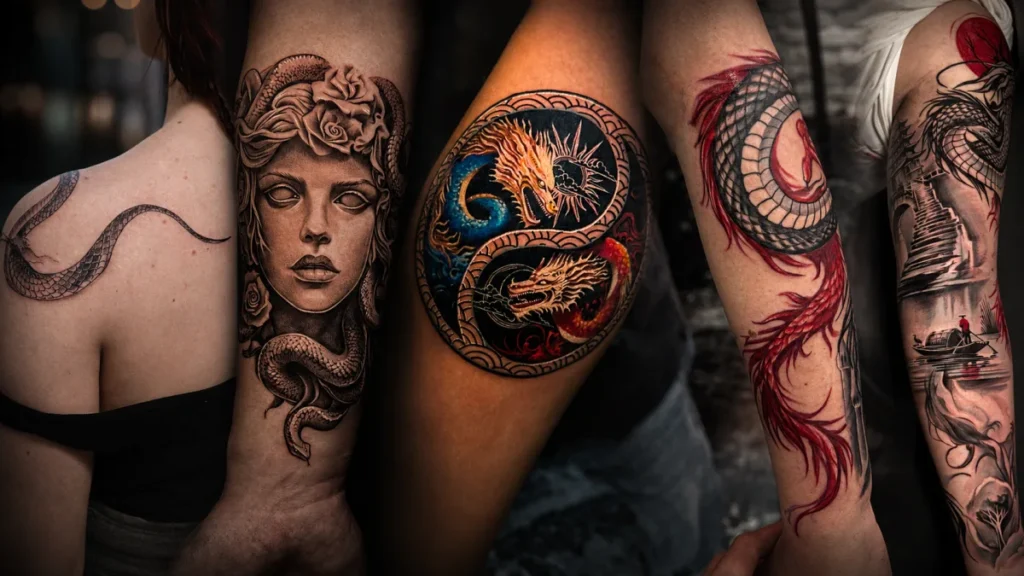
The Medusa and snake tattoo meaning is one of the most powerful interpretations of mythological body art. While Medusa herself is famous for the snakes that replace her hair, these serpents have their own rich symbolism that adds even more depth to the tattoo. Across many ancient cultures, snakes have represented wisdom, rebirth, healing, protection, and transformation because they shed their skin throughout their lives. When combined with Medusa’s image, these meanings create a tattoo that represents personal growth, resilience, and inner strength.
In Greek mythology, the snakes on Medusa’s head became part of her transformation. Although they contributed to her fearsome appearance, modern tattoo interpretations often focus on the symbolic qualities of snakes rather than fear. They remind the wearer that change is a natural part of life and that growth often comes through difficult experiences.
Many tattoo artists use the snakes to tell a personal story. A design with calm, flowing snakes may emphasize wisdom, patience, and emotional balance, while a design featuring aggressive, striking snakes can symbolize courage, protection, and determination. The number, size, and movement of the snakes may also change the overall appearance without changing the tattoo’s core meaning.
Some people combine Medusa with other symbolic elements such as roses, skulls, moons, daggers, or Greek columns. These additions personalize the tattoo while allowing the snakes to remain the central visual feature. Black-and-grey realism highlights every scale and facial detail, while neo-traditional and illustrative styles create bold, artistic interpretations.
For many people, the Medusa and snake tattoo meaning ultimately represents transformation through adversity. It reminds the wearer that challenges can lead to wisdom and that personal strength often grows from life’s most difficult moments.
Medusa Tattoo Meaning and Survivor Symbolism
In recent years, the Medusa tattoo meaning has also become associated with survivor symbolism in some online communities and personal narratives. This interpretation is rooted in modern readings of Medusa’s story rather than in ancient Greek mythology itself. Because of this, it is important to understand that this meaning is contemporary, personal, and not universal.
Many people connect with Medusa because her myth has been reinterpreted as a story about surviving injustice and reclaiming personal power. For some individuals, the tattoo represents healing, resilience, and the decision to move forward after experiencing traumatic events. In this context, Medusa becomes a symbol of endurance rather than fear.
However, it is equally important to avoid making assumptions about someone based on their tattoo. Not everyone who has a Medusa tattoo chose it for survivor symbolism. Many people simply appreciate Greek mythology, admire the artistic design, or connect with themes such as wisdom, protection, strength, or transformation.
Respecting personal interpretation is essential. Tattoos often carry deeply individual meanings, and the same design can represent very different experiences for different people. Asking respectful questions, rather than assuming a specific story, is the best approach if someone chooses to share the significance of their tattoo.
The evolving symbolism of Medusa demonstrates how myths continue to change over time. While ancient stories remain the foundation of the character, modern society often finds new meanings that reflect contemporary values and personal experiences.
Things to Know Before Getting a Medusa Tattoo
Before getting a Medusa tattoo, it’s important to think carefully about both its artistic design and symbolic meaning. Because Medusa is one of the most recognizable figures in Greek mythology, your tattoo will likely attract attention and questions from others.
Start by researching the mythology behind Medusa. Understanding the different versions of her story can help you choose a design that reflects the symbolism you connect with most. Some people prefer a fierce and intimidating Medusa, while others choose a calm, regal, or sorrowful expression that highlights different aspects of her character.
Choosing an experienced tattoo artist is equally important. Medusa tattoos often include intricate facial details, snake scales, flowing hair, and expressive eyes. These elements require advanced technical skill to ensure the tattoo ages well over time. Reviewing an artist’s portfolio before booking an appointment can help you find someone who specializes in detailed portrait work.
Placement also deserves careful consideration. Large designs on the back, thigh, chest, or upper arm allow the artist to include greater detail, while smaller tattoos on the forearm, calf, or shoulder may require a simpler composition.
Think about the long-term significance of your tattoo as well. Since tattoos are permanent, select a design that reflects values or experiences that are meaningful to you rather than following a temporary trend.
Finally, follow all aftercare instructions provided by your tattoo artist. Proper healing protects the artwork, reduces the risk of infection, and helps preserve fine details for years to come.
How to Choose the Best Medusa Tattoo Design
Choosing the best Medusa tattoo design involves balancing artistic style with personal meaning. Instead of copying a design directly from the internet, many people work with a professional tattoo artist to create a custom piece that reflects their personality and story.
Begin by deciding what the tattoo represents to you. If your focus is protection, you may prefer a powerful expression with intense eyes. If you identify with transformation and resilience, a softer, more thoughtful portrait might better reflect your journey.
Next, consider the artistic style. Realistic tattoos emphasize lifelike facial features and detailed snakes, while neo-traditional tattoos use bold outlines and vibrant colors. Fine-line tattoos offer a minimalist appearance, and black-and-grey designs create timeless elegance.
Think about incorporating meaningful background elements. Ancient Greek columns, laurel wreaths, moon phases, roses, olive branches, geometric patterns, or ornamental frames can enhance the composition without distracting from Medusa herself.
Tattoo placement also affects the final design. Larger body areas allow for highly detailed portraits, while smaller placements work best with simplified artwork.
Taking the time to personalize your design ensures that your Medusa tattoo remains meaningful for years to come rather than simply reflecting a passing trend.
Medusa Tattoo Aftercare Tips
Proper aftercare is essential for keeping your Medusa tattoo looking sharp and vibrant after it heals. Even the most detailed tattoo can lose quality if it is not cared for correctly during the healing process.
Follow your tattoo artist’s instructions carefully. They may recommend leaving the protective bandage on for a specific period before gently washing the tattoo with lukewarm water and a mild, fragrance-free soap. Avoid scrubbing the area, and pat it dry with a clean towel instead of rubbing it.
Apply only the recommended moisturizer or tattoo aftercare product in a thin layer. Keeping the skin lightly moisturized helps prevent excessive dryness without trapping too much moisture.
Avoid swimming pools, hot tubs, lakes, and oceans until the tattoo has completely healed. Extended water exposure can interfere with healing and increase the risk of infection. It’s also important to avoid direct sunlight during the healing period because ultraviolet (UV) rays can damage fresh tattoo pigment.
Do not pick at peeling skin or scabs. This is a normal part of healing, and removing them prematurely may affect the tattoo’s appearance.
Once healed, applying sunscreen to exposed tattoos can help preserve fine details and reduce fading over time.
Common Myths About the Medusa Tattoo Meaning
Because Medusa is one of mythology’s most famous characters, several misconceptions surround the Medusa tattoo meaning.
Myth 1: A Medusa tattoo always represents evil.
This is false. Modern interpretations often associate Medusa with protection, resilience, wisdom, and transformation rather than evil.
Myth 2: Only women get Medusa tattoos.
People of all genders choose Medusa tattoos for their artistic beauty and symbolic meanings.
Myth 3: Every Medusa tattoo has the same meaning.
Tattoo meanings are personal. One person’s tattoo may represent Greek mythology, while another’s symbolizes protection or personal growth.
Myth 4: Medusa tattoos are only a social media trend.
Although social media has increased their popularity, Medusa has been an important cultural and artistic figure for thousands of years.
Myth 5: A Medusa tattoo must be large to look good.
Small, minimalist Medusa tattoos can be just as meaningful and visually appealing when designed by an experienced artist.
Frequently Asked Questions About Medusa Tattoo Meaning
1. What does a Medusa tattoo symbolize?
A Medusa tattoo commonly symbolizes protection, resilience, transformation, wisdom, inner strength, and personal empowerment. Its meaning may vary depending on the individual and the design.
2. Is a Medusa tattoo only for women?
No. Both women and men choose Medusa tattoos. While some interpretations emphasize feminine empowerment, many people simply appreciate Greek mythology, symbolism, and artistic design.
3. Is Medusa considered a villain in Greek mythology?
Medusa is a complex mythological figure. Ancient stories portray her in different ways, and modern interpretations often focus on the tragedy and transformation within her story rather than labeling her simply as a villain.
4. Where is the best placement for a Medusa tattoo?
Popular placements include the forearm, upper arm, shoulder, thigh, back, chest, ribs, and calf. Larger areas allow for more detailed artwork.
5. Can I customize my Medusa tattoo?
Absolutely. Many people personalize their tattoo by adding roses, snakes, Greek architecture, celestial elements, geometric patterns, or other meaningful symbols to create a unique design.
Conclusion
The Medusa tattoo meaning continues to evolve while remaining deeply connected to its roots in Greek mythology. Once known primarily as a fearsome Gorgon, Medusa is now widely viewed as a symbol of resilience, protection, transformation, wisdom, and personal strength. Her story reminds us that myths often have multiple interpretations and that symbols gain new meanings as cultures change over time.
Whether you choose a Medusa tattoo because of its historical significance, its striking artistic style, or its personal symbolism, it remains one of the most meaningful mythological tattoo designs available today. By understanding the history behind Medusa, exploring different design styles, selecting an experienced tattoo artist, and choosing artwork that reflects your own values, you can create a tattoo that is both visually stunning and personally significant.
A thoughtfully designed Medusa tattoo is more than body art—it is a lasting expression of identity, resilience, and the stories that shape who we are.